Popular Culture and Social Media
The Power of Pop Culture
The US not only consumes a lot of pop culture but is also responsible for creating much of it. The economic prosperity of the United States at the beginning of last century created cultural industries. The term cultural industry was created by Theodor Adorno and Max Horkheimer to mean the creation, production, and distribution of goods and services that are cultural in nature and usually protected by intellectual property rights. The globalizing forces of trade & international commerce, plus media & communication technology plus the arts & languages are behind the rise of US pop culture. In the 1920s, US media was exported to boost sales of US products. Among the major sponsors of such programming were Procter & Gamble, Colgate-Palmolive, and Lever Brothers, all US manufacturers of soap and cleaning products, thus the term soap opera came into being for the daytime dramas that also became popular exports by themselves.
The growth of the influence of US television has also impacted the international film industry. In 1987, US films captured 56% of the European film market. Less than a decade later, that statistic rose to 90%. Recently, the market share across Western Europe has ranged from 60-75%. In such a lop-sided import/export market, concerns are often raised. "Not only do foreign nations worry about their own domestic entertainment industries from an economic standpoint, but they also worry about the effects on their culture".
Other countries have taken notice in recent decades, and some of those countries have begun to focus on developing pop culture as an economic engine and international export. Take South Korea for instance. In the 1990s the South Korean government realized that the Hollywood blockbuster, Jurassic Park, was the equivalent value of foreign sales of 1.5 million Hyundai cars so it shifted its national export strategy from manufactured goods to cultural products like movies and music. The shift has ultimately paid off. Chinese audiences are huge fans of Korean television dramas. A few years ago, the K-pop artists BTS were invited to the White House to mark the final day of Asian American, Native Hawaiian, and Pacific Islander Heritage Month where they briefly discussed anti-Asian hate crimes with President Biden.
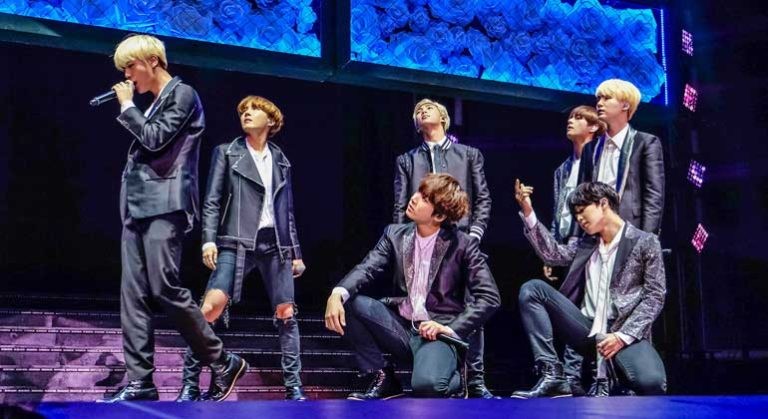
The Hallyu Wave (Korean Wave) has become a legendary example of "soft power" that South Korea has begun to accumulate in international relations. Growing familiarity with any nation's culture translates into easier governmental and stronger commercial relationships around the world. Squid Games anyone?