Education
Practical Applications
Researchers continue to build an in-depth understanding of the customs and practices within certain cultures with the goal of developing meaningful ways to compare cultures. Much of our communication behavior and our expectations for the educational process are deeply embedded parts of our culture. What happens in the classroom is primarily reflective of the values of the dominant culture.
Numerous studies have been done in a variety of cultures to measure teaching and learning styles. Although there is considerable debate as to whether this field of study is accurate across cultural boundaries or should be more focused on individuals, there is enough reason to believe that differences in cultural socialization tend to influence learning styles. As culture has the ability to shape the ways in which its members receive, process and act on information, it does shape the way cultural members learn.
Teaching Styles
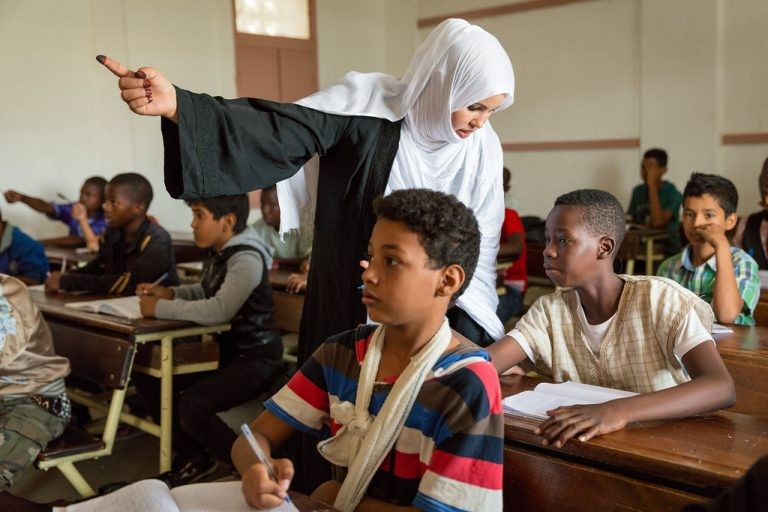
Teachers generally use one of the two types of teaching styles: teacher-centered or student-centered. Encouraging students to become independent thinkers, focusing on individual needs, being assertive and expressing opinions, criticism as a strategy for improvement, and trying to bring about conceptual change in students' understanding of the world are all considered student-centered strategies. Knowledge that is always transferred from an expert to a learner, with conformity and group needs as a focus, are considered more teacher-centered strategies. Students used to teacher-centered instruction may be puzzled, or even offended, by the more informal student-centered approach. They may perceive the teacher as being poorly prepared or lazy.

In individualistic settings, the teacher's role in the classroom is to share ideas and provide practice time to develop further knowledge and/or skills. In collectivistic settings, the teacher is viewed as a moral guide, and friend or parent figure with valuable knowledge that it is a student's duty to learn. Researchers Cortazzi & Jinn compared British and Chinese student/teacher relationships and noted that in Britain good students obeyed and paid attention to the teacher, but in China, students and teachers assumed that all students would behave in this way. Consequently, Chinese teachers spend little time and effort on discipline. In Norway and Russia, students often spend their first 5 or 6 years of school with the same teacher.
Learning Styles
The ways that student learn in different cultures is called learning styles - as is how students communicate. In the US, direct eye contact is interpreted as a sign of interest and honesty. The lack of eye contact is considered a sign of dishonesty or lack of interest, so teachers adjust their styles accordingly. Looking a teacher in the eye in many Asian countries would the height of disrespect.
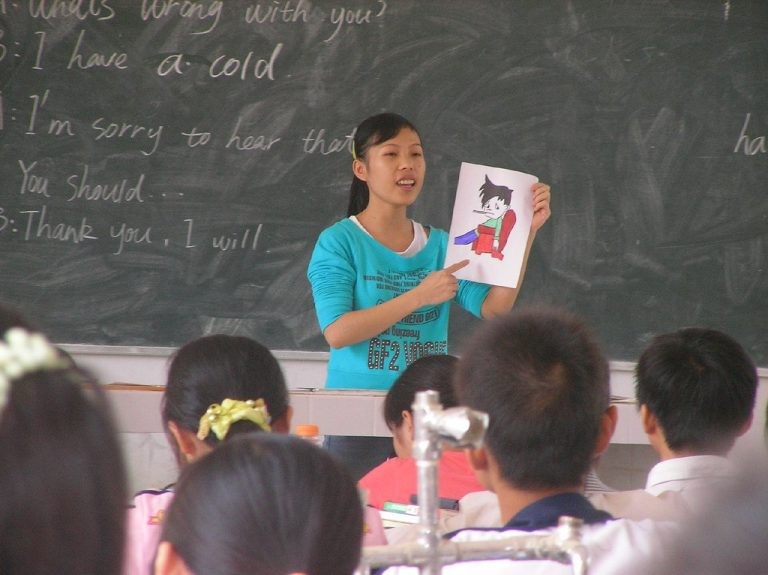
In some cultures, students are taught using through modeling and observation therefore students might not be familiar with the idea of active listening to understand concepts and instructions. Asking questions might imply that the teacher did not teach well and can be considered impolite or challenging the teacher.
In a few cultures, debating or engaging in discussions with different points of view can also be seen as a challenge. Not only is challenging teachers or authority figures seen as disrespectful, but such tactics might not be seen as a learning strategy and ignored. Lectures are the standard mode of instruction and discussion might not even have a place in the classroom.
Even in cultures where discussions are a standard classroom activity, the unwritten rules for discussion may be very different than in the US (e.g. interruptions, loud talking, allowing for short silence, and being called upon). Students may even smile during an intense discussion because they have been taught to react this way so as not to offend the person in authority.
Group work is also approached differently in different places. Group dynamics are developed in a more systematic and sustained manner with greater interdependence and collaboration. Individual instructors in the US may define what are and are not acceptable forms of collaboration in the context of a particular course, but the rules do not apply to all courses.
In the US, the class is often split into pairs, or small groups to work on a task or to discuss a topic. Watkins calls this "simultaneous pupil talk. In a Chinese classroom, you would more likely view "sequential pupil talk" where two students at a time stand and engage in dialogue while the others listen and think. Students from some countries may think certain forms of collaboration are acceptable which might be considered as "cheating" in the US.
The ideas of testing and evaluation can also vary widely from culture to culture. Students in many countries are accustomed to very rigorous high stakes testing. Multiple choice tests, common in the US, are rare outside of the US.
Grading, Power, and Plagiarism
Cultures can have very different expectations about grades and the grading process. There may always be power distance issues in the communication between instructors and students, but these differences will be greater or lesser depending on the culture. Notions of what constitutes being "fair" or "unfair" are cultural embedded as well. Seeking help or soliciting help may not be appropriate or acceptable in some cultures
Attitudes towards cheating and plagiarism, as well as what constitutes each, can be very different. Plagiarism, or the concept that ideas can be owned, is a Western principle. Some cultures require students to memorize and use long passages from well-know experts without crediting them as a matter of education.
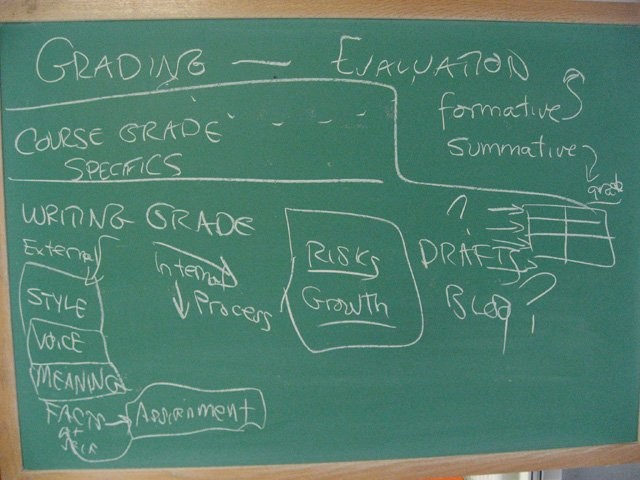
In cultures where a strong emphasis is placed on interdependence, "helping" your classmates may be more important than competing with them. "Turning in" a classmate who cheats may be considered a more serious ethical breach than the act of cheating. Maintaining family reputation, keeping a scholarship, or negotiating for grades could be appropriate in some instances.
Grading systems are far from universal, making the understanding of what a grade means opaque at best. In the Chinese University system, grades are often based on one final examination. There are no other grades, so plagiarism is rarely considered a problem. In the Japanese University system, final grades are based on the mid-term and final. There are no regulations about plagiarism in Japan or Nepal. Students do not need to attend classes in the Nepal University system; they can choose to directly sit for the national exam. Attendance and plagiarism are very important in the university system in India, but students can negotiate with their professors for grades. The Iranian university system also enforces consequences for plagiarism but considers gift-giving an opportunity for extra credit.
In the US, grades are only one of many factors considered in job and school applications. In some parts of the world the grades that you get in preschool will determine whether you will go to college or not.