Problem-Solving and Leadership Styles
Problem-Solving Styles Across Cultures
Problem? No problem!
In any workplace - whether a start-up in Berlin, a family business in Mexico City, or a multinational team meeting virtually across continents - problem-solving requires more than identifying an issue and generating a solution. It also involves navigating differences in how people define problems, share ideas, assign responsibility, and make decisions. By understanding these dynamics, groups can improve their ability to navigate challenges, resolve conflicts, and achieve their goals efficiently.
Problem Solving Styles
In small group contexts, problem solving involves identifying issues and finding solutions to them, while decision making focuses on choosing a course of action from available options. Though related, they aren't the same: problem solving often precedes decision making. This next section will discuss these communication practices in small groups. You'll notice that common themes of open communication, collaboration, and active listening are present in both types of small group situations.
Defining Problem Solving
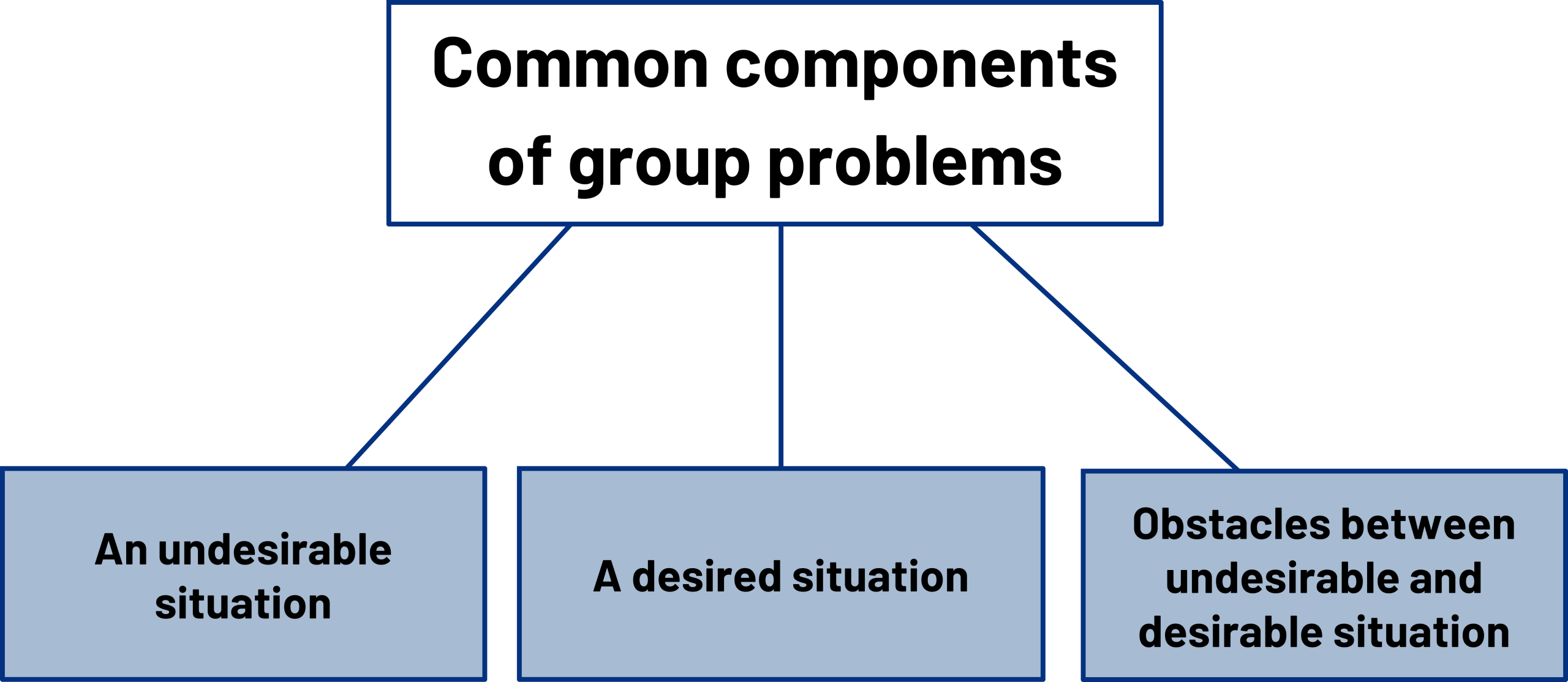
Figure 1: Common components of group problems.
No matter the cultural context, problem-solving involves moving from an undesirable situation to a desired one, navigating obstacles along the way. Most group challenges - whether budgeting, customer service, or innovation - contain three shared elements:
- An undesirable situation: A conflict, challenge, or missed opportunity
- A desired outcome: A goal, improvement, or resolution the team wants to reach
- Obstacles: Resources, knowledge, personalities, or policies that stand in the way
How teams approach those obstacles varies. Some prioritize logical frameworks; others rely on intuition or past relationships. The following five factors - adapted from group communication research and applied to intercultural business contexts - offer a practical framework for understanding group problem-solving styles globally:
-
Task Complexity: Cultures with low uncertainty avoidance (e.g., Sweden, Singapore) may tolerate ambiguity and adjust on the fly. Others (e.g., Japan, France) prefer clear structure, research, and time to plan before acting.
-
Number of Possible Solutions: Some teams prefer to generate many ideas before narrowing down options. Others prefer a few well-vetted options, particularly where hierarchy or face-saving matters.
-
Interest and Engagement: When employees are invested - especially in participative cultures - they may want more freedom to co-create solutions. In high-power-distance cultures, however, solutions may be expected to come from leadership.
-
Familiarity with the Problem: In global teams, members bring different expertise. A problem that's common in one region might be new elsewhere. Effective teams make space to share knowledge without assuming a shared starting point.
-
Need for Stakeholder Buy-In: In collectivist and consensus-driven cultures, decisions often require more consultation. Even the "best" solution will fail if it lacks support from the right people - especially in hierarchical or face-sensitive contexts.
Influences on Problem-Solving
Some cultures value quick, decisive action led by an appointed leader. Others emphasize group harmony and consensus, even if that means more time is needed to reach agreement. Still others focus on pragmatic trial-and-error approaches rather than linear analysis. Understanding these cultural styles can help prevent frustration, reduce miscommunication, and improve collaboration.
Individualistic vs. Collaborative Approaches
One of the most widely studied differences in global problem-solving is the role of individualism and collectivism. In individualistic cultures - such as the United States, Australia, and many parts of Western Europe - problem-solving often emphasizes personal accountability, autonomy, and direct communication. People may speak up quickly, propose solutions independently, and expect recognition for their contributions.
In contrast, collectivist cultures - common in East Asia, Latin America, and many African contexts - may favor a group-oriented approach. Solutions are discussed in group settings, and decisions are expected to reflect shared interests and preserve harmony. Group members might wait for senior input, speak less assertively, or avoid direct disagreement. In such environments, the process can seem slow to outsiders - but it often builds trust and long-term buy-in.
These preferences aren't rigid rules, of course. Professionals in all cultures can flex their styles depending on context. However, being aware of these tendencies - and how they show up in problem-solving - can reduce misunderstandings and help global teams collaborate more effectively.
Workplace Example: Missed Client Deadline
Scenario:
A
project team at an international marketing firm is responsible for
delivering a campaign proposal to a major client by Friday. On Wednesday
morning, it becomes clear that the team is behind schedule - critical
data from the analytics team has not yet arrived, and the visuals are
incomplete. The client has not been updated, and tensions begin to rise
in the team's shared workspace.
The team includes employees from both individualistic and collectivist cultural backgrounds. They agree a solution is needed quickly - but their preferred approaches differ.
Solution 1: Individualistic Approach
An employee from a culture that values individual responsibility and initiative (e.g., United States, Germany) suggests:
"I'll call the client myself and explain the situation. Then I'll stay late tonight to finish the visuals. If we each take a piece and move quickly, we can still deliver on time. We don't need to over-discuss - we just need to act".
In this approach, the emphasis is on personal accountability, assertiveness, and taking decisive action. The employee believes taking ownership and moving fast - even without full consensus - is the best way forward. There's less concern about hierarchy or group harmony, and more focus on outcomes and individual contribution.
Solution 2: Collectivist Approach
An employee from a culture that prioritizes group harmony and consensus (e.g., Japan, Colombia) suggests:
"Let's take a few minutes to talk together about what went wrong and how we can avoid blame. We should speak to our manager as a group and agree on a joint message before contacting the client. It's important that we're aligned before we move forward".
This approach reflects a preference for shared responsibility and team cohesion. The employee emphasizes collective problem-solving, respect for leadership hierarchy, and maintaining group unity - especially when representing the team externally. While it may take longer, this method prioritizes relational trust and long-term collaboration.
Key Takeaway:
Neither approach is inherently better - each reflects a culturally informed way of solving problems. Individualistic strategies may work well in fast-paced, competitive environments where initiative is valued. Collectivist approaches can be more effective in settings where relationship-building, group ownership, and long-term reputation matter most. Intercultural teams benefit when they recognize these differences and find ways to balance clarity with collaboration.
Problem-Solving Process
Many models of problem-solving - such as Dewey's reflective thinking process - are useful starting points but may need to be adapted for global teams. The five stages below can be applied with cultural awareness to support inclusive and effective collaboration.
Step 1: Define the Problem
Define the problem by considering the three elements shared by every problem: the current undesirable situation, the goal or more desirable situation, and obstacles in the way. At this stage, group members share what they know about the current situation, without proposing solutions or evaluating the information. Here are some questions to ask during this stage: What is the current difficulty? How did we come to know that the difficulty exists? Who or what is involved? Why is it meaningful/urgent/important? What have the effects been so far? What, if any, elements of the difficulty require clarification?
At the end of this stage, the group should be able to compose a single sentence that summarizes the problem called a problem statement. Avoid wording in the problem statement or question that hints at potential solutions. A small group formed to investigate ethical violations of city officials could use the following problem statement: "Our state does not currently have a mechanism for citizens to report suspected ethical violations by city officials".
Step 2: Analyze the Problem
During this step, a group should analyze the problem and the group's relationship to the problem. Whereas the first step involved exploring the "what" related to the problem, this step focuses on the "why". At this stage, group members can discuss the potential causes of the difficulty. Group members may also want to begin setting out an agenda or timeline for the group's problem-solving process, looking forward to the other steps. To analyze the problem, the group can discuss the five common problem variables discussed before. Here are two examples of questions that the group formed to address ethics violations might ask: Why doesn't our city have an ethics reporting mechanism? Do cities of similar size have such a mechanism? Once the problem has been analyzed, the group can pose a problem questionthat will guide the group as it generates possible solutions. "How can citizens report suspected ethical violations of city officials and how will such reports be processed and addressed?" As you can see, the problem question is more complex than the problem statement, since the group has moved on to more in-depth discussion of the problem during step 2.
Step 3: Generate Possible Solutions
Helpful tip! it is really important to be open-minded in step 3, to allow all group members to contribute their ideas. Allow group members to propose unlikely or even unfeasible solutions. Through an iterative and creative brainstorming process, a group can often uncover novel solutions that were not apparent at the onset of the discussion.
During this step, group members generate possible solutions to the problem. Again, group members should not evaluate solutions at this point, only propose and clarify. The question should be what could we do to address this problem, not what should we do to address it? It is perfectly OK for a group member to seek more information at this point by asking something like "What do you mean?" or "Could you explain your reasoning more?" Discussions at this stage may reveal a need to return to previous steps to better define or more fully analyze a problem. Since many problems are multifaceted, it is necessary for group members to generate solutions for each part of the problem separately, making sure to have multiple solutions for each part. Stopping the solution-generating process prematurely can lead to groupthink.
Step 4: Evaluate Solutions
During this step, solutions can be critically evaluated based on their credibility, completeness, and worth. Once the potential solutions have been narrowed based on differences in relevance and/or merit, the group should analyze each solution based on its potential effects - especially negative effects. Groups that are required to report the rationale for their decision or whose decisions may be subject to public scrutiny would be wise to make a set list of criteria for evaluating each solution. To avoid groupthink, it is important to evaluate all potential solutions, even if they seem like a "win" on the surface. Take the time to think about the pros and cons of each potential solution and address multiple perspectives.
Additionally, solutions can be evaluated based on how well they fit with the group's charge and the abilities of the group. To do this, group members may ask, "Does this solution live up to the original purpose or mission of the group?" "Can the solution actually be implemented with our current resources and connections?" "How will this solution be supported, funded, enforced, and assessed?" Secondary tensions and substantive conflict, two concepts discussed earlier, emerge during this step of problem solving, and group members will need to employ effective critical thinking and listening skills.
Decision-making is part of the larger process of problem solving and it plays a prominent role in this step. While there are several similar models for problem solving, groups can use many varied decision-making techniques. For example, to narrow the list of proposed solutions, group members may decide by majority vote, by weighing the pros and cons, or by discussing them until they reach a consensus. There are also more complex decision-making models like the "six hats method," (de Bono, 1985). Once the group reaches a final decision, the group leader or facilitator should confirm that the group agrees. It may be beneficial to let the group break for a while or even to delay the final decision until a later meeting to allow people time to evaluate it outside of the group context.
Step 5: Implement and Assess the Solution
Implementing the solution requires some advanced planning, and it should not be rushed unless the group is operating under strict time restraints or a delay may lead to some kind of harm. Although some solutions can be implemented immediately, others may take days, months, or years. As was noted earlier, it may be beneficial for groups to poll those who will be affected by the solution as to their opinion of it or even to do a pilot test to observe the effectiveness of the solution and how people react to it. Before implementation, groups should also determine how and when they would assess the effectiveness of the solution by asking, "How will we know if the solution is working or not?" Since solution assessment will vary based on whether or not the group is disbanded, groups should also consider the following questions: If the group disbands after implementation, who will be responsible for assessing the solution? If the solution fails, will the same group reconvene? Will a new group be formed?
Certain elements of the solution may need to be delegated to various people inside and outside the group. Group members may also be assigned to implement a particular part of the solution based on their role or because it connects to their area of expertise. Likewise, group members may be tasked with publicizing the solution or "selling" it to a particular group of stakeholders. Last, the group should consider its future. In some cases, the group will get to decide if it will stay together and continue working on other tasks or if it will disband. In other cases, outside forces determine the group's fate.
Cultural Adaptability and Team Success
Effective global teams recognize that problem-solving is not just a technical skill - it's a cultural performance. Adapting your expectations, listening to others' approaches, and co-creating processes that work for everyone are essential steps in building intercultural competence.
As you continue reading, we'll explore how leadership expectations - like who gets to decide, who speaks first, and who's held accountable - also vary across cultures and identities.
Wrap Up
Small groups are a vital part of our personal, academic, and professional lives. Whether we're solving a community problem, collaborating on a class project, or working with colleagues on a team, effective group communication plays a critical role in determining outcomes. As you continue to work in small groups, consider not only what your group is doing, but how it is communicating - because that process will often determine your success.