Innovation Strategies
| Site: | Saylor University |
| Course: | [CB DRAFT] BUS501: Strategic Management |
| Book: | Innovation Strategies |
| Printed by: | Guest user |
| Date: | Tuesday, 27 October 2026, 2:34 PM |
Description
 buttons.
Innovation Strategies
Introduction
A firm's philosophy toward innovation greatly impacts the business-level/competitive strategies that it pursues. Having an entrepreneurial orientation stimulates a firm toward innovation, improving its products and services and launching new product lines. Innovation can open new markets for a company, and being the first mover to launch a new product or service can be an advantage over competitors, but not always. There are four types of innovation that depend on if existing or new markets are reached or if existing or new technology is used. Firms may also find it advantageous to cooperate at certain levels, such as through a joint venture, strategic alliance, merger, acquisition co-location, or co-opetition.
Innovation is important in strategic management. A firm must be improving its products and services or developing new ones to stay competitive. Business level strategy will not be able to sustain any competitive advantage by sitting still. As firms implement corporate and international strategies, discussed in the next two chapters, cooperative and co-opetition measures help companies obtain resources and capabilities needed to innovate and enter new markets.
Source: Reed Kennedy, https://pressbooks.lib.vt.edu/strategicmanagement/part/chapter-7-innovation-strategies/ This work is licensed under a Creative Commons Attribution-ShareAlike 4.0 License.
Entrepreneurial Orientation
A famous Nike slogan encourages people to "just do it!" For people and organizations that have developed an entrepreneurial orientation (EO), "just do it!" is a way of life. While often associated with starting new ventures, an EO can be very valuable to established organizations as well. Below we describe each of the three characteristics associated with an EO: innovativeness, proactiveness, and risk-taking.
An additional two characteristics were later added - competitive aggressiveness and autonomy. However, these two dimensions of EO have been subject to much debate and are omitted for the purposes of this text.
Table 7.1 Understanding Entrepreneurial Orientation
| Term | Definition | Example |
|---|---|---|
| Innovativeness | The tendency to pursue novel ideas, creative processes, and experimentation. | 3M has built its business around its mission statement: to solve unsolved problems innovatively. 3M employs over 7,000 researchers and more than 118,000 patents as of 2019, adding more than 4,000 patents annually. 3M's innovativeness has led it to develop thousands of products (such as Post-it notes and Scotch tape) that are sold in almost 200 countries. |
| Proactiveness | The tendency to anticipate and act on future opportunities rather than rely solely on existing products and services. | Proactive Communications Inc. lives up to its name by focusing on emerging and unusual opportunities. The firm embraces contracts in war zones and natural disaster areas that are often avoided by other telecommunications firms. |
| Risk Taking | The tendency to take bold actions rather than being cautious. | Richard Brandson's launching of Virgin Galactic - a company that plans to offer suborbital space flights to commercial passengers - reflects his love of high-risk, high-reward ventures. |
The Value of Thinking and Acting Entrepreneurially
When asked to think of an entrepreneur, people typically offer examples such as Elon Musk, Oprah Winfrey, Jeff Bezos, Kylie Jenner, and Mark Zuckerberg - individuals who have started their own successful businesses from the bottom up that generated a lasting impact on society. But entrepreneurial thinking and doing are not limited to those who begin in their garage with a new idea, financed by family members or personal savings. Some people in large organizations are filled with passion for a new idea, spend their time championing a new product or service, work with key players in the organization to build a constituency, and then find ways to acquire the needed resources to bring the idea to fruition.
Entrepreneurship within an organization is called intrapreneurship. Companies often grow by offering new services or launching new products. Rather than acquire another company that provides that product or service, they develop it themselves. This is a method of strategy implementation called internal development. To maximize opportunities for intrapreneurship, companies need employees with a high entrepreneurial orientation.
Thinking and behaving entrepreneurially can help a person's career as well. Some enterprising individuals successfully navigate through the environments of their respective organizations and maximize their own career prospects by identifying and seizing new opportunities (Table 7.1) (Certo et al., 2009).

In the 1730s, Richard Cantillon used the French term entrepreneur, or literally "undertaker," referring to those who undertake self-employment while also accepting an uncertain return. In subsequent years, entrepreneurs have also been referred to as innovators of new ideas (Thomas Edison), individuals who find and promote new combinations of factors of production (Bill Gates' bundling of Microsoft's products), and those who exploit opportunistic ideas to expand small enterprises (Mark Zuckerberg at Facebook). The common elements of these conceptions of entrepreneurs are that they do something new and that some individuals can make something out of opportunities that others cannot.
Entrepreneurial orientation (EO) is a key concept when executives are crafting strategies in the hopes of doing something new and exploiting opportunities that other organizations cannot exploit. EO refers to the processes, practices, and decision-making styles of organizations that act entrepreneurially (Lumpkin & Dess, 1996). Any organization's level of EO can be understood by examining how it stacks up relative to three dimensions: (1) innovativeness, (2) proactiveness, (3) and risk taking. These dimensions are also relevant to individuals.
Entrepreneurial orientation (EO) is measured at both the organizational and the individual levels. The characteristics of an entrepreneurial company noted in Table 7.1 also apply to individuals. Those individuals who are less risk averse, innovative thinkers, and competitive tend to have a higher EO and greater success at starting a business. Online EO assessment tools exist for those wishing to determine their EO. It is important to note that EO is not only related to high tech start-ups. Starting a lawn care business or a beauty shop are very valid and necessary entrepreneurial ventures, and will have a better chance of success if an entrepreneur possesses a higher EO.
Innovativeness
Innovativeness is the tendency to pursue creativity and experimentation. Some innovations build on existing skills to create incremental improvements, while more radical innovations require brand-new skills and may make existing skills obsolete. Either way, innovativeness is aimed at developing new products, services, and processes. Those organizations that are successful in their innovation efforts tend to enjoy stronger performance than those that do not.
Known for efficient service, FedEx has introduced its Smart Package, which allows both shippers and recipients to monitor package location, temperature, and humidity. This type of innovation is a welcome addition to FedEx's lineup for those in the business of shipping delicate goods, such as human organs. How do firms generate these types of new ideas that meet customers' complex needs? Perennial innovators 3M and Google have found a few possible answers. 3M sends nine thousand of its technical personnel in thirty-four countries into customers' workplaces to experience firsthand the kinds of problems customers encounter each day. Google's two most popular features of its Gmail, thread sorting and unlimited e-mail archiving, were first suggested by an engineer who was fed up with his own e-mail woes. Both 3M and Google allow employees to use a portion of their work time on projects of their own choosing with the goal of creating new innovations for the company. This latter example illustrates how multiple EO dimensions - in this case, autonomy and innovativeness - can reinforce one another.
Proactiveness
Proactiveness is the tendency to anticipate and act on future needs rather than reacting to events after they unfold. A proactive organization is one that adopts an opportunity-seeking perspective. Such organizations act in advance of shifting market demand and are often either the first to enter new markets or "fast followers" that improve on the initial efforts of first movers.
Consider Proactive Communications, an aptly named small firm in Killeen, Texas. From its beginnings in 2001, this firm has provided communications in hostile environments, such as Iraq and areas impacted by Hurricane Katrina. Being proactive in this case means being willing to don a military helmet or sleep outdoors - activities often avoided by other telecommunications firms. By embracing opportunities that others fear, Proactive's executives have carved out a lucrative niche in a world that is technologically, environmentally, and politically turbulent.
Risk Taking
Risk taking refers to the tendency to engage in bold rather than cautious actions. Starbucks, for example, made a risky move when it introduced a new instant coffee called VIA Ready Brew. Instant coffee has long been viewed by many coffee drinkers as a bland drink, but Starbucks decided that the opportunity to distribute its product in a different format was worth the risk of associating its brand name with instant coffee.
Although a common belief about entrepreneurs is that they are chronic risk takers, research suggests that entrepreneurs do not perceive their actions as risky; most take action only after using planning and forecasting to reduce uncertainty. However, uncertainty seldom can be fully eliminated. A few years ago, Jeroen van der Veer, CEO of Royal Dutch Shell PLC, entered a risky energy deal in Russia's Far East. At the time, van der Veer conceded that it was too early to know whether the move would be successful. Just six months later, however, customers in Japan, Korea, and the United States had purchased all the natural gas expected to be produced there for the next twenty years. If political instabilities in Russia and challenges in pipeline construction do not dampen returns, Shell stands to post a hefty profit from its 27.5% stake in the venture.
Building an Entrepreneurial Orientation
Steps can be taken by executives to develop a stronger entrepreneurial orientation throughout an organization and by individuals to become more entrepreneurial themselves. For executives, it is important to design organizational systems and policies to reflect the three dimensions of EO. As an example, how an organization's compensation systems encourage or discourage these dimensions should be considered. Is taking sensible risks rewarded through raises and bonuses, regardless of whether the risks pay off, for example, or does the compensation system penalize risk taking? Other organizational characteristics such as corporate debt level may influence EO. Do corporate debt levels help or impede innovativeness? Is debt structured in such a way as to encourage risk taking? These are key questions for executives to consider.
Examination of some performance measures can assist executives in assessing EO within their organizations. To understand how the organization develops and reinforces autonomy, for example, top executives can administer employee satisfaction surveys and monitor employee turnover rates. Organizations that effectively develop autonomy should foster a work environment with high levels of employee satisfaction and low levels of turnover. Innovativeness can be gauged by considering how many new products or services the organization has developed in the last year and how many patents the firm has obtained.
Similarly, individuals should consider whether their attitudes and behaviors are consistent with the three dimensions of EO. Is an employee making decisions that focus on competitors? Does the employee provide executives with new ideas for products or processes that might create value for the organization? Is the employee making proactive as opposed to reactive decisions? Each of these questions will aid employees in understanding how they can help to support EO within their organizations.
Key Takeaway
- Building an entrepreneurial orientation can be valuable to organizations and individuals alike in identifying and seizing new opportunities. Entrepreneurial orientation consists of three dimensions: (1) innovativeness, (2) proactiveness, and (3) risk taking.
Exercises
- Can you name three firms that have suffered because of lack of an entrepreneurial orientation?
- Identify examples of each dimension of entrepreneurial orientation other than the examples offered in this section.
- How does developing an entrepreneurial orientation have implications for your future career choices?
- How could you apply the dimensions of entrepreneurial orientation to a job search?
Why Innovate?
Innovate to Capture Markets
Innovation can be a key strategy to stay ahead of the competition. Firms who sit still, perhaps satisfied with their success, will find themselves outsmarted and left behind, with the competition winning over their customers. An innovation strategy coupled with an entrepreneurial orientation will help keep customers buying.
Automobile manufacturers have used this strategy of innovation for years. Every year, a new innovation of nearly all car models comes out in the fall season. The new year's model may look a little sleeker, have some safety improvements, or be connected to the internet. These innovations entice consumers to sell their existing car to have the latest look or technology. Cell phone manufacturers do the same thing, coming out with a new model almost annually, with more memory, a faster processor, a better camera, etc. Where would Apple be today if they stopped with the iPhone 7? Drug manufacturers are always innovating by doing research to find the next medication to slow Alzheimers or cure skin cancer.

Innovation is usually the strategy of new startup IT companies. A new software program is developed or a new way to do interactive video games can meet a need or provide a service that consumers want. It is the innovation strategy that propels the organization forward. This is not to discount the need for a business-level/competitive strategy such as focused differentiation, as the firm still needs to determine their business-level strategy and optimize it. Often a differentiation strategy, broad or focused, can be used for a new, innovative product or service and priced high, because the competitors are few or none.
Joseph Addison, an eighteenth century poet, is often credited with coining the phrase "He who hesitates is lost". This proverb is especially meaningful in today's business world. It is easy for executives to become paralyzed by the dizzying array of competitive and cooperative moves available to them. Given the fast-paced nature of most industries today, hesitation can lead to disaster. Some observers have suggested that competition in many settings has transformed into hyper-competition, which involves very rapid and unpredictable moves and countermoves that can undermine competitive advantages. Under such conditions, it is often better to make a reasonable move quickly rather than hoping to uncover the perfect move through extensive and time-consuming analysis.
The importance of continuous learning also contributes to the value of adopting a "get moving" mentality. Success in business often depends on executives learning from a series of competitive and cooperative moves, not on selecting ideal moves. In some circumstances, advantages can be created by taking decisive action, even if the decision is based on incomplete information.
Blue Ocean Strategy
It is best to win without fighting. – Sun-Tzu, The Art of War
A blue ocean strategy involves creating a new, untapped market rather than competing with rivals in an existing market. This strategy follows the approach recommended by the ancient master of strategy Sun-Tzu in the quote above. Instead of trying to outmaneuver its competition, a firm using a blue ocean strategy tries to make the competition irrelevant (Table 7.2). Baseball legend Wee Willie Keeler offered a similar idea when asked how to become a better hitter: "Hit 'em where they ain't". In other words, hit the baseball where there are no fielders rather than trying to overwhelm the fielders with a ball hit directly at them.
Nintendo openly acknowledges following a blue ocean strategy in its efforts to invent new markets. Perrin Kaplan, Nintendo's former vice president of marketing and corporate affairs for Nintendo of America noted in an interview, "We're making games that are expanding our base of consumers in Japan and America. Yes, those who've always played games are still playing, but we've got people who've never played to start loving it with titles like Nintendogs, Animal Crossing and Brain Games. These games are blue ocean in action". Other examples of companies creating new markets include FedEx's invention of the fast-shipping business and eBay's invention of online auctions.
Firms that create blue oceans experience a temporary competitive advantage. How long "temporary competitive advantage lasts" in a blue ocean strategy depends on the particular combination of internal and external factors that create the opportunity in the first place. Needless to say, the more successful a company is with a blue ocean strategy, the more attention they will receive from potential competitors who want to get into a position to benefit from those same advantages.
It's a big ocean out there! When pursuing a blue ocean strategy, executives try to create and exploit vast untapped markets rather than competing directly with rivals. See several examples of firms following a blue ocean strategy below.
Table 7.2 Blue Ocean Strategy
| Examples of Firms Following a Blue Ocean Strategy |
|---|
| The interactive features of Nintendo's Wii transformed playing video games from a hobby for the hardcore gamers into a treasured family event. |
| Coffee shops were once the domain of old men, insomniacs, and chain-smoking urban hipsters. By reinventing coffee shops, Starbucks made the $4 latte a must-have item for college students, business people, and soccer moms. |
| At a time when cars were only for the wealthy, Henry Ford envisioned cars that were affordable to the typical American. Ford priced his vehicles so that his assembly line workers could afford them. |
| eBay's invention of online auctions extended the auction experience - and the chance to buy that rare Elvis plate - to anyone with internet access. |
| Golf can be frustrating to even skilled players. Callaway's creation of the Big Bertha club with an oversized head made golf appealing to a whole new set of weekend warriors. |
| A classy, affordable wine for novice wine drinkers? Casella wines (maker of Yellow Tail) steered clear of wine snobs and sommeliers and instead created fun and simple tastes for the masses. |
Key Takeaway
- Firms must continually innovate to stay ahead of the competition. Blue ocean strategy is one way that innovation can capture new markets.
Exercises
- Find a key trend from the general environment and develop a blue ocean strategy that might capitalize on that trend.
Types of Innovation
Being a First Mover: Advantages and DisadvantagesThe idea of first mover advantage borrows from military strategy. For example, Confederate general Nathan Beford Forrest's attack plan was simply stated as "git thar fustest with the mostest".
When confronted by a poisonous snake, should you strike first or wait for the serpent to make a move? Each option has advantages and disadvantages. In business, being a first mover might allow a firm to "rattle its rivals, but a first move might also attract the "venom" of skeptical customers. Below are examples of successful - and not so successful - first movers.
Table 7.3 First Mover Advantage
| First Move Successes | First Move Failures |
|---|---|
| At a time when using most personal computers required memorizing obscure commands, Apple pioneered a user-friendly interface. The firm gained a reputation as an innovator that persists today. | Netscape's web browser was a first mover that was popular in the 1990s, but nearly extinct by 2002 with the advent of Microsoft's competitive offering - Internet Explorer. |
| Following World War II, Japan's economy laid in ruin. Ibuka Masaru used this backdrop to build a company that would be the first in Japan to create tape recorders and transistors radios. The company he pioneered - Sony - has now been a fierce electronics competitor for over a half century. | Not all of Apple's first moves were triumphs. The firm's disastrous attempt to pioneer the personal digital assistant market through its "Newton" created a loss of around one-hundred million dollars. |
A famous cliché contends that "the early bird gets the worm". Applied to the business world, the cliché suggests that certain benefits are available to a first mover into a market that will not be available to later entrants. A first-mover advantage exists when making the initial move into a market allows a firm to establish a dominant position that other firms struggle to overcome (Table 7.3). For example, Apple's creation of a user-friendly, small computer in the early 1980s helped fuel a reputation for creativity and innovation that persists today. Kentucky Fried Chicken (KFC) was able to develop a strong bond with Chinese officials by being the first Western restaurant chain to enter China. Today, KFC is the leading Western fast-food chain in this rapidly growing market. Genentech's early development of biotechnology allowed it to overcome many of the pharmaceutical industry's traditional entry barriers such as financial capital and distribution networks and become a profitable firm. Decisions to be first movers helped all three of these firms to be successful in their respective industries.
On the other hand, a first mover cannot be sure that customers will embrace its offering, making a first move inherently risky. Apple's attempt to pioneer the personal digital assistant market, through its Newton, was a financial disaster. The first mover also bears the costs of developing the product and educating customers. Others may learn from the first mover's successes and failures, allowing them to cheaply copy or improve the product. Sony, Samsung, and others have built on Apple's knowledge and creation of Airpods to offer competing products. In many industries, knowledge diffusion and public-information requirements make such imitation increasingly easy.
One caution is that first movers must be willing to commit sufficient resources to follow through on their pioneering efforts. RCA and Westinghouse were the first firms to develop active-matrix LCD display technology for flat computer screens, but their executives did not provide the resources needed to sustain the products spawned by this technology. Today, these firms are not even players in this important business segment that supplies screens for notebook computers, camcorders, medical instruments, and many other products.
To date, the evidence is mixed regarding whether being a first mover leads to success. One research study of 1,226 businesses over a fifty-five-year period found that first movers typically enjoy an advantage over rivals for about a decade, but other studies have suggested that first moving offers little or no advantages.
Perhaps the best question that executives can ask themselves when deciding whether to be a first mover is, how will this move provide my firm with a sustainable competitive advantage? First moves that build on strategic resources such as patented technology are difficult for rivals to imitate and thus are likely to succeed. For example, Pfizer enjoyed a monopoly in the erectile dysfunction market for five years with its patented drug Viagra before two rival products (Cialis and Levitra) were developed by other pharmaceutical firms. Despite facing stiff competition, Viagra continues to raise about $1.9 billion in sales for Pfizer annually.
In contrast, E-Trade Group's creation of the portable mortgage seemed doomed to fail because it did not leverage strategic resources. This innovation allowed customers to keep an existing mortgage when they move to a new home. Bigger banks could easily copy the portable mortgage if it gained customer acceptance, undermining E-Trade's ability to profit from its first move.
Incremental Innovation
Innovation can be classified into four types:
- Incremental Innovation
- Disruptive Innovation
- Architectural Innovation
- Radical Innovation
The type of innovation is dependent on two factors:
- Market – does the innovation create a new market, or address the existing market?
- Technology – does the innovation use a new technology or an existing technology?
Figure 7.4 illustrates the four types of innovation.
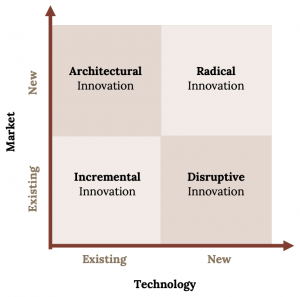
Incremental innovation can be described as making improvements on an existing product or service. The improvements are based on using existing technology and are directed at the existing market. In the automobile industry, the improvements made each year to the newest model of car are incremental innovations. No new markets are formed, and existing technology is used to make the car better. Some other examples of incremental innovation are presented in Table 7.4
Incremental innovation occurs when the innovation uses existing technology to improve a product or service that addresses the existing market.
Table 7.4 Incremental Innovation
| Incremental Innovation Examples |
|---|
| Each new version of Apple's iPhone that comes out is typically incremental innovation. iPhone features such as the camera and processor are tweaked to make an improvement over the previous model. |
| When Gillette went from a single razor blade to a double blade, to now up to six blades, no new markets were created, as the same consumers are buying the blades. There was no new technology involved, so this is incremental innovation. |
| Residential washers and dryers have been transitioning from top-loading to side-loading, and can handle larger loads. This incremental innovation used existing technology and created no new markets, but stimulated demand for more purchasers at higher prices. |
Disruptive Innovation
Some firms have the opportunity to shake up their industry by introducing a disruptive innovation - an innovation that conflicts with, and threatens to replace, traditional approaches to competing within an industry (Table 7.5). Disruptive innovation occurs when a new product or service engages the existing market with a new technology. The iPad has proved to be a disruptive innovation since its introduction by Apple in 2010. Many individuals quickly abandoned clunky laptop computers in favor of the sleek tablet format offered by the iPad. And as a first mover, Apple was able to claim a large share of the market.
Disruptive innovations occur when firms introduce offerings that are so unique and superior that they threaten to replace traditional approaches. Existing markets are disrupted by new technology. Sometimes a disruption is so significant that it may create a "blue ocean" by finding a new market while disrupting an existing one, but this is not typically the case. A number of disruptive innovations are illustrated below.
Table 7.5 Shaking the Market with Disruptive Innovations
| Disruptive Innovation Examples |
|---|
| Tablet computers disrupted laptop sales due to their versatility and portability. Reading books can be awkward on traditional computers, but user-friendly devices such as iPad, Nook, and Kindle are popular platforms for aggressive textbook publishers. |
| Many stores that relied on compact disc sales went under when downloadable digital media disrupted the music industry. Years earlier, CDs supplanted vinyl albums and cassette tapes due to their superior durability and quality. Music subscriptions such as Spotify and Apple Music are new technologies that are replacing downloads. What new technology will replace subscriptions? |
| Digital cameras disrupted the photography industry by offering instant gratification and eliminating the cost of getting film developed. Excellent cameras on cell phones have since disrupted the digital camera industry. |
| The emergence of personal computers disrupted the dominance of mainframes and made it possible for everyone to have a computer in their home. |
| LED lights are a newer technology that have been disrupting and replacing incandescent lights by selling to the existing market. |
The iPad story is unusual because most disruptive innovations are not overnight sensations. Typically, a small group of customers embrace a disruptive innovation as early adopters and then a critical mass of customers builds over time. An example is digital cameras. Few photographers embraced digital cameras initially because they took pictures slowly and offered poor picture quality relative to traditional film cameras. As digital cameras improved, they gradually won over almost everyone that takes pictures. Executives who are deciding whether to pursue a disruptive innovation must first make sure that their firm can sustain itself during an initial period of slow growth.
Architectural Innovation
Architectural innovation occurs when new products or services use existing technology to create new markets and/or new consumers that did not purchase that item before. For example, the smart watch used existing cell phone technology and was repackaged into a watch. This opened up a new market of purchasers by repackaging an existing technology. Typically, firms alter the architecture of the product to create a new product that opens up sales to new markets. Table 7.6 provides more examples.
Firms can innovate by using and adapting existing technology to create new products or services that address new markets and consumers. This type of innovation is called Architectural Innovation, since the architecture of a product is changed to create a new product to reach new markets.
Table 7.6 Architectural Innovation
| Architectural Innovation Examples |
|---|
| Peloton, maker of home exercise bicycles, packages the already existent bicycle, internet, and communications technologies to create new consumers who otherwise would not buy an exercise bike. |
| Some firms have leveraged solar cell technology to produce small outdoor ground lighting. This created a whole new group of consumers who decorate their yards with these environmentally friendly lights. |
| Copiers used to be large and expensive machines purchased only for large offices. Canon and others reconfigured these copiers to be small and usable on desktops, creating a whole new market of people buying personal copier/printers. |
Radical Innovation
When new products or services are developed using new technology that open up new markets, the result is called radical innovation. The airplane is a good example of a radical innovation. It used an entirely new aeronautical technology to open up a whole new market for people traveling. Traveling across the country was unthinkable for most people, when it would take weeks to go from New York to San Francisco by car or train. Table 7.6 provides more examples of radical innovation.
Innovation that uses new technology to reach new consumers is radical innovation. Firms who are successful with a new product of service using radical innovation may then employ a strategy of incremental innovation to continually improve the product or service and generate more sales.
Table 7.7 Radical Innovation
| Radical Innovation Examples |
|---|
| Pharmaceutical researchers often produce a new product that is radical innovation. They come up with a new combination of chemicals to treat a medical condition that attracts new buyers. Aricept,a new medication co-marketed by Eisai and Pfizer that helps treat the symptoms of Alzheimer's disease, has opened new markets. |
| Apple's Airpods can be considered a radical innovation. Apple developed an earpiece that could use wireless technology to receive Bluetooth signals. Now we see people with Airpods in their ears when before they would not have been using wired earphones nearly as much. |
| The Magnetic Resonance Imaging (MRI) machine uses electro-magnetic forces instead of x-rays to produce images internal to the body. This new technology generated a brand new market for hospitals to buy these machines for new diagnostic capabilities. |
Footholds
Footholds are useful for rock climbers looking for sure footing to ascend a difficult mountain, as well as firms hoping to gain positions in new markets. In business, a foothold is a small position that a firm intentionally establishes within a market in which it does not yet compete. Examples of the use of footholds are illustrated below.
Table 7.8 Footholds
| Foothold Examples |
|---|
| Swedish furniture seller IKEA opens just a single store when entering a new country, such as their first store in Japan. This foothold is used as a showcase to establish IKEA's brand; more stores are opened once brand recognition is gained in the country. |
| Pharmaceutical giant Merck obtained a foothold by purchasing SmartCells Inc., - a company developing a possible new diabetes treatment. |
| The foothold concept also applies to warfare. Many armies establish new positions in geographic territories that they have not previously occupied. The Allied Forces used Normandy, France, as their foothold to advance on German forces during World War II. |
Similarly, some organizations find it valuable to establish footholds in certain markets. Within the context of business, a foothold is a small position that a firm intentionally establishes within a market in which it does not yet compete. Swedish furniture seller IKEA is a firm that relies on footholds. When IKEA enters a new country, it opens just one store. This store is then used as a showcase to establish IKEA's brand. Once IKEA gains brand recognition in a country, more stores are established.
Pharmaceutical giants such as Merck often obtain footholds in emerging areas of medicine. In December 2010, for example, Merck purchased SmartCells Inc., a company that was developing a possible new treatment for diabetes. In May 2011, Merck acquired an equity stake in BeiGene Ltd., a Chinese firm that was developing novel cancer treatments and detection methods. Competitive moves such as these offer Merck relatively low-cost platforms from which it can expand if clinical studies reveal that the treatments are effective.
Key Takeaway
- Being the first mover can provide a firm a competitive advantage, but competitors who wait may be the ultimate winners.
- There are four types of innovation that firms employ to increase their strength in the marketplace.
Exercises
- Provide an example of a product that, if invented, would work as a disruptive innovation. How widespread would be the appeal of this product?
- How would you propose to develop a new foothold if your goal was to compete in the fashion industry?
Implementing Innovation
Product Life Cycle and Crossing the Chasm
When innovation creates a new product, it typically goes through four stages within the marketplace. This is true whether it is a high-tech product like a new video game system or a more mundane product like a laundry detergent. The four stages are:
- Introduction: The product is launched, with the hopes that it catches on. Sales are low.
- Growth: The product catches on, and sales increase with time. Competitors jump in, but the rivalry among competitors is not really strong yet, and there are plenty of sales for all.
- Maturity: Sales begin to level out, growth slows, and competition increases. Shake-out occurs, with some competitors leaving the market or being acquired by others.
- Decline: Sales start declining. More consolidation occurs, with firms looking for exit strategies. A few firms remain.
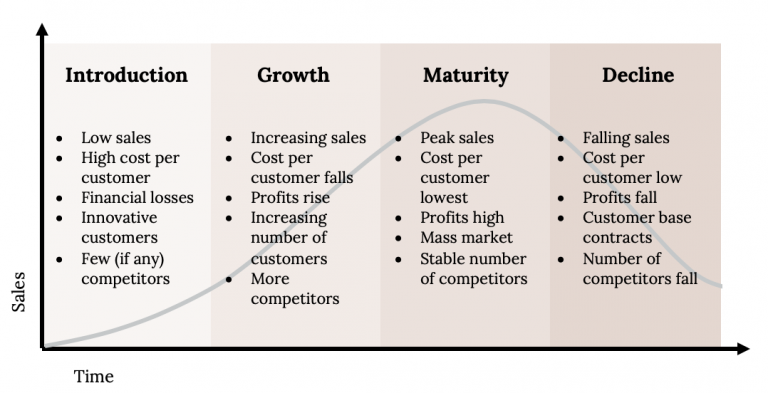
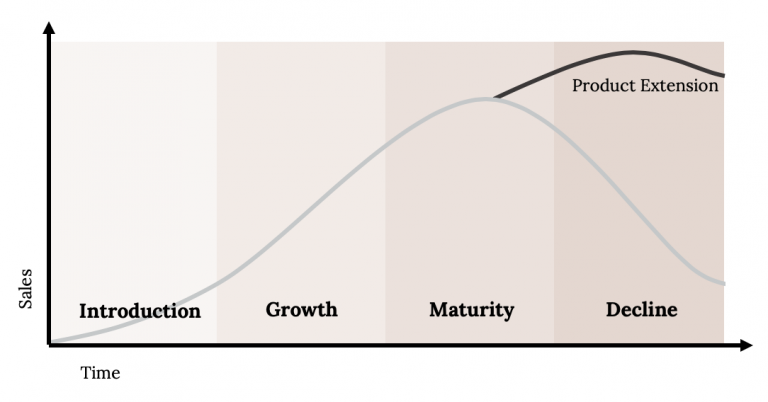
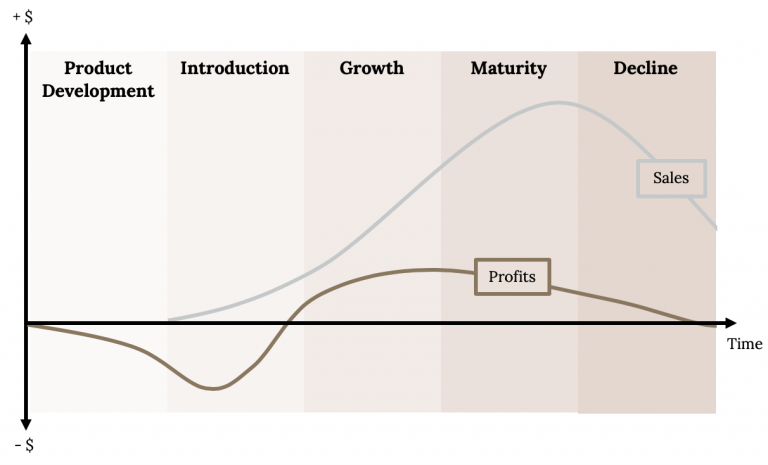
Figure 7.5 illustrates these four stages over time. To prevent the decline of their product after the maturity stage, firms will often "relaunch" their product with a new and improved model. Innovation again plays a role, making improvements to the product, so that consumers will purchase the latest model. Prime examples of incremental innovation strategy are Apple's iPhone and car manufacturers, such as Ford and Toyota. In essence, the new model starts the product life cycle all over again. Figure 7.6 illustrates this concept.
Profits generated during the product life cycle also usually follow a traditional pattern. During the research and development phase of the product, the firm is investing funds into the product, generating a negative profit. Losses continue during the introduction phase, when sales are low and marketing expenses are high. Firms tend to recoup their investment in R&D and marketing during the growth phase, with maximum profits at the beginning of the maturity phase. Once competition heats up in the maturity phase, price competition kicks in, and lower prices mean lower profits. Figure 7.7 illustrates the profits during the four phases of the product life cycle.
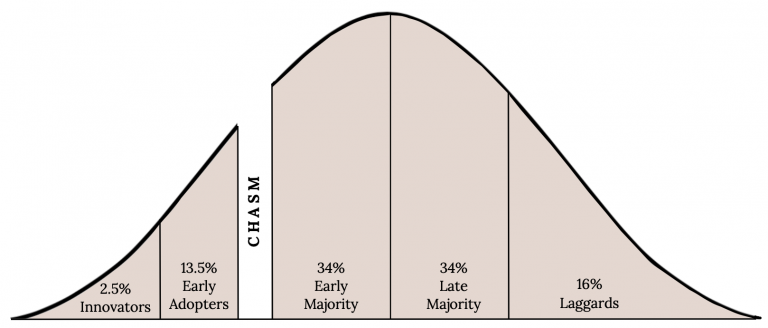
Another phenomenon that occurs in the innovation process with new technology is called "crossing the chasm". When a new technology is launched, often there are technology innovators/enthusiasts who will purchase the new technology to check it out. A few more, called early adopters, will also want to try out the new product. But how does the firm get the product into the mainstream market? How do they get it to catch on? This can often be challenging. Can the product make the leap to the mainstream? This is called "crossing the chasm," and often requires a different marketing approach.
Figure 7.6 illustrates this concept, breaking down the market into customer segments. Innovators and early adopters make up about 15% of the market. Firms must determine a business strategy for each segment of the market. If they cannot convince the early majority to buy their product, the product fails. Google Glass is an example of a product that did not cross the chasm. Eyeglasses connected to the internet were quite an innovative product, projecting internet sites in front of the eyes, or allowing the wearer to take pictures. Its true usefulness, however, was questionable, and aside from some early adopters, it failed.
Where is the electric car in this technology adoption life cycle? The purchase of electric cars has certainly been growing. Have they crossed the chasm? In 2019, approximately 2.2% of all car sales were electric plug-in vehicles. Electric vehicles still need to cross the chasm. The lack of charging stations across the nation and concern for running out of battery are limiting factors preventing the electric vehicle from selling to the early majority.
Making Cooperative Moves
Franklin Roosevelt once quipped, "Competition has been shown to be useful up to a certain point and no further, but cooperation, which is the thing we must strive for today, begins where competition leaves off". We illustrate four commonly used cooperative moves used by firms below.
Table 7.9 Making Cooperative Moves
| Joint Ventures | Joint ventures involve two or more organizations that contribute to the creation of a new entity. For example, Hong Kong Disneyland is a joint venture between the government of Hong Kong and the Walt Disney Company. While the park consists of Disney mainstays such as Main Street, USA, Fantasyland, Adventureland, and Tomorrowland, the park also incorporates elements of Chinese culture such as adherence to the rules of Feng Shui - a set of aesthetic design principles believed to promote positive energy. |
|---|---|
| Strategic Alliances | Strategic alliances are cooperative arrangements governed by contract between two or more organizations that do not involve creating new entities. For example, a strategic alliance between Merck and PAREXEL International Corporation was formed with the goal of collaborating on biotechnology efforts known as biosimilars - a term used to describe subsequent versions of innovative drugs. |
| Mergers and Acquisitions | Mergers and Acquisitions combine two organizations into one. Mergers typically occur between like-size firms. Sprint and T-Mobile merged to create a stronger force in the wireless communications industry. Acquisitions usually are done by larger companies acquiring smaller ones, as when Google acquired Fitbit. |
In addition to competitive moves, firms can benefit from cooperating with one another. Cooperative moves such as forming joint ventures and strategic alliances may allow firms to enjoy successes that might not otherwise be reached (Table 7.9). This is because cooperation enables firms to share rather than duplicate resources and to learn from one another's strengths. Firms that enter cooperative relationships take on risks, however, including the loss of control over operations, possible transfer of valuable secrets to other firms, and possibly being taken advantage of by partners.
Joint Ventures
A joint venture is a cooperative arrangement that involves two or more organizations with each contributing to the creation of a new entity. The partners in a joint venture share decision-making authority, control of the operation, and any profits that the joint venture earns.
Sometimes two firms create a joint venture to deal with a shared opportunity. A joint venture was created between Merck and Sun Pharmaceutical Industries Ltd., an Indian pharmaceutical company. The purpose of the joint venture was to create and sell generic drugs in developing countries. In a press release, a top executive at Sun stressed that each side has important strengths to contribute: "This joint venture reinforces [Sun's] strategy of partnering to launch products using our highly innovative delivery technologies around the world. Merck has an unrivaled reputation as a world leading, innovative, research-driven pharmaceutical company". Both firms contributed executives to the new organization, reflecting the shared decision making and control involved in joint ventures.
In other cases, a joint venture is designed to counter a shared threat. Brewers SABMiller and Molson Coors Brewing Company created a joint venture called MillerCoors that combines the firms' beer operations in the United States. Miller and Coors found it useful to join their US forces to better compete against their giant rival Anheuser-Busch, while the two parent companies still remain separate. The joint venture controls a wide array of brands, including Miller Lite, Coors Light, Blue Moon Belgian White, Coors Banquet, Foster's, Henry Weinhard's, Icehouse, Keystone Premium, Leinenkugel's, Killian's Irish Red, Miller Genuine Draft, Miller High Life, Milwaukee's Best, Molson Canadian, Peroni Nastro Azzurro, Pilsner Urquell, and Red Dog. This diverse portfolio makes MillerCoors a more potent adversary for Anheuser-Busch than either Miller or Coors would be on their own.
Strategic Alliances
A strategic alliance is a cooperative arrangement between two or more organizations that does not involve the creation of a new entity. For example, Twitter formed a strategic alliance with Yahoo! Japan. The alliance involved relevant Tweets appearing within various functions offered by Yahoo! Japan. The alliance simply involves the two firms collaborating through a contractual relationship as opposed to creating a new entity together.

The pharmaceutical industry is the location of many strategic alliances. In another example, Merck and PAREXEL International Corporation engaged in a strategic alliance. Within this alliance, the two companies collaborate on biotechnology efforts known as biosimilars. This alliance could be quite important to Merck because the global market for biosimilars has been predicted to rise significantly.
Mergers and Acquisitions
Another way for firms to cooperate to the advantage of both firms and their stockholders is through mergers. Two firms decide to combine into one entity, often gaining strength in the market. The merger of T-Mobile and Sprint is a prime example. As the number three and four players in the wireless communications industry, combining forces makes the new firm a much stronger competitor against AT&T and Verizon. Sometimes both firms' identities remain in the name of the new company, such as with the merger of Exxon and Mobil oil companies to ExxonMobil. At other times, only one of the firm's names remains, or a new name is selected for the merged companies.
Whereas mergers typically occur with like-size companies, acquisitions are usually done by the larger firm acquiring the smaller firm. The end result is basically the same, with two companies combining into one. Sometimes the acquired firm is absorbed into the acquiring company, but sometime it retains its identity. Besides combining the strengths of both organizations with the intent of having a stronger performing company, mergers and acquisitions reduce the number of competitors in the industry.
Mergers and acquisitions are not without risk, however. According to a Harvard Business Review report, the failure rate of mergers and acquisitions is between 70% – 90%. Often, the enthusiasm of the perceived benefits of the merger overshadow the challenges of adapting two organizational cultures into one, the total costs of the venture, and/or dealing with different technical systems. Also, an acquisition is a quick way to increase firm revenues, a metric that may incentivize CEOs to acquire another firm without adequate due diligence, creating an agency problem, which is discussed in Chapter 11 on ethics.
Internal Development
Another method to expand a firm is through internal development. If a firm wants to add a new product or service line, rather than acquire that expertise by buying a company, the firm can develop that capability themselves. Although this is more of a competitive rather than a cooperative move, this is where a firm's strength of entrepreneurial orientation (EO) comes into play, and when intrapreneurship is important. Instead of acquiring Fitbit, Google could have developed this wearable technology internally by hiring those with the expertise and paying for the research and development for product development to enter this market.
Key Takeaways
- New products and services typically follow a predictable product life cycle, and must be able to "cross the chasm" to attract buyers beyond the early adopters.
- Sometimes it is advantageous for a firm to make a cooperative move with a competitor, with strategies such as a joint venture, strategic alliance, merger, or acquisition. Internal development is also a method to add innovative capability.
Exercises
- What are examples of firms that "relaunch" their products once in the maturity stage of the product life cycle?
- Why might local restaurants not be in the position to respond to large franchises or chains? What can local restaurants do to avoid being ruined by chain restaurants?
- How could a family jewelry store use one of the cooperative moves mentioned in this section?? What type of organization might be a good cooperative partner for a family jewelry store?
- What are some reasons why a merger between Ford and Volkswagen might fail?
Responding to Innovation in the Market
Executives in many markets must cope with a rapid-fire barrage of attacks from rivals, such as head-to-head advertising campaigns, price cuts, and attempts to grab key customers. If a firm is going to respond to a competitor's move, doing so quickly is important. If there is a long delay between an attack and a response, this generally provides the attacker with an edge. For example, PepsiCo made the mistake of waiting fifteen months to copy Coca-Cola's introduction of Vanilla Coke. In the interim, Vanilla Coke carved out a significant market niche.
In contrast, fast responses tend to prevent such an edge. Pepsi's announcement of a mid-calorie cola introduction was quickly followed by a similar announcement by Coke, signaling that Coke would not allow this niche to be dominated by its longtime rival. Thus, as former General Electric CEO Jack Welch noted in his autobiography, success in most competitive rivalries "is less a function of grandiose predictions than it is a result of being able to respond rapidly to real changes as they occur. That's why strategy has to be dynamic and anticipatory".
So…We Meet Again
Multi-point competition adds complexity to decisions about whether to respond to a rival's moves. With multi-point competition, a firm faces the same rival in more than one market. Cigarette makers R. J. Reynolds (RJR) and Philip Morris, for example, square off not only in the United States, but also in many countries around the world. When a firm has one or more multi-point competitors, executives must realize that a competitive move in a market can have effects not only within that market, but also within others. When RJR started using lower-priced cigarette brands in the United States to gain customers, Philip Morris responded in two ways. The first response was cutting prices in the United States to protect its market share. This started a price war that ultimately hurt both companies. Second, Philip Morris started building market share in Eastern Europe where RJR had been establishing a strong position. This combination of moves forced RJR to protect its market share in the United States and neglect Eastern Europe.
If rivals are able to establish mutual forbearance, then multi-point competition can help them be successful. Mutual forbearance occurs when rivals do not act aggressively because each recognizes that the other can retaliate in multiple markets. Southwest Airlines and United Airlines compete in some, but not all markets. United announced plans to form a new division that would move into some of Southwest's other routes. Southwest CEO Herb Kelleher publicly threatened to retaliate in several shared markets. United then backed down, and Southwest had no reason to attack. The result was better performance for both firms. Similarly, in hindsight, both RJR and Philip Morris probably would have been more profitable had RJR not tried to steal market share in the first place. Thus, recognizing and acting on potential forbearance can lead to better performance through firms not competing away their profits, while failure to do so can be costly.
Responding to a Disruptive Innovation
When a rival introduces a disruptive innovation that conflicts with the industry's current competitive practices, such as the emergence of online stock trading, executives choose from among three main responses. First, executives may believe that the innovation will not replace established offerings entirely and thus, may choose to focus on their traditional modes of business while ignoring the disruption. For example, many traditional bookstores such as Barnes & Noble did not consider book sales on Amazon to be a competitive threat until Amazon began to take market share from them. Second, a firm can counter the challenge by attacking along a different dimension. For example, Apple responded to the direct sales of cheap computers by Dell and Gateway by adding power and versatility to its products. The third possible response is to simply match the competitor's move. Merrill Lynch, for example, confronted online trading by forming its own Internet-based unit. Here the firm risks cannibalizing its traditional business, but executives may find that their response attracts an entirely new segment of customers.
Fighting Brands: Get Ready to Rumble
A firm's success can be undermined when a competitor tries to lure away its customers by charging lower prices for its goods or services. Such a scenario is especially scary if the quality of the competitor's offerings is reasonably comparable to the firm's. One possible response would be for the firm to lower its prices to prevent customers from abandoning it. This can be effective in the short term, but it creates a long-term problem. Specifically, the firm will have trouble increasing its prices back to their original level in the future because charging lower prices for a time will devalue the firm's brand and make customers question why they should accept price increases.
The creation of a fighting brand is a move that can prevent this problem. A fighting brand is a lower-end brand that a firm introduces to try to protect the firm's market share without damaging the firm's existing brands. In the late 1980s, General Motors (GM) was troubled by the extent to which the sales of small, inexpensive Japanese cars were growing in the United States. GM wanted to recapture lost sales, but it did not want to harm its existing brands, such as Chevrolet, Buick, and Cadillac, by putting their names on low-end cars. GM's solution was to sell small, inexpensive cars under a new brand: Geo.
Interestingly, several of Geo's models were produced in joint ventures between GM and the same Japanese automakers that the Geo brand was created to fight. A sedan called the Prizm was built side by side with the Toyota Corolla by the New United Motor Manufacturing Incorporated (NUMMI), a factory co-owned by GM and Toyota. The two cars were virtually identical except for minor cosmetic differences. A smaller car (the Metro) and a compact sport utility vehicle (the Tracker) were produced by a joint venture between GM and Suzuki. By 1998, the US car market revolved around higher-quality vehicles, and the low-end Geo brand was discontinued.

Some fighting brands are rather short lived. Merck's failed attempt to protect market share in Germany by creating a fighting brand is an example. Zocor, a treatment for high cholesterol, was set to lose its German patent in 2003. Merck tried to keep its high profit margin for Zocor intact until the patent expired as well as preparing for the inevitable competition with generic drugmakers by creating a lower-priced brand, Zocor MSD. Once the patent expired, however, the new brand was not priced low enough to keep customers from switching to generics. Merck soon abandoned the Zocor MSD brand.
Two major airlines experienced similar futility. In response to the growing success of discount airlines such as Southwest, AirTran, Jet Blue, and Frontier, both United Airlines and Delta Airlines created fighting brands. United launched Ted in 2004 and discontinued it in 2009. Delta's Song had an even shorter existence. It started in 2003 and ended in 2006. Southwest's acquisition of AirTran in 2011 created a large airline that may make United and Delta lament that they were not able to make their own discount brands successful.
Despite these missteps, the use of fighting brands is a time-tested competitive move. For example, very successful fighting brands were launched forty years apart by Anheuser-Busch and Intel. After Anheuser-Busch increased the prices charged by its existing brands in the mid-1950s (Budweiser and Michelob), smaller brewers started gaining market share. In response, Anheuser-Busch created a lower-priced brand: Busch. The new brand won back the market share that had been lost and remains an important part of Anheuser-Busch's brand portfolio today. In the late 1990s, silicon chipmaker Advanced Micro Devices (AMD) started undercutting the prices charged by industry leader Intel. Intel responded by creating the Celeron brand of silicon chips, a brand that has preserved Intel's market share without undermining profits. Wise strategic moves such as the creation of the Celeron brand help explain why Intel ranks thirty-second on Fortune magazine's list of the "World's Most Admired Corporations". Meanwhile, Anheuser-Busch is the second most admired beverage firm, ranking behind Coca-Cola.
Table 7.10 Co-location and Co-opetition
| Co-location | Co-location refers to a situation when goods and services offered under different brands are located very close to each other. Noting one common example of co-location, a comedian once joked that La Quinta was Spanish for "Next to Denny's". Both hotels and restaurants are often co-located alongside freeway exits to allow numerous choices for road-weary travelers. |
|---|---|
| Co-opetition | Co-opetition is a term that refers to the blending of competition and cooperation between two firms. Toyota and General Motors' creation of jointly owned New United Motor Manufacturing incorporated (NUMMI) allowed for collaboration on automobile designs while Toyota and GM continued to compete for market share worldwide. The NUMMI experience also inspired the comedy Gung Ho. |
Co-location
Co-location occurs when goods and services offered under different brands are located close to one another. In many cities, for example, theaters and art galleries are clustered together in one neighborhood. Auto malls that contain several different car dealerships are found in many areas. Restaurants and hotels are often located near one another as well. "Big Box Stores" like Target. Staples, Best Buy, Lowes, etc., are almost always found clustered together with other retailers. By providing customers with a variety of choices, a set of co-located firms can attract a bigger set of customers collectively than the sum that could be attracted to individual locations. If a desired play is sold out, a restaurant overcrowded, or a hotel overbooked, many customers simply patronize another firm in the area.
Because of these benefits, savvy executives in some firms co-locate their own brands. The industry that Brinker International competes within is revealed by its stock ticker symbol: EAT. This firm often sites outlets of the multiple restaurant chains it owns on the same street. Marriott's Courtyard and Fairfield Inn often sit side by side. Yum! Brands takes this clustering strategy one step further by locating more than one of its brands - A&W, Long John Silver's, Taco Bell, Kentucky Fried Chicken, and Pizza Hut - within a single store.

Co-opetition
Although competition and cooperation are usually viewed as separate processes, the concept of co-opetition highlights a complex interaction that is becoming increasingly popular in many industries. Ray Noorda, the founder of software firm Novell, coined the term to refer to a blending of competition and cooperation between two firms. For example, drug manufacturers Merck and Roche are rivals in some markets, but the firms are working together to develop tests to detect cancer and to promote a hepatitis treatment. NEC, a Japanese electronics company, has three different relationships with Hewlett-Packard Co.: customer, supplier, and competitor. Some units of each company work cooperatively with the other company, while other units are direct competitors. NEC and Hewlett-Packard could be described as "frienemies" - part friends and part enemies.
Toyota and General Motors provide a well-known example of co-opetition. In terms of cooperation, Toyota and GM vehicles were produced side by side for many years at the jointly owned New United Motor Manufacturing Incorporated (NUMMI) in Fremont, California. While Honda and Nissan used wholly owned plants to begin producing cars in the United States, NUMMI offered Toyota a lower-risk means of entering the US market. This entry mode was desirable to Toyota because its top executives were not confident that Japanese-style management would work in the United States. Meanwhile, the venture offered GM the chance to learn Japanese management and production techniques - skills that were later used in GM's facilities. NUMMI offered both companies economies of scale in manufacturing and the chance to collaborate on automobile designs. Meanwhile, Toyota and GM compete for market share around the world. In recent years, the firms have been the world's two largest automakers, and they have traded the top spot over time.
In their book titled, not surprisingly, Co-opetition, A. M. Brandenberger and B. J. Nalebuff suggest that cooperation is generally best suited for "creating a pie," while competition is best suited for "dividing it up". In other words, firms tend to cooperate in activities located far in the value chain from customers, while competition generally occurs close to customers. The NUMMI example illustrates this tendency - GM and Toyota worked together on design and manufacturing but worked separately on distribution, sales, and marketing. Similarly, a research study focused on Scandinavian firms found that, in the mining equipment industry, firms cooperated in material development, but they competed in product development and marketing. In the brewing industry, firms worked together on the return of used bottles but not in distribution.
Key Takeaway
- Cooperating with other firms is sometimes a more lucrative and beneficial approach than directly attacking competing firms.
Exercises
- Divide your class into four or eight groups, depending on the size of the class. Each group should select a different industry. Find examples of competitive and cooperative moves that you would recommend if hired as a consultant for a firm in that industry.
- What types of cooperative moves could your college or university use to partner with local, national, and international businesses? What benefits and risks would be created by making these moves?
- If a new alternative fuel was found in the auto industry, what are two ways existing car manufacturers might respond to this disruptive innovation?
- How might a firm such as Apple computers use a fighting brand?
Conclusion
This chapter explains how innovation impacts strategy development. An entrepreneurial orientation helps a firm develop and implement new innovations. Being the first mover can present advantages, but is not without the risk of competitors learning from the first mover and eventually beating them. Executives may also choose a more conservative route by establishing a foothold within an area that can serve as a launching point or by avoiding existing competitors overall by using a blue ocean strategy. There are four types of innovation: incremental, disruptive, architectural, and radical. New products typically follow a predictable product life cycle with four stages: introduction, growth, maturity, and decline. Firms often use incremental innovation to re-launch products with improved features, starting the product life cycle over again. New products and services must "cross the chasm" to get them into the mainstream. Firms may cooperate with competitors through joint ventures, strategic alliances, mergers, and acquisitions, or through co-location and co-opetition. Executives may also react to competitive attacks by using fighting brands. All of these efforts by firms are part of the strategic management process that executives must respond to if they want their companies to be successful.
Exercises
- Divide your class into four or eight groups, depending on the size of the class. Each group should think of one example for each of the four types of innovation: Incremental, Architectural, Radical, and Disruptive. Report out to the class.
- Divide your class into four or eight groups, depending on the size of the class. Each group should think of one product or service that launched but did not "cross the chasm". Report out to the class.
Selecting Corporate-Level Strategies
Introduction
The preceding chapters focused on generic business-level, also referred to as generic competitive strategy: how firms compete head-to-head on products and services they offer. The intent is to develop strategies that provide a competitive advantage, so that buyers will purchase what a business has to offer instead of purchasing from a competitor. However, there are three types of strategy: business-level, corporate-level, and international strategy.
In this chapter, the focus is on corporate-level strategy. Corporate-level strategy is a paradigm shift from business-level strategy. It asks: what businesses should the firm be in, and how can being in those businesses create synergy and improve performance? Diversification is the key in corporate strategy. There are several ways that a corporate diversification strategy can be implemented that will be examined here. The third and final type of strategy following business-level and corporate-level strategies is international strategy, which will be discussed in the next chapter.
Corporate-Level Strategy Defined
What's the Big Picture at Disney?

Disney's Avengers: Endgame movie, released in 2019, was Disney's highest grossing movie of all time. With revenues of over $2 billion, it is one of seven Disney movies to gross over $1 billion. Frozen II was the highest grossing animated movie at $1.37 billion (Clark, 2020).
Although Walt Disney was a visionary, even he would have struggled to imagine such enormous numbers when his company was created. In 1923, Disney Brothers Cartoon Studio was started by Walt and his brother Roy in their uncle's garage. The fledgling company gained momentum in 1928 when a character was invented that still plays a central role for Disney today - Mickey Mouse. Disney expanded beyond short cartoons to make its first feature film, Snow White and the Seven Dwarves, in 1937.
Following a string of legendary films such as Pinocchio (1940), Fantasia (1940), Bambi (1942), and Cinderella (1950), Walt Disney began to diversify his empire. His company developed a television series for the American Broadcasting Company (ABC) in 1954 and opened the Disneyland theme park in 1955. Shortly before its opening, the theme park was featured on the television show to expose the American public to Walt's innovative ideas. One of the hosts of that episode was Ronald Reagan, who twenty-five years later became president of the United States. A larger theme park, Walt Disney World, was opened in Orlando in 1971. Roy Disney died just two months after Disney World opened; his brother Walt had passed in 1966 while planning the creation of the Orlando facility.
The Walt Disney Company began a series of acquisitions in 1993 with the purchase of movie studio Miramax Pictures. ABC was acquired in 1996, along with its very successful sports broadcasting company, ESPN. Two other important acquisitions were made during the following decade. Pixar Studios was purchased in 2006 for $7.4 billion. This strategic move brought a very creative and successful animation company under Disney's control. Three years later, Marvel Entertainment was acquired for $4.24 billion. Marvel was attractive because of its vast roster of popular characters, including Iron Man, the X-Men, the Incredible Hulk, the Fantastic Four, and Captain America. In addition to featuring these characters in movies, Disney could build attractions around them within its theme parks.
With annual revenues in excess of $38 billion, The Walt Disney Company was the largest media conglomerate in the world by 2010. It was active in four key industries. Disney's theme parks included not only its American locations but also joint ventures in France and Hong Kong. A park in Shanghai, China opened in 2016. The theme park business accounted for 28% of Disney's revenues.
Disney's presence in the television industry, including ABC, ESPN, Disney Channel, and ten television stations, accounted for 45% of revenues. Disney's original business, filmed entertainment, accounted for 18% of revenue. Merchandise licensing was responsible for 7% of revenue. This segment of the business included children's books, video games, and 350 stores spread across North American, Europe, and Japan. The remaining 2% of revenues were derived from interactive online technologies. Much of this revenue was derived from Playdom, an online gaming company that Disney acquired in 2010.
Disney continued with more acquisitions, buying Lucasfilm in 2012, Maker Studios in 2015, BAMTech in 2017, and 21st Century Fox in 2019. With the exception of 2017, when there was a slight revenue decline, Disney's revenues have shown consistent, strong growth (Macrotrends, n.d.). Can Disney maintain this trend? Is Disney getting too large to manage effectively? With the COVID-19 pandemic of 2020 shutting down many of Disney's business lines temporarily, should Disney diversify into other industries, and not be so dependent on the entertainment industry for its future success?

Business-level strategy deals directly with how a firm competes in the marketplace. How does the firm get buyers to purchase their products and services as opposed to those of their competitors? Corporate-level strategy considers issues at a broader level of analysis. The word "corporate" does not refer to the legal entity of a corporation, but to the level of strategy higher than direct head-to-head competition. Any size firm can develop corporate-level strategy. The owner of a McDonald's franchise can pursue a corporate strategy, as can the owner of a local plumbing company.
Corporate Strategy –Specifies actions taken by the firm to gain a competitive advantage by selecting and managing a group of different businesses in several industries and/or product markets.
In corporate-level strategy, executives seek to answer two basic questions, and then three more detailed questions.
A. What business(es) should we be in?
B. How should we manage the portfolio to achieve synergy/create value?
With respect to the first question A above, what business(es) should we be in, firms must ask:
- In what stage of the industry value chain should we participate?
- What range of products and services should we offer?
- Where geographically should we compete?
All three of these questions should be answered within the context of question B above, how can synergy be achieved?
Synergy in the business context means the cooperation or interaction of two or more business units so that they perform more effectively together than they would if independent. For example, if a larger company acquires a similar smaller company, some of the administrative overhead expenses such as accounting or human resources can be combined and operate more efficiently. Another synergy produced is overall reduced marketing expenses since they can market their products together.
The foundational issue in corporate-level strategy is diversification: how can the organization diversify, and in doing so, create synergy? Diversification can address geographic questions, such as how Disney established theme parks in France, Japan, and China. Also, moving a firm into other industries, outside the home industry, is another way to diversify. Warren Buffet's company Berkshire Hathaway owns businesses as diverse as real estate, insurance, and a railroad. Additionally, a firm may expand into business areas within its value chain, by acquiring suppliers upstream in the supply chain or distributors or retailers downstream. For example, when Disney launched its streaming service Disney+, it diversified downstream in its value chain to control and provide an outlet for the movie content it produced.
The executives in charge of a firm such as The Walt Disney Company must decide whether to remain within their present domains or venture into new ones. In Disney's case, the firm has expanded from its original business (films) and into television, theme parks, cruise lines, and several others. In contrast, many firms never expand beyond their initial choice of industry. Disney executives could consider further diversifying geographically, diversifying into additional industries, and diversifying deeper into its value chain, for example, by acquiring some of its suppliers. In all these considerations, Disney needs to evaluate if and how synergy can be produced.
Diversification
There are a variety of reasons a company may consider diversification. Diversification strategies can help mitigate the risk of a company operating in only one industry. If an industry experiences issues or slows down, being in other industries can help soften the impact. Companies can also diversify within their own industry. There are three types of diversification:
- Related Diversification - Diversifying into business lines in the same industry; Volkswagen acquiring Audi is an example.
- Unrelated Diversification - Diversifying into new industries, such as Amazon entering the grocery store business with its purchase of Whole Foods.
- Geographic Diversification - Operating in various geographic markets, which is the corporate strategy of Starbucks, Target, and KFC.
In all three diversification strategies, the goal is to achieve synergy. How can the firm operate more efficiently and effectively through its diversification efforts?
Three Tests for Diversification
A proposed diversification move must first answer three questions to determine if it should be accepted or rejected.
- How attractive is the industry that a firm is considering entering? Unless the industry has strong profit potential, entering it may be very risky. Porter's Five Forces Analysis can help with this assessment.
- How much will it cost to enter the industry? Executives need to be sure that their firm can recoup the expenses that it absorbs in diversifying. When Philip Morris bought 7Up, it paid four times what 7Up was actually worth. Making up these costs proved to be impossible and 7Up was sold less than 10 years later.
- Will the new unit and the firm be better off? Unless at least one side gains a competitive advantage, diversification should be avoided. In the case of Philip Morris and 7Up, for example, neither side benefited significantly from joining together.
Related Diversification
Related diversification occurs when a firm moves into a new industry that has important similarities with the firm's existing industry or industries (Figure 8.1). Because films and television are both aspects of entertainment, Disney's purchase of ABC is an example of related diversification. Some firms that engage in related diversification aim to develop and exploit a core competency to become more successful. A core competency is a skill set that is difficult for competitors to imitate, can be leveraged in different businesses, and contributes to the benefits enjoyed by customers within each business. For example, Newell Rubbermaid is skilled at identifying under-performing brands and integrating them into their three business groups: (1) home and family, (2) office products, and (3) tools, hardware, and commercial products.
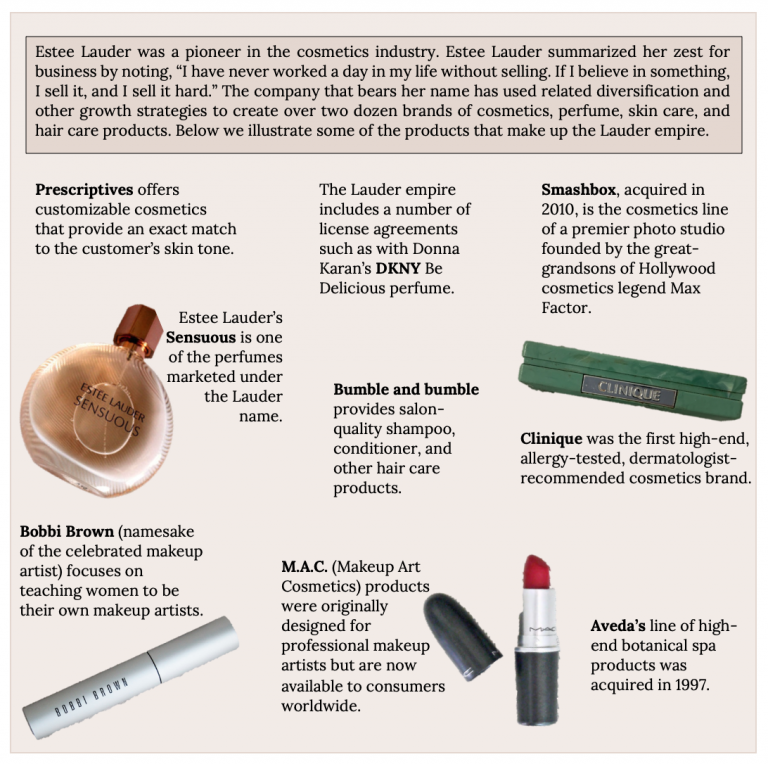

Honda Motor Company provides a good example of leveraging a core competency through related diversification. Although Honda is best known for its cars and trucks, the company actually started out in the motorcycle business. Through competing in this business, Honda developed a unique ability to build small and reliable engines. When executives decided to diversify into the automobile industry, Honda was successful in part because it leveraged this ability within its new business. Honda also applied its engine-building skills in the all-terrain vehicle, lawn mower, and boat motor industries.
Sometimes the benefits of related diversification that executives hope to enjoy are never achieved. Both soft drinks and cigarettes are products that consumers do not need. Companies must convince consumers to buy these products through marketing activities such as branding and advertising. Thus, on the surface, the acquisition of 7Up by Philip Morris seemed to offer the potential for Philip Morris to take its existing marketing skills and apply them within a new industry. Unfortunately, the possible benefits to 7Up never materialized.
Unrelated Diversification
"Don't put all your eggs in one basket" is often a good motto for individual investors. By building a portfolio of stocks, an investor can minimize the chances of suffering a huge loss. Some executives take a similar approach. Rather than trying to develop synergy across businesses, they seek greater financial stability for their firms by owning an array of companies. Warren Buffett's Berkshire Hathaway has long enjoyed strong performance by purchasing companies and improving how they are run. Below we illustrate some of the different groups in their very diversified portfolio of firms.
Table 8.1 Unrelated Diversification at Berkshire Hathaway
| Berkshire's insurance group includes firms such as General Reinsurance Corporation and GEICO. They maintain capital strength at exceptionally high levels, which gives them an advantage even a caveman could understand. | Berkshire's financial health is also fueled by utilities and energy companies that are part of the MidAmerican Energy Holdings Company. | Their apparel businesses include well-known names such as Fruit of the Loom and Justin Brands. |
| Building companies include Acme Building Brands, makers of the famous brick, as well as paint company Benjamin Moore & Co. | FlightSafety International Inc. is a Berkshire firm that engages in high-tech training for aircraft and ship operators. | Retail holdings include a number of furniture businesses such as R.C. Willey Home Furnishings, Star Furniture Company, and Jordan's Furniture, Inc. |
| Hungry for more businesses to manage, Berkshire acquired The Pampered Chef, Ltd. - the largest direct kitchen tools seller - in 2002. | Buffett had a sweet tooth for See's Candies, whom he purchased from the See's family in 1972. | Shareholders were all on board for the purchase of the Burlington Northern Santa Fe Corporation railroad in 2009. |
Why would a soft-drink company buy a movie studio? It's hard to imagine the logic behind such a move, but Coca-Cola did just this when it purchased Columbia Pictures for $750 million. This is a good example of unrelated diversification, which occurs when a firm enters an industry that lacks any important similarities with the firm's existing industry or industries (Table 8.1). Luckily for Coca-Cola, its investment paid off - Columbia was sold to Sony for $3.4 billion just seven years later.
Most unrelated diversification efforts, however, do not have happy endings. Harley-Davidson, for example, once tried to sell Harley-branded bottled water. Starbucks tried to diversify into offering Starbucks-branded furniture. Both efforts were disasters. Although Harley-Davidson and Starbucks both enjoy iconic brands, these strategic resources simply did not transfer effectively to the bottled water and furniture businesses.
A different example, lighter firm Zippo tried to avoid this scenario. According to CEO Geoffrey Booth, the Zippo lighter is viewed by consumers as a "rugged, durable, made in America, iconic" brand (Associated Press, 2011). This brand has fueled ninety years of success for the firm. But the future of the lighter business is bleak. This downward trend is likely to continue as smoking becomes less and less attractive in many countries. To save their company, Zippo executives want to diversify.

In particular, Zippo wants to follow a path blazed by Eddie Bauer and Victorinox Swiss Army Brands Inc. The rugged outdoors image of Eddie Bauer's clothing brand has been used effectively to sell sport utility vehicles made by Ford. The high-quality image of Swiss Army knives has been used to sell Swiss Army–branded luggage and watches. As of 2020, Zippo has diversified into pocket knives, money clips, pocket flashlights, key holders, writing instruments, and tape measures. Trying to figure out which of these diversification options would be winners, such as the Eddie Bauer-edition Ford Explorer, and which would be losers, such as Harley-branded bottled water, was a key challenge facing Zippo executives.
Geographic Diversification
Firms may also diversify through expanding geographically. Big box stores such as Target and Best Buy use this strategy. Starbucks and KFC have found success with international expansion as well as domestic expansion. Synergy is developed in several ways. Many of the administrative functions such as logistics, procurement, human resources, and legal can be consolidated at the corporate level, so they do not need to be duplicated at each location. New store development is also made easier. Having already developed new stores, the firm can establish a process that it has learned from previously establishing stores, and can implement this best practice to efficiently build out, equip, and supply new stores.
Horizontal Integration: Mergers and Acquisitions
Horizontal integration refers to pursuing a diversification strategy by acquiring or merging with a rival. The term merger is generally used when two similarly sized firms are integrated into a single entity. In an acquisition, a larger firm purchases and absorbs a smaller firm. Examples of each are illustrated below..
Table 8.2 Horizontal Integration
| Horizontal Integration Examples |
|---|
| ExxonMobil is a direct descendant of John D. Rockefeller's Standard Oil Company. It was formed by the 1999 merger of Exxon and Mobil. As in many mergers, the new company name combines the old company names. |
| Starbucks acquired competitor Seattle's Best Coffee - which had a presence in Borders Bookstores and Subway Restaurants - in order to target a more working-class audience without diluting the Starbucks brand. |
| Bill Hewlett and Dave Packard formed Hewlett-Packard in a garage after graduating from Stanford in 1935. HP has pursued horizontal integration through a merger with Compaq computers and the acquisition of Palm, a digital personal assistant. Both failed miserably. |
| DaimlerChrysler was formed in 1998 when Chrysler entered into what was billed as a "merger of equals" with Germany's Daimler-Benz AG. The marriage failed, with billions of dollars in losses, and Chrysler is currently owned by Italian automaker Fiat. |
| There tend to be many of mergers in the banking industry. Recently, BB&T merged with SunTrust Banks and adopted the new name Truist Financial Corp. |
| The merger of wireless carriers Sprint and T-Mobile combined the number three and four companies in the market. The new company name dropped Sprint and operates under the name T-Mobile. |
Rather than rely on their own efforts, some firms try to expand their presence in an industry by acquiring or merging with one of their rivals. This strategic move is known as horizontal integration (Table 8.2). An acquisition takes place when one company purchases another company. Generally, the acquired company is smaller than the firm that purchases it. A merger joins two companies into one. Mergers typically involve similarly sized companies. Disney was much bigger than Miramax and Pixar when it joined with these firms, thus these two horizontal integration moves are considered to be acquisitions.
Horizontal integration can be attractive for several reasons. In many cases, horizontal integration is aimed at lowering costs by achieving greater economies of scale. This was the reasoning behind several mergers of large oil companies, including BP and Amoco in 1998, Exxon and Mobil in 1999, and Chevron and Texaco in 2001. Oil exploration and refining is expensive. Executives in charge of each of these six corporations believed that greater efficiency could be achieved by combining forces with a former rival. Considering horizontal integration alongside Porter's Five Forces model highlights that such moves also reduce the intensity of rivalry in an industry and thereby make the industry more profitable.
Some purchased firms are attractive because they own strategic resources such as valuable brand names. Acquiring Tasty Baking was appealing to Flowers Foods, for example, because the name Tastykake is well known for quality in heavily populated areas of the northeastern United States. Some purchased firms have market share that is attractive. Part of the motivation behind Southwest Airlines' purchase of AirTran was that AirTran had a significant share of the airline business in cities - especially Atlanta, home of the world's busiest airport - that Southwest had not yet entered. Rather than build a presence from nothing in Atlanta, Southwest executives believed that buying a position was prudent.

Horizontal integration can also provide access to new distribution channels. Some observers were puzzled when Zuffa, the parent company of the Ultimate Fighting Championship (UFC), purchased rival mixed martial arts (MMA) promotion Strikeforce. UFC had such a dominant position within MMA that Strikeforce seemed to add very little for Zuffa. Unlike UFC, Strikeforce had gained exposure on network television through broadcasts on CBS and its partner Showtime. Thus, acquiring Strikeforce might help Zuffa gain mainstream exposure of its product.
Despite the potential benefits of mergers and acquisitions, their financial results often are very disappointing. One study found that more than 60% of mergers and acquisitions erode shareholder wealth while fewer than one in six increases shareholder wealth. Some of these moves struggle because the cultures of the two companies cannot be meshed. Other acquisitions fail because the buyer pays more for a target company than that company is worth and the buyer never earns back the premium it paid.
In the end, between 70% to 90% of mergers fail, according to a Harvard Business Review study, often at huge losses. For example, Mattel purchased The Learning Company in 1999 for $3.6 billion and sold it a year later for $430 million - 12% of the original purchase price. Similarly, Daimler-Benz bought Chrysler in 1998 for $37 billion. When the acquisition was undone in 2007, Daimler recouped only $1.5 billion worth of value - a mere 4% of what it paid. Thus, executives need to be cautious when considering using horizontal integration.
Vertical Integration Strategies
When pursuing a vertical integration strategy, a firm gets involved in new portions of the value chain (Table 8.3). This approach can be very attractive when a firm's suppliers or buyers have too much power over the firm and are becoming increasingly profitable at the firm's expense. By entering the domain of a supplier or a buyer, executives can reduce or eliminate the leverage that the supplier or buyer has over the firm. Considering vertical integration alongside Porter's five forces model highlights that such moves can create greater profit potential. Firms can pursue vertical integration on their own, such as when Apple opened stores bearing its brand, or through a merger or acquisition, such as when eBay purchased PayPal.
In the late 1800s, Carnegie Steel Company was a pioneer in the use of vertical integration. The firm controlled the iron mines that provided the key ingredient in steel, the coal mines that provided the fuel for steel making, the railroads that transported raw material to steel mills, and the steel mills themselves. Having control over all elements of the production process ensured the stability and quality of key inputs. By using vertical integration, Carnegie Steel achieved levels of efficiency never before seen in the steel industry.
When using vertical integration, firms get involved in different elements of the value chain. This concept gets top billing at American Apparel, a firm that describes its business model as "vertically integrated manufacturing". The elements of their integrated process for designing, manufacturing, wholesaling, and selling basic T-shirts, underwear, leggings, dresses, and other clothing and accessories for men, women, children, and dogs is illustrated below.
Table 8.3 Vertical Integration at American Apparel
| American Apparel Vertical Integration |
|---|
| Backward Vertical Integration - entering a supplier's business - is evident as all clothing design is done in-house - often using employees as models. |
| Manufacturing is conducted in an 800,000 square foot factory in downtown Los Angeles. |
| Ironically, it was a Canadian named Dov Charney who founded American Apparel in 1989. |
| The vertical integration process allows the company to keep pace with the fast-moving world of fashion. It takes just a couple of weeks to go from idea to retail floor. |
| Forward Vertical Integration – American Apparel uses forward vertical integration - entering a buyer's business - by operating 250 plus company-owned stores worldwide. |
Today, oil companies are among the most vertically integrated firms. Firms such as ExxonMobil and ConocoPhillips can be involved in all stages of the value chain, including crude oil exploration, drilling for oil, shipping oil to refineries, refining crude oil into products such as gasoline, distributing fuel to gas stations, and operating gas stations.
The risk of not being vertically integrated is illustrated by the 2010 Deepwater Horizon oil spill in the Gulf of Mexico. Although the US government held BP responsible for the disaster, BP cast at least some of the blame on drilling rig owner Transocean and two other suppliers: Halliburton Energy Services (which created the cement casing for the rig on the ocean floor) and Cameron International Corporation (which had sold Transocean blowout prevention equipment that failed to prevent the disaster). In April 2011, BP sued these three firms for what it viewed as their roles in the oil spill.

Vertical integration also creates risks. Venturing into new portions of the value chain can take a firm into very different businesses. A lumberyard that started building houses, for example, would find that the skills it developed in the lumber business have very limited value to home construction. Such a firm would be better off selling lumber to contractors.
Vertical integration can also create complacency. Consider, for example, a situation in which an aluminum company is purchased by a can company. People within the aluminum company may believe that they do not need to worry about doing a good job because the can company is guaranteed to use their products. Some companies try to avoid this problem by forcing their subsidiary to compete with outside suppliers, but this undermines the reason for purchasing the subsidiary in the first place.
Backward Vertical Integration
A backward vertical integration strategy involves a firm moving back along the value chain and entering a supplier's business. Some firms use this strategy when executives are concerned that a supplier has too much power over their firms. In the early days of the automobile business, Ford Motor Company created subsidiaries that provided key inputs to vehicles such as rubber, glass, and metal. This approach ensured that Ford would not be hurt by suppliers holding out for higher prices or providing materials of inferior quality.
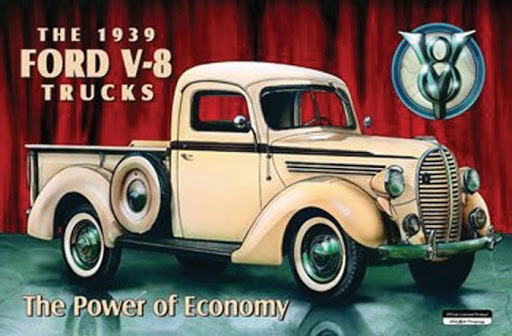
Although backward vertical integration is usually discussed within the context of manufacturing businesses, such as steel making and the auto industry, this strategy is also available to firms such as Disney that compete within the entertainment sector. ESPN is a key element of Disney's operations within the television business. Rather than depend on outside production companies to provide talk shows and movies centered on sports, ESPN created its own production company. ESPN Films is a subsidiary of ESPN that was created in 2001. ESPN Films has created many of ESPN's best-known programs, including Around the Horn and The Dance documentary. By owning its own production company, ESPN can ensure that it has a steady flow of programs that meet its needs.
Forward Vertical Integration
A forward vertical integration strategy involves a firm moving further down the value chain to enter a buyer's business. Disney has pursued forward vertical integration by operating more than three hundred retail stores that sell merchandise based on Disney's characters and movies. This allows Disney to capture profits that would otherwise be enjoyed by another store. Each time a Frozen book bag is sold through a Disney store, the firm makes a little more profit than it would if the same book bag were sold by a retailer such as Target.
Forward vertical integration also can be useful for neutralizing the effect of powerful buyers. Rental car agencies are able to insist on low prices for the vehicles they buy from automakers because they purchase thousands of cars. If one automaker stubbornly tries to charge high prices, a rental car agency can simply buy cars from a more accommodating automaker. It is perhaps not surprising that Ford purchased Hertz Corporation, the world's biggest rental car agency, in 1994. This ensured that Hertz would not drive too hard of a bargain when buying Ford vehicles. By 2005, selling vehicles to rental car companies had become less important to Ford and Ford was struggling financially. The firm then reversed its forward vertical integration strategy by selling Hertz.

eBay's purchase of PayPal and Apple's creation of Apple Stores are two examples of forward vertical integration. Despite its enormous success, one concern for eBay is that many individuals avoid eBay because they are nervous about buying and selling goods online with strangers. PayPal addressed this problem by serving, in exchange for a fee, as an intermediary between online buyers and sellers. eBay's acquisition of PayPal signaled to potential customers that their online transactions were completely safe - eBay was now not only the place where business took place but eBay also protected buyers and sellers from being ripped off.
Apple's ownership of its own branded stores set the firm apart from computer makers such as Hewlett-Packard, Dell, and Lenovo that only distribute their products through retailers like Best Buy and Office Depot. Employees at Best Buy and Office Depot are likely to know only a little bit about each of the various brands their store carries. In contrast, Apple's stores are popular in part because store employees are experts about Apple products. They can therefore provide customers with accurate and insightful advice about purchases and repairs. This is an important advantage that has been created through forward vertical integration.
Key Takeaways
- Diversification strategies involve a firm stepping beyond its existing industries and entering a new value chain. Generally, related diversification (entering a new industry that has important similarities with a firm's existing industries) is wiser than unrelated diversification (entering a new industry that lacks such similarities). Geographic diversification is another strategy to drive synergy.
- A horizontal diversification strategy involves trying to compete successfully within a single industry.
- Mergers and acquisitions are popular moves for executing a concentration strategy, but executives need to be cautious about horizontal integration because the results are often poor.
- Vertical integration occurs when a firm gets involved in new portions of the value chain. By entering the domain of a supplier (backward vertical integration) or a buyer (forward vertical integration), executives can reduce or eliminate the leverage that the supplier or buyer has over the firm.
Exercises
- Studies have shown that executives' pay increases when their firms get larger. What role, if any, do you think executive pay plays in diversification decisions? Is this an ethical issue?
- Identify a firm that has recently engaged in diversification. Search the firm's website to identify executives' rationale for diversifying. Do you find the reasoning to be convincing? Why or why not?
- Suppose the president of your college or university decided to merge with or acquire another school. What schools would be good candidates for this horizontal integration move? Would the move be a success?
- Given that so many mergers and acquisitions fail, why do you think that executives keep making horizontal integration moves?
- Identify a well-known company that does not use backward or forward vertical integration. Why do you believe that the firm's executives have avoided these strategies?
- Some universities have used vertical integration by creating their own publishing companies. The Harvard Business Press is perhaps the best-known example. Are there other ways that a university might vertically integrate? If so, what benefits might this create?
Implementing Corporate Strategy
Once a firm decides which corporate strategy to pursue, it must implement that strategy successfully. As noted earlier, many attempts to diversify end in failure. Executing a good implementation plan successfully is key.
There are various ways that a firm can implement their corporate diversification strategy. These are:
- Internal Development
- Strategic Alliance
- Joint Venture
- Merger and Acquisition
Internal Development
When deciding what business to be in, sometimes an organization chooses internal development. Internal development means the company develops and launches the new business themselves. To do this, the firm should have a strong entrepreneurial orientation, as this implementation method is the same process as starting a new business. A firm may select this method if they have sufficient resources and capabilities within the firm or can hire the expertise and knowledge to develop this new business unit and achieve the marketing and sales required to be successful. Internal development has been the implementation method of choice for Apple's corporate strategy. Apple has used internal development to enter new markets. Apple moved from the computer industry to the music industry with iPod and Apple music and then into the smartphone industry by developing internal capabilities and resources. This is a very costly and time-intensive strategy, but as is evident with Apple, it can be extremely lucrative and create many competitive benefits.
Strategic Alliance
A firm might implement their corporate strategy by working with another firm, even if that firm is a competitor. A strategic alliance is a mutually beneficial relationship between two organizations, usually governed through a contractual agreement. The firms may agree to share expertise or knowledge, resources, supply chain activities, distribution channels, research and development, etc.. Often money changes hands as one company provides what the other company needs. T-Mobile and Nokia entered into a strategic alliance in 2018, where for a fee, Nokia helped T-Mobile develop its 5G network. Barnes & Noble and Starbucks have a strategic alliance whereby Starbucks puts their coffee shops inside of the Barnes & Noble bookstores. In all these examples, an alliance was beneficial for both companies.
Joint Venture
Similar to a strategic alliance, two or more companies form a joint venture when they "birth" a third company, and the joint venture partners are shared owners of the new firm. With a joint venture, a new company is always formed. The ownership arrangement can vary as to how much each partner owns and how much each partner has control. Typically, profits of the new company are shared according to the ownership percentages. Joint ventures can work well, even among competitors, when each partner brings something of value to the venture that the other partner could use. US airplane manufacturer Boeing created a joint venture with the Brazilian aircraft manufacturer of smaller commercial jets Embraer to start a third company that will get Boeing into the smaller passenger planes market. Boeing owns 80% of the company, and Embraer 20%.
Mergers and Acquisitions
A common method for firms to diversify is through mergers and acquisitions. A merger is between two companies of similar size and are less common. Acquisitions occur when one company buys another. Typically, a larger company acquires a smaller one. Mergers and acquisitions (M & A) may occur between competitors, which reduces the competition in the market. In this situation, the M & A is an example of related diversification and horizontal integration. T-Mobile's merger with Sprint is an example. Firms might acquire other companies in their value chain to give them more control within the industry. Moving into their suppliers' industry is backward integration, and buying companies in industries they sell to is forward integration. Forward integration is illustrated by Apple establishing Apple Stores and having direct involvement in the retail market. One way to diversify by acquisitions is through unrelated diversification. Unrelated diversification occurs when one company purchases another company that is located in an industry the first company is not involved in. An example of this strategy is Berkshire Hathaway owning companies in industries as diverse as insurance and railroads.
Strategies for Getting Smaller
"In what industry or industries should our firm compete?" is the central question addressed by corporate-level strategy. In some cases, the answer that executives arrive at involves exiting one or more industries.
Retrenchment
In the early twentieth century, many military battles were fought in a series of parallel trenches. If an attacking army advanced enough to force a defending army to abandon a trench, the defenders would move back to the next trench and try to refortify their position. This small retreat was preferable to losing the battle entirely. Trench warfare inspired the business term retrenchment. Firms following a retrenchment strategy shrink one or more of their business units. Much like an army under attack, firms using this strategy hope to make just a small retreat rather than losing a battle for survival. It is also commonly referred to as "downsizing" or "right-sizing".

Retrenchment is often accomplished through laying off employees. For example, South African grocery store chain Pick n Pay announced plans to release more than 3,000 of its estimated 36,000 workers. Just over a month earlier, South African officials had approved Walmart's acquisition of a leading local retailer called Massmart. Rivalry in the South African grocery business seemed likely to become more fierce, and Pick n Pay executives needed to cut costs for their firm to remain competitive.
A Pick n Pay executive explained the layoffs by noting that "the decision was not taken lightly but was required to ensure the viability of the retail business and its employees into the future". This is a common rationale for retrenchment - by shrinking the size of a firm, executives hope that the firm can survive as a profitable enterprise. Without becoming smaller and more cost effective, Pick n Pay and other firms that use retrenchment can risk total failure. This strategy was particularly evident during the COVID-19 pandemic of 2020. Many organizations shrank temporarily with hopes of surviving until the economy opened up again. Some did survive, and unfortunately, some did not.
Restructuring
Spin-offs occur when businesses create a new firm from a piece of their operations. Because some diversified firms are too complex for investors to understand, breaking them up can create wealth by resulting in greater stock market valuations. Spinning off a company also reduces management layers, which can lower costs and speed up decision making. Below we describe a variety of firms that were created as spin-offs.
Table 8.4 Spin Offs
| Examples of Spin Offs |
|---|
| There are 17 billion of Freescale Semiconductor's chips in use around the world. The firm was spun-off from Motorola. |
| Toyota started in the car business, right? Wrong. The firm was spun-off in the 1930s from Toyoda Automatic Loom Works - a company that produced commercial weaving looms. |
| Delphi Automotive - an automotive parts company headquartered in Troy, Michigan - is a spin-off from General Motors. |
| Guidant Corporation - a spin-off from Eli Lilly - designs and manufacturers artificial pacemakers, defibrillators, stents, and other heart-helpful medical products. |
Executives sometimes decide that bolder moves than retrenchment are needed for their firms to be successful in the future. Divestment refers to selling off part of a firm's operations. In some cases, divestment reverses a forward vertical integration strategy, such as when Ford sold Hertz. Divestment can also be used to reverse backward vertical integration. General Motors (GM), for example, turned a parts supplier called Delphi Automotive Systems Corporation from a GM subsidiary into an independent firm. This was done via a spin-off, which involves creating a new company whose stock is owned by investors (Table 8.4). GM stockholders received 0.69893 shares of Delphi for every share of stock they owned in GM. A stockholder who owned 100 shares of GM received 69 shares of the new company plus a small cash payment in lieu of a fractional share.
Divestment also serves as a means to undo diversification strategies. Divestment can be especially appealing to executives in charge of firms that have engaged in unrelated diversification. Investors often struggle to understand the complexity of diversified firms, and this can result in relatively poor performance by the stocks of such firms. This is known as a diversification discount. Executives sometimes attempt to unlock hidden shareholder value by breaking up diversified companies.
Sometimes diversified companies find themselves in a situation where, instead of synergy, they are experiencing increased inefficiency and increased costs. In this case, the value of the individual businesses are worth more separately than when part of the conglomerate. This can happen when an organization grows too large, with too many layers of management, and too top heavy. This situation is called a diversification discount. General Electric is a good example of this phenomenon. GE made everything from light bulbs, to washing machines, to jet engines, to CAT, scanners, to large power systems, and had engaged in operating a financial institution, GE Capital, that provided loans to companies. When the recession of 2008-2009 hit, GE Capital was left holding a lot of unpaid debt, and drove the GE stock price down. GE began to get out of the financing business, along with a number of its other business lines. It trimmed down to a much smaller organization that was not so complicated to manage in order to survive.

Fortune Brands provides another good example. Surprisingly, this company does not own Fortune magazine, but it has been involved in a diverse set of industries. The firm consisted of three businesses: spirits (including Jim Beam and Maker's Mark), household goods (including Masterlock and Moen Faucets), and golf equipment (including Titleist clubs and balls as well as FootJoy shoes). Fortune Brand's CEO announced a plan to separate the three businesses to "maximize long-term value for our shareholders and to create exciting opportunities within our businesses" (Dalal, et. al., 2011). Fortune Brands took the first step toward overcoming the diversification discount when it reached an agreement to sell its golf business to Fila. Later plans to spin off the home products business were announced.
Executives are sometimes forced to admit that the operations that they want to abandon have no value. If selling off part of a business is not possible, the best option may be liquidation. This involves simply shutting down portions of a firm's operations, often at a tremendous financial loss. GM has done this by scrapping its Geo, Saturn, Oldsmobile, and Pontiac brands. Ford followed this approach by shutting down its Mercury brand. Such moves are painful because massive investments are written off, but becoming "leaner and meaner" may save a company from total ruin.
Key Takeaway
- Executives sometimes need to reduce the size of their firms to maximize the chances of success. This can involve fairly modest steps such as retrenchment or more profound restructuring strategies.
Exercises
- Should Disney consider using retrenchment or restructuring? Why or why not?
- Given how much information is readily available about companies, why do you think investors still struggle to analyze diversified companies?
Portfolio Planning and Corporate-Level Strategy
Executives in charge of firms involved in many different businesses must figure out how to manage such portfolios. General Electric (GE), for example, competed in a very wide variety of industries, including financial services, insurance, television, theme parks, electricity generation, lightbulbs, robotics, medical equipment, railroad locomotives, and aircraft jet engines. When leading a company such as GE, executives must decide which units to grow, which ones to shrink, and which ones to abandon.
Portfolio planning can be a useful tool. Portfolio planning is a process that helps executives assess their firms' prospects for success within each of its industries, offers suggestions about what to do within each industry, and provides ideas for how to allocate resources across industries. Portfolio planning first gained widespread attention in the 1970s, and it remains a popular tool among executives today.
The Boston3nsulting Group Matrix
The Boston Consulting Group (BCG) Matrix is the best-known approach to portfolio planning (Table 8.5). Using the matrix requires a firm's businesses to be categorized as high or low along two dimensions: its share of the market and the growth rate of its industry. The BCG Matrix has four quadrants or categories:
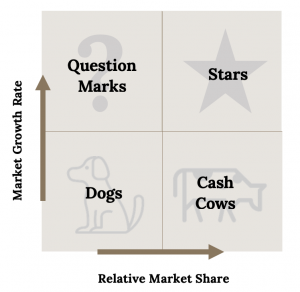
- Cash Cows: High market share units within slow-growing industries are called cash cows. Because their industries have bleak prospects, profits from cash cows should not be invested back into cash cows but rather diverted to more promising businesses.
- Dogs: Low market share units within slow-growing industries are called dogs. These units are good candidates for divestment.
- Stars: High market share units within fast-growing industries are called stars. These units have bright prospects and thus are good candidates for growth.
- Question Marks: Finally, low-market-share units within fast-growing industries are called question marks. Executives must decide whether to build these units into stars, hold them, or to divest them.
Figure 8.12 shows how the BCG Matrix is laid out. The various business units that a company has are plotted on the matrix. Once plotted, decisions can be made about the portfolio of businesses the company operates, such as where more investment would be beneficial, and which units may be candidates to divest.
The Boston Consulting Group matrix is the best-known approach to portfolio planning - assessing a firm's prospects for success within the industries in which it competes. The matrix categorizes businesses as high or low along two dimensions - the firm's market share in each industry and the growth rate of each industry. Suggestions are then offered about how to approach each industry.
Table 8.5 The Boston Consulting Group Matrix
| Low Relative Market Share | High Relative Market Share | |
|---|---|---|
| High Industry Growth Rate | Question marks should be resolved by executives by deciding whether to foster or sell these units. | Stars should be funded and encouraged to grow. |
| Low Industry Growth Rate | It sounds mean, but dogs should be sold if possible and abandoned if necessary. | Cash cows should be "milked" to supply funds to more promising businesses. |

Figure 8.13: Owning a puppy is fun, but companies may want to avoid owning units that are considered to be dogs.
To use the BCG Matrix, the company needs to know the market share for each of its business lines and the relative growth rate. It is important to set the scales on both axes so that the midpoints are roughly in the middle of the range of the market share and growth rates of the business units. Once the axes are set, the business units are plotted on the matrix relative to each other. Figure 8.14 shows a BCG Matrix for the Coca-Cola company and its various products. Notice that sometimes the market share axis is reversed, as it is in Figure 8.12.
Sometimes a third dimension is plotted on the BCG Matrix, using the size of the circle. The circle sizes might represent the business units' proportion of total company revenues or proportion of total company profit generated. This added dimension can assist in decision making regarding the business units. For example, if a business unit in the Dog quadrant also represents 40% of the company's revenue and 35% of its profit, divesting it would mean a significant downsizing of the company with implications for many other support functions.
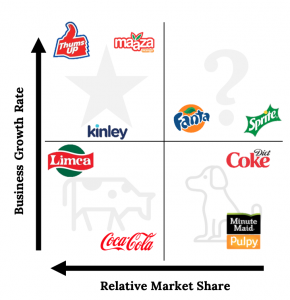
Once plotted, company leadership can evaluate its portfolio and make decisions on how to optimize its company. For example, in Figure 8.13, the two products in the Cash Cow quadrant have little opportunity for growth, given the socio-cultural force toward more healthy foods. Since they already have a high market share, it may be best to use their profits to invest in other business lines with more growth and market share potential. The products in the Question Marks and Dogs categories also are impacted by the trend toward healthy eating, so investment there is questionable. Usually, if investment in Question Marks can result in greater market share, it can be a wise move. Dogs are sometimes considered for divestment, however, Diet Coke has such high revenues and profit margins, divesting it would have a negative impact on the company. Investing in the Stars, where Kinley water products leverage the trend toward healthy beverages, and Thumbs Up is booming in India, would be a good decision.
Limitations to Portfolio Planning
Although portfolio planning is a useful tool, this tool has important limitations. First, portfolio planning oversimplifies the reality of competition by focusing on just two dimensions when analyzing a company's operations within an industry. Many dimensions are important to consider when making strategic decisions, not just two. Second, portfolio planning can create motivational problems among employees. For example, if workers know that their firm's executives believe in the BCG Matrix and that their subsidiary is classified as a dog, then they may give up any hope for the future. Similarly, workers within cash cow units could become dismayed once they realize that the profits that they help create will be diverted to boost other areas of the firm. Third, portfolio planning does not help identify new opportunities. Because this tool only deals with existing businesses, it cannot reveal what new industries a firm should consider entering.
Key Takeaway
- Portfolio planning is a useful tool for analyzing a firm's various business units, but this tool has limitations. The BCG matrix is one of the most widely used approaches to portfolio planning.
Exercises
- Is market share a good dimension to use when analyzing the prospects of a business? Why or why not?
- What might executives do to keep employees within dog units motivated and focused on their jobs?
Conclusion
This chapter explains corporate-level strategy. Executives grappling with corporate-level strategy must decide in what industry or industries their firms will compete. Many of the possible answers to this question involve diversification, which can be related, unrelated, or geographic. Integration involves expanding into new stages of the value chain. Backward integration occurs when a firm enters a supplie business while forward vertical integration occurs when a firm enters a customer's business. Firms implement their corporate diversification strategies through internal development, strategic alliances, joint ventures, mergers and acquisitions. Sometimes being smart about corporate-level strategy requires shrinking the firm through retrenchment or restructuring. Finally, portfolio planning using the BCG Matrix can be useful for analyzing firms that participate in a wide variety of industries or business lines.
Exercises
- Divide your class into four or eight groups, depending on the size of the class. Each group should create a new portfolio planning technique by selecting two dimensions along which companies can be analyzed. Allow each group three to five minutes to present its approach to the class. Discuss which portfolio planning technique seems to offer the best insights.
Competing in International Markets
Introduction
International strategy is the third and final type of strategy presented in this textbook. The first, generic business-level/competitive strategy, is how companies directly compete with rivals on their products and services. Corporate strategy is how a firm might diversify to compete in other industries or expand geographically to reduce risk and grow profits. In international strategy, a firm may desire to expand by entering into new foreign markets or to lower its costs. There are advantages and opportunities when going international, but it is not without risks. There are several tools that firms use to help them assess their potential success when their strategic management process points them abroad. Firms will need to determine which one of four international strategies will work best and which method to enter another country. Some US companies have found great success going international, while others have struggled or failed.
Advantages and Disadvantages of Competing in International Markets
Kia Picks Up Speed

On June 2, 2011, South Korean automaker Kia announced plans for a major expansion of its American production facility. Capacity at Kia Motors Manufacturing Georgia Inc. (KMMG) was slated to expand 20% from 300,000 to 360,000 vehicles per year. In addition to the crossover utility vehicle Sorento, the plant would begin making a sedan named the Optima in September 2011. The expansion of the plant was estimated to cost $100 million and was expected to create 1,000 new jobs.
This ambitious growth was made possible by Kia's superb performance in the US market. KMMG had started building vehicles less than two years earlier after being constructed for a cost of $1 billion. In 2010, yearly sales in the United States climbed above 350,000 vehicles. Kia's overall share of the US market increased in 2010 for the sixteenth consecutive year. In May 2011, Kia sold more than 48,000 cars and trucks in the United States, an increase of more than 53% from May 2010 sales levels. The Optima led the way with a whopping 210% increase in sales.
Kia was not the only beneficiary of its success. KMMG's location of West Point, Georgia, had been economically devastated when its homegrown textile company, WestPoint Home, shut down its local factories to take advantage of lower labor prices overseas. Following a fierce competition with towns in Mississippi, Kentucky, and other states, West Point was selected in 2006 as the site of Kia's first US manufacturing facility. To win the plant, state and local authorities offered Kia more than $400 million worth of incentives, including tax breaks, free land, and infrastructure creation. This kind of governmental inducement has become commonplace when states lure new businesses to a region. This practice is also an example of "corporate welfare".
Georgia's return on this investment included two thousand new jobs at the plant as well as hundreds of jobs at suppliers that set up shop to support KMMG. The neighboring state of Alabama benefited from KMMG's success too. As of June 2011, nearly sixty companies spread across twenty-three Alabama counties supplied parts or services to KMMG.
The name "Kia" means to arise or come up out of Asia (Kia, n.d.). This name is very appropriate; Kia rose from humble beginnings as a maker of bicycle parts in 1944 to become a global player in the automobile industry. As of 2011, Kia was producing more than 2.1 million vehicles per year in eight countries. Kias were sold in 172 countries. Kia employed more than 44,000 people and enjoyed annual revenues in excess of $20 billion. Fellow South Korean automaker Hyundai owned just over 33% of Kia, and the two firms strengthened each other through collaboration. When taking all of these facts into consideration, Kia's slogan - "The Power to Surprise" - had to make its rivals wonder what surprises the Korean upstart might have in store for them next.

As Kia's experience illustrates, international business is a huge segment of the world's economic activity. Amazingly, current projections suggest that, within a few years, the total dollar value of trade across national borders will be greater than the total dollar value of trade within all of the world's countries combined. One driver of the rapid growth of internal business over the past two decades has been the opening up of large economies such as China and Russia that had been mostly closed off to outside investors.
International strategy is determining how to do business outside the borders of a firm's home country. International business has opened up significantly in the last few decades. This has been due to lower trade barriers, improved communications, more efficient shipping via ship and airplane, and the internet. Many US companies have shifted their manufacturing and supply chain activities abroad, where labor is cheaper and overall costs are reduced, even with the additional costs of shipping. The COVID-19 pandemic of 2020 illustrated some issues that emerge when an economy, such as with the US, becomes dependent on other countries for the materials it uses for its final products. During the pandemic, the capacity for global supply chains to meet the sharp increase in demand for paper goods, cleaning supplies, as well as for medications and other medical equipment and supplies, was immediately strained.
International strategy for a firm can be somewhat minimal, such as procuring needed supply chain resources for manufacturing a product in the home country, to an expanded role, like exporting products for sale in other countries, to full manufacturing subsidiaries such as the Kia example in the US. There are multiple reasons why a firm would go international, and also multiple advantages and disadvantages.
The domestication of the camel by Arabian travelers fueled two early examples of international trade: spices and silk. Today, camels have been replaced by airplanes, trains, and ships, and international trade is more alluring than ever. Here are three key reasons why executives are enticed to enter new markets.
| Reason | Description |
|---|---|
| Access to new customers | China's population is roughly four times as large as that of the United States. While political, cultural, and economic differences add danger to trade with China, the immense size of the Chinese market appeals to American firms. |
| Lowering costs | Access to cheaper raw materials and labor have led to considerable outsourcing and offshoring. Call centers in India have become so sophisticated that many Indian customer service representatives take extensive language training to learn regional US dialects. |
| Diversification of business risk | Business risk refers to the risk of an operation failing. Competing in multiple markets allows this risk to be spread out among many economies and customers. Coca-Cola, for example, has a presence in over 200 markets worldwide. |
The United States enjoys the world's largest economy. As an illustration of the power of the American economy, consider that in 2018, the economy of just one state - California - was the fifth largest in the world. If it were a country, it would rank between Germany and the United Kingdom. The size of the US economy has led American commerce to be very much intertwined with international markets. In fact, it is fair to say that every business is affected by international markets to some degree. Tiny businesses such as individual convenience stores and clothing boutiques sell products that are imported from abroad. Meanwhile, corporate goliaths such as General Motors (GM), Coca-Cola, and Microsoft conduct a great volume of business overseas.
Access to New Customers
Perhaps the most obvious reason to compete in international markets is gaining access to new customers. Although the United States enjoys the largest economy in the world, it accounts for only about 5% of the world's population. Selling goods and services to the other 95% of people on the planet can be very appealing, especially for companies whose industry within their home market is saturated (Table 9.1).
Few companies have a stronger "All-American" identity than McDonald's. Yet McDonald's is increasingly reliant on sales outside the United States. In 2006, the United States accounted for 34% of McDonald's revenue, while Europe accounted for 32% and 14% was generated across Asia, the Middle East, and Africa. By 2011, Europe was McDonald's biggest source of revenue (40%), the US share had fallen to 32%, and the collective contribution of Asia, the Middle East, and Africa had jumped to 23%. By 2019, McDonald's US percent of total revenue had grown to 41%. With less than half of its sales being generated in its home country, McDonald's is truly a global powerhouse.

China and India have been attractive markets to US firms. The countries are the two most populous in the world. Both nations have growing middle classes, which means they have been building infrastructures, like education and transportation systems, that support increased purchasing power. In other words, individuals in these countries can buy goods and services that are not merely necessities of life. This trend has created tremendous opportunities for some firms. In 2019, for example, GM sold more vehicles in China than it sold in the United States (3.1 million vs. 2.9 million). This gap has continued from at least 2010.
Lowering Costs
Many firms that compete in international markets hope to gain cost advantages. If a firm can increase its sales volume by entering a new country, for example, it may attain economies of scale that lower its per unit production costs. Going international also has implications for dealing with suppliers. The growth of overseas expansion leads many businesses to purchase supplies in greater numbers. This can provide a firm with stronger leverage when negotiating prices with its suppliers.
Offshoring has become a popular yet controversial means for trying to reduce costs. Offshoring involves relocating a business activity to another country. Many American companies have closed down operations at home in favor of creating new operations in countries such as China and India that offer cheaper labor. While offshoring can reduce a firm's costs of doing business, the job losses in the firm's home country can devastate local communities. For example, West Point, Georgia, lost approximately 16,000 jobs in the 1990s and 2000s as local textile factories were shut down in favor of offshoring. Fortunately for the town, Kia's decision to locate its first US factory in West Point has improved the economy in the past few years. In another example, Fortune Brands saved $45 million a year by relocating several factories to Mexico, but the employee count in just one of the affected US plants dropped from 1,160 to 350.
A growing number of US companies are finding that offshoring is not providing the benefits they had expected. This has led to a new phenomenon known as reshoring, whereby jobs that had been sent overseas are returning home. In some cases, the quality provided by workers overseas is not good enough. Carbonite, a seller of computer backup services, found that its call center in Boston was providing much stronger customer satisfaction than its call center in India. The Boston operation's higher rating was attained even though it handled the more challenging customer complaints. As a result, Carbonite shifted 250 call center jobs back to the United States.

In other cases, the expected cost savings have not materialized. NCR had been making ATMs and self-service checkout systems in China, Hungary, and Brazil. These machines can weigh more than a ton, and NCR found that shipping them from overseas plants back to the United States was extremely expensive. NCR hired 500 workers to start making the ATMs and checkout systems at a plant in Columbus, Georgia, adding 370 more jobs (Isidore, 2011). Similarly, Apple, General Motors, Boeing, and Ford had brought back thousands of jobs each to the US from abroad by 2019.
Diversification of Business Risk
A familiar cliché warns "don't put all of your eggs in one basket". Applied to business, this cliché suggests that it is dangerous for a firm to operate in only one country. Business risk refers to the potential that an operation might fail. If a firm is completely dependent on one country, negative events in that country could ruin the firm. Just like spreading one's eggs into multiple baskets reduces the chances that all eggs will be broken, business risk is reduced when a firm is involved in multiple countries.

Consider, for example, natural disasters such as the earthquakes and tsunami that hit Japan in 2011. If Japanese automakers such as Toyota, Nissan, and Honda sold cars only in their home country, the financial consequences could have been grave. Because these firms operate in many countries, however, they were protected from being ruined by events in Japan. In other words, these firms diversified their business risk by not being overly dependent on their Japanese operations.
American cigarette companies such as Philip Morris and R. J. Reynolds are challenged by trends within the United States and Europe. Tobacco use in these areas is declining as more laws are passed that ban smoking in public areas and in restaurants. In response, cigarette makers are attempting to increase their operations within countries where smoking remains popular to remain profitable over time.
For example, Philip Morris spent $5.2 billion to purchase a controlling interest in Indonesian cigarette maker Sampoerna. This was the biggest acquisition ever in Indonesia by a foreign company. Tapping into Indonesia's population of approximately 230 million people was attractive to Philip Morris in part because nearly two-thirds of men are smokers, and smoking among women is on the rise. At the time, Indonesia was the fifth-largest tobacco market in the world, trailing only China, the United States, Russia, and Japan. To appeal to local preferences for cigarettes flavored with cloves, Philip Morris introduced a variety of its signature Marlboro brand called Marlboro Mix 9 that includes cloves in its formulation.
The use of PESTEL can be a valuable tool in assessing the risk for a firm considering international diversification. Analyzing the industry within the target country could provide valuable insights on whether to enter that market or not. For example, if Apple were to consider shifting some of its product manufacturing to India, what do the PESTEL forces reveal for the Indian IT industry?
| Factor | Analysis |
|---|---|
| Political | Moderate, positive & negative: Stable government, democracy, international companies highly regulated |
| Economical | Strong, positive: Low cost labor, IT has strong growth |
| Socio-cultural | Strong, positive: Many speak English, strong STEM education |
| Technological | Strong, positive: Strong growth |
| Ecological | Weak |
| Legal | Moderate, negative: Highly regulated |
In conclusion, a PESTEL analysis reveals that overall it would be a positive move for Apple to do manufacturing in India, but will need to comply with many laws and regulations.
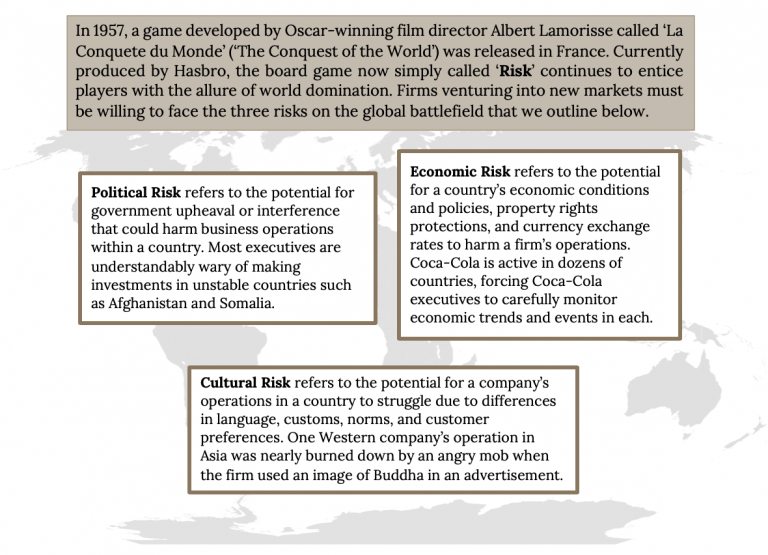
Political Risk
Although competing in international markets offers important potential benefits, such as access to new customers, the opportunity to lower costs, and the diversification of business risk, going overseas also poses daunting challenges. Political risk refers to the potential for government upheaval or interference with business to harm an operation within a country (Figure 9.1). For example, the term "Arab Spring" has been used to refer to a series of uprisings in 2011 within countries such as Tunisia, Egypt, Libya, Bahrain, Syria, and Yemen. Unstable governments associated with such demonstrations and uprisings make it difficult for firms to plan for the future. Over time, a government could become increasingly hostile to foreign businesses by imposing new taxes and new regulations. In extreme cases, a firm's assets in a country are seized by the national government. This process is called nationalization. In recent years, for example, Venezuela has nationalized foreign-controlled operations in the oil, cement, steel, and glass industries. US oil companies were expelled from the country.
Countries with the highest levels of political risk tend to be those whose governments are so unstable that few foreign companies are willing to enter them because of the potential for physical violence and harm to life or property. High levels of political risk are also present, however, in several of the world's important emerging economies, including India, the Philippines, and Indonesia. This creates a dilemma for firms in that these risky settings also offer enormous growth opportunities. Firms can choose to concentrate their efforts in countries such as Canada, Australia, South Korea, and Japan that have very low levels of political risk, but opportunities in such settings are often more modest.

Economic Risk
Economic risk refers to the potential for a country's economic conditions and policies, property rights protections, and currency exchange rates to harm a firm's operations within a country. Executives who lead companies that do business in many different countries have to take stock of these various dimensions and try to anticipate how the dimensions will affect their companies. Because economies are unpredictable, economic risk presents executives with tremendous challenges.

Consider, for example, Kia's operations in Europe., Kia reported increased sales in ten European countries relative to the prior year. The firm enjoyed a 62% year-to-year increase in Slovakia, 58% in Austria, 50% in Gibraltar, 49% in Sweden, 43% in Poland, 24% in Germany, 21% in the United Kingdom, 13% in the Czech Republic, 6% in Belgium, and 3% in Italy. As Kia's executives planned for the future, they needed to wonder how economic conditions would influence Kia's future performance in Europe. If inflation and interest rates were to increase in a particular country, this would make it more difficult for consumers to purchase new Kias. If currency exchange rates were to change such that the euro became weaker relative to the South Korean won, this would make a Kia more expensive for European buyers.
Cultural Risk
The phrase "When in Rome, do as the Romans do" is used to encourage travelers to embrace local customs. An important part of fitting in is avoiding behaviors that locals consider offensive. Below we illustrate a number of activities that would go largely unnoticed in the United States but could raise concerns in other countries.
| Examples of Cultural Risk | |
|---|---|
| Snapping Fingers | If you want to signal "Check please!" to catch the attention of your garçon in France and Belgium, remember that snapping your fingers is vulgar there. |
| Provocative Dress | Provocative dress is embraced by many Americans, but many people in Muslim countries consider a woman's clothing to be inappropriate if it reveals anything besides the face and hands. |
| Punctuality | Do you pride yourself on your punctuality? You may be wasting your time in Latin American countries, where the locals tend to be about 20 minutes behind schedule. |
| Eating Habits | Do not eat with your left hand in India or Malaysia. That hand is associated with unclean activities reserved for the bathroom. |
| Footwear | In many Asian and Arabian countries, showing the sole of your shoe is considered rude. |
| Hand Gestures | If everything is OK when you're in Brazil, avoid making the "OK" hand signal. It's the equivalent to giving someone the middle finger. |
| Clearing Your Plate | Do not clean your plate in China. Leaving food on the plate indicates the host was so generous that the meal could not be finished. |
| Eye Contact | In Japan, direct eye contact is viewed as impolite. |
Cultural risk refers to the potential for a company's operations in a country to struggle because of differences in language, customs, norms, and customer preferences (Table 9.2). The history of business is full of colorful examples of cultural differences undermining companies. For example, a laundry detergent company was surprised by its poor sales in the Middle East. Executives believed that their product was being skillfully promoted using print advertisements that showed dirty clothing on the left, a box of detergent in the middle, and clean clothing on the right. A simple and effective message, right? Not exactly. Unlike English and other Western languages, the languages used in the Middle East, such as Hebrew and Arabic, involve reading from right to left. To consumers, the implication of the detergent ads was that the product could be used to take clean clothes and make them dirty. Not surprisingly, few boxes of the detergent were sold before this cultural blunder was discovered.
A refrigerator manufacturer experienced poor sales in the Middle East because of another cultural difference. The firm used a photo of an open refrigerator in its print ads to demonstrate the large amount of storage offered by the appliance. Unfortunately, the photo prominently featured pork, a type of meat that is not eaten by the Jews and Muslims who make up most of the area's population. To get a sense of consumers' reactions, imagine if you saw a refrigerator ad that showed meat from a horse or a dog. You would likely be disgusted. In some parts of the world, however, horse and dog meat are accepted parts of diets. Firms must take cultural differences such as these into account when competing in international markets.
Cultural differences can cause problems even when the cultures involved are very similar and share the same language. RecycleBank is an American firm that specializes in creating programs that reward people for recycling, similar to airlines' frequent-flyer programs. When RecycleBank expanded its operations into the United Kingdom, executives at RecycleBank became offended when the British press referred to RecycleBank's rewards program as a "scheme". Their concern was unwarranted, however. The word scheme implies sneakiness when used in the United States, but a scheme simply means a service in the United Kingdom. Differences in the meaning of English words between the United States and the United Kingdom are also vexing (Table 9.4).
Cultural differences rooted in language - even across English-speaking countries - can affect how firms do business internationally. Below we provide a few examples.
| Cultural Differences in Language | |
|---|---|
| Book and movie titles | Book and movie titles are often changed in different markets to appeal to different cultural sensibilities. For example, British author J.K. Rowling's Harry Potter and the Philosopher's Stone was changed to Harry Potter and the Sorcerer's Stone in the United States because of the belief that American children would find a philosopher to be boring. |
| Vocabulary | Moms in the states can be seen walking with strollers in their neighborhoods, while "mums" in Ireland and the United Kingdom keep their children moving in a buggy. |
| Politeness | In India, you are more likely to hear "no problem" than "no" as Indian nationals avoid the disappointment associated with using the word no. |
| Car terminology | The area of a car called a trunk in America is known as the boot in England. Wondering what it means when a British friend asks, "What's under your bonnet?" Open the hood of your car to offer an answer. |
| Flashlight vs. torch | While Americans look for a flashlight when power goes out, a torch is the preferred term for those outside of North America. |
| Urban legend | Urban legend says that the Chevrolet Nova did not do well in Spanish speaking countries because the name translates as "no go". The truth is that the car sold well in both Mexico and Venezuela. |
Key Takeaway
- Competing in international markets involves important opportunities and daunting threats. The opportunities include access to new customers, lowering costs, and diversification of business risk. The threats include political risk, economic risk, and cultural risk.
Exercises
- Is offshoring ethical or unethical? Why?
- Do you expect reshoring to become more popular in the years ahead? Why or why not?
- Have you ever seen an advertisement that was culturally offensive? Why do you think that companies are sometimes slow to realize that their ads will offend people?
CAGE Framework
Doing business abroad is fraught with peril. Even Target failed when it opened stores in Canada—a move that one would think was easy. A firm must assess the risks and the likelihood of success before taking the leap. One way to do this is to analyze the political, economic, and cultural risks discussed earlier in this chapter. Another tool to assist in this evaluation is the CAGE framework.
The CAGE framework helps a firm gauge the distance that the target country is from the firm's home country on four dimensions. The greater the distance or difference, the more risk exists and the less opportunity there is for success.
The four CAGE dimensions are:
- Cultural Distance
- Administrative Distance
- Geographic Distance
- Economic Distance
Cultural Distance: This refers to the differences of cultures between the target and home countries. The history of relationships between nations provides one source of explanation for the closeness (similarity) or distance (difference) between cultures. For instance, many countries suffered under the domination of imperial rule during colonial times with effects that are evident in their contemporary culture and influencing national relationships. For example, as a former colony of Great Britain, there is a smaller cultural distance between the US and the United Kingdom than there is between the US and Spain. However, this is not always the case. Western European countries have a significant cultural distance with many Asian countries despite having colonized many of those same territories. Therefore, history provides a partial insight into cultural distance.
Societal customs and values also play a key role in cultural distance. Language differences also increase or decrease cultural distance. At first glance, it would appear that the US and India would have a large cultural distance, but this is reduced because much of business in India is conducted in English, and both countries were colonies of Great Britain.
Administrative Distance: The legal and political systems of the home and target countries determine the administrative distance between the two. In countries where the political systems are different, for example, democracy versus communism, there is a greater distance and more uncertainty. Different laws between countries can make compliance and doing business more difficult. For example, in some countries, laws governing contract compliance are not enforced. In some nations if a buyer fails to make payment for purchases, the seller can sue, but it may take years before a court will even hear the case. Also, labor laws can be quite different among nations. In the Dominican Republic, for instance, companies are required to pay employees a thirteenth month of salary at the end of the year, as a bonus. Alternatively, some nations protect the civil rights of people who fall within protected categories in the US (e.g., age, race, sex, class, gender, sexual orientation, etc.), but other nations may not. This raises particularly tricky questions for firms who must abide by US laws, but seek to expand abroad,
Geographic Distance: The literal physical distance between the home and target country are a key consideration of this dimension. The more miles the countries are apart, the longer and more costly it is to go there or to ship from one to the other. But mileage is not the only factor. The ease of communication between countries is another. Advances in telephone and internet communications have made this almost a non-issue in most countries. However, when two countries are twelve time zones apart, like the US and China, communication can be hampered when work schedules are twelve hours out of sync. Geographic distance can also be affected by the infrastructure of a country in other ways other than communication and internet capabilities. For example, Haiti is physically close to the US, but its lack of adequate port facilities make it a poor target for outsourcing manufacturing.
Economic Distance: International business between two countries is also impacted by the differences in their economic factors. The greater the differences in the two economies, the more difficult it is to be successful. One way to measure the difference is by GDP per capita. Countries with a similar GDP per capita have a greater opportunity for success. If the purchasing power and disposable income of the target country are quite different from the home country, working in the target country is more challenging.
Suppose Chipotle believes there are great opportunities if they go international. Executives have narrowed the countries down to two—Canada and Spain. Canada made the list because they are close and more like the US. But Spain has 10 million more inhabitants, is not spread out like Canada is, and Spaniards should have a great attraction to Chipotle's menu, since it's Mexican cuisine. The CAGE framework can be used to help make a decision. The four dimensions for each country are measured on a 10 point scale, with the higher numbers indicating greater distance. Therefore, the country with the lower score is the better choice. Table 9.5 illustrates the process.
|
C Cultural |
A Administrative |
G Geographic |
E Economic | Total | |
|---|---|---|---|---|---|
| Canada | 3 Oh, there is the French speaking part of Canada | 2 Parliamentarian with Prime Minister vs US | 2 Very close, but cities very spread out | 2 About the same except for currency | 9 |
| Spain | 7 Language difference, and they don't eat much Mexican food | 5 Member of EU, similar to US, some laws different | 5 Easy 6 hour plane flight, 6 hour time difference. | 6 US GDP per capita twice Spain's. | 23 |
As can be seen from the CAGE scores, the Chipotle executives' hunches about Spain proved incorrect, and Canada is the best location to first go international.
Key Takeaway
- Success with implementing an international strategy starts with selecting the correct country to enter. Using the CAGE framework allows a firm to compare target countries to help make this critical decision. Understanding the distance between the home country and the target country as it relates to differences in culture, administrative functions, geographic barriers, and economic disparities will assist the firm in making the best decision.
Exercises
- Tesla wants to explore going into Europe or South America, and has narrowed down the countries to Germany or Chile. Use the CAGE framework to decide which would be the better choice.
- Divide up into groups of 4 or 8 and discuss some of the cultural differences that exist across countries that cultural distance shows should be taken into consideration. Report out.
Types of International Strategies
A firm that has operations in more than one country is known as a multinational corporation (MNC). The largest MNCs are major players within the international arena. Walmart's annual worldwide sales, for example, are larger than the dollar value of the entire economies of Austria, Norway, and Saudi Arabia. Although Walmart tends to be viewed as an American retailer, the firm earns 35% of its revenues outside the United States. Walmart owns significant numbers of stores in Mexico, Central America, Brazil, Japan, the United Kingdom, Canada, Chile, Botswana, and Argentina. Walmart also participates in joint ventures in China and India. Even more modestly sized MNCs are still very powerful. If Kia were a country, its current sales level of approximately $21 billion would place it in the top 100 among the more than 180 nations in the world.
Multinationals such as Kia and Walmart must choose an international strategy to guide their efforts in various countries. There are four main international strategies available:
- International
- Multi-domestic
- Global
- Transnational
(Figure 9.2). Each strategy involves a different approach to trying to be sensitive to (1) costs and efficiencies on one hand and trying to be responsive to (2) variation in customer preferences and market conditions across nations. Responding or not responding to these two pressures of cost and local cultural conditions determines which of the four types of international strategies will be pursued.
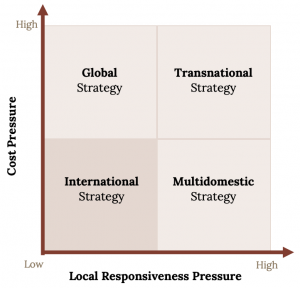
International Strategy
Firms pursuing an international strategy are neither concerned about costs nor adapting to the local cultural conditions. They attempt to sell their products internationally with little to no change. When Harley Davidson sells motorcycles abroad, they do not need to lower their prices or adapt the bike to local motorcycle standards. People in other countries buy a Harley particularly because it is different from the local motorcycles. Buyers want the American look and the sound and power of a Harley, and will pay for that differentiation. Belgium chocolate exporters do not lower their price when exporting to the American market to compete with Hershey's, nor do they adapt their product to American tastes. They use an international strategy. Starbucks and Rolex watches are other examples of firms pursuing the international strategy.
Multi-Domestic Strategy
A firm using a multi-domestic strategy does not focus on cost or efficiency but emphasizes responsiveness to local requirements within each of its markets. Rather than trying to force all of its American-made shows on viewers around the globe, Netflix customizes the programming that is shown on its channels within dozens of countries, including New Zealand, Portugal, Pakistan, and India. Similarly, food company H. J. Heinz adapts its products to match local preferences. Because some Indians will not eat garlic and onion, for example, Heinz offers them a version of its signature ketchup that does not include these two ingredients. Outback Steakhouse uses the multi-domestic strategy in the multiple countries where it operates, adapting to local eating preferences but not lowering prices significantly.
Global Strategy
A firm using a global strategy sacrifices responsiveness to local requirements within each of its markets in favor of emphasizing lower costs and better efficiency. This strategy is the complete opposite of a multi-domestic strategy. Some minor modifications to products and services may be made in various markets, but a global strategy stresses the need to gain low costs and economies of scale by offering essentially the same products or services in each market.
Microsoft, for example, offers the same software programs around the world but adjusts the programs to match local languages. Similarly, consumer goods maker Procter & Gamble attempts to gain efficiency by creating global brands whenever possible. Global strategies also can be very effective for firms whose product or service is largely hidden from the customer's view, such as silicon chip maker Intel. Lenovo also uses this strategy. For such firms, variance in local preferences is not very important, but pricing is.
Transnational Strategy
A firm using a transnational strategy seeks a middle ground between a multi-domestic strategy and a global strategy. Such a firm tries to balance the desire for lower costs and efficiency with the need to adjust to local preferences within various countries. For example, large fast-food chains such as McDonald's and Kentucky Fried Chicken (KFC) rely on the same brand names and the same core menu items around the world. These firms make some concessions to local tastes too. In France, for example, wine can be purchased at McDonald's. This approach makes sense for McDonald's because wine is a central element of French diets. In Saudi Arabia, McDonalds serves a McArabia Chicken sandwich, and its breakfast menu features no pork products like ham, bacon, or sausage.
Key Takeaway
- Multinational corporations choose from among four basic international strategies: (1) international (2) multi-domestic, (3) global, and (4) transnational. These strategies vary depending on two pressures; 1) on emphasizing low cost and efficiency and 2) responding to the local culture and needs.
Exercises
- Which of the four international strategies is Kia using? Is this the best strategy for Kia to be using?
- Identify examples of companies using each of the four international strategies other than those described above. Which company do you think is best positioned to compete in international markets?
Drivers of Success and Failure When Competing in International Markets
The title of a book written by newspaper columnist Thomas Friedman attracted a great deal of attention when the book was released in 2005. In The World Is Flat: A Brief History of the 21st Century, Friedman argued that technological advances and increased interconnectedness is leveling the competitive playing field between developed and emerging countries. This means that companies exist in a "flat world" because economies across the globe are converging on a single integrated global system. For executives, a key implication is that a firm being based in a particular country is ceasing to be an advantage or disadvantage.
While Friedman's notion of business becoming a flat world is flashy and attention grabbing, it does not match reality. Research studies conducted since 2005 have found that some firms enjoy advantages based on their country of origin while others suffer disadvantages. A powerful framework for understanding how likely it is that firms based in a particular country will be successful when competing in international markets was provided by Professor Michael Porter of the Harvard Business School. The framework is formally known as "the determinants of national advantage," but it is often referred to more simply as "the diamond model" because of its shape (Table 9.6).
Diamonds may be a country's best friend. Around half of the world's diamonds are mined in South Africa, giving that country a unique advantage in the global diamond industry. Porter's Determinants of National Advantage (often referred to as the diamond model) includes four key dimensions that help explain why firms located in certain countries are more successful than others in particular industries.
Table 9.6 Porter's Diamond Model of National Advantage
| Strategy, Structure, and Rivalry | The United States has an overall trade deficit, but it enjoys a trade surplus within the service sector. Fierce domestic competition in industries such as hotels and restaurants has helped make American firms such as Marriott and Subway important players on the world stage. |
|---|---|
| Factor Conditions | The inputs present in a country shape a firm's global competitiveness. The rapid growth of Chinese manufacturers has been fueled by the availability of cheap labor. |
| Demand Conditions | Fussy domestic customers help firms prepare for the global arena. Japanese firms must create excellent goods to meet Japanese consumers' high expectations about quality, aesthetics, and reliability. |
| Related and Supporting Industries | Firms benefit when their domestic suppliers and other complementary industries are developed and helpful. Italy's fashion industry is enhanced by the abundance of fine Italian leather and well-known designers. |
According to the model, the ability of the firms in an industry whose origin is in a particular country (e.g., South Korean automakers or Italian shoemakers) to be successful in the international arena is shaped by four factors:
- Their home country's demand conditions
- Their home country's factor conditions
- Related and supporting industries within their home country
- Strategy, structure, and rivalry among their domestic competitors
Demand Conditions
Within the diamond model, demand conditions refer to the nature of domestic customers (Table 9.7). It is tempting to believe that firms benefit when their domestic customers are perfectly willing to purchase inferior products. This would be a faulty belief! Instead, firms benefit when their domestic customers have high expectations.
Japanese consumers are known for insisting on very high levels of quality, aesthetics, and reliability. Japanese automakers such as Honda, Toyota, and Nissan reap rewards from this situation. These firms have to work hard to satisfy their domestic buyers. Living up to lofty quality standards at home prepares these firms to offer high-quality products when competing in international markets. In contrast, French car buyers do not stand out as particularly fussy. It is probably not a coincidence that French automakers Renault and Peugeot have struggled to gain traction within the global auto industry.
Within the diamond model, demand conditions refer to the nature of domestic customers. Below we provide examples from the worldwide auto industry that illustrate how domestic customers influence firms' ability to compete in the global arena.
Table 9.7 Demand Conditions
| Demand Condition Examples |
|---|
| Japanese consumers insist on very high levels of quality, aesthetics, and reliability. This forces Honda, Toyota, and Nissan to rise to a difficult challenge as well as preparing them to dominate internationally. |
| Because French car buyers are not particularly picky, Renault and Peugeot have not been forced to excel in their home market. Not surprisingly, they have struggled to gain traction within the global auto industry. |
| Germans place value on the concept of fahrvergnügen, which means "driving pleasure". Customers around the globe experience driving pleasure when purchasing cars from BMW, Mercedes-Benz, Porsche, and Volkswagen. |
| The Italian fascination with styling is evident in luxury car brands such as Alfa Romeo, Ferrari, Lamborghini, and Maserati. |
| To many Americans, bigger is better. This attitude is captured in the large SUVs like the Suburban. When gas prices go down, sales of these hunkers go up. |

Demand conditions also help to explain why German automakers such as Porsche, Mercedes-Benz, and BMW create excellent luxury and high-performance vehicles. German consumers value superb engineering. While a car is simply a means of transportation in some cultures, Germans place value on the concept of fahrvergnügen, which means "driving pleasure". Meanwhile, demand for fast cars is high in Germany because the country has built nearly eight thousand miles of superhighways known as autobahns. No speed limits for cars are enforced on more than half of the eight thousand miles. Many Germans enjoy driving at 150 miles per hour or more, and German automakers must build cars capable of safely reaching and maintaining such speeds. When these companies compete in the international arena, the engineering and performance of their vehicles stand out.
Factor Conditions
Factor conditions refer to the nature of raw material and other inputs that firms need to create goods and services (Table 9.8). Examples include land, labor, capital markets, and infrastructure. Firms benefit when they have good access to factor conditions and face challenges when they do not. Companies based in the United States, for example, are able to draw on plentiful natural resources, a skilled labor force, highly developed transportation systems, and sophisticated capital markets to be successful. The dramatic growth of Chinese manufacturers in recent years has been fueled in part by the availability of cheap labor.
The factor conditions in a country serve as the basic building blocks of doing business within the country. Below are examples of how important factor conditions have provided competitive advantages for firms based in certain different countries.
Table 9.8 Factor Conditions
| Land | Russia has the greatest land mass of any country in the world and it enjoys vast oil deposits. This abundance of natural resources has helped Russia's petroleum industry become one of the largest in the world. |
|---|---|
| Labor | India is the seventh largest country in terms of land mass, but its population size is second only to China. Because India graduates more English speakers annually than the United States, it should come as no surprise that Indian firms have gained ground in the international arena within industries that rely on engineering and computer skills. |
| Capital | The capital market in the United States is one of the largest and most sophisticated in the world. This has helped American companies fund expansion and innovation over time, making them better prepared for international competition. |
| Entrepreneurial Ability | Entrepreneurial ability creates national wealth when entrepreneurs develop new innovations that support key industries. Denmark's low start-up costs and high research and development spending have fueled success in industries such as pharmaceuticals and medical equipment. |
In some cases, overcoming disadvantages in factor conditions leads companies to develop unique skills. Japan is a relatively small island nation with little room to spare. This situation has led Japanese firms to be pioneers in the efficient use of warehouse space through systems such as just-in-time inventory management (JIT). Rather than storing large amounts of parts and material, JIT management conserves space - and lowers costs - by requiring inputs to a production process to arrive at the moment they are needed. Their use of JIT management has given Japanese manufacturers an advantage when they compete in international markets.

Related and Supporting Industries
The Beatles' legendary songwriting team of Lennon and McCartney once wrote that they got by "with a little help from my friends". In Porter's diamond model, the presence of strong friends in the form of related and supporting industries is one of the keys to national advantage. We provide examples of American industries that excel internationally due in part to help from supporting industries.
Table 9.9 Related and Supporting Industries
| Related and Supporting Industries |
|---|
| A very strong agriculture business helps support the cattle industry - which accounted for approximately $8.33 billion dollars worth of exports in 2018. |
| Excellent steel makers and engine manufacturers support the production of one of America's most lucrative exports - commercial aircraft. |
| The pharmaceutical industry benefits from the research skills possessed by university-affiliated hospitals. |
| America's excellent performing arts schools such as the Juilliard School cultivate the talents of world-famous American performers. |
Could Italian shoemakers create some of the world's best shoes if Italian leather makers were not among the world's best? Possibly, but it would be much more difficult. The concept of related and supporting industries refers to the extent to which firms' domestic suppliers and other complementary industries are developed and helpful (Table 9.9). Italian shoemakers such as Salvatore Ferragamo, Prada, Gucci, and Versace benefit from the availability of top-quality leather within their home country. If these shoemakers needed to rely on imported leather, they would lose flexibility and speed.

The auto industry is a setting where related and supporting industries are very important. Electronics are key components of modern vehicles. South Korean automakers Kia and Hyundai can leverage the excellent electronics provided by South Korean firms Samsung and LG. Similarly, Honda, Nissan, and Toyota are able to draw on the skills of Sony and other Japanese electronics firms. Unfortunately, for French automakers Renault and Peugeot, no French electronics firms are standouts in the international arena. This situation makes it difficult for Renault and Peugeot to integrate electronics into their vehicles as effectively as their South Korean and Japanese rivals.
In extreme cases, the poor condition of related and supporting industries can undermine an operation. Otabo LLC, a small custom shoe company, was forced to shut down its Florida factory as it struggled to find technicians that had the skills needed to fix its shoe making machines. Meanwhile, there are very few suppliers of shoelaces, soles, eyelets, and other components in the United States because about 99% of the shoes purchased in the United States are imported, mostly from China. The few available suppliers were unwilling to create the small batches of customized materials that Otabo wanted. In the end, the American factory simply could not get access to many of the supplies needed to create shoes (Aeppel, 2008). Production was shifted to China, where all the needed supplies can be found easily and cheaply.
Firm Strategy, Structure, and Rivalry
The concept of firm strategy, structure, and rivalry within the diamond model refers to how challenging it is to survive domestic competition. When domestic competition is fierce, the survivors are well prepared for the international arena. Below we offer examples of some of the most renowned exports that have resulted from the intense competition in domestic markets.
Table 9.10 Strategy, Structure, and Rivalry
| Successful Export Examples |
|---|
| Cuban cigar brands such as Chiba are treasured by cigar aficionados around the globe. Despite US trade sanctions, cigars remain a leading export from Cuba. |
| Belgian firms produce over 200 million tons of chocolate each year. Brands that prosper despite this domestic competition stand out when they compete overseas. |
| Say "domo arigato" (Thank you very much) to the Japanese electronics industry, where competitors Seiko, Sony, Hitachi, and others push each other to bring smiles to the faces of consumers wanting a new watch, camera, video game system, or robot. |
| Over one million weavers work in Iran's Persian rug industry. Part of the magic behind these world-famous carpets is that excellence is needed in order to fly above a crowded domestic market. |
| German breweries produce over five thousand brands of beer. With this high level of domestic rivalry, it is not surprising that German beers excel worldwide. |
| US movie studios have collectively dominated the global scene since the days of Charlie Chaplin and other silent-film stars. |
The concept of firm strategy, structure, and rivalry refers to how challenging it is to survive domestic competition (Table 9.10). The Olympics offer a good analogy for illustrating the positive aspects of very challenging domestic situations. If the competition to make a national team in gymnastics is fierce, the gymnasts who make the team will have been pushed to stretch their abilities and performance. In contrast, gymnasts who faced few contenders in their quest to make a national team will not have been tested with the same level of intensity. When the two types meet at the Olympics, the gymnasts who overcame huge hurdles to make their national teams are likely to have an edge over athletes from countries with few skilled gymnasts.

Companies that have survived intense rivalry within their home markets are likely to have developed strategies and structures that will facilitate their success when they compete in international markets. Hyundai and Kia had to keep pace with each other within the South Korean market before expanding overseas. The leading Japanese automakers, Honda, Nissan, and Toyota, have had to compete not only with one another but also with smaller yet still potent domestic firms such as Isuzu, Mazda, Mitsubishi, Subaru, and Suzuki. In both examples, the need to navigate potent domestic rivals has helped firms later become fearsome international players.
If, in contrast, domestic competition is fairly light, a company may enjoy admirable profits within its home market. However, the lack of being pushed by rivals will likely mean that the firm struggles to reach its potential in creativity and innovation. This undermines the firm's ability to compete overseas and makes it vulnerable to foreign entry into its home market. Because neither Renault nor Peugeot has been a remarkable innovator historically, these French automakers have enjoyed fairly gentle domestic competition. Once the auto industry became a global competition, however, these firms found themselves trailing their Asian rivals.
Key Takeaway
- The likelihood that a firm will succeed when it competes in international markets is shaped by four aspects of its domestic market: (1) demand conditions; (2) factor conditions; (3) related and supporting industries; and (4) strategy, structure, and rivalry among its domestic competitors.
Exercises
- Which of the four elements of the diamond model do you believe has the strongest influence on a firm's fate when it competes in international markets?
- Automakers in China and India have yet to compete on the world stage. Based on the diamond model, would these firms be likely to succeed or fail within the global auto industry?
Options for Competing in International Markets
French philosopher Michel de Montaigne once quipped that marriage is "a market which has nothing free but the entrance". When trying to match their goods and services with the promise of love from a new market, executives have multiple entry options - but they should carefully consider each, lest the romance be short-lived.
Table 9.11 Market Entry Options
| Exporting | Exporting involves creating goods at home and then shipping them to another country. Civilian aircraft are a top-ten US export to countries such as Japan, China, Germany, Italy, and France that want to make their skies friendlier for travel. |
|---|---|
| Licensing | Licensing involves granting a foreign company the right to create a company's product in exchange for a fee. This option is frequently used in manufacturing industries, such as when Coca-Cola licenses their secret formulas to local bottlers (without revealing the formulas, of course). |
| Franchising | Franchising involves "renting" a firm's brand name and business processes to local entrepreneurs. Curves International has used franchising to bulk up its fitness empire to include over thirty countries. |
| Joint Venture | In a joint venture, two or more organizations each contribute to the creation of a new entity. In a strategic alliance, firms work together cooperatively without forming a new organization. Global Nuclear Fuel Co. - a collaboration among General Electric, Toshiba Corporation, and Hitachi Limited - is an example of a joint venture. |
| Acquisition/Wholly owned Subsidiary | Acquisition/wholly owned subsidiary is when a firm acquires a business operation in a foreign country. The firm fully owns the acquired company. Intel established IPLS - a wholly owned subsidiary in Ireland - to facilitate and manage its research throughout the "Emerald Isle". Smithfield Foods, the world's largest producer of pork products and located in Virginia, was acquired by a Chinese company for nearly $5 million. |
| Greenfield/Wholly owned subsidiary | Greenfield/wholly owned subsidiary is when a company enters a foreign country and buys property and constructs their business. This could be a manufacturer building a plant, or a retailer building a store, as opposed to acquiring an existing one. BMW used this approach to build its car manufacturing plant in South Carolina. |
When the executives in charge of a firm decide to enter a new country, they must decide how to enter the country. There are six basic options available: (1) exporting, (2) licensing, (3) franchising, (4) creating a joint venture or strategic alliance (5) acquisition/creating a wholly owned subsidiary, and (6) greenfield/wholly owned subsidiary (Table 9.11). These options vary in terms of how much control a firm has over its operation, how much risk is involved, and what share of the operation's profits the firm gets to keep.
It is important to note that these options are not exclusively for implementing international strategy. As discussed in Chapter 8, all but exporting are also methods to accomplish corporate strategies in their domestic markets to diversify their portfolio.
As shown in Figure 9.3, there are trade-offs in the selection of the method of entry to another country. These variables are:
- The amount of risk
- The degree of control and ownership
- The potential for profit
Exporting provides the least amount of risk, but also the least amount of control and profit potential. Moving from exporting at one end of the continuum to greenfield on the other end, the amount of risk increases, as does the degree of control/ownership and the potential to make more profit. The most risky method to enter into another country is greenfield, when the investment is high in acquiring land and building facilities, without the advantage of taking over an existing company. However, the venture is totally under the control of the entering company and the profit potential is the highest, although riskiest, as noted.
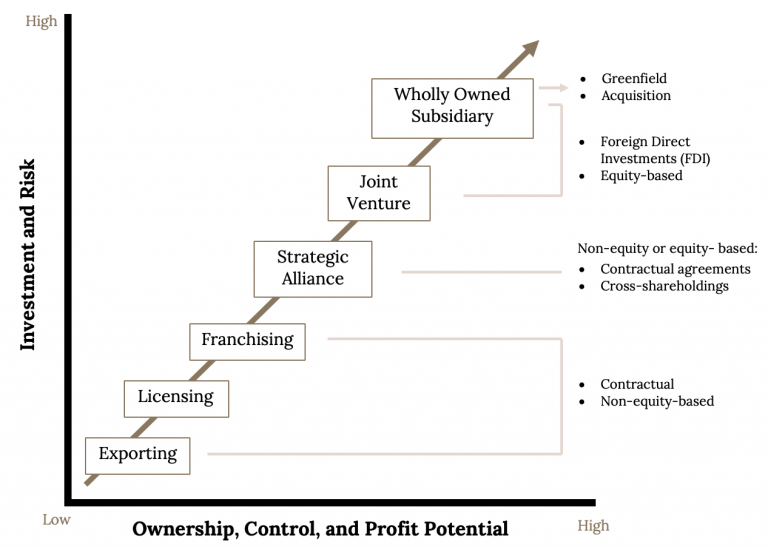
Exporting
Exporting involves creating goods within a firm's home country and then shipping them to another country. Once the goods reach foreign shores, the exporter's role is over. A local firm then sells the goods to local customers. Many firms that expand overseas start out as exporters because exporting offers a low-cost method to find out whether a firm's products are appealing to customers in other lands. Some Asian automakers, for example, first entered the US market through exporting. Small firms may rely on exporting because it is a low-cost and lower risk option.

Once a firm's products are found to be viable in a particular country, exporting often becomes undesirable. A firm that exports its goods loses control of them once they are turned over to a local firm for sale locally. This local distributor may treat customers poorly and thereby damage the firm's brand. Also, an exporter only makes money when it sells its goods at wholesale prices to a local firm, not when end users buy the goods. Executives may want their firm to enjoy the profits that are made when products are sold to individual customers rather than a local distributor.
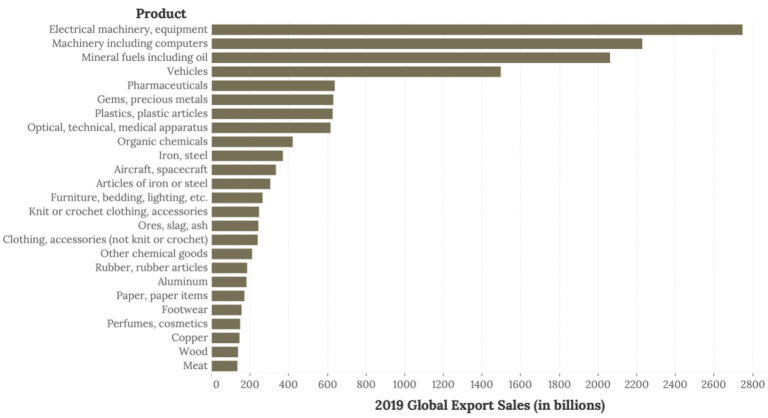
Licensing
While franchising is an option within service industries, licensing is most frequently used in manufacturing industries. Licensing involves granting a foreign company the right to create a company's product within a foreign country in exchange for a fee. These relationships often center on patented technology. A firm that grants a license avoids absorbing a lot of costs, but its profits are limited to the fees that it collects from the local firm. The firm also loses some control over how its technology is used.
A historical example involving licensing illustrates how rapidly events can change within the international arena. By the time Japan surrendered to the United States and its Allies in 1945, World War II had crippled the country's industrial infrastructure. In response to this problem, Japanese firms imported a great deal of technology, especially from American firms. When the Korean War broke out in the early 1950s, the American military relied on Jeeps made in Japan using licensed technology. In just a few years, a mortal enemy had become a valuable ally.
Strategy at the Movies
Gung Ho
Can American workers survive under Japanese management? Although this sounds like the premise for a bad reality TV show, the question was a legitimate consideration for General Motors (GM) and Toyota in the early 1980s. GM was struggling at the time to compete with the inexpensive, reliable, and fuel-efficient cars produced by Japanese firms. Meanwhile, Toyota was worried that the US government would limit the number of foreign cars that could be imported. To address these issues, these companies worked together to reopen a defunct GM plant in Fremont, California in 1984 that would manufacture both companies' automobiles in one facility. The plant had been the worst performer in the GM system; however, under Toyota's management, the New United Motor Manufacturing Incorporated (NUMMI) plant became the best factory associated with GM - using the same workers as before! Despite NUMMI's eventual success, the joint production plant experienced significant growing pains stemming from the cultural differences between Japanese managers and American workers.
The NUMMI story inspired the 1986 movie Gung Ho in which a closed automobile manufacturing plant in Hadleyville, Pennsylvania, was reopened by Japanese car company Assan Motors. While Assan Motors and the workers of Hadleyville were both excited about the venture, neither was prepared for the differences between the two cultures. For example, Japanese workers feel personally ashamed when they make a mistake. When manager Oishi Kazihiro failed to meet production targets, he was punished with "ribbons of shame" and forced to apologize to his employees for letting them down. In contrast, American workers were presented in the film as likely to reject management authority, prone to fighting at work, and not opposed to taking shortcuts.
When Assan Motors' executives attempted to institute morning calisthenics and insisted that employees work late without overtime pay, the American workers challenged these policies and eventually walked off the production line. Assan Motors' near failure was the result of differences in cultural norms and values. Gung Ho illustrates the value of understanding and bridging cultural differences to facilitate successful cross-cultural collaboration, value that was realized in real life by NUMMI.
Franchising
Franchising is a popular way for firms to grow internationally. Below are examples of US-based franchises that are successful worldwide.
Table 9.12 Franchising: A Leading American Export
| Successful US-based Franchises |
|---|
| In many Asian countries, McDonald's franchises offer side dishes such as rice alongside its signature French fries. |
| If you grow tired of strudel while in Germany, remember that Dunkin' Donuts has over 3,200 stores in 36 countries outside of the United States. |
| Legend says that the first sandwich was created when John Montagu, the fourth Earl of Sandwich, ordered meat tucked between bread so he could play cards and eat at the same time. The sandwich remains popular in Europe, where Subway boasts over one thousand franchised restaurants. |
| All KFCs in Japan prominently feature a statue of KFC's founder Colonel Sanders. |
| If a franchised store in Norway was open during the age of the Vikings, its slogan may have been "Thank Asgard for 7-11". |
Franchising has been used by many firms that compete in service industries to develop a worldwide presence (Table 9.12). Subway, The UPS Store, and Hilton Hotels are just a few of the firms that have done so. Franchising involves an organization (called a franchiser) granting the right to use its brand name, products, and processes to other organizations (known as franchisees) in exchange for an up-front payment (a franchise fee) and a percentage of franchisees' revenues (a royalty fee).
Franchising is an attractive way to enter foreign markets because it requires little financial investment by the franchiser. Indeed, local franchisees must pay the vast majority of the expenses associated with getting their businesses up and running. On the downside, the decision to franchise means that a firm will get to enjoy only a small portion of the profits made under its brand name. Also, local franchisees may behave in ways that the franchiser does not approve. For example, KFC was angered by some of its franchisees in Asia when they started selling fish dishes without KFC's approval. It is often difficult to fix such problems because laws in many countries are stacked in favor of local businesses. Last, franchises are only successful if franchisees are provided with a simple and effective business model. Executives thus need to avoid expanding internationally through franchising until their formula has been perfected.

Joint Ventures and Strategic Alliances
Within each market entry option described earlier, a firm either maintains strong control of operations (wholly owned subsidiary) or it turns most control over to a local firm (exporting, franchising, and licensing). In some cases, however, executives find it beneficial to work closely with one or more local partners in a joint venture or a strategic alliance. In a joint venture, two or more organizations each contribute to the creation of a new entity. In a strategic alliance, firms work together cooperatively, but no new organization is formed. In both cases, the firm and its local partner or partners share decision-making authority, control of the operation, and any profits that the relationship creates.
Joint ventures and strategic alliances are especially attractive when a firm believes that working closely with locals will provide important knowledge about local conditions, facilitate acceptance of their involvement by government officials, or both. In the late 1980s, China was a difficult market for American businesses to enter. Executives at KFC saw China as an attractive country because chicken is a key element of Chinese diets. After considering the various options for entering China with its first restaurant, KFC decided to create a joint venture with three local organizations. KFC owned 51% of the venture; having more than half of the operation was advantageous in case disagreements arose. A Chinese bank owned 25%, the local tourist bureau owned 14%, and the final 10% was owned by a local chicken producer that would supply the restaurant with its signature food item.

Having these three local partners helped KFC navigate the cumbersome regulatory process that was in place and allowed the American firm to withstand the scrutiny of wary Chinese officials. Despite these advantages, it still took more than a year for the store to be built and approved. Once open in 1987, however, KFC was an instant success in China. As China's economy gradually became more and more open, KFC was a major beneficiary. By the end of 1997, KFC operated 191 restaurants in 50 Chinese cities. By the start of 2019, there were approximately 5,000 KFCs spread across 1,100 Chinese cities. Roughly 90% of these restaurants are wholly owned subsidiaries of KFC - a stark indication of how much doing business in China has changed over the past twenty-five years.
Creating a Wholly Owned Subsidiary: Acquisition and Greenfield
In international strategy, a wholly owned subsidiary is a business operation in a foreign country that a firm fully owns. A firm can develop a wholly owned subsidiary through a greenfield venture, meaning that the firm creates the entire operation itself. This usually means building and operating the facility. Another possibility is purchasing an existing operation from a local company or another foreign operator.
Regardless of whether a firm builds a wholly owned subsidiary "from scratch" or acquires an existing company, having a wholly owned subsidiary can be attractive because the firm maintains complete control over the operation, and gets to keep all of the profits that the operation makes. A wholly owned subsidiary can be quite risky, however, because the firm must pay all of the expenses required to set it up and operate it. Kia, for example, spent $1 billion to build its US factory. Many firms are reluctant to spend such sums in more volatile countries because they fear that they may never recoup their investments.
Key Takeaway
- When entering a new country, executives can choose exporting, licensing, franchising, creating a joint venture or strategic alliance, and creating a wholly owned subsidiary through greenfield or acquisition. The key issues of how much control a firm has over its operation, how much risk is involved, and what share of the operation's profits the firm gets to keep all vary across these options. Along the continuum from exporting to wholly owned subsidiary, risk, control, and profit potential are least with exporting and highest with the wholly owned subsidiary.
Exercises
- Do you believe that KFC would have been so successful in China today if executives had tried to make their first store a wholly owned subsidiary? Why or why not?
- The typical joint venture only lasts a few years. Why might joint ventures dissolve so quickly?
Conclusion
This chapter explains competition in international markets. Executives must consider the benefits and risks of competing internationally when making decisions about whether to expand overseas. Using the CAGE framework helps firms decide the cultural, administrative, geographic, and economic distance between the home and target country. Executives also need to determine the likelihood that their firms will succeed when they compete in international markets by examining demand conditions, factor conditions, related and supporting industries, strategy, structure, and rivalry among its domestic competitors. When a firm does venture overseas, a decision must be made about whether its international strategy will be international, multi-domestic, global, or transnational. Finally, when leading a firm to enter a new market, executives can choose to manage the operation via exporting, licensing, franchising, creating a joint venture or strategic alliance, and creating a wholly owned subsidiary through greenfield or acquisition.
Exercises
- Divide your class into four or eight groups, depending on the size of the class. Each group should select a different industry. Find examples of each international strategy for your industry. Discuss which strategy seems to be the most successful in your selected industry.
- This chapter discussed Kia and other automakers. If you were assigned to turn around a struggling automaker such as General Motors or Chrysler, what actions would you take to revive the company's prospects within the global auto industry?