Executing Strategy Through Organizational Design
| Site: | Saylor University |
| Course: | [CB DRAFT] BUS501: Strategic Management |
| Book: | Executing Strategy Through Organizational Design |
| Printed by: | Guest user |
| Date: | Tuesday, 27 October 2026, 2:34 PM |
Description
 buttons.
Introduction
Introduction
With an understanding of developing business-level, corporate level, and international strategies, firms must execute their strategies to be successful. The way a firm organizes itself is critical to its ability to implement strategy. This chapter addresses why organizational structure is important to achieving a firm's strategic goals - which types of structures are deployed by firms, what control systems are used by firms, and what are the options for establishing a legal entity. These organizational decisions should support and align with an organization's mission, vision, and values to ensure ethical as well as strategic outcomes. The role of social responsibility and ethics in a corporate setting will be discussed in detail in the next and final chapter.
The word executing used in this chapter's title has two distinct meanings. These meanings were cleverly intertwined in a quip by John McKay. McKay had the misfortune to be the head coach of a hapless professional football team. In one game, McKay's offensive unit played particularly poorly. When McKay was asked after the game what he thought of his offensive unit's execution, he wryly responded, "I am in favor of it".
In the context of business, execution refers to how well a firm such as GE implements the strategies that executives create for it. This involves the creation and operation of both an appropriate organizational structure with an aligned organizational control process. Executives who skillfully orchestrate structure and control are likely to lead their firms to greater levels of success. In contrast, those executives who fail to do so are likely to be viewed by stakeholders such as employees and owners in much the same way McKay viewed his offense: worthy of execution.
Source: Reed Kennedy, https://pressbooks.lib.vt.edu/strategicmanagement/part/chapter-10-executing-strategy-through-organizational-design/ This work is licensed under a Creative Commons Attribution-ShareAlike 4.0 License.
Why Organizational Design?
Can Oil Well Services Fuel Success for General Electric?
In the spring of 2010 the Deepwater Horizon fire and oil spill in the Gulf of Mexico occurred. It resulted in 11 deaths, 17 injuries, and millions of barrels of oil contaminating the Gulf and US shoreline. As a result of this disaster, General Electric (GE) saw an opportunity. In February 2011, General Electric reached an agreement to acquire the well-support division of John Wood Group PLC for $2.8 billion. This was GE's third acquisition of a company that provides services to oil wells in only five months. In October 2010, GE added the deepwater exploration capabilities of Wellstream Holdings PLC for $1.3 billion. In December 2010, part and equipment maker Dresser was acquired for $3 billion. By spending more than $7 billion on these acquisitions, GE executives made it clear that they had big plans within the oil well services business.
While many executives would struggle to integrate three new companies into their firms, experts expected GE's leaders to smoothly execute the transitions. In describing the acquisition of John Wood Group PLC, for example, one Wall Street analyst noted, "This is a nice bolt-on deal for GE". In other words, this analyst believed that John Wood Group PLC could be seamlessly added to GE's corporate empire. The way that GE was organized fueled this belief.
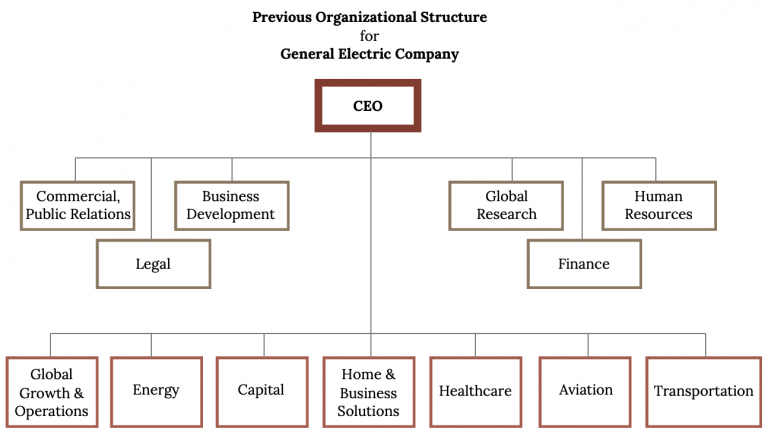
GE's organizational structure includes six divisions, each devoted to specific product categories: (1) Energy (the most profitable division), (2) Capital (the largest division), (3) Home & Business Solutions, (4) Healthcare, (5) Aviation, and (6) Transportation. Within the Energy division, there are three subdivisions: (1) Oil & Gas, (2) Power & Water, and (3) Energy Services. Rather than having the entire organization involved with integrating John Wood Group PLC, Wellstream Holdings PLC, and Dresser into GE, these three newly acquired companies would simply be added to the Oil & Gas subdivisions within the Energy division.
In addition to the six product divisions, GE also had a division devoted to Global Growth & Operations. This division was responsible for all sales of GE products and services outside the United States. The Global Growth & Operations division was very important to GE's future. Indeed, GE's CEO Jeffrey Immelt expected that countries other than the United States will account for 60% of GE's sales in the future, up from 53% in 2010. To maximize GE's ability to respond to local needs, the Global Growth & Operations was further divided into twelve geographic regions: China, India, Southeast Asia, Latin/South America, Russia, Canada, Australia, the Middle East, Africa, Germany, Europe, and Japan.
Finally, like many large companies, GE also provided some centralized services to support all its units. These support areas included public relations, business development, legal, global research, human resources, and finance. By having entire units of the organization devoted to these functional areas, GE hoped not only to minimize expenses but also to create consistency across divisions.
Growing concerns about the environmental effects of drilling, for example, made it likely that GE's oil well services operations would need the help of GE's public relations and legal departments in the future. Other important questions about GE's acquisitions remained open as well. In particular, would the organizational cultures of John Wood Group PLC, Wellstream Holdings PLC, and Dresser mesh with the culture of GE? Most acquisitions in the business world fail to deliver the results that executives expect, and the incompatibility of organizational cultures is one reason why.
This General Electric example highlights several concepts regarding the strategic role decisions about the organization. First, how large, complex organizations organize themselves impact how they accomplish their mission. Also, assessing the external environment can open up organizational opportunities. Third, how the acquisition and then integration of companies into the home firm can be challenging. And fourth, in hindsight, investing in the fossil fuel industry at a time of rising energy renewables was a strategic mistake. Since this time, GE has sold off many of its business lines for billions of dollars, and the downsized company is nowhere near the powerhouse it was a decade ago. GE is still struggling due to the strategic errors in a number of the industries it was involved in.
Firms must be organized in an optimal way to be able to compete and accomplish its mission. As noted in an earlier chapter, the external and competitive environments cannot be ignored. A firm must find the best "fit" to deal with the business environment and maximize its internal resources, capabilities, and core competencies. This organizational fit will determine its performance. It is unique to each organization; it is not "one size fits all".
The business-level strategy that a firm selects impacts the organizational structure, with some structures better suited for certain strategies. There are trade-offs with each structure. The structure influences the firm's ability to respond quickly to outside forces, its adaptability, resource efficiency, and accountability.
Walmart uses a functional organizational structure (described later in this chapter) because it is the best design to support a low cost strategy operating in a stable environment. A functional structure allows for excellent resource efficiency, but the trade off is a reduction in its adaptability and responsiveness to external forces (Harvard).
The Basic Building Blocks of Organizational Structure
Legendary football coach Vince Lombardi once noted, "The achievements of an organization are the results of the combined effort of each individual". Understanding how people can be most efficiently organized is the basis for modern management thought, and the building blocks of organizational structure are illustrated below.
| Term | Definition |
|---|---|
| Division of Labor | Division of labor is a process of splitting up a task into a series of smaller tasks, each of which is performed by a specialist. In ancient Greece, historian Xenophon wrote about the division of labor in shoe making: one person cut out the shoes, another sewed the uppers together, and a third person assembled the parts. |
| Organizational Chart | An organizational chart is a diagram that depicts a firm's structure. |
| Informal Linkages | Informal linkages are unofficial relationships such as friendships that do not appear in organizational charts. Examples are two department heads that build a relationship for better collaboration between their departments, a mentor relationship, or an experienced staff member taking a new employee "under their wing" to help them get off to a good start at the company. |
| Vertical Linkages | Vertical linkages tie supervisors and subordinates together. These linkages show the lines of responsibility through which a supervisor delegates authority to subordinates, oversees their activities, evaluates their performance, and guides them toward improvement when necessary. |
| Horizontal Linkages | Horizontal linkages are formal relationships between equals in an organization. They often take the form of committees and task forces. |
| Unity of Command | Employees may receive conflicting guidance about how to do their jobs if they work in a situation where multiple bosses are present. This problem can be avoided by following the unity of command principle, which states that each person should only report directly to one supervisor. |
Division of Labor
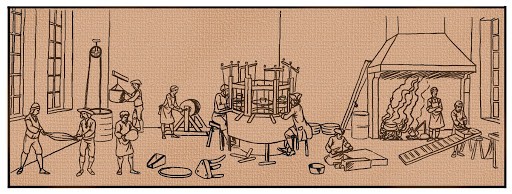
General Electric (GE), although downsized, still offers an array of products and services, including power generation, jet engines, medical equipment, and renewable energy. One way that GE could produce its jet engines would be to have individual employees work on one jet engine at a time from start to finish. However, this would be very inefficient so GE and most other organizations avoid this approach. Instead, organizations rely on division of labor when creating their products (Table 10.1). Division of labor is a process of splitting up a task (such as the creation of jet engines) into a series of smaller tasks, each of which is performed by a specialist.
Illustrated below is one of the oldest recorded stories from about 4300 years ago that is relevant to the design of modern organizations.
| Hierarchy of Authority Example: Moses | |
|---|---|
| After fleeing Egypt, Moses found himself as the sole judge of the entire Hebrew population. This was a daunting task because estimates suggest the population may have exceeded one million people. | Moses's father-in-law, Jethro, warned Moses that he would wear himself out if he tried to handle such a heavy load alone. |
| Jethro offered Moses some practical advice. He told Moses that he should teach the people decrees and laws in an effort to minimize trouble and act as an example to demonstrate how the people live and the duties they were to perform. | Rather than handling all judging himself, Moses should appoint capable and trustworthy officials over groups of thousands, hundreds, fifties, and tens. These men would serve as judges for the people at all times, and only the most difficult cases would be brought to Moses. |
This is perhaps the first recorded example of a clear hierarchy of authority - an arrangement of individuals based on rank. A similar idea is used today in the US justice system where there are lower courts for easy-to-resolve cases and the Supreme Court only handles the most difficult cases.
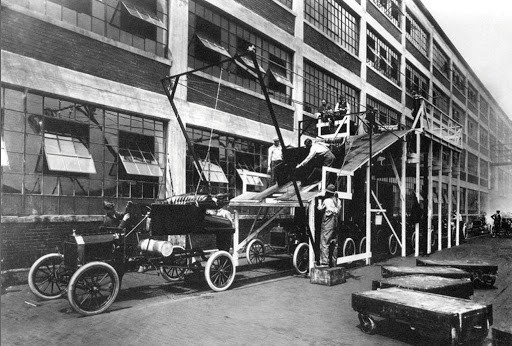
The leaders at the top of organizations have long known that division of labor can improve efficiency. Thousands of years ago, for example, Moses's creation of a hierarchy of authority by delegating responsibility to other judges offered perhaps the earliest known example (Table 10.2). In the eighteenth century, Adam Smith's book The Wealth of Nations quantified the tremendous advantages that division of labor offered for a pin factory. If a worker performed all the various steps involved in making pins himself, he could make about twenty pins per day. By breaking the process into multiple steps, however, 10 workers could make 48,000 pins a day. In other words, the pin factory was a staggering 240 times more productive than it would have been without relying on division of labor. In the early twentieth century, Smith's ideas strongly influenced Henry Ford and other industrial pioneers who sought to create efficient organizations.
While division of labor fuels efficiency, it also creates a challenge - figuring out how to coordinate different tasks and the people who perform them. The solution is organizational structure, which is defined as the process by which tasks are assigned and grouped together with formal reporting relationships. Creating a structure that effectively coordinates a firm's activities increases the firm's likelihood of success. Meanwhile, a structure that does not match well with a firm's needs undermines the firm's chances of prosperity.
Vertical and Horizontal Linkages
Most organizations use a diagram called an organizational chart to depict their structure. These organizational charts show how firms' structures are built using two basic building blocks: vertical linkages and horizontal linkages. Vertical linkages tie supervisors and subordinates together. These linkages show the lines of responsibility through which a supervisor delegates authority to subordinates, oversees their activities, evaluates their performance, and guides them toward improvement when necessary. Every supervisor except for the person at the very top of the organizational chart also serves as a subordinate to someone else. In the typical business school, for example, a department chair supervises a set of professors. The department chair in turn is a subordinate of the dean.
Most executives rely on the unity of command principle when mapping out the vertical linkages in an organizational structure. This principle states that each person should only report directly to one supervisor. If employees have multiple bosses, they may receive conflicting guidance about how to do their jobs. The unity of command principle helps organizations to avoid such confusion. In the case of GE, for example, the head of the Energy division reports only to the chief executive officer. If problems were to arise with executing the strategic move discussed in this chapter's opening vignette, joining the John Wood Group PLC with GE's Energy division, the head of the Energy division would look to the chief executive officer for guidance.
Horizontal linkages are relationships between equals in an organization. These linkages are often called committees, task forces, or teams. Horizontal linkages are important when close coordination is needed across different segments of an organization. For example, most business schools revise their undergraduate curriculum every five or so years to ensure that students are receiving an education that matches the needs of current business conditions. Typically, a committee consisting of at least one professor from every academic area (such as management, marketing, accounting, and finance) will be appointed to perform this task. This approach helps ensure that all aspects of business are represented appropriately in the new curriculum.
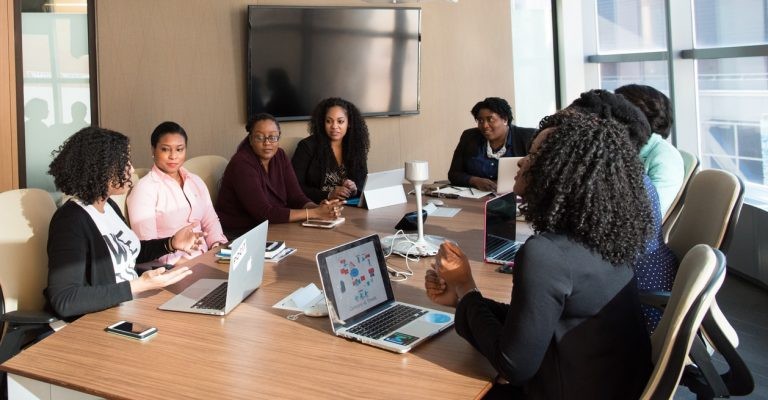
The organic grocery store chain Whole Foods Market, owned by Amazon, is a company that relies heavily on horizontal linkages. As noted on their website:
At Whole Foods Market we recognize the importance of smaller tribal groupings to maximize familiarity and trust. We organize our stores and company into a variety of interlocking teams. Most teams have between 6 and 100 Team Members and the larger teams are divided further into a variety of sub-teams. The leaders of each team are also members of the Store Leadership Team and the Store Team Leaders are members of the Regional Leadership Team. This interlocking team structure continues all the way upwards to the Executive Team at the highest level of the company.
This emphasis on teams is intended to develop trust throughout the organization, as well as to make full use of the talents and creativity possessed by every employee.
Informal Linkages
Informal linkages refer to unofficial relationships such as personal friendships, rivalries, and politics. In the long-running comedy series The Simpsons, Homer Simpson is a low-level, low-performing employee at a nuclear power plant. In one episode, Homer gains power and influence with the plant's owner, Montgomery Burns, which far exceeds Homer's meager position in the organization chart, because Mr. Burns desperately wants to be a member of the bowling team that Homer captains. Homer tries to use his newfound influence for his own personal gain and, naturally, the organization as a whole suffers. Informal linkages such as this one do not appear in organizational charts, but they nevertheless can have (and often do have) a significant influence on how firms operate.
Key Takeaway
- The concept of division of labor (dividing organizational activities into smaller tasks) lies at the heart of the study of organizational structure. Understanding vertical, horizontal, and informal linkages helps managers to organize better the different individuals and job functions within a firm.
Exercises
- How is division of labor used when training college or university football teams? Do you think you could use a different division of labor and achieve more efficiency?
- What are some formal and informal linkages that you have encountered at your college or university? What informal linkages have you observed in the workplace?
Creating an Organizational Structure
Within most firms, executives rely on vertical and horizontal linkages to create a structure that they hope will match the needs of their firm's strategy. Four types of structures are available to executives:
- Functional
- Multi-divisional
- Matrix
- Boundaryless
Like snowflakes, however, no two organizational structures are exactly alike. When creating a structure for their firm, executives will take one of these types and adapt it to fit the firm's unique circumstances. As they do this, executives must realize that the choice of structure will influence their firm's strategy in the future. Once a structure is created, it constrains future strategic moves. If a firm's structure is designed to maximize efficiency, for example, the firm may lack the flexibility needed to react quickly to exploit new opportunities.
Executives rely on vertical and horizontal linkages to create a structure that they hope will match the firm's needs. While no two organizational structures are exactly alike, four general types of structures are available to executives: functional, multi-divisional, matrix, and boundaryless.
| Functional Structure | Within a functional structure, employees are divided into departments that each handle activities related to a functional area of the business, such as marketing, production, human resources, information technology, and customer service. |
| Multi-divisional Structure | In this type of structure, employees are divided into departments based on product areas and/or geographic regions. General Electric, for example, had six product divisions: Energy, Capital, Home & Business Solutions, Healthcare, Aviation, and Transportation. |
| Matrix Structure | The matrix structure can be thought of as a hybrid between functional and divisional structures. Complex organizations or firms that engage in projects of limited duration may use a matrix structure where employees can be put on different teams to maximize creativity and idea flow. |
| Boundaryless Structure | The boundaryless organization is flat, with decentralized decision making and the use of many cross-functional teams. This structure works well in knowledge industries such as IT, where responsiveness to changing environmental and competitive forces must be quick. |
Functional Structure
Organizations become more complex as they grow, and this can require more formal division of labor and a strong emphasis on hierarchy and vertical links.
Functional structures rely on a division of labor whereby groups of people handle activities related to a specific function of the overall business. Illustrated are functional structures in action within two types of organizations that commonly use them.
| Grocery Store Functions | Spa Functions |
| Grocery stockers often work at night to make sure shelves stay full during the day. | Some spa employees manicure fingernails, a practice that is over four thousand years old. Many also provide pedicures, a service whose popularity has nearly doubled in the recent past. |
| Pharmacists' specialized training allows them to command pay that can exceed $55 an hour. | Compared to other spa functions, little training is required of a tanning bed operator - although the ability to tell time may help. |
| Bakers wake up early to give shoppers their daily bread. | Almost anyone can buy a shotgun or parent a child without any training, but every state requires a license in order to cut hair. |
| Bagging groceries requires a friendly personality as well as knowing that eggs should not go on the bottom. | Cucumber masks are usually applied by a skincare specialist who has taken a professional training program. |
| Folks that work checkout aisles should be trusted to handle cash. | The license required of massage therapists in many states ensures that spa visits end happily. |
| The creation of produce, deli, and butcher departments provides an efficient way to divide a grocery store physically as well as functionally. |
Within a functional structure, employees are divided into departments that each handle activities related to a functional area of the business, such as marketing, production, human resources, information technology, and customer service (Table 10.4). Each of these five areas would be headed up by a manager who coordinates all activities related to her functional area. Everyone in a company that works on marketing the company's products, for example, would report to the manager of the marketing department. The marketing managers and the managers in charge of the other four areas in turn would report to the chief executive officer.
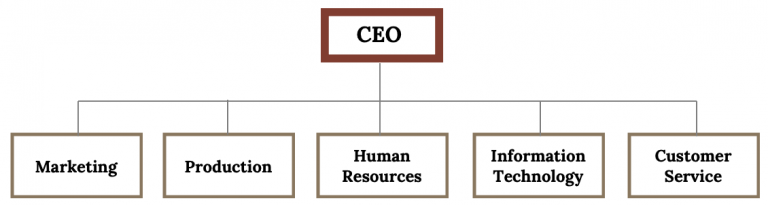
Using a functional structure creates advantages and disadvantages. An important benefit of adopting a functional structure is that each person tends to learn a great deal about his or her particular function. By being placed in a department that consists entirely of marketing professionals, an individual has a great opportunity to become an expert in marketing. Thus a functional structure tends to create highly skilled specialists. Second, grouping everyone that serves a particular function into one department tends to keep costs low and to create efficiency. Also, because all the people in a particular department share the same background training, they tend to get along with one another. In other words, conflicts within departments are more rare.
Using a functional structure also has a significant downside: executing strategic changes can be very slow when compared with other structures. Suppose, for example, that a textbook publisher decides to introduce a new form of textbook that includes "scratch and sniff" photos that let students smell various products in addition to reading about them. If the publisher is organized using a functional structure, every department in the organization will have to be intimately involved in the creation of the new textbooks. Because the new product lies outside each department's routines, it may become lost in the proverbial shuffle. And unfortunately for the books' authors, the publication process will be halted whenever a functional area does not live up to its responsibilities in a timely manner. More generally, because functional structures are slow to execute change, they tend to work best for organizations that offer narrow and stable product lines.
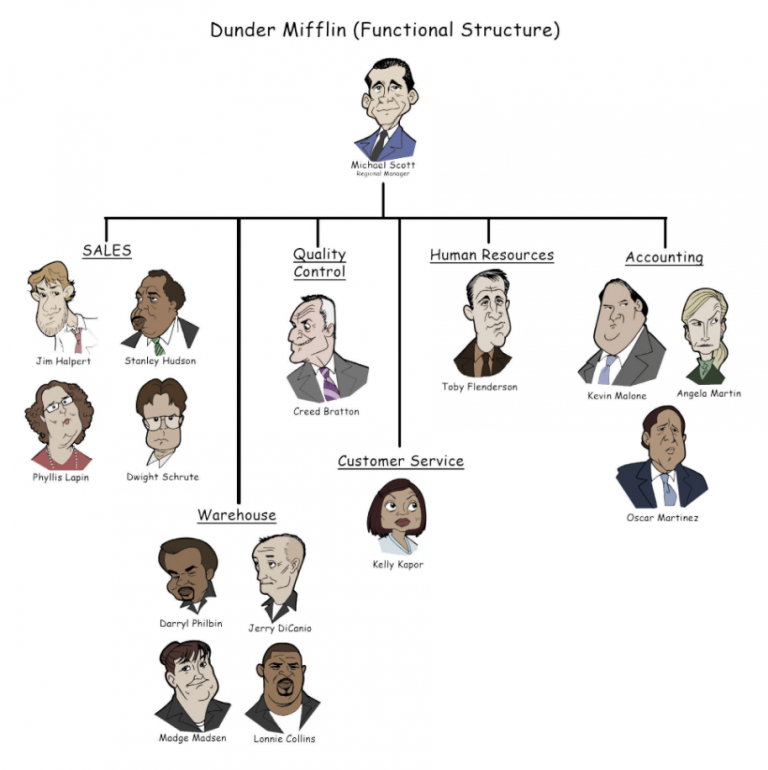
The specific functional departments that appear in an organizational chart vary across organizations that use functional structures. In the example offered earlier in this section, a firm was divided into five functional areas: (1) marketing, (2) production, (3) human resources, (4) information technology, and (5) customer service. In the TV show The Office, a different approach to a functional structure is used at the Scranton, Pennsylvania, branch of Dunder Mifflin. The branch was divided into six functional areas: (1) sales, (2) warehouse, (3) quality control, (4) customer service, (5) human resources, and (6) accounting. A functional structure was a good fit for the branch at the time because its product line was limited to just selling office paper.
Multi-Divisional Structure
Many organizations offer a wide variety of products and services. Some of these organizations sell their offerings across an array of geographic regions. These approaches require firms to be very responsive to customers' needs. Yet, as noted, functional structures tend to be fairly slow to change. As a result, many firms abandon the use of a functional structure as their offerings expand. Often the new choice is a multi-divisional structure. In this type of structure, employees are divided into departments based on product areas and/or geographic regions.
General Electric (GE) is an example of a company organized this way. As shown in the organization chart that accompanies this chapter's opening vignette, most of the company's employees belonged to one of six product divisions (Energy, Capital, Home & Business Solutions, Health Care, Aviation, and Transportation) or to a division that is devoted to all GE's operations outside the United States (Global Growth & Operations).
A big advantage of a multi-divisional structure is that it allows a firm to act quickly. When GE makes a strategic move such as acquiring the well-support division of John Wood Group PLC, only the relevant division (in this case, Energy, needs to be involved in integrating the new unit into GE's hierarchy. In contrast, if GE were organized using a functional structure, the transition would be much slower because all the divisions in the company would need to be involved. A multi-divisional structure also helps an organization to better serve customers' needs. For example, GE's Capital division started to make real-estate loans after exiting that market during the financial crisis of the late 2000s (Jacobius, 2011). Because one division of GE handled all the firm's loans, the wisdom and skill needed to decide when to re-enter real-estate lending was easily accessible.
Of course, empowering divisions to act quickly can backfire if people in those divisions take actions that do not fit with the company's overall strategy. McDonald's experienced this kind of situation. In particular, the French division of McDonald's ran a surprising advertisement in a magazine called Femme Actuelle. The ad included a quote from a nutritionist that asserted children should not eat at a McDonald's more than once per week. Executives at McDonald's headquarters in suburban Chicago were concerned about the message sent to their customers, of course, and they made it clear that they strongly disagreed with the nutritionist.

Another downside of multi divisional structures is that they tend to be more costly to operate than functional structures. While a functional structure offers the opportunity to gain efficiency by having just one department handle all activities in an area, such as marketing, a firm using a multi-divisional structure needs to have marketing units within each of its divisions. In GE's case, for example, each of its seven divisions must develop marketing skills. Absorbing the extra expenses that are created reduces a firm's profit margin. Often a multi-divisional firm will employ a functional structure within each of its divisions.
GE's organizational chart highlights a way that firms can reduce some of these expenses: the centralization of some functional services. As shown in the organizational chart, departments devoted to important aspects of public relations, business development, legal, global research, human resources, and finance are maintained centrally to provide services to the six product divisions and the geographic division. By consolidating some human resource activities in one location, for example, GE creates efficiency and saves money.
An additional benefit of such moves is that consistency is created across divisions. For example, the Coca-Cola Company created an Office of Sustainability to coordinate sustainability initiatives across the entire company. Bea Perez was named Coca-Cola's chief sustainability officer and was put in charge of the Office of Sustainability. At the time, Coca-Cola's chief executive officer Muhtar Kent noted that Coca-Cola had "made significant progress with our sustainability initiatives, but our current approach needs focus and better integration" (Coca-Cola Company, 2011). In other words, a department devoted to creating consistency across Coca-Cola's sustainability efforts was needed for Coca-Cola to meet its sustainability goals.
Matrix Structure
Within functional and multi-divisional structures, vertical linkages between bosses and subordinates define most of the elements. Matrix structures, in contrast, rely heavily on horizontal relationships (Ketchen & Short, 2011). In particular, these structures create cross-functional teams that each work on a different project. This offers several benefits: maximizing the organization's flexibility, enhancing communication across functional lines, and creating a spirit of teamwork and collaboration. A matrix structure can also help develop new managers. In particular, a person without managerial experience can be put in charge of a relatively small project as a test to see whether the person has a talent for leading others.
Using a matrix structure can create difficulties too. One concern is that a matrix structure violates the unity of command principle, because each employee is assigned multiple bosses. Specifically, any given individual reports to a functional area supervisor as well as one or more project supervisors. This creates confusion for employees because they are left unsure about who should be giving them direction. Violating the unity of command principle also creates opportunities for unsavory employees to avoid responsibility by claiming to each supervisor that a different supervisor is currently depending on their efforts.
The potential for conflicts arising between project managers within a matrix structure is another concern. Chances are that students have had some classes with professors who are excellent speakers, while being forced to suffer through a semester of incomprehensible lectures in other classes. This mix of experiences reflects a fundamental reality of management: in any organization, some workers are more talented and motivated than others. Within a matrix structure, each project manager, naturally, will want the best people in the company assigned to their project because their boss evaluates these managers based on how well their projects perform. Because the best people are a scarce resource, infighting and politics can easily flare up around which people are assigned to each project.
Given these problems, not every organization is a good candidate to use a matrix structure. Organizations such as information technology, engineering, and consulting firms that need to maximize their flexibility to service projects of limited duration can benefit from the use of a matrix. Matrix structures are also used to organize research and development departments within many large corporations. In each of these settings, the benefits of organizing around teams are so great that they often outweigh the risks of doing so.
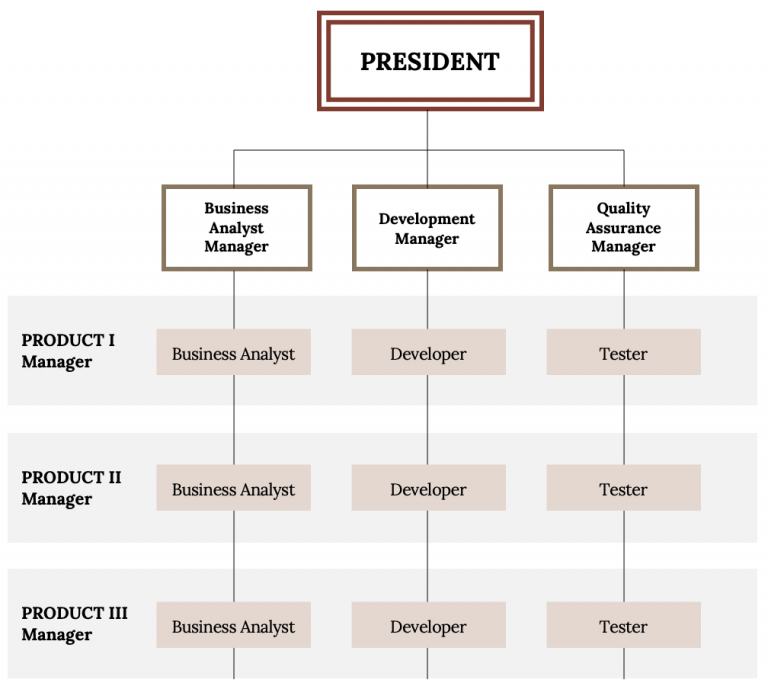
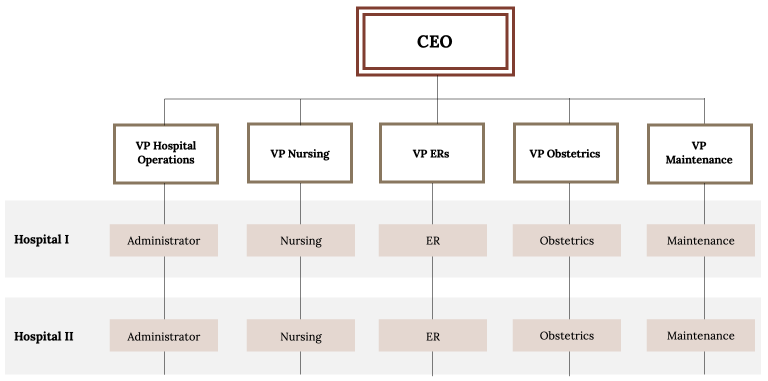
The matrix structure works well for other complex organizations that are not project based. These can be set up on a permanent basis and fit well for firms with multiple locations. This works particularly well for standardizing processes and policies across the various units of the firm. For example, a manufacturer with five plants spread out across the Southeast United States can use this structure to standardize finance and accounting, production, supply chain, marketing, and logistics. Each of these functional areas has a vice-president in charge of that function and reports to the CEO. However, each function in each plant has a manager who reports both to the functional VP and to the plant manager. The matrix structure is best suited for firms implementing a related diversification corporate strategy in complex environments where responding quickly to external forces is important.
Sentara Healthcare is a hospital system that operates 13 hospitals in Virginia. This organization uses a matrix structure to provide consistency and standardization of policies, procedures, supplies, and equipment across its hospitals. The diagram below illustrates how the reporting structure goes both vertically and horizontally. This allows for standardization of the major functions across the hospital system. For example, the emergency rooms in all hospitals use the same medical equipment, the same computer systems, and the same processes and paperwork, so nurses can easily work in any hospital without having to be retrained. Efficiency is improved, best practices are implemented across the system easier, and volume discounts by purchasing identical supplies and equipment for all the emergency departments saves money.
Strategy at the Movies
Office Space
How much work can a man accomplish with eight bosses breathing down his neck? For Peter Gibbons, an employee at information technology firm Initech in the movie Office Space, the answer was zero. Initech's use of a matrix structure meant that each employee had multiple bosses, each representing a different aspect of Initech's business. High-tech firms often use a matrix structure to gain the flexibility needed to manage multiple projects simultaneously. Successfully using a matrix structure requires excellent communication among various managers - however, excellence that Initech could not reach. When Gibbons forgot to put the appropriate cover sheet on his TPS report, each of his eight bosses - and a parade of his coworkers - admonished him. This fiasco and others led to Gibbons to become cynical about his job.
Simpler organizational structures can be equally frustrating. Joanna, a waitress at nearby restaurant Chotchkie's, had only one manager - a stark contrast to Gibbons's eight bosses. Unfortunately, Joanna's manager had an unhealthy obsession with the "flair" (colorful buttons and pins) used by employees to enliven their uniforms. A series of mixed messages about the restaurant's policy on flair led Joanna to emphatically proclaim - both verbally and nonverbally - her disdain for the manager. She then quit her job and stormed out of the restaurant.
Office Space illustrates the importance of organizational design decisions to an organization's culture and to employees' motivation levels. A matrix structure can facilitate resource sharing and collaboration but may also create complicated working relationships and impose excessive stress on employees. Chotchkie's organizational structure involved simpler working relationships, but these relationships were strained beyond the breaking point by a manager's eccentricities. In a more general sense, Office Space shows that all organizational structures involve a series of trade-offs that must be carefully managed.

Boundaryless Organizations
Most organizational charts show clear divisions and boundaries between different units. The value of a much different approach was highlighted by former GE CEO Jack Welch when he created the term boundaryless organization. A boundaryless organization is one that removes the usual barriers between parts of the organization as well as barriers between the organization and others (Askenas, et. al., 1995). Eliminating all internal and external barriers is not possible, of course, but making progress toward being boundaryless can help an organization become more flexible and responsive. One example is W. L. Gore, a maker of fabrics, medical implants, industrial sealants, filtration systems, and consumer products. This firm avoids organizational charts, management layers, and supervisors despite having approximately 9,000 employees across 30 countries. Rather than granting formal titles to certain people, leaders with W. L. Gore emerge based on performance, and they attract followers to their ideas over time. As one employee noted, "We vote with our feet. If you call a meeting, and people show up, you're a leader" (Hamel, 2007).

Boundaryless organizations work best in knowledge industries, such as information technology and communications firms. They are characterized by the frequent use of cross-functional teams and decision-making that is highly decentralized. These organizations rely heavily on loose boundaries and the informal linkages mentioned earlier in this chapter. The boundaryless structure lends itself well to the free-rein leadership style where the external environment changes quickly, and for executing innovation strategies.
An illustration of how removing barriers can be valuable has its roots in a very unfortunate event. During Hurricane Katrina in 2005, rescue efforts were hampered by a lack of coordination between responders from the National Guard (who are controlled by state governments) and from active-duty military units (who are controlled by federal authorities). According to one National Guard officer, "It was just like a solid wall was between the two entities" (Elliott, 2011). Efforts were needlessly duplicated in some geographic areas while attention to other areas was delayed or inadequate. For example, poor coordination caused the evacuation of thousands of people from the New Orleans Superdome to be delayed by a full day. The results were immense human suffering and numerous fatalities.

To avoid similar problems from arising in the future, barriers between the National Guard and active-duty military units are being bridged by special military officers called dual-status commanders. These individuals will be empowered to lead both types of units during a disaster recovery effort, helping to ensure that all areas receive the attention they need in a timely manner.
Reasons for Changing an Organization's Structure
Creating an organizational structure is not a one time activity. Executives must revisit an organization's structure over time and make changes to it if certain danger signs arise. For example, a structure might need to be adjusted if decisions with the organization are being made too slowly or if the organization is performing poorly. Both these problems plagued Sears Holdings leading executives to reorganize the company.
Sears's new structure organized the firm around five types of divisions: (1) operating businesses (such as clothing, appliances, and electronics), (2) support units (certain functional areas such as marketing and finance), (3) brands (which focus on nurturing the firm's various brands such as Lands' End, Joe Boxer, Craftsman, and Kenmore), (4) online, and (5) real estate. At the time, Sears's chairman Edward S. Lampert noted that "by creating smaller focused teams that are clearly responsible for their units, we [will] increase autonomy and accountability, create greater ownership and enable faster, better decisions" (Jones, 2008). Unfortunately, structural changes cannot cure all a company's ills. Sears's stock was worth just over half what it had been worth five years earlier and it continues to close stores into 2020.
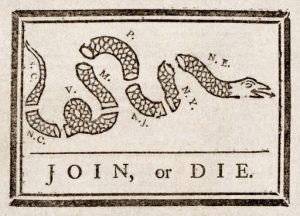
Sometimes structures become too complex and need to be simplified. Many observers believe that this description fits Cisco. The company's CEO, John Chambers, moved Cisco away from a hierarchical emphasis toward a focus on horizontal linkages. Before, Cisco had four types of such linkages. For any given project, a small team of people reported to one of 47 boards. The boards averaged 14 members each. Forty-three of these boards each reported to one of 12 councils. Each council also averaged 14 members. The councils reported to an operating committee consisting of Chambers and 15 other top executives. Four of the 47 boards bypassed the councils and reported directly to the operating committee. These arrangements are so complex and time consuming that some top executives spend 30% of their work hours serving on more than 10 of the boards and councils, as well as the operating committee.
Because it competes in fast-changing high-tech markets, Cisco needed to be able to make competitive moves quickly. The firm's complex structural arrangements were preventing this. A competitor, Hewlett-Packard (HP), started promoting a warranty service that provided free support and upgrades within the computer network switches market. Because Cisco's response to this initiative had to work its way through multiple committees, the firm did not take prompt action. During the delay, Cisco's share of the market dropped as customers embraced HP's warranty. This problem and others created by Cisco's overly complex structure were so severe that one columnist wondered aloud "has Cisco's John Chambers lost his mind?" (Blodget, 2009). Finally, Chambers reversed course and decided to return Cisco to a more traditional structure while reducing the firm's workforce by 9%. Since the implementation of these structural changes, Cisco's stock price more than doubled.
Key Takeaway
- Executives must select among the four types of structure (functional, multi-divisional, matrix, and boundaryless) available to organize operations. Each structure has unique advantages, and the selection of structures involves a series of trade-offs.
Exercises
- What type of structure best describes the organization of your college or university? What led you to reach your conclusion?
- The movie Office Space illustrates two types of structures. What are some other scenes or themes from movies that provide examples or insights relevant to understanding organizational structure?
Creating Organizational Control Systems
In addition to creating an appropriate organizational structure, effectively executing strategy depends on the skillful use of organizational control systems. Executives create strategies trying to achieve their organization's vision, mission, and goals. Organizational control systems allow executives to track how well the organization is performing, identify areas of concern, and then take action to address the concerns. Three basic types of control systems are available to executives: (1) output control, (2) behavioral control, and (3) clan control. Different organizations emphasize different types of control, but most organizations use a mix of all three types.
NOTE: The words "mean" and "average" are often used interchangeably. The substitution of one word for the other is common practice. The technical term is "arithmetic mean," and "average" is technically a center location. However, in practice among non-statisticians, "average" is commonly accepted for "arithmetic mean".
Output Control
Stephen Covey said "start with the end in mind". Output control is one way decision makers put this into practice. Output control focuses on measurable results within an organization. Examples from the business world include the number of hits a website receives per day, the number of microwave ovens an assembly line produces per week, and the number of vehicles a car salesman sells per month (Table 10.5). In each of these cases, executives must decide what level of performance is acceptable, communicate expectations to the relevant employees, track whether performance meets expectations, and then make any needed changes. In an ironic example, a group of post office workers in Pensacola, Florida, were once disappointed to learn that their paychecks had been lost - by the US Postal Service. The corrective action was simple: they started receiving their pay via direct deposit rather than through the mail.
Many times the stakes are much higher. Delta Airlines was forced to face some facts as part of its use of output control. Data gathered by the federal government revealed that only 77.4% of Delta's flights had arrived on time during the year. This performance led Delta to rank dead last among the major US airlines and fifteenth out of 18 total carriers. In response, Delta took important corrective steps. In particular, the airline added to its ability to service airplanes and provided more customer service training for its employees. These changes and others paid off. For the second quarter of the following year, Delta enjoyed a $198 million profit, despite having to absorb a $1 billion increase in its fuel costs due to rising prices.
Outcome controls assess measurable production and other tangible results. Often output controls emphasize "bottom-line" performance. We illustrate some outcome controls found in organizations below.
| Output Control Examples | |
|---|---|
| Real Estate Agents | Because real estate agents are paid a percentage of the selling price when a house sells, the number of dollars generated in houses sold is an important metric. Many realty offices have designations like "five million dollar club" to recognize very productive realtors. |
| Students | Grade point averages provide a tangible means for employers and graduate schools to compare students. |
| Toy Production | In the classic movie Elf, the main character Buddy leaves Santa's workshop when the number of Etch-A-Sketch toys he produces is nearly 900 units lower than the standard pace. |
| Academics | To earn tenure in a research-focused business school, a professor's output generally must include publishing numerous high-quality articles at reputable scholarly journals. |
| Restaurant Servers | Within restaurants, servers can increase a key output - amount of tips received - by providing customers with fast, friendly, and high-quality service. |

Output control also plays a big part in the college experience. For example, test scores and grade point averages are good examples of output measures. If you perform badly on a test, a student might take corrective action by studying harder or by studying in a group for the next test. At most colleges and universities, a student is put on academic probation when his grade point average drops below a certain level. If the student's performance does not improve, he may be removed from his major and even dismissed. On the positive side, output measures can trigger rewards too. A very high grade point average can lead to placement on the dean's list and graduating with honors.
The balanced scorecard discussed in an earlier chapter is an output measure used by firms to track their progress toward achieving performance goals and strategies. Sometimes an output measure may have unintended consequences and produce the opposite impact desired. For example, if the sales team in a firm is rewarded based only on individual sales totals, sales people may not cooperate, collaborate, or help each other. They may even attempt to sabotage each other in their quest to achieve first place in sales for the period. Organizations must take care in how employees and managers are incentivized.
Creating an effective reward structure is key to effectively managing behavior because people tend to focus their efforts on the rewarded behaviors. Problems can arise when people are rewarded for behaviors that seem positive on the surface but that can actually undermine organizational goals under some circumstances. For example, restaurant servers are highly motivated to serve their tables quickly because doing so can increase their tips. But if a server devotes all his or her attention to providing fast service, other tasks that are vital to running a restaurant, such as communicating effectively with managers, host staff, chefs, and other servers, may suffer. Managers need to be aware of such trade-offs and strive to align rewards with behaviors. For example, waitstaff who consistently behave as team players could be assigned to the most desirable and lucrative shifts, such as nights and weekends.
Behavioral Control
Behavioral controls dictate the actions of individuals. Such controls often emphasize rules and procedures. Some behavioral controls found in organizations are illustrated below.
| Behavioral Control Examples | |
|---|---|
| Attire Requirements | No shoes, no shirt, no paycheck. Many food service companies have strict attire requirements to make sure employees are in compliance with the rules of the Food and Drug Administration and those of local health departments. |
| Dress Codes | Casual Fridays provide a welcome break in offices that enforce strict dress codes. |
| Financial Controls | Many businesses require that checks are signed by two people. This prevents a dishonest employee from embezzling money. |
| Class Attendance | In a classroom setting, grading attendance is a behavioral control designed to force students to show up for class. This can be very helpful because research shows that attendance is positively related to grades. Unfortunately, there are no behavioral controls that force professors' lectures to be interesting. |
| Bathroom Breaks | Gotta go? Be careful to not take too much time at certain auto factories, where bathroom breaks are monitored in an effort to cut costs. Some employees of US firms are limited to 46 minutes of bathroom time per shift, while Japanese automakers allow their American employees only 30 minutes per shift. |
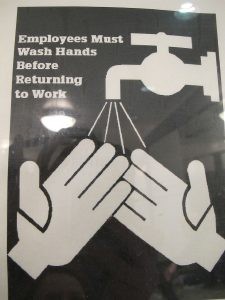
While output control focuses on results, behavioral control focuses on controlling the actions that ultimately lead to results. In particular, various rules and procedures are used to standardize or to dictate behavior (Table 10.6). In most states, for example, signs are posted in restaurant bathrooms reminding employees that they must wash their hands before returning to work. To try to prevent employee theft, many firms require direct deposit for paychecks. And as an extreme example, some automobile factories and meat processing plants dictate to workers how many minutes they can spend in restrooms during their work shift.
Behavioral control also plays a significant role in the college experience. An illustrative (although perhaps unpleasant) example is penalizing students for not attending class. Instructors grade attendance to control students' behavior; specifically, to motivate students to attend class. Meanwhile, student's exert some control over an instructor's future behavior through their student evaluation measures at the end of the semester.
Outside the classroom, behavioral control is a major factor within college athletic programs. The National Collegiate Athletic Association (NCAA) governs college athletics using an enormous set of rules, policies, and procedures. The NCAA's rule book on behavior is so complex that virtually all coaches violate its rules at one time or another. Critics suggest that the behavioral controls instituted by the NCAA have reached an absurd level. Despite this example, some degree of behavioral control is needed within virtually all organizations to ensure a productive work environment for all employees.
While a firm may have many mechanisms within its behavioral control system, the priority given to a particular set of control mechanisms can be influenced by the external environment. The Supreme Court ruling (June 2020) on LGBTQ workplace protections coupled with parallel outrage regarding social justice issues facing Black, Indigenous, and other People of Color (BIPOC) have an impact on firm decision-making. As a result, firms have been focused to pay more addition to making public statements on racial injustice while making changes to the existing (or absent) practices ensuring enforcement of anti-discrimination and equity policies. These changes may result in new prioritization within organizational behavior control systems. For example, in 2020 NASCAR banned the presence of the Confederate flag at its race venues following national demonstrations against white supremacy.
Creating an effective reward structure is key to effectively managing behavior because people tend to focus their efforts on the rewarded behaviors. Problems can arise when people are rewarded for behaviors that seem positive on the surface but that can actually undermine organizational goals under some circumstances. For example, restaurant servers are highly motivated to serve their tables quickly because doing so can increase their tips. But if a server devotes all his or her attention to providing fast service, other tasks that are vital to running a restaurant, such as communicating effectively with managers, host staff, chefs, and other servers, may suffer. Managers need to be aware of such trade-offs and strive to align rewards with behaviors. For example, waitstaff who consistently behave as team players could be assigned to the most desirable and lucrative shifts, such as nights and weekends.
Clan Control
Rather than measuring results (as in outcome control) or dictating behavior (as in behavioral control), clan control relies on shared traditions, expectations, values, and norms to lead people to work toward the good of their organization. Some of the most interesting and unusual examples of clan control are found on college campuses. Below we illustrate a few striking examples that help build school spirit and loyalty.
| Clan Controls | |
|---|---|
| Brandeis University | Roughly one-quarter of Brandeis University's student body gets adorned in paint - and nothing else - at the annual Liquid Latex event. |
| University of Pennsylvania | No matter how you slice it, the Toast Toss seems strange to outsiders. University of Pennsylvania students fling the breakfast staple into the air after the third quarter of home football games. |
| Texas Tech University | Students at Texas Tech University honor the school's Southwest heritage by throwing tortillas at sporting events. |
Instead of measuring results (as in outcome control) or dictating behavior (as in behavioral control), clan control is an informal type of control. Specifically, clan control relies on shared traditions, expectations, values, and norms to lead people to work toward the good of their organization (Table 10.7). Clan control is often used heavily in settings where creativity is vital, such as many high-tech businesses. In these companies, output is tough to dictate, and many rules are not appropriate. The creativity of a research scientist would be likely to be stifled, for example, if she were given a quota of patents that she must meet each year (output control) or if a strict dress code were enforced (behavioral control).
Google is a firm that relies on clan control to be successful. Employees are permitted to spend 20% of their workweek on their own innovative projects. The company offers an "ideas mailing list" for employees to submit new ideas and to comment on others' ideas. Google executives routinely make themselves available two to three times per week for employees to visit with them to present their ideas. These informal meetings have generated a number of innovations, including personalized home pages and Google News, which might otherwise have never been adopted. Another illustration is when NASCAR banned the Confederate flag, all the race car drivers and crews walked the racetrack at Talladega, Alabama, in a powerful support of the ban.

Some executives look to clan control to improve the performance of struggling organizations. In Florida, officials became fed up with complaints about surly clerks within the state's driver's license offices. The solution was to look for help with training employees from two companies that are well-known for friendly, engaged employees and excellent customer service. The first was The Walt Disney Company, which offers world-famous hospitality at its Orlando theme parks. The second was regional supermarket chain Publix, a firm whose motto stressed that "shopping is a pleasure" in its stores. The goal of the training was to build the sort of positive team spirit Disney and Publix enjoy. The state's highway safety director summarized the need for clan control when noting that "we've just got to change a little culture out there".
Clan control is also important on many college campuses. Philanthropic and social organizations such as clubs, fraternities, and sororities often revolve around shared values and team spirit. More broadly, many campuses have treasured traditions that bind alumni together across generations. Purdue University, for example, proudly owns the world's largest drum. The drum is beaten loudly before home football games to fire up the crowd. After athletic victories, Auburn University students throw rolls of toilet paper into campus oak trees. At Virginia Tech, their spirit of service as modeled in their motto "That I May Serve" leads them to hold the largest Relay for Life fundraising event on a university campus year after year. These examples and thousands of others spread across the country's colleges and universities help students feel like they belong to something special.
Management Fads: Out of Control?
The emergence and disappearance of fads appears to be a predictable aspect of modern society. A fad arises when some element of culture - such as fashion, a toy, or a hairstyle - becomes enthusiastically embraced by a group of people. Fads also seem to be a predictable aspect of the business world. Below we illustrate several fads that executives have latched onto in an effort to improve their organizations' control systems.
| Management by Objectives | Description |
|---|---|
| Management by Objectives | A supervisor and an employee create a series of goals that provide structure and motivation for the employee. A huge set of studies shows that setting challenging but attainable goals leads to good performance, but not every aspect of work can be captured by a goal. |
| Sensitivity Training | Free-flowing group discussions are used to lead individuals toward greater understanding of themselves and others. Because a "mob mentality" can take over a group, sensitivity training too often degenerates into hostility and humiliation. |
| Quality Circles | Volunteer employee groups developed to brainstorm new methods or processes to improve quality. Quality is important, but managers face trade-offs among quality, cost, flexibility, and speed. A singular obsession with quality sacrifices too much along other dimensions. |
| Strong Culture | Fueled by 1982's In Search of Excellence and fascination with Japanese management systems, having a strong culture became viewed as crucial to organizational success. Within a few years, many of the "excellent" companies highlighted in the book had fallen on hard times. However, firms such as Disney continue to gain competitive advantage through their strong cultures. |
Don't chase the latest management fads. The situation dictates which approach best accomplishes the team's mission. -Colin Powell
The emergence and disappearance of fads appears to be a predictable aspect of modern society. A fad arises when some element of popular culture becomes enthusiastically embraced by a group of people. Over the past few decades, for example, fashion fads have included leisure suits (1970s), "Members Only" jackets (1980s), platform shoes (1990s), Crocs (2000s), and torn jeans (2010s). Ironically, the reason a fad arises is also usually the cause of its demise. The uniqueness (or even outrageousness) of a fashion, toy, or hairstyle creates "buzz" and publicity but also ensures that its appeal is only temporary.
Fads also seem to be a predictable aspect of the business world (Table 10.8 "Managing Management Fads"). As with cultural fads, many provocative business ideas go through a life cycle of creating buzz, captivating a group of enthusiastic adherents, and then giving way to the next fad. Bookstore shelves offer a seemingly endless supply of popular management books whose premises range from the intriguing to the absurd. Within the topic of leadership, for example, various books promise to reveal the "leadership secrets" of an eclectic array of famous individuals such as Jesus Christ, Hillary Clinton, Attila the Hun, and Santa Claus.
Beyond the striking similarities between cultural and business fads, there are also important differences. Most cultural fads are harmless, and they rarely create any long-term problems for those that embrace them. In contrast, embracing business fads could lead executives to make bad decisions. As our quote from Colin Powell suggests, relying on sound business practices is much more likely to help executives to execute their organization's strategy than are generic words of wisdom from Old St. Nick.
Many management fads have been closely tied to organizational control systems. For example, one of the best-known fads was an attempt to use output control to improve performance. Management by Objectives (MBO) is a process wherein managers and employees work together to create goals. These goals guide employees' behaviors and serve as the benchmarks for assessing their performance. Following the presentation of MBO in Peter Drucker's 1954 book The Practice of Management, many executives embraced the process as a cure-all for organizational problems and challenges.
Like many fads, however, MBO became a good idea run amok. Companies that attempted to create an objective for every aspect of employees' activities eventually discovered that this was unrealistic. The creation of explicit goals can conflict with activities involving tacit knowledge about the organization. Intangible notions such as "providing excellent customer service," "treating people right," and "going the extra mile" are central to many organizations' success, but these notions are difficult if not impossible to quantify. Thus, in some cases, getting employees to embrace certain values and other aspects of clan control is more effective than MBO.
Quality circles were a second fad that built on the notion of behavioral control. Quality circles began in Japan in the 1960s and were first introduced in the United States in 1972. A quality circle is a formal group of employees that meets regularly to brainstorm solutions to organizational problems. As the name "quality circle" suggests, identifying behaviors that would improve the quality of products and the operations management processes that create the products was the formal charge of many quality circles.
While the quality circle fad depicted quality as the key driver of productivity, it quickly became apparent that this perspective was too narrow. Instead, quality is just one of four critical dimensions of the production process; speed, cost, and flexibility are also vital. Maximizing any one of these four dimensions often results in a product that simply cannot satisfy customers' needs. Many products with perfect quality, for example, would be created too slowly and at too great a cost to compete in the market effectively. Thus trade-offs among quality, speed, cost, and flexibility are inevitable.
Improving clan control was the aim of sensitivity-training groups (or T-groups) that were used in many organizations in the 1960s. This fad involved gatherings of approximately eight to fifteen white people openly discussing their emotions, feelings, beliefs, and biases about workplace issues. In stark contrast to the rigid nature of MBO, the T-group involved free-flowing conversations led by a facilitator. These discussions were thought to lead individuals to greater understanding of themselves and others. The anticipated results were more enlightened workers and a greater spirit of teamwork.
Research on social psychology has found that groups are often far crueler than individuals. Unfortunately, this meant that the candid nature of T-group discussions could easily degenerate into accusations and humiliation. Eventually, the T-group fad gave way to recognition that creating potentially hurtful situations has no place within an organization. Hints of the softer side of T-groups can still be observed in modern team-building fads, however. Perhaps the best known is the "trust game," which claims to build trust between employees by having individuals fall backward and depend on their coworkers to catch them.
Improving clan control was the basis for the fascination with organizational culture that was all the rage in the 1980s. This fad was fueled by a best-selling 1982 book titled In Search of Excellence: Lessons from America's Best-Run Companies. Authors Tom Peters and Robert Waterman studied companies that they viewed as stellar performers and distilled eight similarities that were shared across the companies. Most of the similarities, including staying "close to the customer" and "productivity through people," arose from powerful corporate cultures. The book quickly became an international sensation; more than three million copies were sold in the first four years after its publication.
Soon it became clear that organizational culture's importance was being exaggerated. Before long, both the popular press and academic research revealed that many of Peters and Waterman's "excellent" companies quickly had fallen on hard times. Basic themes such as customer service and valuing one's company are quite useful, but these clan control elements often cannot take the place of holding employees accountable for their performance.

The history of fads allows us to make certain predictions about today's hot ideas, such as empowerment, "good to great," and viral marketing. Executives who distill and act on basic lessons from these fads are likely to enjoy performance improvements. Empowerment, for example, builds on important research findings regarding employees - many workers have important insights to offer to their firms, and these workers become more engaged in their jobs when executives take their insights seriously. Relying too heavily on a fad, however, seldom turns out well.
Just as executives in the 1980s could not treat In Search of Excellence as a recipe for success, today's executives should avoid treating James Collins's 2001 best-selling book Good to Great: Why Some Companies Make the Leap…and Others Don't as a detailed blueprint for running their companies. Overall, executives should understand that management fads usually contain a core truth that can help organizations improve but that a balance of output, behavioral, and clan control is needed within most organizations. As legendary author Jack Kerouac noted, "Great things are not accomplished by those who yield to trends and fads and popular opinion".
Key Takeaway
- Organizational control systems are a vital aspect of executing strategy because they track performance and identify adjustments that need to be made. Output controls involve measurable results. Behavioral controls involve regulating activities rather than outcomes. Clan control relies on a set of shared values, expectations, traditions, and norms. Over time, a series of fads intended to improve organizational control processes have emerged. Although these fads tend to be seen as cure-alls initially, executives eventually realize that an array of sound business practices is needed to create effective organizational controls.
Exercises
- How is division of labor used when training college or university football teams? Do you think you could use a different division of labor and achieve more efficiency?
- What are some formal and informal linkages that you have encountered at your college or university? What informal linkages have you observed in the workplace?
- How could you integrate each type of control into a college classroom to maximize student learning?
Legal Forms of Business
Making a profit is a key goal for the overwhelming majority of firms. How a firm's owners benefit from profits and suffer from losses varies across different legal forms of business. Below we illustrate how profits and losses are treated within different business forms.
| Treatment of Profits and Losses within Different Business Forms | |
|---|---|
| Sole Proprietorship | A sole proprietorship is owned by one person. The firm and its owner are treated interchangeably—the owner is the only beneficiary of any profits and is personally responsible for any losses and debts. Most sole proprietorships are small, but entrepreneur James Cash Penney operated JCPenney as one for many years after buying out his two partners. |
| Partnership | In a partnership, two or more partners jointly own the firm. A successful partnership requires trust because profits and losses are shared and because each partner is accountable for the actions of others. Partnerships are a common business form for dental practices and law offices. |
| Corporation | A corporation such as Southwest Airlines separates ownership and management by issuing ownership shares that are publicly traded in stock markets. Shareholders do not directly receive profits or absorb losses, but profits and losses tend to be reflected in whether the firm's stock price rises or falls. Shareholders can also benefit from profits in the form of dividends. Most large companies are C corporations with multiple stockholders. A disadvantage of this business form is double taxation: taxes are paid on corporate profits and on any dividends that corporate pays to stockholders, at their personal tax rate. An S corporation is limited to 100 stockholders and is more for smaller companies. It does not have double taxation. Taxes are paid on profits distributed to stockholders at their personal tax rate. |
| Limited Liability Company (LLC) | A limited liability company (LLC) can be thought of as a hybrid of a corporation and partnership. Like in a corporation, owners are not accountable for the firm's debts. A winner of a legal judgement against an LLC, for example, cannot claim the personal assets of the LLC's owners. LLC's also enjoy the management flexibility of partnerships. For federal tax purposes, an LLC must choose to be treated as a corporation, a partnership, or a sole proprietorship. Many architectural and consulting firms are organized as LLCs. |
Choosing a Form of Business
The legal form a firm chooses to operate under is an important decision with implications for how a firm structures its resources and assets. Several legal forms of business are available to executives. Each involves a different approach to dealing with profits and losses (Table 10.9).
There are three primary considerations that firms should take into account when deciding which legal form of business should be chosen. These are:
- How taxes are handled
- How liability of the owners is handled
- How easy to set up and operate the entity
There are five basic forms of business entities:
- Sole Proprietorship
- Partnership
- Corporation
- S Corporation
- Limited Liability Company—LLC
A sole proprietorship is a firm that is owned by one person. From a legal perspective, the firm and its owner are considered one and the same. On the plus side, this means that all profits are the property of the owner (after taxes are paid, of course). On the minus side, however, the owner is personally responsible for the firm's losses and debts. This presents a tremendous risk. If a sole proprietor is on the losing end of a significant lawsuit, for example, the owner could find his personal assets forfeited. Most sole proprietorships are small and many have no employees. In most towns, for example, there are a number of self-employed repair people, plumbers, and electricians who work alone on home repair jobs. Also, many sole proprietors run their businesses from their homes to avoid expenses associated with operating an office. Along with the disadvantage of personal liability for the owner, sole proprietorships enjoy two advantages. Taxes on profits are assessed at the owner's personal tax rate. Also, this is the easiest form of business to set up and operate.
In a partnership, two or more partners share ownership of a firm. A partnership is similar to a sole proprietorship in that the partners are the only beneficiaries of the firm's profits, but they are also responsible for any losses and debts. Partnerships can be especially attractive if each person's expertise complements the others. For example, an accountant who specializes in preparing individual tax returns and another who has mastered business taxes might choose to join forces to offer customers a more complete set of tax services than either could offer alone.
From a practical standpoint, a partnership allows a person to take time off without closing down the business temporarily. Sander & Lawrence is a partnership of two home builders in Tallahassee, Florida. When Lawrence suffered a serious injury a few years ago, Sander was able to take over supervising his projects and see them through to completion. Had Lawrence been a sole proprietor, his customers would have suffered greatly. However, a person who chooses to be part of a partnership rather than operating alone as a sole proprietor also takes on some risk; your partner could make bad decisions that end up costing you a lot of money. Thus developing trust and confidence in one's partner is very important. As with the sole proprietorship, the owners and the partnership are considered as one. Being personally liable for the debts and actions of the partnership and the partner(s) is certainly a downside, however setting up a partnership is relatively easy. Taxes are also paid at the partners individual rate, a tax advantage generally.
Most large firms, such as Southwest Airlines, are organized as corporations. A key difference between a corporation and a sole proprietorship or partnership is that corporations involve the separation of ownership and management. Corporations sell shares of ownership that are publicly traded in stock markets, and they are managed by professional executives. These executives may own a significant portion of the corporation's stock, but this is not a legal requirement.
Another unique feature of corporations is how they deal with profits and losses. Unlike in sole proprietorships and partnerships, a corporation's owners (i.e., shareholders) do not directly receive profits or absorb losses. Instead, profits and losses indirectly affect shareholders in two ways. First, profits and losses tend to be reflected in whether the firm's stock price rises or falls. When a shareholder sells her stock, the firm's performance while she has owned the stock will influence whether she makes a profit relative to her stock purchase. Shareholders can also benefit from profits if a firm's executives decide to pay cash dividends to shareholders. Unfortunately, for shareholders, corporate profits and any dividends that these profits support are both taxed. This double taxation is a big disadvantage of corporations. Corporations (also called C corporations) are also the most difficult form of business to set up and have a number of regulations to comply with.
A specialized type of corporation called an S corporation is designed for smaller companies.. Much like in a partnership, the firm's profits and losses are reported on owners' personal tax returns in proportion with each owner's share of the firm, so double taxation is avoided. Although this is an attractive feature, an S corporation would be impractical for most large firms because the number of shareholders in an S corporation is capped, usually at one hundred. In contrast, Southwest Airlines has more than ten thousand shareholders. For smaller firms, such as many real-estate agencies, the S corporation is an attractive form of business. S corporations also provide liability protection for their stockholders as C corporations do, and are easier to set up and operate than C corporations.
A final form of business is very popular, yet it is not actually recognized by the federal government as a form of business. Instead, the ability to create a limited liability company (LLC) is granted in state laws. LLCs mix attractive features of corporations and partnerships. The owners of an LLC are not personally liable for debts that the LLC accumulates (like in a corporation) and the LLC can be run in a flexible manner (like in a partnership). When paying federal taxes, however, an LLC must choose to be treated as a corporation, a partnership, or a sole proprietorship. Many home builders (including Sander & Lawrence), architectural businesses, and consulting firms are LLCs. The ease of setting up and operating an LLC is similar to a sole proprietorship or partnership.
| Form | Taxes | Liability | Ease of Operation |
|---|---|---|---|
| Sole Proprietor | Personal tax return | Unlimited liability | Easiest |
| Partnership | Personal tax return | Unlimited liability | Easy |
| C Corporation | Double taxation | Limited liability | Hardest |
| S Corporation | Personal tax return | Limited liability | Hard |
| Limited Liability Company | Personal tax return | Limited liability | Moderate |
Key Takeaway
- The five major forms of business in the United States are sole proprietorships, partnerships, LLCs, and C and S corporations. Each form has implications for how individuals are taxed, the personal liability of the owners, and how resources are managed and deployed in the set up and operations.
Exercises
- Why are so many small firms sole proprietorships?
- Find an example of a firm that operates as an LLC. Why do you think the owners of this firm chose this form of business over others?
- Why might different forms of business be more likely to rely on a different organizational structure?
Conclusion
This chapter explains elements of organizational design that are vital for executing strategy. Leaders of firms, ranging from the smallest sole proprietorship to the largest global corporation, must make decisions about the delegation of authority and responsibility when organizing activities within their firms. Deciding how to best divide labor to increase efficiency and effectiveness is often the starting point for more complex decisions that lead to the creation of formal organizational charts. While small businesses rarely create organization charts, firms that embrace functional, multidivisional, matrix, and boundaryless structures often have reporting relationships with considerable complexity. To execute strategy effectively, managers also depend on the skillful use of organizational control systems that involve output, behavioral, and clan controls. Although introducing more efficient business practices to improve organizational functioning is desirable, executives need to avoid letting their firms become "out of control" by being skeptical of management fads. Finally, the legal form a business takes is an important decision with implications for a firm's organizational structure.
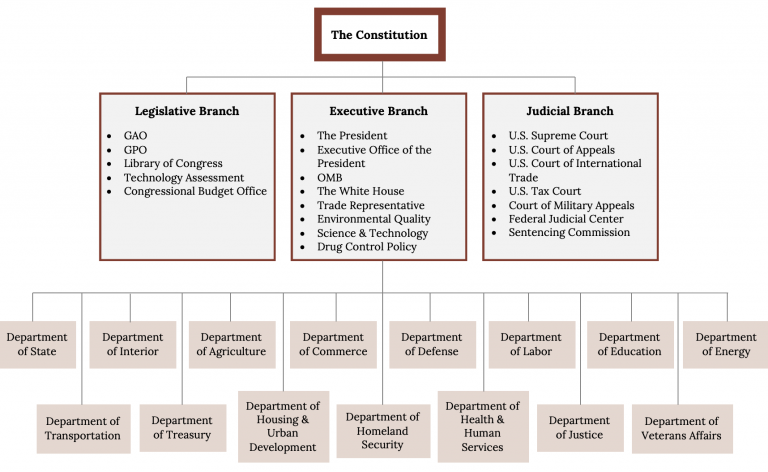
Exercises
- The preceding chart is an organizational chart for the US federal government. What type of the four structures mentioned in this chapter best fits what you see in this chart?
- How does this structure explain why the government seems to move at an incredibly slow pace?
- What changes could be made to speed up the government? Would they be beneficial?