HR Management and Diversity
| Site: | Saylor University |
| Course: | [CB DRAFT] BUS501: Strategic Management |
| Book: | HR Management and Diversity |
| Printed by: | Guest user |
| Date: | Tuesday, 27 October 2026, 2:34 PM |
Description
 buttons.
Human Resource Management

Exhibit 11.1 (Credit: Ludovic Bertron /flickr / Attribution 2.0 Generic (CC BY 2.0))
Introduction
Exploring Managerial Careers
Eva Hartmann, Trellis LLC
Eva Hartmann has nearly 20 years of experience as a strategic, results-driven, innovative leader with significant expertise in human resources strategy, talent and leadership development, and organizational effectiveness. She has worked in a variety of industries, from manufacturing to Fortune 500 consulting. Eva is a transformational change agent who has developed and led strategic human capital programs and talent initiatives in multiple challenging environments globally. Eva is passionate about enhancing both individual and organizational performance.
Eva began her career in one of the large "Big 6" management consulting firms at the time, and she happily returned several years ago to consulting. She is the founder and president of Trellis LLC, a human capital consulting and staffing firm in Richmond, Virginia.
Prior to Trellis, Eva was the global human resources leader for a large global manufacturer of plastic film products and was responsible for the HR strategy and operations of a $600 million global division. In this role, Eva led a global team of HR managers in North and South America, Europe, and Asia to support global HR initiatives to drive business results and build human capital and performance across the division.
Eva has also held a variety of leadership and managerial roles in both human resources and quality functions at several nationally and globally recognized companies, including Wachovia Securities, Genworth Financial, Sun Microsystems, and Andersen Consulting (now Accenture).
Eva holds an MBA from the College of William and Mary in Williamsburg, Virginia, and a BA in anthropology from the University of Virginia in Charlottesville, Virginia. She is also an adjunct faculty member with the University of Richmond Robins School of Business. Eva currently serves on the board of the Society of Human Resource Management (SHRM) of Richmond, Virginia.
Human resource management is an area that has evolved a great deal over the last few decades. From the days of the very tactical "personnel" management to the current and more strategic state of human resources, businesses and HR professionals alike have changed the way they see the function. In the current economy, human capital assets (i.e., people) are the greatest value creators. Companies compete for talent, and they distinguish themselves in their business performance by the talent they have in their ranks. Human resource management, therefore, becomes a key lever companies can utilize to find, recruit, develop, and grow talent for competitive advantage. This chapter discusses the value and benefits that human resource management brings to an organization, as well as the challenges that the function still faces as a strategic partner to the business.
Source: OpenStax, https://openstax.org/books/principles-management/pages/11-introduction
 This work is licensed under a Creative Commons Attribution 4.0 License.
An Introduction to Human Resource Management
- What has been the evolution of human resource management (HRM) over the years, and what is the current value it provides to an organization?
Human resource management over the years has served many purposes within an organization. From its earliest inception as a primarily compliance-type function, it has further expanded and evolved into its current state as a key driver of human capital development. In the book HR From the Outside In (Ulrich, Younger, Brockbank, Younger, 2012), the authors describe the evolution of HR work in "waves". Wave 1 focused on the administrative work of HR personnel, such as the terms and conditions of work, delivery of HR services, and regulatory compliance. This administrative side still exists in HR today, but it is often accomplished differently via technology and outsourcing solutions. The quality of HR services and HR’s credibility came from the ability to run administrative processes and solve administrative issues effectively. Wave 2 focused on the design of innovative HR practice areas such as compensation, learning, communication, and sourcing. The HR professionals in these practice areas began to interact and share with each other to build a consistent approach to human resource management. The HR credibility in Wave 2 came from the delivery of best-practice HR solutions.
Wave 3 HR, over the last 15–20 years or so, has focused on the integration of HR strategy with the overall business strategy. Human resources appropriately began to look at the business strategy to determine what HR priorities to work on and how to best use resources. HR began to be a true partner to the business, and the credibility of HR was dependent upon HR having a seat at the table when the business was having strategic discussions. In Wave 4, HR continues to be a partner to the business, but has also become a competitive practice for responding to external business conditions. HR looks outside their organizations to customers, investors, and communities to define success - in the form of customer share, investor confidence, and community reputation. HR’s credibility is thus defined in terms of its ability to support and drive these external metrics. Although each "wave" of HR’s evolution is important and must be managed effectively, it is the "outside in" perspective that allows the human resource management function to shine via the external reputation and successes of the organization.
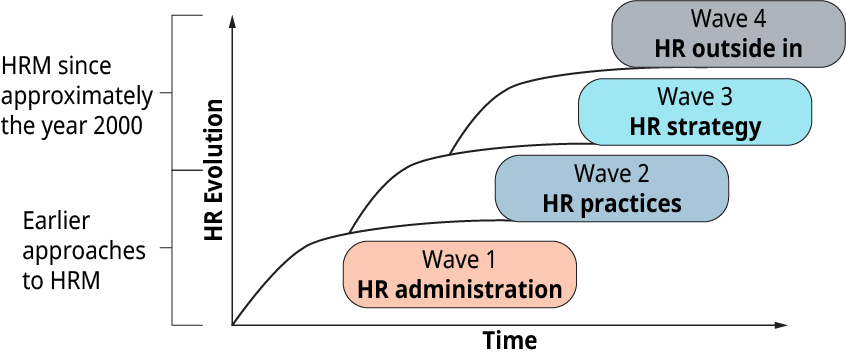
Exhibit 11.2 Evolution of HR Work in Waves
Catching the Entrepreneurial Spirit
Human Resources Outsourcing - Entrepreneurial Ventures
Human resources is a key function within any company, but not all companies are able to afford or justify full-time HR staff. Over the last decade, HR outsourcing has become a good business decision for many small companies whose current staff doesn’t have the bandwidth or expertise to take on the risks of employee relations issues, benefits and payroll, or HR compliance responsibilities. This has led many HR practitioners to try out their entrepreneurial skills in the areas of HR outsourcing and "fractional HR".
Human resources outsourcing is very commonly used by smaller companies (and often large companies too) to cover such tasks as benefits and payroll management. This is an area that has been outsourced to third parties for many years. More recent is the trend to have "fractional HR" resources to help with the daily/weekly/monthly HR compliance, employee relations, and talent management issues that companies need to address. Fractional HR is a growing industry, and it has become the service offering of many entrepreneurial HR ventures. Fractional HR is essentially as it sounds - it is the offering of HR services to a company on a part-time or intermittent basis when the company may not be able to justify the cost of a full-time HR resource. An HR professional can be available onsite for a specified number of hours or days weekly or monthly, depending on the company’s needs and budget. The HR professional handles everything from HR compliance issues and training to employee issues support. Also, for companies that are keen on development of employees, the HR resource can drive the talent management processes - such as performance management, succession planning, training, and development - for companies who require more than just basic HR compliance services.
How does a business leader decide whether HR outsourcing is needed? There are generally two factors that drive a leader to consider fractional HR or HR outsourcing - time and risk. If a leader is spending too much time on HR issues and employee relations, he may decide that it is a smart tradeoff to outsource these tasks to a professional. In addition, the risk inherent in some HR issues can be very great, so the threat of having a lawsuit or feeling that the company is exposed can lead the company to seek help from a fractional HR professional.
HR entrepreneurs have taken full advantage of this important trend, which many say will likely continue as small companies grow and large companies decide to off-load HR work to third parties. Some HR companies offer fractional HR as part of their stated HR services, in addition to payroll and benefits support, compensation, and other HR programmatic support. Having a fractional HR resource in place will often illuminate the need for other HR services and program builds, which are generally supported by those same companies. Whether you are an individual HR practitioner or have a small company of HR practitioners and consultants, fractional HR and HR outsourcing can be a very viable and financially rewarding business model. It can also be very personally rewarding, as the HR professional enables smaller companies to grow and thrive, knowing that its HR compliance and processes are covered.
Discussion Questions
- What do you believe is contributing to the growth of the fractional HR and HR outsourcing trend? Do you expect this trend to continue?
- At what point should a company consider bringing on a full-time HR resource instead of using a fractional HR resource? What questions should the company ask itself?
Human resource management provides value to an organization, to a large extent, via its management of the overall employee life cycle that employees follow - from hiring and onboarding, to performance management and talent development, all the way through to transitions such as job change and promotion, to retirement and exit. Human capital is a key competitive advantage to companies, and those who utilize their human resource partners effectively to drive their human capital strategy will reap the benefits.
Human resource management includes the leadership and facilitation of the following key life cycle process areas:
- Human resources compliance
- Employee selection, hiring, and onboarding
- Performance management
- Compensation rewards and benefits
- Talent development and succession planning
Human resources is responsible for driving the strategy and policies in these areas to be in accordance with and in support of the overall business strategy. Each of these areas provides a key benefit to the organization and impacts the organization’s value proposition to its employees.
Concept Check
- How has the function of human resource management evolved over the years?
- In what way do you usually interact with human resources?
Human Resource Management and Compliance
- How does the human resources compliance role of HR add value to an organization?
Human resources compliance is an area that traces back to the very origin of the human resources function - to administrative and regulatory functions. Compliance continues to be a very important area that HR manages, and there are numerous regulations and laws that govern the employment relationship. HR professionals must be able to understand and navigate these laws to help their organizations remain compliant and avoid having to pay fines or penalties. The additional threat of reputational harm to the organization is another reason that HR needs to be aware and alert to any potential gaps in compliance.
Some of the most common examples of laws and regulations that govern the employer-employee relationship include the following (SHRM.org):
- Age Discrimination in Employment Act (ADEA)
- Americans with Disabilities Act (ADA)
- Fair Labor Standards Act (FLSA)
- Family and Medical Leave Act (FMLA)
- National Labor Relations Act (NLRA)
- Worker Adjustment and Retraining Notification Act (WARN)
The Age Discrimination in Employment Act (ADEA) of 1967 protects individuals who are 40 years of age or older from employment discrimination based on age. These protections apply to both employees and job applicants. It also makes it unlawful to discriminate based on age with respect to any terms of employment, such as hiring, firing, promotion, layoff, compensation, benefits, job assignments, and training.
The Americans with Disabilities Act (ADA) of 1990 prohibits private employers, state and local governments, employment agencies, and labor unions from discriminating against qualified individuals with disabilities. The ADA defines an individual with a disability as a person who: 1) has a mental or physical impairment that substantially limits one or more major life activities, 2) has a record of such impairment, or 3) is regarded as having such impairment. An employer is required to make a reasonable accommodation to the known disability of a qualified applicant or employee if it would not impose an "undue hardship" on the operation of the employer's business.
The Fair Labor Standards Act (FLSA) of 1938 establishes the minimum wage, overtime pay, recordkeeping, and youth employment standards affecting full-time and part-time workers in the private sector and in federal, state, and local governments. Special rules apply to state and local government employment involving fire protection and law enforcement activities, volunteer services, and compensatory time off instead of cash overtime pay.
The Family and Medical Leave Act (FMLA) of 1993 entitles eligible employees to take up to 12 weeks of unpaid, job-protected leave in a 12-month period for specified family and medical reasons. FMLA applies to all public agencies, including state, local, and federal employers, local education agencies (schools), and private-sector employers who employed 50 or more employees in 20 or more workweeks in the current or preceding calendar year, including joint employers and successors of covered employers.
The National Labor Relations Act (NLRA) of 1935, which was later amended in 1947, extends rights to many private-sector employees, including the right to organize and bargain with their employer collectively. Employees covered by the act are protected from certain types of employer and union misconduct and have the right to attempt to form a union where none exists.
The Worker Adjustment and Retraining Notification Act (WARN) of 1988 generally covers employers with 100 or more employees, not counting those who have worked less than six months in the last 12 months and those who work an average of less than 20 hours a week. Regular federal, state, and local government entities that provide public services are not covered. WARN protects workers, their families, and communities by requiring employers to provide notification 60 calendar days in advance of plant closings and mass layoffs.
These are just a few of the key regulatory federal statutes, regulations, and guidance that human resources professionals need to understand to confirm organizational compliance. For additional information on HR compliance resources, the Society of Human Resource Management (SHRM) at SHRM.org maintains a plethora of resources for the HR professional and the businesses that they support.
To ensure the successful management and oversight of the many compliance rules and regulations, the human resources team must utilize best practices to inform and hold employees accountable to HR compliance practices. Some of these best practices include education and training, documentation, and audit. Each of these is described in greater detail, and will help HR achieve its important goal of maintaining HR compliance for the organization.
Education and training in the areas of compliance and labor law is critical to ensure that all applicable laws and regulations are being followed. These laws can change from year to year, so the HR professionals in the organization need to ensure that they are engaged in ongoing education and training. It is not just imperative for the HR professional to receive training. In many organizations, managers receive training on key rules and regulations (such as FMLA or ADA, to name a few) so that they have a foundation of knowledge when dealing with employee situations and potential risk areas. Human resources and management need to partner to ensure alignment on compliance issues - especially when there is a risk that an employee situation treads into compliance regulation territory. See Table 11.1 for a partial list of federal labor laws by number of employees, as displayed on the Society for Human Resource Management website.
Refer to Table 11.1: Federal Labor Laws by Number of Employees.
| Federal Labor Laws |
|---|
| American Taxpayer Relief Act of 2012 |
| Consumer Credit Protection Act of 1968 |
| Employee Polygraph Protection Act of 1988 |
| Employee Retirement Income Security Act of 1974 (ERISA) |
| Equal Pay Act of 1963 |
| Fair and Accurate Credit Transaction Act of 2003 (FACT) |
| Fair Credit Reporting Act of 1969 |
| Fair Labor Standards Act of 1938 |
| Federal Insurance Contributions Act of 1935 (Social Security) (FICA) |
| Health Insurance Portability and Accountability Act of 1996 (if a company offers benefits) (HIPPA) |
| Immigration Reform and Control Act of 1986 |
|
These federal laws cover all employees of all organizations. Several other factors may apply in determining employer coverage, such as whether the employer is public or private, whether the employer offers health insurance, and whether the employer uses a third party to conduct background checks.
Source: SHRM website, https://www.shrm.org/, accessed October 20, 2018. |
Documentation of the rules and regulations - in the form of an employee handbook - can be one of the most important resources that HR can provide to the organization to mitigate compliance risk. The handbook should be updated regularly and should detail the organization's policies and procedures and how business is to be conducted. Legal counsel should review any such documentation before it is distributed to ensure that it is up-to-date and appropriate for the audience.
Scheduling HR compliance audits should be part of the company's overall strategy to avoid legal risk. Noncompliance can cause enormous financial and reputational risk to a company, so it is important to have audits that test the organization's controls and preparedness. When the human resources function takes the lead in implementing audits and other best practices, they create real value for the organization.
Concept Check
- What are some of the key regulations that guide the compliance work of human resource management?
- What does an employee handbook provide to an organization?
Performance Management
- How do performance management practices impact company performance?
Performance management practices and processes are among the most important that human resources manages, yet they are also among the most contentious processes in an organization. Many people view performance management as a human resources role and believe that it is in some parallel path with the business. On the contrary, for the process to be successful, it should not only be human resources that is responsible for driving performance. For the (typically) annual performance management process, human resources and line management should partner on the implementation and ongoing communication of the process. Although HR is responsible for creating and facilitating the performance management processes, it is the organizational managers that need to strongly support the process and communicate the linkage of performance management to overall organizational goals and performance. In my experience, it was helpful when business leadership emphasized that performance management isn't a human resources process - it is a mission-critical business process. If a business manager can't track and drive performance at the individual level, then the overall organization won't know how it's tracking on overall organizational goals. Before discussing the state of performance management in the workplace today, it is important to understand the origin of performance management. Performance management began as a simple tool to drive accountability (as it still does) but has evolved more recently into a tool used for employee development.
Performance management can be tracked back to the U.S. military's "merit rating" system, which was created during World War I to identify poor performers for discharge or transfer ("The Performance Management Revolution," Harvard Business Review, October 2016). After World War II, about 60% of all U.S. companies were using a performance appraisal process. (By the 1960s nearly 90% of all U.S. companies were using them.) Although the rules around job seniority determined pay increases and promotions for the unionized worker population, strong performance management scores meant good advancement prospects for managers. In the beginning, the notion of using this type of system to improve performance was more of an afterthought, and not the main purpose. By the 1960s or so, when we started to see a shortage of managerial talent, companies began to use performance systems to develop employees into supervisors, and managers into executives.
In 1981, when Jack Welch became CEO of General Electric, he championed the forced-ranking system - another military creation. He did this to deal with the long-standing concern that supervisors failed to label real differences in performance (HBR, The Performance Management Revolution). GE utilized this performance management system to shed the people at the bottom. They equated performance with people's inherent capabilities and ignored their potential to grow. People were categorized as "A" players (to be rewarded), "B" players (to be accommodated), and "C" players (to be dismissed). In the GE system, development was reserved for the "A" players - and those with high potential were chosen to advance to senior positions. Since the days of GE's forced ranking, many companies have implemented a similar forced-ranking system, but many have backed away from the practice. After Jack Welch retired, GE backed away from the practice as well. Companies, GE included, saw that it negatively fostered internal competition and undermined collaboration and teamwork and thus decided to drop forced ranking from their performance management processes.
Most people agree, in theory, that performance management is important. What people may not agree on is how performance management should be implemented. As the dissatisfaction with performance management processes began to increase, some companies began to change the way they thought about performance. In 2001, an "Agile Manifesto" was developed by software developers and "emphasized principles of collaboration, self-organization, self-direction, and regular reflection on how to work more effectively, with the aim of prototyping more quickly and responding in real-time to customer feedback and changes in requirements". (Performance Management Revolution, HBR). The impact on performance management was clear, and companies started to think about performance management processes that were less cumbersome, incorporated frequent feedback, and delivered performance impacts.
In a recent public survey by Deloitte Services, 58% of executives surveyed believed that their current performance management approach drives neither employee engagement nor high performance. They need something more nimble, real-time, and individualized - and focused on fueling performance in the future rather than assessing it in the past. ("Reinventing Performance Management," Harvard Business Review, Buckingham and Goodall, 2015). In light of this study, Deloitte became one of the companies that has recently sought to redesign their performance processes. As part of their "radical redesign," they seek to see performance at the individual level, and thus they ask team leaders about their own future actions and decisions with respect to each individual. They ask leaders what they'd do with their team members, not what they think of them ("Reinventing Performance Management," HBR). The four questions that Deloitte asks of its managers are as follows:
- Given what I know of this person's performance, and if it were my money, I would award this person the highest possible compensation increase and bonus.
- Given what I know of this person's performance, I would always want him or her on my team.
- This person is at risk for low performance.
- This person is ready for promotion today.
Although there has been some discussion over the last several years about some companies wanting to drop performance appraisals completely, most of the research seems to support that the total absence of performance management doesn't help either. A recent global survey by CEB Global reports that more than 9,000 managers and employees think that not having performance evaluations is worse than having them. ("Let's Not Kill Performance Evaluations Yet," HBR, Nov 2016, Goler, Gale, Grant). Their findings indicate that even though every organization has people who are unhappy with their bonuses or disappointed that they weren't promoted, research shows that employees are more willing to accept an undesirable outcome when the process is fair. The key question really becomes: how can HR help the business create a process to fairly evaluate performance and enhance employee development while not burdening the business with undue bureaucracy and non-value-added activities?
Managing Change
Global versus Local HR
Multinational companies are always challenged to determine the balance between global and local needs when creating a human resource management strategy. Some large companies weigh heavily on the side of centralization, with very few local deviations from the global strategy. Others may allow more localization of processes and decision-making if there are very specific local cultural needs that must be addressed. In either case, companies are well-served by maintaining global standards while also allowing for local market adaptation in the human resources areas where it makes the most sense.
According to the MIT Sloan Management Review article "Six Principles of Effective Global Talent Management" (Winter 2012), most multinational companies introduce global performance standards, competency profiles, and performance management tools and processes. These are the human resources areas that are most closely linked to the overall strategies and goals, and thus remain at the global level. Those HR processes that are not perceived as being as closely linked to the strategy and that may need to have local market inputs include processes such as training and compensation. Hiring practices may also need to be locally adapted, due to country-specific labor laws and challenges. One caveat, however, is that a company may limit itself in terms of its global talent management if it has too many country-specific adaptations to hiring, assessment, and development processes for top talent. It is important that the company takes a global approach to talent management so that cross-learning opportunities and cross-cultural development opportunities can take place.
One of the most important aspects of global talent management is that a company can break down silos and pollinate the business with talented employees from around the globe. Some companies even have global leadership programs that bring together high-potential leaders from across the organization to build camaraderie, share knowledge, and engage in learning. Others have created rotational programs for leaders to be able to experience new roles in other cultures in order to build their personal resumes and cultural intelligence. Human resources can have an enormous impact on the company's ability to harness the power of a global talent pool when they create a global network for talent while also balancing this with the requirements of the local market.
Discussion Questions
- What are the challenges of a company developing a different competency model or performance management process for each of its local offices?
- Why might compensation programs and hiring practices need to have local adaptation? What would be the risks if these were not adapted to local markets?
As organizations evaluate their options for a performance management system, human resources and business leadership need to consider several challenges that will need to be addressed - no matter what the system. ("The Performance Management Revolution," Capelli and Tavis, HBR, pp. 9-11).
The first is the challenge of aligning individual and company goals. Traditionally, the model has been to "cascade" goals down through the organization, and employees are supposed to create goals that reflect and support the direction set at the top. The notion of SMART goals (Specific, Measurable, Achievable, Relevant, Timebound) has made the rounds over the years, but goal setting can still be challenging if business goals are complex or if employee goals seem more relatable to specific project work than to the overall top-line goals. The business and the individual need to be able to respond to goal shifts, which occur very often in response to the rapid rate of change and changing customer needs. This is an ongoing issue that human resources and business leadership will need to reconcile.
The next key challenge to think about when designing a performance management process is rewarding performance. Reward structures are discussed later in this chapter, but reward systems must be rooted in performance management systems. Currently, the companies that are redesigning their performance processes are trying to figure out how their new practices will impact their pay-for-performance models. Companies don't appear to be abandoning the concept of rewarding employees based on and driven by their performance, so the linkage between the two will need to be redefined as the systems are changed.
The identification of poor performers is a challenge that has existed since the earliest days of performance management, and even the most formal performance management process doesn't seem to be particularly good at weeding out poor performers. A lot of this is due to the managers who evaluate employees and are reluctant to address the poor performers that they're seeing. Also, the annual performance management process tends to make some managers feel that the poor performance should be overlooked during the year and only addressed (often ineffectively) during a one-per-year review. Whatever new performance management models an organization adopts, they will have to ensure that poor performance is dealt with in real time and is communicated, documented, and managed closely.
Avoiding legal troubles is another ongoing challenge for organizations and is another reason for real-time communication and documentation of performance issues. Human resources supports managers as they deal with employee relations issues, and the thought of not having a formal, numerical ratings system is unfathomable for some people who worry about defending themselves against litigation. However, because even formal performance processes can be subjective and may reveal ratings bias, neither the traditional formal process nor some of the radical new approaches can guarantee that legal troubles will never develop. From my experience, the best strategy for effective and fair performance management is real-time communication and documentation of issues. The employee is told about his or her performance issues (in as close to real time as possible), and the manager has documented the performance issues and conversations objectively and has engaged human resources with any larger or more complex issues.
"Managing the feedback firehose" and keeping conversations, documentation, and feedback in a place where it can be tracked and utilized is an ongoing challenge. The typical annual performance process is not conducive to capturing ongoing feedback and conversations. There have been some new technologies introduced (such as apps) that can be used to capture ongoing conversations between managers and employees. General Electric uses an app called PD@GE (PD = performance development) that allows managers to pull up notes and materials from prior conversations with employees. IBM has a similar app that allows peer-to-peer feedback. Although there are clearly some technology solutions that can be used to help communicate and collect feedback, human resources will need to continue to communicate and reinforce rules around objectivity and appropriate use of the tools.
Performance management processes - traditional and inventive new approaches alike - will face the same challenges over time. Human resource management professionals need to be aware of these challenges and design a performance management system that addresses them in the format and within the context of their culture.
Concept Check
- Where did the concept of performance management originate?
- What are some of the key challenges of any performance management process?
Influencing Employee Performance and Motivation
- How do companies use rewards strategies to influence employee performance and motivation?
Both performance management and rewards systems are key levers that can be used to motivate and drive individual and group performance ... which leads to overall organizational performance, productivity, and growth. Performance and rewards systems are also "cultural" in that they provide a glimpse into the way a company manages the performance (or nonperformance) of its employees, and to what extent they are willing to differentiate and reward for that performance. There has been a great deal of discussion over the years to identify best practices in the ways we differentiate and reward employees, which will also drive employee performance and motivation.
Before we can talk about best practices and findings in rewards and motivation systems, we must first define the terms. Rewards systems are the framework that an organization (generally via human resources) creates and manages to ensure that employee performance is reciprocated with some sort of reward (e.g., monetary or other extrinsic) that will drive and motivate the employee to continue to perform for the organization. Rewards programs consist primarily of compensation programs and policies, but can also include employee benefits and other extrinsic rewards that fulfill employee needs.
Within human resource management, the primary focus of a rewards program in an organization is to successfully implement a compensation system. Most organizations strive to implement a pay-for-performance compensation program that offers competitive pay in the marketplace and allows differentiation of compensation based on employee performance. Pay for performance begins with a philosophy that an organization adopts that states that they seek to reward the best-performing employees to enhance business performance and take care of those who can have the greatest impact.
In the 2011 SHRM article by Stephen Miller, entitled "Study: Pay for Performance Pays Off," Miller says that companies’ top four drivers for moving to a pay-for-performance strategy are to:
- Recognize and reward high performers (46.9%)
- Increase the likelihood of achieving corporate goals (32.5%)
- Improve productivity (7.8%)
- Move away from an entitlement culture (7.8%)
The study also showed that the drivers differed depending on whether the company was high performing or lower performing. Almost half of high-performing organizations indicated that recognizing and rewarding top performers was the main driver of their pay-for-performance strategy, making it number one on the list of primary drivers. Lower-performing organizations did not appear to be as sure about the drivers behind their strategy. The number one driver among this group was achieving corporate goals. It appears that those top-performing organizations that implement a pay-for-performance strategy truly believe in the idea of differentiating among different levels of performance.
According to the 2015 World at Work "Compensation Programs and Practices Report," pay for performance continues to thrive with better than 7 in 10 (72%) companies saying that they directly tie pay increases to job performance, and two-thirds (67%) indicating increases for top performers are at least 1.5 times the increase for average performers. In addition, the results of the survey seem to indicate that employees’ understanding of the organization’s compensation philosophy improves when there is higher differentiation in increases between average and top performers. The greater differentiation of increases is more visible and drives home the point that the company is serious about pay for performance.
A pay-for-performance program may have many components, and the human resources organization has the challenge of designing, analyzing, communicating, and managing the different components to ensure that the philosophy and the practices themselves are being carried out appropriately and legally. Human resource management’s role in establishing pay for performance is that HR must engage business leadership to establish the following elements of the framework:
- Define the organization’s pay philosophy. Leadership needs to agree that they will promote a culture that rewards employees for strong performance.
- Review the financial impacts of creating pay-for-performance changes. How much differentiation of performance will we have? What is the cost of doing this?
- Identify any gaps that exist in the current processes. If any of the current human resources and compensation policies conflict with pay for performance, they should be reviewed and changed. Examples may lie in the performance management process, the merit increase process, and the short-term and long-term bonus processes. If the performance management process has gaps, these should be corrected before pay for performance is implemented; otherwise this will generate more distrust in the system. The salary structure should also be benchmarked with market data to ensure that the organization is compensating according to where it wishes to be in the marketplace.
- Update compensation processes with new pay for-performance elements. This includes the design of a merit matrix that ties employee annual pay increases to performance. Other areas of focus should be the design of a short-term bonus matrix and a long-term bonus pay-for-performance strategy. In other words, how does performance drive the bonus payouts? What is the differential (or multiplier) for each level?
- Communicate and train managers and employees on the pay for-performance philosophy and process changes. Explain the changes in the context of the overall culture of the organization. This is a long-term investment in talent and performance.
Human resource management professionals play a key role in the rewards processes, and employee compensation is only one piece (although a key piece!) of the "total rewards" pie. World at Work defines total rewards as a "dynamic relationship between employers and employees". World at Work also defines a total rewards strategy as the six elements of total rewards that "collectively define an organization’s strategy to attract, motivate, retain and engage employees". These six elements include:
- Compensation - Pay provided by an employer to its employees for services rendered (i.e., time, effort, and skill). This includes both fixed and variable pay tied to performance levels.
- Benefits - Programs an employer uses to supplement the cash compensation employees receive. These health, income protection, savings, and retirement programs provide security for employees and their families.
- Work-life effectiveness - A specific set of organizational practices, policies, and programs, plus a philosophy that actively supports efforts to help employees achieve success at both work and home.
- Recognition - Formal or informal programs that acknowledge or give special attention to employee actions, efforts, behavior, or performance and support business strategy by reinforcing behaviors (e.g., extraordinary accomplishments) that contribute to organizational success.
- Performance management - The alignment of organizational, team, and individual efforts toward the achievement of business goals and organizational success. Performance management includes establishing expectations, skill demonstration, assessment, feedback, and continuous improvement.
- Talent development - Provides the opportunity and tools for employees to advance their skills and competencies in both their short- and long-term careers.
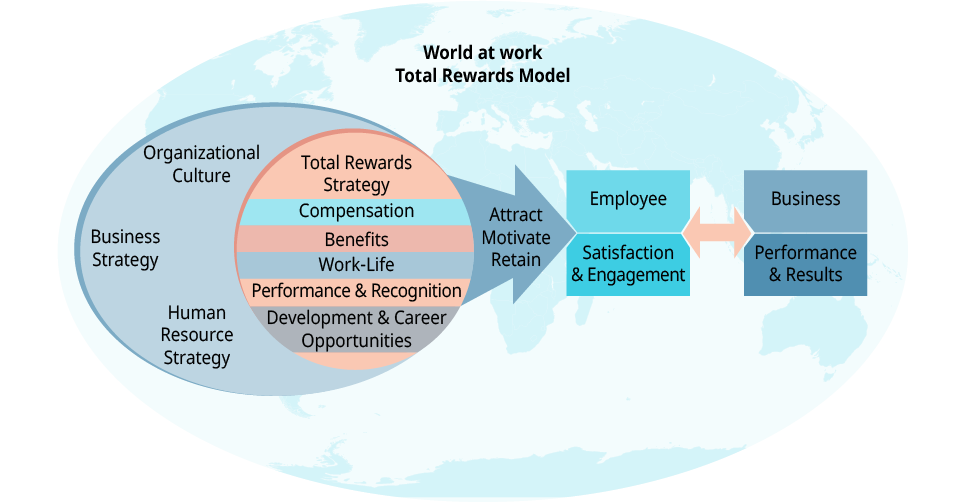
Exhibit 11.3 Total Rewards Model, World at Work
Human resource management is responsible for defining and driving the various elements of an organization’s total rewards strategy and ensuring that it is engaging enough to attract and retain good employees. It is easy to see that there are many different types of rewards that can motivate individuals for many different reasons. In the HBR article "Employee Motivation: A Powerful New Model" (Nohria, Groysberg, Lee), August 2008, the authors describe four different drives that underlie motivation. They assert that these are hardwired into our brains and directly affect our emotions and behaviors. These include the drives to acquire, bond, comprehend, and defend. Table 11.2 illustrates each of these drives, the primary levers found in an organization to address those drives, and the actions that should be taken to support the primary levers.
The drive to acquire describes the notion that we are all driven to acquire scarce goods that bolster our sense of well-being. This drive also seems to be relative (we compare ourselves to others in what we have) and insatiable (we always want more). Within an organization, the primary lever to address this drive is the reward system, and the actions are to differentiate levels of performance, link performance to rewards, and pay competitively.
The drive to bond describes the idea that humans extend connections beyond just individuals, to organizations, associations, and nations. In organizations, this drive is fulfilled when employees feel proud to be a part of the company and enjoy being a member of their team. Within an organization, the primary lever to address this drive is culture, and the actions are to foster mutual reliance and friendships, to value collaboration and teamwork, and to encourage best practice sharing.
The drive to comprehend is the concept of all of us wanting to make sense of the world around us and producing different theories and accounts to explain things. People are motivated by the idea of figuring out challenges and making a contribution. In organizations, the primary lever to address this drive is job design, and the actions are to design jobs that have distinct and important roles in the organization, as well as jobs that are meaningful and foster a sense of contribution.
The drive to defend is our instinct to defend ourselves, our families, and our friends, and it describes our defensiveness against external threats. This drive also tells us a lot about our level of resistance to change, and why some employees have especially guarded or emotional reactions. In organizations, the primary levers that address this drive are performance management and resource-allocation processes, and the actions are to increase process transparency and fairness, and to build trust by being just in granting rewards, assignments, and other recognition.
Within human resource management, the area of compensation and reward systems is exceedingly complicated. In organizations, we think primarily of compensation rewards, which are very important drivers and motivators for most people. We need to also remember the other aspects of the total rewards strategy, as well as the drives and levers we can utilize to motivate employees.
Concept Check
- What does a pay-for-performance strategy mean for a company?
- What is the first step in defining an organization’s pay-for-performance strategy?
Building an Organization for the Future
- What is talent acquisition, and how can it create a competitive advantage for a company?
We've discussed some of the key focus areas that human resource management professionals need to address to ensure that employees are performing their roles well and are being fairly rewarded for their contributions. We haven't yet addressed how we think about where these employees come from - Whom do we hire? What skills do we need now and in the future? Where will we even look for these employees? What are some best practices? Talent acquisition is the area within human resource management that defines the strategy for selection, recruiting, and hiring processes, and helps the organization fight the "war for talent" during good times and bad.
Hiring strong talent is a key source of competitive advantage for a company, yet so many companies do it poorly. Often, the recruiting and hiring processes happen reactively - someone leaves the organization and then people scramble to fill the gap. Very few companies take a longer-term, proactive approach and work to create a strategic plan for talent acquisition. In the article "The Definitive Guide to Recruiting in Good Times and Bad" (Fernandez-Araoz, Groysberg, Nohria, HBR, 2009), the authors advocate for a rigorous and strategic recruiting process that includes the following critical actions:
- Anticipate your future leadership needs based on your strategic business plan.
- Identify the specific competencies required in each position you need to fill.
- Develop a sufficiently large candidate pool.
In organizations today, there are often pieces of the talent acquisition process that are outsourced to external recruiters, as opposed to being managed internally by human resources employees. While outsourcing specific searches is not an issue, there must be internal HR/talent acquisition employees responsible for creating the overall strategic plan for the recruiting function. Contract recruiters may then take responsibility for a piece of the overall process by leveraging the strategy and competencies that the HR team puts forth.
Recruiting and hiring of high-level leadership candidates has special risks and rewards associated with it. The risk that a key leadership position is vacant or becoming vacant poses a risk to the organization if it is left open for too long. These high-level positions are often harder to fill, with fewer candidates being available and the selection of the right talent being so critical to the organization's future. The reward, however, is that with due diligence and clear goals and competencies/skills defined for the position, the HR/talent acquisition professional can create a competitive advantage through the recruitment of key high-level talent.
The following best practices illustrate the key steps for effective recruiting of key leadership hires. Both human resources and business leadership should partner to discuss and define each of the elements to ensure alignment and support of the recruiting plan and process (Definitive Guide to Recruiting, HBR, 2009).
Anticipate your needs. Every two to three years there should be a review of high-level leadership requirements based on the strategic plan. Some of the questions to answer here are:
- How many people will we need, and in what positions, in the next few years?
- What will the organizational structure look like?
- What must our leadership pipeline contain today to ensure that we find and develop tomorrow's leaders?
Specify the job. For each leadership position identified, specify competencies needed in each role. For example:
- Job-based: What capabilities will the job require?
- Team-based: Will the applicant need to manage political dynamics?
- Firm-based: What resources (supporting, talent, technology) will the organization need to provide the person who fills this role?
Develop the pool. Cast a wide net for candidates by asking suppliers, customers, board members, professional service provides, and trusted insiders for suggestions. It helps to start this process even before you have a role that you're hiring for. During succession planning and talent discussions internally, it helps to start making of list of internal and external contacts and potential candidates before the need arises.
Assess the candidates. Have the hiring manager, the second-level manager, and the top HR manager conduct a "behavioral event interview" with each candidate. Candidates will describe experiences they've had that are like situations they'll face in the organization. Gain an understanding of how the candidate acted and the reasoning behind their actions. Make sure to evaluate a broad range of references to ask about results the candidate achieved.

Exhibit 11.4 The Job Fair A job fair, career fair, or career expo, like this one at the College of DuPage, is an event in which employers, recruiters, and schools give information to potential employees and job seekers attend hoping to make a good impression on potential employers. They also interact with potential coworkers by speaking face-to-face, exchanging résumés, and asking questions in an attempt to get a good feel for the work needed. Likewise, online job fairs give seekers another way to get in contact with probable employers using the Internet.
Close the deal. Once you have chosen the final candidate, you can increase the chance that the job offer will be accepted by:
- Sharing passion about the company and role, and showing genuine interest in the candidate
- Acknowledging the opportunities and challenges of the role, differentiating the opportunities at your organization from those of your competitor
- Striking a creative balance between salary, bonuses, and other long-term incentives
Integrate the newcomer. It is important to integrate new hires into the company's culture:
- During the first few months, have the managers and the HR team check in with each new hire.
- Assign a mentor (star employee) to provide ongoing support to each new hire.
- Check in with the new hire to ensure that they are getting enough support, and inquire about what other support might be needed. Ensure that new hires are adequately building new relationships throughout the organization.
| Hiring Top-Level Executives | |||
|---|---|---|---|
| Steps in the Process | Poor Practices | Best Practices | Challenges |
| Anticipate. |
Hiring only when you have an opening Poor succession plan Not anticipating future needs |
Conduct ongoing analysis of future needs. Always evaluate the pool of potential talent. |
Linking the talent plan to the strategic plan Incorporating HR into the strategic planning process |
| Specify the job. | Relying on generic job specifications |
Continually defining the specific demands of the job Specifying specific skills and experience requirements |
Dialogue between HR and top management |
| Develop a pool. |
Limiting the pool Only looking for external or internal candidates |
Develop a large pool. Include all inside and outside potential candidates. |
Breaking organizational silos |
| Assess the candidates. |
Don't pick the first OK choice. Don't only use your "gut". |
Use a small pool of your best interviewers. Conduct robust background checks. |
Training senior managers on interviewing techniques |
| Hire the choice. |
Don't assume money is the only issue. Don't only discuss the positives of the job. |
Show active support of the candidates' interests. Realistically describe the job. Ensure that offered compensation is fair to other employees. |
Getting commitment of top managers Ensuring compensation equity |
| Integrate the new hire. | Don't assume that the new hire is a "plug and play". |
Use a "top performer" as a mentor. Check in often early in the process even if no problems seem imminent. |
Rewarding mentors |
| Review the process. | Don't hang on to bad hires. |
Remove bad hires early on. Review the recruiting practices. Reward your best interviewers. |
Institutionalizing audit and review practices Admitting mistakes and moving on |
Refer to Table 11.2: Hiring Top-Level Executives, adapted from "The Definitive Guide to Recruiting in Good Times and Bad," from the article "Hiring Top Executives: A Comprehensive End-to-End Process," Harvard Business Review, May 2009.
By following these best practices, human resources and business leadership can ensure that the new hire is integrating well and has the best possible start in the new role. Talent acquisition is a key element of any human resource management program, and the right process can mean the difference between a poor hire and a distinct competitive advantage gained through top talent.
Concept Check
- What are some best practices for recruiting and hiring leadership candidates?
- How can we ensure a more successful integration of the new hire?
Talent Development and Succession Planning
- What are the benefits of talent development and succession planning?
Talent development and succession planning are, in my opinion, two of the most critical human resource management processes within an organization. You can work tirelessly to recruit and hire the right people, and you can spend a lot of time defining and redesigning your performance and rewards programs, but if you can't make decisions that effectively assess and develop the key talent that you have, then everything else feels like a wasted effort. Talent development describes all process and programs that an organization utilizes to assess and develop talent. Succession planning is the process for reviewing key roles and determining the readiness levels of potential internal (and external!) candidates to fill these roles. It is an important process that is a key link between talent development and talent acquisition/recruiting.
The human resources function facilitates talent development activities and processes, but they are also heavily reliant on business inputs and support. Each of the talent development processes that will be discussed require heavy involvement and feedback from the business. Like performance management, talent development is a process that HR owns and facilitates, but it is a true business process that has a fundamental impact on an organization's performance. Talent is a competitive advantage, and in the age of the "war for talent," an organization needs to have a plan for developing its key talent.
One of the key tools that is used in talent development is the talent review. This process generally follows an organization's performance management process (which is primarily focused on current employee performance) and is more focused on employee development and potential for the future. Talent reviews often employ the use of a 9-box template, which plots employee performance versus employee potential and provides the reviewer with nine distinct options, or boxes, to categorize where the employee is.
Refer to Table 11.3: Performance and Potential Grid.
| Performance and Potential Grid | ||||
|---|---|---|---|---|
| Lowest Potential Rating | Middle Potential Rating | Highest Potential Rating | ||
| Performance Over Time | Highest |
John Smith Melanie Roper Keegan Flanagan |
Chieh Zhang Edgar Orrelana |
Rory Collins Aimee Terranova |
| Medium |
Joseph Campbell Alina Dramon Alex Joiner Lauren Gress |
Christina Martin Thomas Weimeister |
Richard Collins | |
| Lowest | Marty Hilton | |||
The performance axis ratings are low/medium/high and based on the employee's recent performance management rating. Low = below target, medium = at target, and high = above target. Like the performance rating, this reflects performance against objectives and the skills and competencies required in the employee's current role and function. Performance can change over time (for example, with a promotion or job change). Performance is overall a more objective rating than potential, which leaves the rater to make some assumptions about the future.
Potential is defined as an employee's ability to demonstrate the behaviors necessary to be successful at the next highest level within the company. Competencies and behaviors are a good indicator of an employee's potential. Higher-potential employees, no matter what the level, often display the following competencies: business acumen, strategic thinking, leadership skills, people skills, learning agility, and technology skills. Other indicators of potential may include:
- Top performance in current job
- Success in other positions held (within or outside of the company)
- Education/certifications
- Significant accomplishments/events
- Willingness and desire to advance
Managing Change
Tech in Human Resources
There has been a boom in HR technology and innovation over the last several years - and it is making some of the traditional HR systems from last decade seem enormously outdated. Some of the trends that are driving this HR tech innovation include mobile technology, social media, data analytics, and learning management. Human resources professionals need to be aware of some of the key technology innovations that have emerged as a result of these trends because there's no sign that they will be going away any time soon.
Josh Bersin of Bersin by Deloitte, Deloitte Consulting LLP, wrote about some of these HR technology innovations in his SHRM.org article "9 HR Tech Trends for 2017" (Jan. 2017). One of these technology innovations is the "performance management revolution" and the new focus on managing performance by team and not just by hierarchy. Performance management technologies have become more agile and real time, with built-in pulse surveys and easy goal tracking. Now, instead of the formal, once-a-year process that brings everything to a halt, these performance management technologies allow ongoing, real-time, and dynamic input and tracking of performance data.
Another HR tech trend named is the "rise of people analytics". Data analytics has become such a huge field, and HR's adoption of it is no exception. Some disruptive technologies in this area are predictive - they allow analysis of job change data and the prediction of successful versus unsuccessful outcomes. Predictive analytics technologies can also analyze patterns of e-mails and communications for good time-management practices, or to predict where a security leak is likely to occur. One other incredible analytics application consists of a badge that monitors employees' voices and predicts when an employee is experiencing stress. That is either really cool or really eerie, if you ask me.
The "maturation of the learning market" is a fascinating trend to me, as an HR professional who grew up in the days of multiple in-class trainings and week-long leadership programs. Learning processes have changed greatly with the advent of some of these innovative HR technologies. Although many larger companies have legacy learning management systems (like Cornerstone, Saba, and SuccessFactors), there are many new and competitive options that focus on scaling video learning to the entire organization. The shift has gone from learning management to learning - with the ability to not only register and track courses online, but to take courses online. Many companies are realizing that these YouTube-like learning applications are a great complement to their existing learning systems, and it is predicted that the demand will continue to grow.
Other trends of note include technologies that manage the contingent workforce, manage wellness, and automate HR processes via artificial intelligence. It is amazing to think about so many interesting and innovative technologies that are being designed for Human Resources. The investment in human capital is one of the most critical investments that a company makes, and it is refreshing to see that this level of innovation is being created to manage, engage, and develop this investment.
Discussion Questions
- How does real-time performance management compare to the traditional annual performance process? How can a real-time process help an employee be more effective? What are some potential drawbacks?
- Why do you think learning systems evolved in this way? Is there still a place for group classroom training? What types of learning might require classroom training, and what is better suited for online and YouTube-style learning?
In the talent review, the potential axis equates to potential for advancement within the organization: low = not ready to advance, medium = close to ready, and high = ready to advance. Potential does not equate to the value of an individual within the organization, nor does it state the quality of individual. There are likely many strong performers (top contributors) in every company who prefer to stay in their current role for years and be specialists of their own processes. A specialist or expert may not want to manage people, and thus would be rated as low on potential due to the lack of interest in advancement. Advancement may also mean relocation or lifestyle change that an employee is not willing to make at that time, so the employee would be rated low on potential for that reason. Potential can certainly change over time, given people's individual situations and life circumstances. Potential tends to be the more subjective ratings axis, as it involves some assumptions into what a team member could be capable of based on limited information that is available now.

Exhibit 11.5 This is a flight simulator for a Boeing 737 aircraft. There is a drastic shortage of aircraft pilots, and training future pilots is a critical function with the challenge of limited actual flight training time. Consider how technology helps companies develop skilled workers both on and off the job.
A human resources team member should absolutely facilitate the talent review process and provide leaders with clear session objectives and specific instructions in order maintain the integrity and confidentiality of this important talent process. The book One Page Talent Management (Effron and Ort, HBS Press, 2010) describes the talent review meeting as a talent review calibration process that "ensures objective performance and potential evaluations, clear development plans, and an understanding of what high potential means in your company. A calibration meeting brings together a manager and her team members to discuss their talent. Each team member presents the performance and potential (PxP) grid that he prepared on direct reports and briefly describes how each person is rated. Other team members contribute their opinions based on their firsthand interactions with that person. The discussion concludes after they have discussed each person, agreed on their final placement, and identified key development steps for them".
After everyone being discussed has been placed in one of the boxes on the 9-box template, the leadership team should discuss key development actions for each employee. (If there isn't time to discuss development activities for each employee, the group should start with the high-potential employees.) After the talent review calibration process is complete, human resources should keep a master list of the documented outcomes, as well as the development activities that were suggested for everyone. HR should follow up with each of the leaders to help with the planning and execution of the development activities as needed. The key outputs of the talent review process include:
- Identification of the "high-potential" employees in the organization
- Definition of development actions/action plans for each employee
- Insight into talent gaps and issues
- Input into the succession planning process
Succession planning generally follows shortly after (if not right after) a talent review because human resources and organizational leadership now have fresh information on the performance and potential of employees in the organization. Succession planning is a key process used to identify the depth of talent on the "bench" and the readiness of that talent to move into new roles. The process can be used to identify gaps or a lack of bench strength at any levels of the organization, but it is usually reserved for leadership roles and other key roles in the organization. In succession planning, human resources will generally sit down with the group leader to discuss succession planning for his group and create a defined list of leadership and other critical roles that will be reviewed for potential successors.
Once the roles for succession planning analysis have been defined, both HR and the business leader will define the following elements for each role:
- Name of incumbent
- Attrition risk of incumbent
- Names of short-term successor candidates (ready in <1 year)
- Names of mid-term successor candidates (ready in 1–3 years)
- Names of long-term successor candidates (ready in 3+ years)
- Optional - 9-box rating next to each successor candidate's name
The names of longer-term successor candidates are not as critical, but it is always helpful to understand the depth of the bench. With the information recently collected during the talent review process, HR and management will have a lot of quality information on the internal successor candidates. It is important to include external successor candidates in the succession planning analysis as well. If there are no candidates that are identified as short-, mid-, or long-term successor candidates for a role, then the word "EXTERNAL" should automatically be placed next to that role. Even if there are internal candidates named, any external successor candidates should still be captured in the analysis as appropriate.
Talent reviews and succession planning processes both generate excellent discussions and very insightful information on the state of talent in the organization. Human resources facilitates both processes, in very close partnership with the business, and ultimately keeps the output information from the sessions - i.e., the final succession plan, the final 9-box, and the follow-up development actions and activities as defined in the talent review session. With this information, human resources possesses a level of knowledge that will allow it to drive talent development and coach managers on the follow-up actions that they need to set in motion. Some examples of follow-up development activities that may be appropriate based on the outputs of the succession and 9-box events include training, stretch assignments, individual assessments, and individual development plans. Training and training plans identify the learning events that an individual would benefit from, either in a classroom or online format. Stretch assignments may be an appropriate development action for an employee who is being tested for or who wants to take on additional responsibility. Individual assessments, such as a 360 assessment for managers, is a good developmental tool to provide feedback from manager, peers, direct reports, customers, or others who interact with the employee regularly. Finally, an individual development plan is an important document that employees should use to map out their personal development goals and actions, and to track their own status and progress toward those goals.
Talent development is a collection of organization-wide processes that help to evaluate talent strengths and gaps within the organization. Although many of the processes are carried out in a group setting, the output of talent development needs to be very individualized via a collection of development tools and strategies to enhance performance. Human resources is a key resource and partner for these tools and strategies, and thus plays a critical role in the future of talent for the organization.
Conclusion
Human resource management is a complex and often difficult field because of the nature of the key area of focus - people. In working with people, we begin to understand both the expressed and the hidden drives - intentions and emotions that add complexity and additional context to the processes and tasks that we set forth. We also begin to understand that an organization is a group of individuals, and that human resources plays a critical role in ensuring that there are philosophies, structures, and processes in place to guide, teach, and motivate individual employees to perform at their best possible levels.
Concept Check
- What is the difference between the performance and potential categories used in the talent review?
- What roles should an organization discuss as part of the succession planning process?
Key Terms
360 assessment
An evaluation tool that collects feedback from manager, peers, direct reports, and customers.
9-box
A matrix tool used to evaluate an organization's talent pool based on performance and potential factors.
Competencies
A set of defined behaviors that an organization might utilize to define standards for success.
Employee life cycle
The various stages of engagement of an employee - attraction, recruitment, onboarding, development, retention, separation.
Employer-employee relationship
The employment relationship; the legal link between employers and employees that exists when a person performs work or services under specific conditions in return for payment.
Human capital
The skills, knowledge, and experience of an individual or group, and that value to an organization.
Human resource management
The management of people within organizations, focusing on the touchpoints of the employee life cycle.
Human resources compliance
The HR role to ensure adherence to laws and regulations that govern the employment relationship.
Merit matrix
A calculation table that provides a framework for merit increases based on performance levels.
Pay-for-performance model
The process and structure for tying individual performance levels to rewards levels.
Performance management
The process by which an organization ensures that its overall goals are being met by evaluating the performance of individuals within that organization.
Society for Human Resource Management
The world's largest HR professional society, with more than 285,000 members in more than 165 countries. It is a leading provider of resources serving the needs of HR professionals.
Succession planning
The process of identifying and developing new leaders and high-potential employees to replace current employees at a future time.
Talent acquisition
The process of finding and acquiring skilled candidates for employment within a company; it generally refers to a long-term view of building talent pipelines, rather than short-term recruitment.
Talent development
Integrated HR processes that are created to attract, develop, motivate, and retain employees.
Talent review calibration process
The meeting in which an organization's 9-box matrix is reviewed and discussed, with input and sharing from organizational leadership.
Total rewards strategy
As coined by World at Work, includes compensation, benefits, work-life effectiveness, recognition, performance management, and talent development.
Training, stretch assignments, individual assessments, individual development plans
These are tools that may be used in talent development:
Training - a forum for learning in person or online
Stretch assignments - challenge roles for high-potential employees
Individual assessments - personality and work style inventories of employees
Individual development plans - documents that highlight an individual employee's opportunities for growth and path of action
War for talent
Coined by McKinsey & Company in 1997, it refers to the increasing competition for recruiting and retaining talented employees.
Summary
An Introduction to Human Resource Management
- What has been the evolution of human resource management over the years, and what is the current value it provides to an organization?
Human resource management began in its first "wave" as a primarily compliance-type function, with the HR staff charged with enforcing compliance of employees and running the ongoing administrative processes. In the second wave, HR became focused on the design of HR practice areas, which could be built upon best-practice models. Wave 3 of HR brought with it the concept that HR should be a true partner to the business and should support the business strategy through its programs and services. Finally, in the fourth wave, HR is still a partner to the business, but it looks outside of the business to customers, investors, and communities to see how it can be competitive in terms of customer share, investor confidence, and community reputation.
Some key areas that HR supports within the employee life cycle process include: human resources compliance, employee selection and hiring, performance management, compensation rewards, and talent development and succession planning.
Human Resource Management and Compliance
- How does the human resources compliance role of HR provide value to a company?
Human resources helps protect the company and its employees to ensure that they are adhering to the numerous regulations and laws that govern the employment relationship. The impact of noncompliance can be very costly and can be in the form of financial, legal, or reputational cost. Some of the key legislation that HR manages compliance around includes the Fair Labor Standards Act (FLSA), the Age Discrimination in Employment Act (ADEA), the Americans with Disabilities Act (ADA), and the Family and Medical Leave Act (FMLA), among others.
Some of the best practices for informing and holding employees accountable are to provide education and training to explain the regulations, to provide reference documentation for guidance with the regulations, and to schedule regular compliance audits to ensure that processes are being followed. Scheduling regular internal HR audits help the organization plan and feel comfortable with its level of preparedness and illustrates the value that a strong HR group can bring to the organization.
Performance Management
- How do performance management practices impact company performance?
Performance management is a critical business process that the human resources group manages for the business. Performance management aligns the work of individual groups with the overall business objectives and enables the business to work toward its goals. Performance management should also help the company differentiate between different levels of employee performance through the management of feedback and a rewards structure.
Performance management also allows a company to identify its poor performers and provides a consistent process for tracking and managing poor performance in a manner that is fair and consistent with the law. There has been much discussion of best practices for a performance management process beyond a formal, annual process that often feels cumbersome to the business. However formal or informal, human resource management needs to ensure that the process helps to differentiate different levels of performance, manages the flow of feedback, and is consistent and fair for all employees.
Influencing Employee Performance and Motivation
- How do companies use rewards strategies to influence employee performance and motivation?
Companies use rewards strategies to influence employee performance and motivation by differentiating between the various levels of performance. This strategy is called pay for performance, and it ties the employee's performance level to a consistent framework of rewards at each level. Research indicates that the primary reason that companies implement pay for performance is to be able to recognize and reward their high performers.
To implement a pay-for-performance structure, HR and the organization first need to define a compensation philosophy, then perform a review of the financial implications of such a system. Gaps in the current system must be identified, and compensation practices should be updated in accordance with the determined pay-for-performance design. Finally, communication and training are key to help employees understand the context and philosophy, as well as the specific methodology.
Building an Organization for the Future
- What is talent acquisition, and how can it create a competitive advantage for a company?
Human resource management plays the important role of managing the talent processes for an organization, and it is critical in the process of acquiring talent from the outside. Talent acquisition is the process of determining what roles are still needed in the organization, where to find people, and whom to hire. Hiring top talent is a key source of competitive advantage for a company, and not all organizations are good at doing it.
The impact of hiring is especially magnified when you talk about top leadership talent. The right leadership candidate can make all the difference in an organization's growth, performance, and trajectory over the years. HR should work with the business to assess need and specifics of the job, develop a pool of candidates, and then assess candidates for the right person to bring into the organization.
Talent Development and Succession Planning
- What are the benefits of talent development and succession planning?
Talent development and succession planning processes provide organizations with the systems needed to assess and develop employees and to make the appropriate decisions on their internal movement and development. One important talent development process involves a talent review, in which leadership discusses the employees in its groups in terms of their performance and potential. Performance is based on current performance management evaluations on the current role. Potential is based on behavioral indications that would predict future high performance and promotability in an organization. There is then a discussion on the follow-up actions and development plans for the employees, based on where they fall in the performance/potential matrix. The benefit of this process is that the organization gains a better understanding of where the top talent is within the organization and can make plans to manage the development of that talent.
Another key process for managing talent is succession planning. In this process, leadership and HR meet to identify leadership roles and other critical roles in the organization, and then they discuss a potential pipeline of internal and external successor candidates at different levels of readiness for the role. The output of succession planning is that an organization gets to understand the depth of its talent bench and knows the gap areas where it may need to focus on developing or acquiring additional candidates.
Review Questions
- What are the four "waves" of the human resource management evolution?
- What are some of the key regulations that human resources must manage compliance with?
- What are some of the unintended consequences of a forced ranking system?
- What are some of the performance management challenges that must be addressed, no matter what the system?
- Why are many companies interested in moving to a pay-for-performance strategy?
- What are the main process steps for implementing pay for performance?
- What are some best practices for recruiting new leadership candidates?
- Describe the steps of a talent review session.
- What is the difference between performance and potential?
- How can you tell if a candidate has potential?
Critical Thinking Case
Zappos, Holacracy, and Human Resource Management
In 2013, Zappos was performing well under the leadership of Tony Hsieh and was getting ready to take on a new challenge that would, among other things, push the boundaries of traditional human resource management. Although business was booming, Tony Hsieh was not a man who wanted to be in status quo mode for too long, so he set out to implement an organizational and cultural change called Holacracy. Zappos was the largest and best known of the 300 companies worldwide that had adopted Holacracy - a new form of hierarchy that is a "flexible, self-governing structure, where there are no fixed jobs but simply temporary functional roles".
In a Holacracy, the main unit is called the "circle," which is a distinct yet fluid team. Leadership became similarly fluid with the changing circles. Circles are designed to meet certain goals and are created and disbanded as project needs change. The intent is that people self-select to work on projects that they want to work on and that they have the skills for. Tony also removed all previous titles. The role of manager went away and was replaced with three roles: "lead links" would focus on guiding the work in the circles; "mentors" would work on employee growth and development; and "compensation appraisers" would work on determining employees’ salaries. In 2015, he decided to further break down the divisions between many of the functions, changing them all to business-centric circles. There were changes to almost every human resource management structure that you can think of, and there were quite a few growing pains within the organization. Zappos began to look at employee pay, and Holacracy seemed to have a steep learning curve for many people, even though a "constitution" was created to provide guidance. Zappos was also facing 14% attrition, as some of the rapid and excessive changes were wearing on employees. Tony was a visionary, but for a lot of people it was hard to catch up and see the same vision.
From a human resource management perspective, there could be some positive attributes of a Holacracy if it were to succeed - such as building engagement and helping to build talent and skill sets. There were also a few risks that needed to be dealt with carefully. When you create an organization in which people don’t have set teams or projects but instead determine what they want to work on, one of the big challenges is going to be determining the level and nature of their role, as well as the compensation for that role. If Holacracy is compared to a consulting organization, in which consultants are brought into different projects with different requirements, it is critical to first determine the level of their consultant role (based on their education, skills, experience, etc.) so that they can properly move from project to project yet maintain a role of a certain level. That level is then tied to a specific pay scale, so the same consultant will receive the same salary no matter which project they are on. If that consultant is "on the bench," or not placed on a project (or self-placed, in the case of Holacracy), then after a certain defined period that consultant may be at risk of termination.
Holacracy is in some ways a challenging concept to think about, and self-management may not be able to work in all environments. A company that is implementing a Holacracy may find that they are able to master the process of self-selection of work in the "circles". The "task" part of the equation may not be much of an issue once people figure out how to navigate the circles. However, the "people" part of the equation may need some work. The greatest challenge may lie in the structures and processes of human resource management that ultimately define the employer-employee relationship.
Critical Thinking Questions
- What are some of the human resource management processes that might be enhanced by a Holacracy? What processes will be challenged?
- Do you think that a Holacracy can be compared to a consulting company? How are they similar,s and how are they different? Can you think of work areas or industries in which Holacracy would be very difficult to implement?
Diversity in Organizations
Introduction

Exhibit 12.1 (Credit: rawpixel/ Pixabay/ (CC BY 0))
Exploring Managerial Careers
Dr. Tamara A. Johnson, Assistant Chancellor for Equity, Diversity, and Inclusion at University of Wisconsin-Eau Claire
Dr. Tamara Johnson's role as assistant chancellor for equity, diversity, and inclusion at the University of Wisconsin-Eau Claire involves supervising and collaborating with various campus entities to ensure their operations continue to support the university's initiatives to foster diversity and equity within the university community. Dr. Johnson oversees the Affirmative Action, Blugold Beginnings (pre-college program), Gender and Sexuality Resource Center, Office of Multicultural Affairs, Ronald E. McNair Program, Services for Students with Disabilities, Student Support Services, University Police, and Upward Bound units and leads campus-wide initiatives to educate and train faculty, students, and staff about cultural awareness, diversity, and institutional equity.
Dr. Johnson's journey to her current role began more than 20 years ago when she worked as a counselor for the Office of Multicultural Student Affairs at the University of Illinois. Her role in this office launched her on a path through university service - Dr. Johnson went on to work as the associate director for University Career Services at Illinois State University, the director for multicultural student affairs at Northwestern University, and the director for faculty diversity initiatives at the University of Chicago. As faculty at the Chicago School of Professional Psychology, Argosy University, and Northwestern University, Dr. Johnson taught counseling courses at the undergraduate, master's, and doctorate levels.
Dr. Johnson's work at the University of Wisconsin-Eau Claire involves developing a program and protocols to ensure all faculty and staff across the institution receive baseline diversity training. In addition, one of her goals is to include criteria related to diversity factors in the evaluations of all faculty/staff. A primary issue that she seeks to address is to increase the awareness of the challenges experienced by underrepresented students. This includes individuals who may come from backgrounds of low income, students of color, first-generation students, and other marginalized groups such as lesbian, gay, bisexual, and transgender students. Dr. Johnson understands the importance of creating initiatives to support individuals in those groups so their specific concerns may be addressed in multiple ways. As you will learn in this chapter, when leaders proactively create an inclusive and supportive climate that values diversity, benefits are produced that result in in positive outcomes for organizations.
An Introduction to Workplace Diversity
- What is diversity?
Diversity refers to identity-based differences among and between two or more people that affect their lives as applicants, employees, and customers. These identity-based differences include such things as race and ethnicity, gender, sexual orientation, and age. Groups in society based on these individual differences are referred to as identity groups. These differences are related to discrimination and disparities between groups in areas such as education, housing, healthcare, and employment. The term managing diversity is commonly used to refer to ways in which organizations seek to ensure that members of diverse groups are valued and treated fairly within organizations in all areas including hiring, compensation, performance evaluation, and customer service activities. The term valuing diversity is often used to reflect ways in which organizations show appreciation for diversity among job applicants, employees, and customers. Inclusion, which represents the degree to which employees are accepted and treated fairly by their organization, is one way in which companies demonstrate how they value diversity. In the context of today's rapidly changing organizational environment, it is more important than ever to understand diversity in organizational contexts and make progressive strides toward a more inclusive, equitable, and representative workforce.
Three kinds of diversity exist in the workplace (see Table 12.1). Surface-level diversity represents an individual's visible characteristics, including, but not limited to, age, body size, visible disabilities, race, or sex. A collective of individuals who share these characteristics is known as an identity group. Deep-level diversity includes traits that are nonobservable such as attitudes, values, and beliefs. Hidden diversity includes traits that are deep-level but may be concealed or revealed at the discretion of individuals who possess them. These hidden traits are called invisible social identities and may include sexual orientation, a hidden disability (such as a mental illness or chronic disease), mixed racial heritage, or socioeconomic status. Researchers investigate these different types of diversity in order to understand how diversity may benefit or hinder organizational outcomes.
Diversity presents challenges that may include managing dysfunctional conflict that can arise from inappropriate interactions between individuals from different groups. Diversity also presents advantages such as broader perspectives and viewpoints. Knowledge about how to manage diversity helps managers mitigate some of its challenges and reap some of its benefits.
| Types of Diversity | |
|---|---|
| Type | Description |
| Surface-level diversity | Diversity in the form of characteristics of individuals that are readily visible including, but not limited to, age, body size, visible disabilities, race, or sex. |
| Deep-level diversity | Diversity in characteristics that are nonobservable such as attitudes, values, and beliefs, such as religion. |
| Hidden diversity | Diversity in characteristics that are deep-level but may be concealed or revealed at discretion by individuals who possess them, such as sexual orientation. |
Concept Check
- What is diversity?
- What are the three types of diversity encountered in the workplace?
Diversity and the Workforce
- How diverse is the workforce?
In 1997, researchers estimated that by the year 2020, 14% of the workforce would be Latino, 11% Black, and 6% Asian. Because of an increase in the number of racial minorities entering the workforce over the past 20 years, most of those projections have been surpassed as of 2016, with a workforce composition of 17% Hispanic or Latino of any race, followed by 12% Black and 6% Asian (see Exhibit 12.2). American Indians, Alaska Natives, Native Hawaiians, and Other Pacific Islanders together made up a little over 1% of the labor force, while people of two or more races made up about 2% of the labor force. Women constitute approximately 47% of the workforce compared to approximately 53% for men, and the average age of individuals participating in the labor force has also increased because more employees retire at a later age. Although White people still predominantly make up the workforce with a 78% share, the U.S. workforce is becoming increasingly more diverse, a trend that presents both opportunities and challenges. These demographic shifts in the labor market affect the workforce in a number of ways due to an increasing variety of workers who differ by sex, race, age, sexual orientation, disability status, and immigrant status.
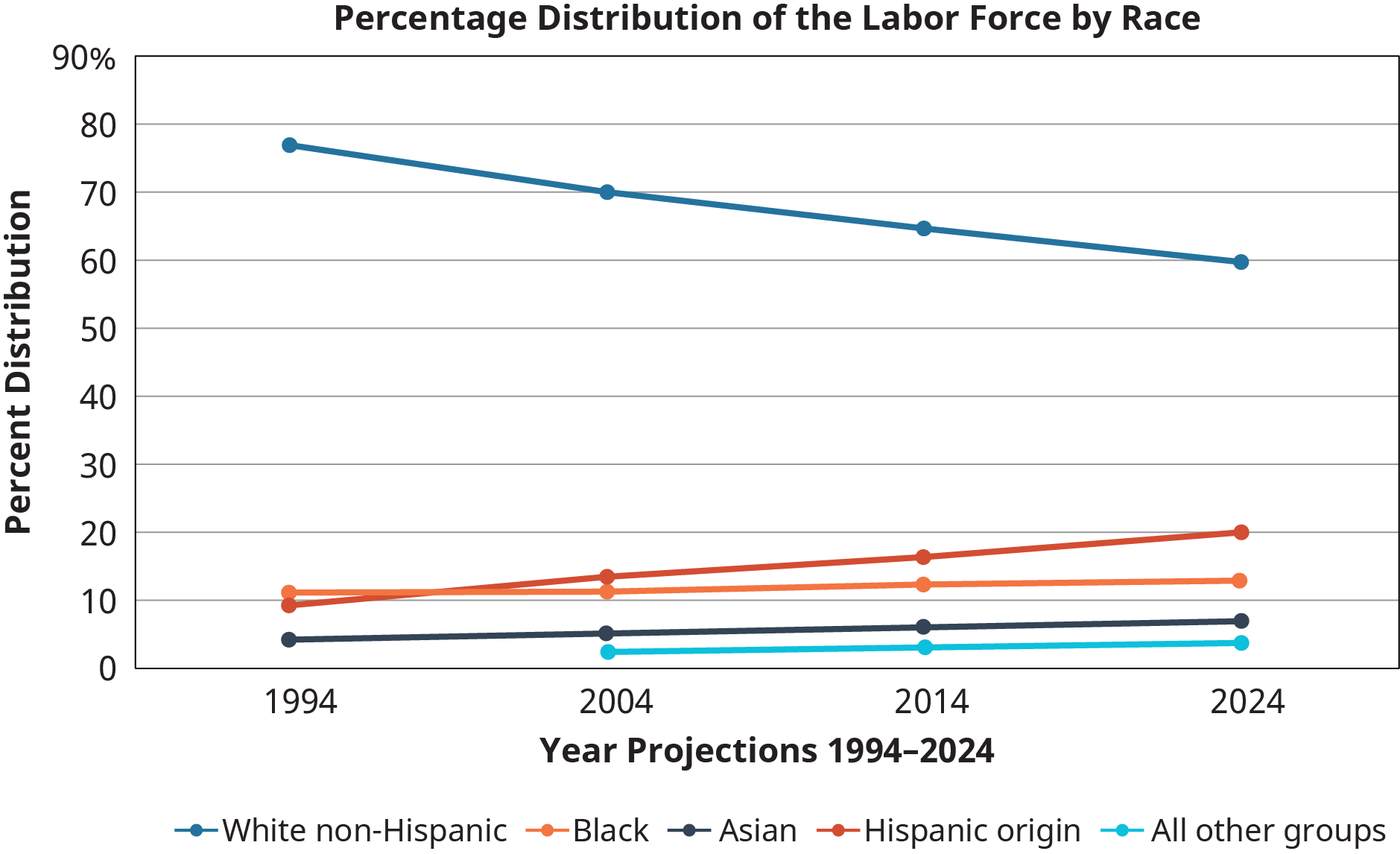
Exhibit 12.2 Percentage distribution of the labor force by race
Gender
Increasingly more women are entering the workforce. Compared to 59% in 1977, the labor force participation rate for men is now approximately 53% and is expected to decrease through 2024 to 52%. As the labor force participation rate decreases for men, the labor force growth rate for women will be faster. Their percentage of the workforce has steadily risen, as can be seen in Exhibit 12.3, which compares the percentage of the workforce by gender in 1977 to 2017.
Although more women are entering the labor force and earning bachelor's degrees at a higher rate than men, women still face a number of challenges at work. The lack of advancement opportunities awarded to qualified women is an example of a major challenge that women face called the glass ceiling, which is an invisible barrier based on the prejudicial beliefs that underlie organizational decisions that prevent women from moving beyond certain levels within a company. Additionally, in organizations in which the upper-level managers and decision makers are predominantly men, women are less likely to find mentors, which are instrumental for networking and learning about career opportunities. Organizations can mitigate this challenge by providing mentors for all new employees. Such a policy would help create a more equal playing field for all employees as they learn to orient themselves and navigate within the organization.
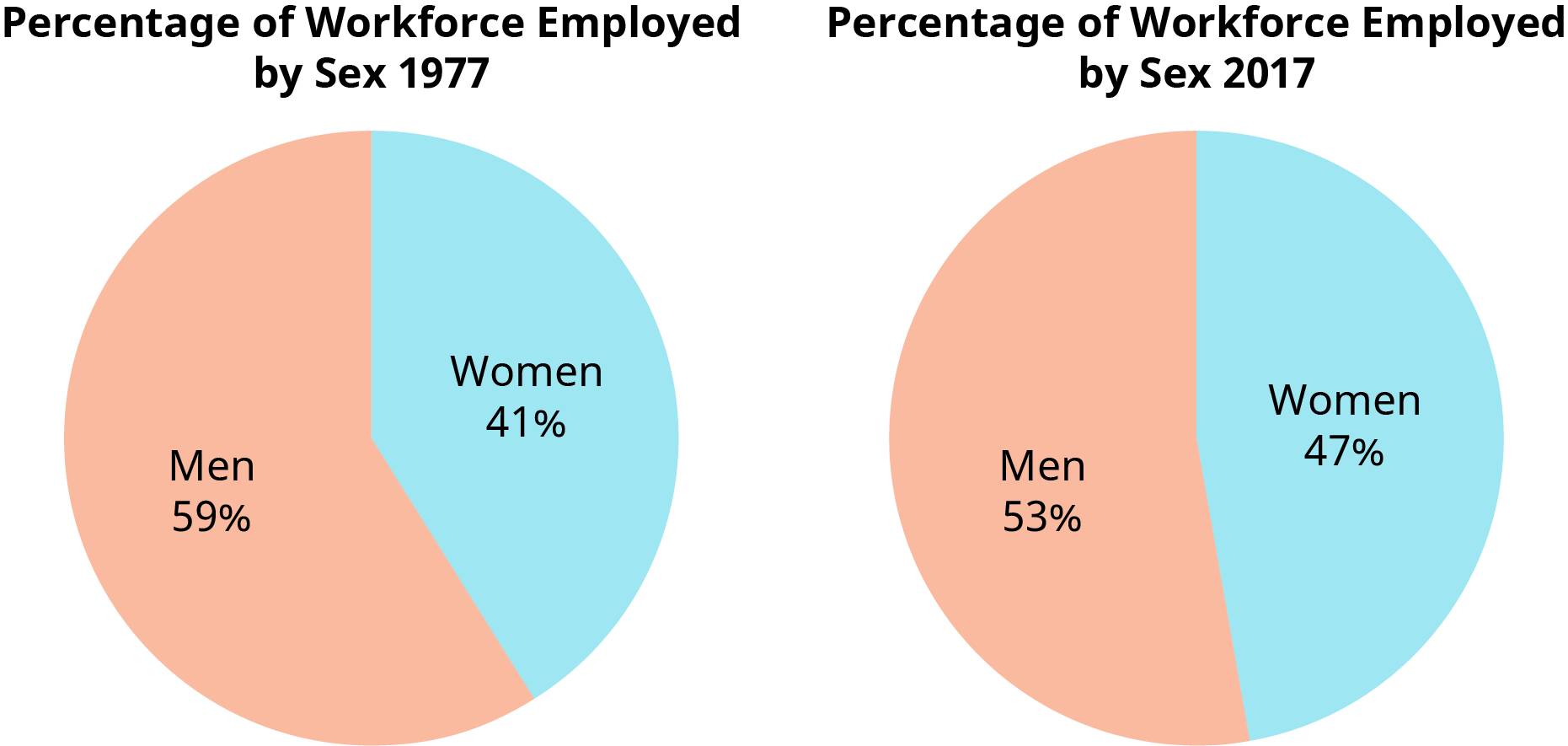
Exhibit 12.3 Percentage Distribution of the Labor Force by Sex
One factor that greatly affects women in organizations is sexual harassment. Sexual harassment is illegal, and workers are protected from it by federal legislation. Two forms of sexual harassment that can occur at work are quid pro quo and hostile environment. Quid pro quo harassment refers to the exchange of rewards for sexual favors or punishments for refusal to grant sexual favors. Harassment that creates a hostile environment refers to behaviors that create an abusive work climate. If employees are penalized (for example by being demoted or transferred to another department) for refusing to respond to repeated sexual advances, quid pro quo sexual harassment has taken place. The telling of lewd jokes, the posting of pornographic material at work, or making offensive comments about women in general are examples of actions that are considered to create a hostile work environment. According to the Equal Employment Opportunity Commission, sexual harassment is defined as the "unwelcome sexual advances, requests for sexual favors, and other verbal or physical harassment of a sexual nature. Harassment can also include offensive remarks about a person's sex". Although both men and women can be sexually harassed, women are sexually harassed at work more often. In addition, Black and other minority women are especially likely to be subjected to sexual discrimination and harassment.

Exhibit 12.4 Tamara Johnson The treatment of women in business has become a hot topic in corporate boardrooms, human resources departments, and investment committees. Tamara Johnson, who is profiled in the opening feature to this chapter, moves beyond simply acknowledging widespread discrimination to focusing on solutions. Also on the agenda: the need to improve diversity and inclusion across the board and breaking through the glass ceiling.
It is in the organization's best interest to prevent sexual harassment from occurring. Ways to do this include companies providing ongoing (e.g., annual) training so that employees are able to recognize sexual harassment. Employees should know what constitutes acceptable and unacceptable behavior and what channels and protocols are in place for reporting unacceptable behaviors. Managers should understand their role and responsibilities regarding harassment prevention, and a clear and understandable policy should be communicated throughout the organization.
Just as gender-based discrimination is illegal and inappropriate, so is discrimination or mistreatment based on pregnancy, childbirth, or related medical conditions. While organizations may have different policies regarding maternity and paternity leave, they must comply with both the Pregnancy Discrimination Act and the Family Medical Leave Act.
Race
Another important demographic shift in workforce diversity is the distribution of race. (Note that we are using categories defined by the U.S. Census Bureau. It uses the term "Black (African American)" to categorize U.S. residents. In this chapter, we use the term "Black".)
While the White non-Hispanic share of the workforce continues to shrink, the share of racial and ethnic minority groups will continue to grow. Specifically, Hispanic people and Asian people will grow at a faster rate than other racial minorities, and Hispanic people are projected to make up almost one-fifth of the labor force by 2024. The projected changes in labor force composition between 2014 and 2024 are as follows:
White non-Hispanic participation in the labor force will decline by 3%. Other groups' share of the labor force is expected to increase: Black (10.1%), Hispanic/Latino (28%), Asian (23.2%), and Other groups (i.e., multiracial, American Indian, Alaska Native, Native Hawaiian, and Other Pacific Islanders) labor force share is expected to increase by 22.2%. With the workforce changing, managers will need to be mindful of issues employees encounter that are uniquely tied to their experiences based on race and ethnicity, including harassment, discrimination, stereotyping, and differential treatment by coworkers and decision makers in organizations.
Discrimination Against Black Employees
Race is one of the most frequent grounds for discrimination. Although Black people do not make up the largest share of the workforce for racial minorities, research studies show they face discrimination more often than other racial minorities. As a matter of fact, some experts believe that hiring discrimination against Black people has not declined over the past 25 years while workplace discrimination against other racial minority groups has declined.
Ethics in Practice
Discrimination in the Sharing Economy - #AirbnbWhileBlack
Airbnb, a popular home-sharing website founded in San Francisco in 2008, offers millions of homes for short-term rental in more than 190 countries. This company has revolutionized the sharing economy in the same way that ride-sharing services such as Uber and Lyft have, and according to the company, the site's drive to connect hosts and potential renters has been able to contribute to the quality of life of both homeowners and travelers. According to Airbnb's press releases and information campaigns, their services can reduce housing costs for travelers on a budget and can provide unique experiences for adventurous travelers who wish to have the flexibility to experience a city like a local. The organization also claims that most of its users are homeowners looking to supplement their incomes by renting out rooms in their homes or by occasionally renting out their whole homes. According to a statement, most of the listings on the site are rented out fewer than 50 nights per year.
Despite the carefully crafted messages Airbnb has presented to the public, in 2016 the company came under intense scrutiny when independent analyses by researchers and journalists revealed something startling: While some Airbnb hosts did in fact use the services only occasionally, a significant number of hosts were using the services as though they were hotels. These hosts purchased a large number of properties and continuously rented them, a practice that affected the availability of affordable housing in cities and, because these hosts were not officially registered as hoteliers, made it possible for Airbnb hosts to avoid paying the taxes and abiding by the laws that hotels are subject to.
Title II of the Civil Rights Act of 1964 mandates that hotels and other public accommodations must not discriminate based on race, national origin, sex, or religion, and Title VIII of the Civil Rights Act of 1968 (also known as the Fair Housing Act [FHA]) prohibits discrimination specifically in housing. However, Airbnb's unique structure allows it to circumvent those laws. The company also claims that while it encourages hosts to comply with local and federal laws, it is absolved from responsibility if any of its hosts break these laws. In 2017, researcher Ben Edelman conducted a field experiment and found that Airbnb users looking to rent homes were 16% less likely to have their requests to book accepted if they had traditionally African American sounding names like Tamika, Darnell, and Rasheed.
These findings, coupled with a viral social media campaign, #AirbnbWhileBlack, in which users claimed they were denied housing requests based on their race, prompted the state of California's Department of Fair Employment and Housing (DFEH) to file a complaint against the company. In an effort to resolve the complaint, Airbnb reported banning any hosts who were found to have engaged in discriminatory practices, and they hired former U.S. Attorney General Eric Holder and former ACLU official Laura Murphy to investigate any claims of discrimination within the company. In 2016, Airbnb released a statement outlining changes to company practices and policies to combat discrimination, and while they initially resisted demands by the DFEH to conduct an audit of their practices, the company eventually agreed to an audit of roughly 6,000 of the hosts in California who have the highest volume of properties listed on the site.
Discussion Questions
- What are some efforts companies in the sharing economy can take before problems of discrimination threaten to disrupt operations?
- Should Airbnb be held responsible for discriminatory actions of its hosts?
Currently, White men have higher participation rates in the workforce than do Black men, and Black women have slightly higher participation rates than White women. Despite growth and gains in both Black education and Black employment, a Black person is considerably more likely to be unemployed than a White person, even when the White person has a lower level of education or a criminal record.
Black people frequently experience discrimination in the workplace in spite of extensive legislation in place to prohibit such discrimination. Research has shown that stereotypes and prejudices about Black people can cause them to be denied the opportunity for employment when compared to equally qualified White people. It is estimated that about 25% of businesses have no minority workers and another 25% have less than 10% minority workers. In terms of employed Black people, research has shown that, regardless of managers' race, managers tended to give significantly higher performance ratings to employees who were racially similar to them. Because White people are much more likely to be managers than Black people, this similarity effect tends to advantage White employees over Black employees. Black people are also significantly more likely to be hired in positions that require low skills, offer little to no room for growth, and pay less. These negative employment experiences affect both the mental and physical health of Black employees.
Hispanic/Latino
Hispanic people are the second-fastest-growing minority group in the United States behind Asian people, and they make up 17% of the labor force. Despite this and the fact that Hispanic people have the highest labor participation rate of all the minority groups, they still face discrimination and harassment in similar ways to other minority groups. (Note that we are again using the categories as defined by the U.S. Census Bureau, which predominantly uses the term "Hispanic" to refer to people of Cuban, Mexican, Puerto Rican, South or Central American, or other Spanish culture or origin.)
Hispanic people can be of any race. As a matter of fact, increasingly more Hispanic people are identifying racially as White. In 2004 almost half of Hispanic people identified themselves racially as White, while just under half identified themselves as "some other race". More than 10 years later, approximately 66% of Hispanic people now identify themselves racially as White while only 26% identify themselves as "some other race". The remaining Hispanic population, totaling approximately 7%, identify as either Black, American Indian, Asian, Alaskan Native, Pacific Islander, or Native Hawaiian.
Why would a minority identity group identify racially as White? A Pew study found that the longer Hispanic families lived in the United States, the more likely they were to claim White as their race even if they had not done so in the past. This suggests that upward mobility in America may be perceived by some Hispanic people to be equated with "Whiteness". Consequently, Hispanic people who self-identify racially as White experience higher rates of education and salary, and lower rates of unemployment. Additionally, only 29% of Hispanic people polled by the Pew Hispanic Center believe they share a common culture. According to the Pew Research Center, this finding may be due to the fact that the Hispanic ethnic group in the United States is made up of at least 14 Hispanic origin groups (such as Puerto Rican, Cuban, Spanish, Mexican, Dominican, and Guatemalan, among many others). Each of these groups has its own culture with different customs, values, and norms.
These cultural differences among the various Hispanic groups, combined with different self-perceptions of race, may also affect attitudes toward their workplace environment. For example, one study found that the absenteeism rate among Black people was related to the level of diversity policies and activities visible in the organization, while the absenteeism rate among Hispanic people was similar to that of White people and not related to those diversity cues. Results from this study suggest that managers need to be aware of how diversity impacts their workplace, namely addressing the relationship between Hispanic job seekers or workers and organizational outcomes concerning diversity policies as it may differ from that of other racial minorities.
Asian and Asian American
Asian people are the fastest-growing ethnic group in the United States, growing 72% between 2000 and 2015. Compared to the rest of the U.S. population overall, households headed by Asian Americans earn more money and are more likely to have household members who hold a bachelor's degree. However, there is a wide range of income levels among the Asian population that differs between the more than 19 groups of Asian origin in the United States.
Similar to other racial and ethnic minority groups, Asian people are stereotyped and face discrimination at work. Society through media often stereotypes Asian men as having limited English-speaking skills and as being highly educated, affluent, analytical, and good at math and science. Asian women are often portrayed as weak and docile. For Asian women, and other minority women as well, social stereotypes depicting them as exotic contribute to reports of sexual harassment from women minority groups.
The model minority myth is a reflection of perceptions targeting Asian people and Asian Americans that contrast the stereotypes of "conformity" and "success" of Asian men with stereotypes of "rebelliousness" and "laziness" of other minority men. It also contrasts the stereotyped "exotic" and "obedient" nature of Asian women against the stereotypical beliefs that White women are "independent" and "pure". These perceptions are used not only to invalidate injustice that occurs among other racial minorities, but also to create barriers for Asian and Asian Americans seeking leadership opportunities as they are steered toward "behind the scenes" positions that require less engagement with others. These stereotypes also relegate Asian women into submissive roles in organizations, making it challenging for Asian men and women to advance in rank at the same rate as White male employees.
Multiracial
Although the U.S. Census Bureau estimates that approximately 2% of the U.S. population describes themselves as belonging to more than one race, the Pew Research Center estimates that number should be higher, with around 7% of the U.S. population considered multiracial. This is due to the fact that some individuals may claim one race for themselves even though they have parents from different racial backgrounds. To complicate matters even more, when collecting data from multiracial group members, racial identity for individuals in this group may change over time because race is a social construct that is not necessarily based on a shared culture or country of origin in the same way as ethnicity. As a result, multiracial individuals (and Hispanic people) have admitted to changing their racial identity over the course of their life and even based on the situation. Approximately 30% of multiracial individuals polled by the Pew Research Center say that they have varied between viewing themselves as belonging to one race or belonging to multiple races. Within the group polled, the order in which they first racially identified as belonging to one racial group versus belonging to more than one group varied.
Despite the fact that multiracial births have risen tenfold between 1970 and 2013, their participation in the labor force is only around 2%. Additionally, multiracial individuals with a White racial background are still considered a racial minority unless they identify themselves solely as White, and approximately 56% of them on average say they have been subjected to racial jokes and slurs. Discrimination also varies when multiracial groups are broken down further, with Black–American Indians having the highest percentage of individuals reporting discrimination and White–Asian people having the lowest percentage.
At work, multiracial employees are sometimes mistaken for races other than their own. If their racial minority background is visible to others, they may experience negative differential treatment. Sometimes they are not identified as having a racial or ethnic minority background and are privy to disparaging comments from unsuspecting coworkers about their own race, which can be demoralizing and can lead to lower organizational attachment and emotional strain related to concealing their identity.
Other Groups
Approximately 1% of the labor force identifies as American Indian, Alaska Native, Native Hawaiian or Pacific Islander, or some other race.
Age
The age distribution of an organization's workforce is an important dimension of workplace diversity as the working population gets older. Some primary factors contributing to an older population include the aging of the large Baby Boomer generation (people born between 1946 and 1964), lower birth rates, and longer life expectancies due to advances in medical technology and access to health care. As a result, many individuals work past the traditional age of retirement (65 years old) and work more years than previous generations in order to maintain their cost of living.
Exhibit 12.5 compares the percentage of the population over the age of 65 to those under the age of 18 between 2010 and 2016. The number of older individuals has increased and is projected to reach 20.6% by the year 2030 while the number of younger individuals has steadily decreased within that time period. These numbers imply that organizations will increasingly have employees across a wide range of ages, and cross-generational interaction can be difficult to manage. Although older workers are viewed as agreeable and comfortable to work with, they are also stereotyped by some employees as incompetent and less interested in learning new tasks at work compared to younger workers. Studies have found support for the proposition that age negatively relates to cognitive functioning. However, if managers offer less opportunity to older workers solely because of declining cognitive functioning, it can be detrimental to organizational performance because older workers outperform younger workers on a number of other job performance measures. Compared to younger workers, older workers are more likely to perform above their job expectations and follow safety protocols. They are also less likely to be tardy, absent, or abuse drugs or alcohol at work compared to their younger counterparts.
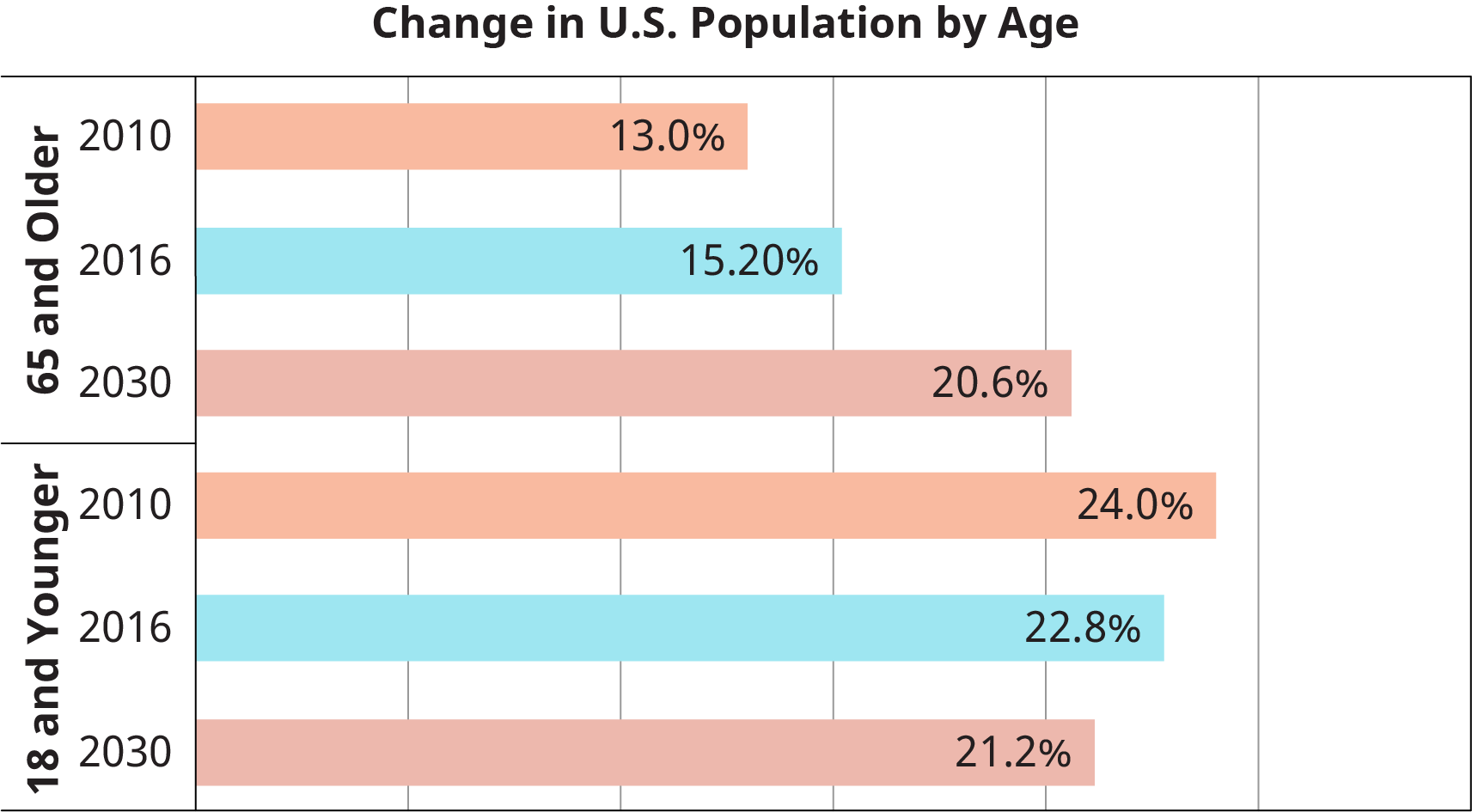
Exhibit 12.5 Change in U.S. population by age
Sexual Orientation and Gender Identity
Sexual orientation diversity is increasing in the workforce. In June, 2020, the Supreme Court ruled that the Civil Rights Act prohibits discrimination based on sexual orientation and gender identity. Until this ruling, only 21 states and Washington D.C. prohibited such discrimination. With this new federal protection, individuals cannot for employment or fired for their sexual orientation , gender identity, or gender expression. However, although the Civil Rights Act does not provide federal protection to lesbian, gay, bisexual and transgender, and queer/questioning (LGBTQ) employees, that protection is not complete. LGBTQ people can still face other types of discrimination inside and outside of the workplace, and some employers and lawmakers may take up the issue in the future. On a positive note, more than half of the Fortune 500 companies have corporate policies that protect sexual minorities from discrimination at work and offer domestic-partner benefits. Many employers are beginning to understand that being perceived as inclusive will make them more attractive to a larger pool of job applicants. Furthermore, many organizations have come to recognize that gender and sexual orientation equity aligns to their mission and ethics.
Unfortunately, the percentage of hate crimes relating to sexual orientation discrimination has increased. Indeed, LGBTQ employees are stigmatized so much that in a recent study, researchers found that straight-identifying participants were more attracted to employers with no job security to offer them compared to gay-friendly employers. In other words, individuals would waive job security to avoid working with sexual minorities. Also, compared to heterosexuals, sexual minorities have higher education levels but still face hiring and treatment discrimination frequently.
LGBTQ employees are often faced with the decision of whether or not to be truthful about their sexual orientation at work for fear of being stigmatized and treated unfairly. To be clear, any stigmatization is the fault of the people who mistreat others, and sometimes even the organization itself. But as a result, LGTBQ and other people may choose to engage in what is sometimes called passing, or the decision not to disclose something about oneself. Passing often involves a great risk of emotional strain that can affect performance and wellbeing. Individuals who pass may distance themselves from coworkers or clients to avoid disclosure about their personal life. This behavior can also result in decreased networking and mentoring opportunities, which over time can limit advancement opportunities. The decision to be transparent about sexual orientation is sometimes called revealing. Just like passing, revealing has its own set of risks including being ostracized, stigmatized, and subjected to other forms of discrimination at work. However, compared to passing, the benefits of building relationships at work and using their identity as a catalyst for tolerance and progressive organizational change may outweigh the risks when LGBTQ employees decide to reveal. The decision to "come out" should be made exclusively by the individual; "outing" someone else as any sexual orientation or gender identity is considered highly inappropriate and hurtful, and may have employment-related consequences.
Research shows that when laws are passed to prevent sexual orientation discrimination, incidents of workplace discrimination decrease. This same effect occurs when firms adopt policies that protect the rights of sexual minority employees. By creating a safe and inclusive work environment for LGBTQ employees, companies can create a culture of tolerance and trust for all employees regardless of their sexual orientation or gender identity.
Managing Change
Removing Bias In Recruiting
An increasing number of companies are testing new and innovative methods of recruiting. In many cases, firms remove any identifying information about applicants during the recruitment process. An example of this may include anonymous applications that omit fields requesting information such as an applicant's name or age. Using computer application technology, some companies like Google administer surveys to their anonymous applicants that measure the abilities required for the job before they are considered in the next step of the recruitment process. Alternatively, companies may request that applicants remove identifying information such as names and address from their resumes before applying for positions. As resumes are received, hiring managers can assign a temporary identification number.
Although more companies are using this method of recruiting, the idea is not new for symphony orchestras, many of which have been using this type of auditioning since the 1970s. In some instances musicians audition behind screens so they are evaluated only by their music. This process removes bias associated with race and gender because the performer cannot be seen and only heard. A study investigating this practice examined 11 symphony orchestras that varied their auditions. Researchers found that those orchestras that held "unseen" auditions increased the likelihood that a woman would be hired by between 25 and 46%. A recruitment process like this can help organizations attract more candidates, hire the best talent, increase their workplace diversity, and avoid discrimination liability.
In other efforts, organizations work to alter their job descriptions to remove terms that result in gender or other biases. By involving diversity and equity experts, and sometimes using artificial intelligence-based language analysis, recruiters can eliminate unintended barriers and improve their hiring processes.
Discussion Questions
- Should all companies change their resume screening and interview processes to eliminate biases or are there exceptions that must be considered?
- If improved recruiting helps eliminate bias during the recruitment process, then what does that say about social media platforms such as Linked In that are commonly used for recruiting applicants? Will using those platforms expose companies to greater liability compared to using more traditional means of recruiting?
- How does working to eliminate bias recruiting help organizations? How may it hinder organizations?
Immigrant Workers
Every year a new record is set for the time it takes to reach the U.S. cap of H-1B visas granted to employers. H- 1B visas are a type of work visa, a temporary documented status that authorizes individuals to permanently or temporarily live and work in the United States. As a result of the demand for work visas by employers, the number of immigrant workers in the U.S. workforce has steadily grown within the last decade from 15% in 2005 to 17% in 2016. Compared to those born in the United States, the immigrant population in America is growing significantly faster. This is partly because of the U.S. demand for workers who are proficient in math and science and wish to work in America.
Although a huge demand for immigrant labor exists in the United States, immigrant labor exploitation occurs, with immigrant employees receiving lower wages and working longer hours compared to American workers. Foreign-born job seekers are attracted to companies that emphasize work visa sponsorship for international employees, yet they are still mindful of their vulnerability to unethical employers who may try to exploit them. For example, Lambert and colleagues found that some of the job-seeking MBA students from the Philippines in their study believed that companies perceived to value international diversity and sponsor H-1B visas signaled a company wishing to exploit workers. Others believed that those types of companies might yield diminishing returns to each Filipino in the company because their token value becomes limited. In news stories, companies have been accused of drastically shortchanging foreign student interns on their weekly wages. In another case, Infosys, a technology consulting company, paid $34 million to settle allegations of visa fraud due to suspicion of underpaying foreign workers to increase profits.
Other Forms of Diversity at Work
Workers with disabilities are projected to experience a 10% increase in job growth through the year 2022. This means that more public and corporate policies will be revised to allow greater access to training for workers with disabilities and employers. Also, more companies will use technology and emphasize educating employees about physical and mental disabilities as workplace accommodations are used more often.
In the past, the United States has traditionally been a country with citizens who predominantly practice the Christian faith. However, over the past almost 30 years the percentage of Americans who identify as Christian has significantly decreased - by approximately 12%. Over that same time period, affiliation with other religions overall increased by approximately 25%. The increase in immigrant workers from Asian and Middle Eastern countries means that employers must be prepared to accommodate religious beliefs other than Christianity. Although federal legislation protects employees from discrimination on the basis of race, religion, and disability status, many employers have put in place policies of their own to deal with the variety of diversity that is increasingly entering the workforce.
Concept Check
- How is diversity defined in relation to the workplace?
- What are the components that make up a diverse workplace and workforce?
Diversity and Its Impact on Companies
- How does diversity impact companies and the workforce?
Due to trends in globalization and increasing ethnic and gender diversity, it is imperative that employers learn how to manage cultural differences and individual work attitudes. As the labor force becomes more diverse there are both opportunities and challenges to managing employees in a diverse work climate. Opportunities include gaining a competitive edge by embracing change in the marketplace and the labor force. Challenges include effectively managing employees with different attitudes, values, and beliefs, in addition to avoiding liability when leadership handles various work situations improperly.
Reaping the Advantages of Diversity
The business case for diversity introduced by Taylor Cox and Stacy Blake outlines how companies may obtain a competitive advantage by embracing workplace diversity. Six opportunities that companies may receive when pursuing a strategy that values diversity include cost advantages, improved resource acquisition, greater marketing ability, system flexibility, and enhanced creativity and better problem solving (see Exhibit 12.6).
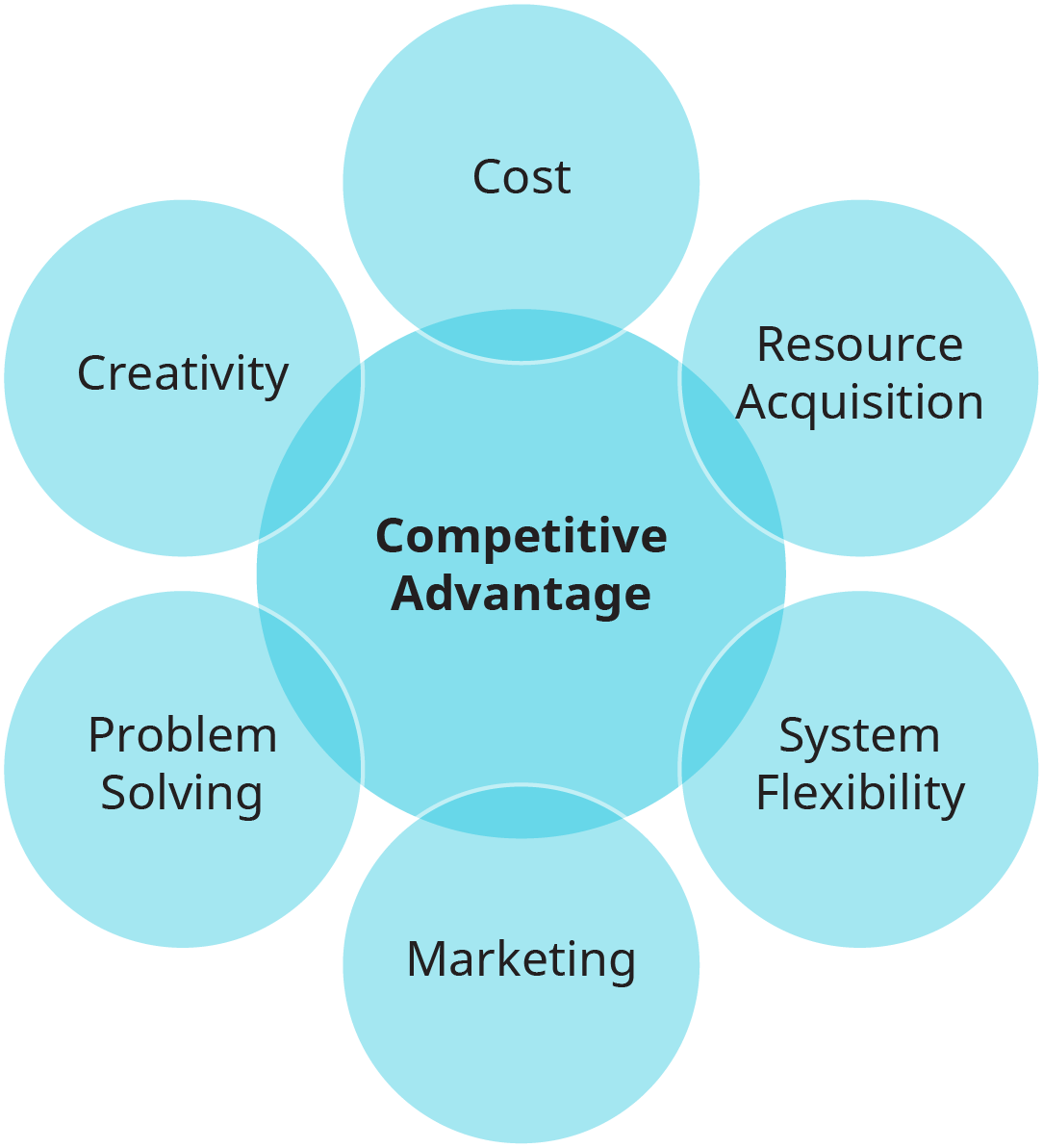
Exhibit 12.6 Managing Cultural Diversity
Cost Advantages
Traits such as race, gender, age, and religion are protected by federal legislation against various forms of discrimination (covered later in this chapter). Organizations that have policies and procedures in place that encourage tolerance for a work climate of diversity and protect female and minority employees and applicants from discrimination may reduce their likelihood of being sued due to workplace discrimination. Cox and Blake identify this decreased liability as an opportunity for organizations to reduce potential expenses in lawsuit damages compared to other organizations that do not have such policies in place.
Additionally, organizations with a more visible climate of diversity experience lower turnover among women and minorities compared to companies that are perceived to not value diversity. Turnover costs can be substantial for companies over time, and diverse companies may ameliorate turnover by retaining their female and minority employees. Although there is also research showing that organizations that value diversity experience a higher turnover of White employees and male employees compared to companies that are less diverse, some experts believe this is due to a lack of understanding of how to effectively manage diversity. Also, some research shows that White people with a strong ethnic identity are attracted to diverse organizations similarly to non-White people.
Resource Acquisition
Human capital is an important resource of organizations, and it is acquired through the knowledge, skills, and abilities of employees. Organizations perceived to value diversity attract more women and minority job applicants to hire as employees. Studies show that women and minorities have greater job-pursuit intentions and higher attraction toward organizations that promote workplace diversity in their recruitment materials compared to organizations that do not. When employers attract minority applicants, their labor pool increases in size compared to organizations that are not attractive to them. As organizations attract more job candidates, the chances of hiring quality employees increases, especially for jobs that demand highly skilled labor. In summary, organizations gain a competitive advantage by enlarging their labor pool by attracting women and minorities.
Marketing
When organizations employ individuals from different backgrounds, they gain broad perspectives regarding consumer preferences of different cultures. Organizations can gain insightful knowledge and feedback from demographic markets about the products and services they provide. Additionally, organizations that value diversity enhance their reputation with the market they serve, thereby attracting new customers.
System Flexibility
When employees are placed in a culturally diverse work environment, they learn to interact effectively with individuals who possess different attitudes, values, and beliefs. Cox and Blake contend that the ability to effectively interact with individuals who differ from oneself builds cognitive flexibility, the ability to think about things differently and adapt one's perspective. When employees possess cognitive flexibility, system flexibility develops at the organizational level. Employees learn from each other how to tolerate differences in opinions and ideas, which allows communication to flow more freely and group interaction to be more effective.
Creativity and Problem Solving
Teams from diverse backgrounds produce multiple points of view, which can lead to innovative ideas. Different perspectives lead to a greater number of choices to select from when addressing a problem or issue.
Life experience varies from person to person, sometimes based on race, age, or sex. Creativity has the opportunity to flourish when those experiences are shared. Diverse teams not only produce more alternatives, but generate a broader range of perspectives to address tasks and problems. One way in which diverse teams enhance problem-solving ability is by preventing groupthink, a dysfunction in decision-making that occurs in homogeneous groups as a result of group pressures and group members' desire for conformity and consensus. Diverse group membership prevents groupthink because individuals from varied backgrounds with different values, attitudes, and beliefs can test the assumptions and reasoning of group members' ideas.
Aligning Diversity Programs with an Organization's Mission and Strategic Goals
Diversity helps organizations perform best when it is aligned with a specific business strategy. For example, when companies use heterogeneous management teams that are directed by an entrepreneurial strategy focusing on innovation, the companies' productivity increases.
When an entrepreneurial strategy is not present, however, team diversity has little effect on productivity. An entrepreneurial strategy includes innovation that reflects a company's commitment to being creative, supporting new ideas, and supporting experimentation as a way to gain a competitive advantage. In other words, managers may properly utilize the multiple perspectives that emerge from heterogeneous teams by integrating them as a resource for pursuing the overall strategy of the organization.
Using Human Resources Tools Strategically
To effectively align diversity with an organization's strategy, the human resources function must be able to engage employees at dynamic levels. Using a strategic human resources management approach to an organization can successfully integrate diversity with the organization's goals and objectives. Strategic human resources management (SHRM) is a system of activities arranged to engage employees in a manner that assists the organization in achieving a sustainable competitive advantage. SHRM practices vertically integrate with the mission and strategy of the organization while horizontally integrating human resources activities across its functional areas. By doing so, a unique set of resources can be made available to specific to the needs of the organization. Furthermore, when human resources becomes a part of the strategic planning process instead of just providing ancillary services, improved communication, knowledge sharing, and greater synergy between decision makers can occur within the organization to improve organizational functioning.
The resource-based view of the firm has been used to support the argument for diversity because it demonstrates how a diverse workforce can create a sustainable competitive advantage for organizations. Based on the resource-based view of the firm, when companies possess resources that are rare, valuable, difficult to imitate, and non-substitutable, a sustained competitive advantage can be attained. The SHRM approach assumes that human capital - the current and potential knowledge, skills, and abilities of employees - is instrumental to every organization's success and sustainability and longevity.
If a diverse composition of employees within organizations is rare, employing minorities in positions of leadership is even rarer. One exception is Northern Trust, an investment management firm that was recently listed on Forbes magazine's 2018 Best Employers for Diversity list. Thirty-eight percent of Northern Trust's top executives are women, which is impressive because it matches the average percentage of women in full-time one-year MBA programs over the past five years. The average for S&P 500 companies is just 27%. In addition, African Americans make up 23% of Northern Trust's board, which also demonstrates the commitment Northern Trust has to diversity. This rare degree of diversity helps Northern Trust become an employer of choice for minorities and women. In turn, attracting minority applicants increases the labor pool available to Northern Trust and increases its ability to find good talent.

Exhibit 12.7 Bank staff watching presentation The Disability Awareness Players present to the staff at Northern Trust.
Diverse companies may capitalize on the multiple perspectives that employees from different backgrounds contribute to problem solving and idea generation. In group settings, members from collectivist cultures from Asia and South America, for example, engage with others on tasks differently than members from North America. Similarly, Asian, Black, and Hispanic people usually act more collectively and engage more interdependently than White people, who are generally more individualistic. More harmonious working interactions benefit group cohesion and team performance, and employees can grasp better ways of doing things when there is a diverse population to learn from.
For a company to attain a sustained competitive advantage, its human resource practices must be difficult to copy or imitate. As we will see later in the chapter, companies may hold one of three perspectives on workplace diversity. The integration and learning perspective results in the best outcomes for employees and the organization. However, it is not easy to become an employer that can effectively manage diversity and avoid the challenges we learned about earlier in this chapter. Historical conditions and often-complex interplay between various organizational units over time can contribute to a company's ability to perform effectively as a diverse organization. Best practices for targeting diverse applicants or resolving conflicts based on cultural differences between employees may occur organically and later become codified into the organizational culture. Sometimes, however, the origin of diversity practices is unknown because they arose from cooperation among different functional areas (e.g., marketing and human resources working strategically with leadership to develop recruitment ideas) that occurred so long ago that not even the company itself, let alone other companies, could replicate the process.
Diversity and Organizational Performance
Research indicates that having diversity in an organization produces mixed results for its success. Some studies show a positive relationship, some show a negative relationship, and others show no relationship between diversity and performance. Some researchers believe that although findings regarding a direct relationship between diversity and success in the marketplace may be inconsistent, the relationship may be due to other variables not taken into account.
Taking the resource-based view perspective, Richard and colleagues demonstrated that racially diverse banking institutions focused on innovation experienced greater performance than did racially diverse banks with a low focus on innovation. These findings suggest that for the potential of racial diversity to be fully realized, companies should properly manage the system flexibility, creativity, and problem-solving abilities used in an innovative strategy. Other studies show that when top management includes female leadership, firm performance improves when organizations are innovation driven.
Concept Check
- What are the challenges and opportunities that diversity provides to companies?
- What are the responsibilities of human resources regarding diversity?
- Can diversity be a strategic advantage to organizations?
Challenges of Diversity
- What is workplace discrimination, and how does it affect different social identity groups?
Although diversity has it benefits, there are also challenges that managers must face that can only be addressed with proper leadership. Some of the most common challenges observed in organizations and studied in research include lower organizational attachment and misunderstanding work diversity initiatives and programs.
Lower Organizational Attachment
Although diversity programs attract and retain women and minorities, they may have the opposite effect on other, nonminority employees. When diversity is not managed effectively, White and male employees can feel alienated from or targeted by the organization as diversity programs are put in place. A study that examined 151 work groups across three large organizations investigated whether the proportion of group membership based on race or sex affected the group members' absentee rates, psychological attachment to their work group, and turnover intentions, three factors that play significant roles in an employee's attachment to their organization. Results showed a positive relationship between group heterogeneity and lower organizational attachment, higher turnover intentions, and greater frequency of absences for men and for White group members. In other words, as work group diversity increased, White employees and male employees felt less attached to the organization and were more likely to quit. Because heterogeneous groups improve creativity and judgement, managers should not avoid using them because they may be challenging to manage. Instead, employers need to make sure they understand the communication structure and decision-making styles of their work groups and seek feedback from employees to learn how dominant group members may adjust to diversity.
Legal Challenges and Diversity
The legal system is used to combat discrimination. Among the ways that we will cover here are reverse discrimination, workplace discrimination, harassment, age discrimination, disability discrimination, national origin discrimination, pregnancy discrimination, race/color discrimination, religious discrimination, sex-based discrimination and other forms of discrimination.
Reverse Discrimination
As research shows, workplace discrimination against women and racial or ethnic minorities is common. Reverse discrimination is a term that has been used to describe a situation in which dominant group members perceive that they are experiencing discrimination based on their race or sex. This type of discrimination is uncommon, but is usually claimed when the dominant group perceives that members of a protected (diverse) class of citizens are given preference in workplace or educational opportunities based not on their merit or talents, but on a prescribed preferential treatment awarded only on the basis of race or sex.
Research conducted in the 1990s shows that only six federal cases of reverse discrimination were upheld over a four-year period (1990–1994), and only 100 of the 3,000 cases for discrimination over that same four-year period were claims of reverse discrimination. Interestingly, a recent poll administered by the Robert Wood Johnson Foundation and the Harvard T.H. Chan School of Public Health found that a little more than half of White Americans believe that White people face discrimination overall, and 19% believe they have experienced hiring discrimination due to the color of their skin. This misperception stems in part from the recalibration of the labor force as it become more balanced due to increased equal employment opportunities for everyone. Members of dominant identity groups, White people and men, perceive fewer opportunities for themselves when they observe the workforce becoming more diverse. In reality, the workforce of a majority of companies is still predominantly White and male employees. The only difference is that legislation protecting employees from discrimination and improvements in equal access to education have created opportunities for minority group members when before there were none.
Workplace Discrimination
Workplace discrimination occurs when an employee or an applicant is treated unfairly at work or in the job-hiring process due to an identity group, condition, or personal characteristic such as the ones mentioned above. Discrimination can occur through marital status, for example when a person experiences workplace discrimination because of the characteristics of a person to whom they are married. Discrimination can also occur when the offender is of the same protected status of the victim, for example when someone discriminates against someone based on a national origin that they both share.
The Equal Employment Opportunity Commission (EEOC) was created by Title VII of the Civil Rights Act of 1964 with the primary goal of making it illegal to discriminate against someone in the workplace due to their race, national origin, sex, disability, religion, or pregnancy statu, and the 2020 Supreme Court decision upheld the same protections for sexual orientation and gender identity. The EEOC enforces laws and issues guidelines for employment-related treatment. It also has the authority to investigate charges of workplace discrimination, attempt to settle the charges, and, if necessary, file lawsuits when the law has been broken.
All types of workplace discrimination are prohibited under different laws enacted and enforced by the EEOC, which also considers workplace harassment and sexual harassment forms of workplace discrimination and mandates that men and women must be given the same pay for equal work.
The provision for equal pay is covered under the Equal Pay Act of 1963, which was an amendment to the Fair Labor Standards Act of 1938. Virtually all employers are subject to the provisions of the act, which was an attempt to address pay inequities between men and women. More than 50 years later, however, women still earn about 80 cents to every dollar that men earn, even while performing the same or similar jobs.
Harassment
Harassment is any unwelcome conduct that is based on characteristics such as age, race, national origin, disability, gender, or pregnancy status. Harassment is a form of workplace discrimination that violates Title VII of the Civil Rights Act of 1964, the Age Discrimination in Employment Act of 1967, and the Americans with Disabilities Act of 1990.
Sexual harassment specifically refers to harassment based on a person's sex, and it can (but does not have to) include unwanted sexual advances, requests for sexual favors, or physical and verbal acts of a sexual nature. Though members of any sex can be the victim of sexual harassment, women are the primary targets of this type of harassment.
Age Discrimination
Age discrimination consists of treating an employee or applicant less favorably due to their age. The Age Discrimination in Employment Act (ADEA) forbids discrimination against individuals who are age 40 and above. The act prohibits harassment because of age, which can include offensive or derogatory remarks that create a hostile work environment.
Disability Discrimination
A person with a disability is a person who has a physical or mental impairment that limits one or more of the person's life actions. Disability discrimination occurs when an employee or applicant who is covered by the Americans with Disabilities Act (ADA) is treated unfavorably due to their physical or mental disability. The ADA is a civil rights law that prohibits discrimination in employment, public services, public accommodations, and telecommunications against people with disabilities. To be covered under the ADA, individuals must be able to perform the essential functions of their job with or without reasonable accommodations. Research has shown that reasonable accommodations are typically of no or low cost (less than $100) to employers.
National Origin Discrimination
National origin discrimination involves treating someone unfavorably because of their country of origin, accent, ethnicity, or appearance. EEOC regulations make it illegal to implement an employment practice or policy that applies to everyone if it has a negative impact on people of a certain national origin. For example, employers cannot institute an "English-only" language policy unless speaking English at all times is essential to ensure the safe and efficient operation of the business. Employers also cannot mandate employees be fluent in English unless fluency in English is essential to satisfactory job performance. The EEOC also prohibits businesses from hiring only U.S. citizens or lawful residents unless the business is required by law to do so.
Pregnancy Discrimination
Pregnancy discrimination involves treating an employee or applicant unfairly because of pregnancy status, childbirth, or medical conditions related to pregnancy or childbirth. The Pregnancy Discrimination Act (PDA) prohibits any discrimination as it relates to pregnancy in any of the following areas: hiring, firing, compensation, training, job assignment, insurance, or any other employment conditions. Further, certain conditions that result from pregnancy may be protected under the ADA, which means employers may need to make reasonable accommodations for any employee with disabilities related to pregnancy.
Under the Family and Medical Leave Act (FMLA), new parents, including adoptive and foster parents, may be eligible for 12 weeks of unpaid leave (or paid leave only if earned by the employee) to care for the new child. Also, nursing mothers have the right to express milk on workplace premises.
Race/Color Discrimination
Race/color discrimination involves treating employees or applicants unfairly because of their race or because of physical characteristics typically associated with race such as skin color, hair color, hair texture, or certain facial features.
As with national origin discrimination, certain workplace policies that apply to all employees may be unlawful if they unfairly disadvantage employees of a certain race. Policies that specify that certain hairstyles must or must not be worn, for example, may unfairly impact African American employees, and such policies are prohibited unless their enforcement is necessary to the operations of the business.
Religious Discrimination
Religious discrimination occurs when employees or applicants are treated unfairly because of their religious beliefs. The laws protect those who belong to traditional organized religions and those who do not belong to organized religions but hold strong religious, ethical, or moral beliefs of some kind. Employers must make reasonable accommodations for employees' religious beliefs, which may include flexible scheduling or modifications to workplace practices. Employees are also permitted accommodation when it comes to religious dress and grooming practices, unless such accommodations will place an undue burden on the employer. Employees are also protected from having to participate (or not participate) in certain religious practices as terms of their employment.
Sex-Based Discrimination
Sex-based discrimination occurs when employees or applicants are treated unfairly because of their sex. This form of discrimination includes unfair treatment due to gender, transgender status, and sexual orientation. Harassment and policies that unfairly impact certain groups protected under sex discrimination laws are prohibited under EEOC legislation.
The key diversity-related federal laws are summarized in Table 12.2.
| Key Diversity Related Legislation | |
|---|---|
| Legislation | Description |
| Title VII of the Civil Rights Act of 1964 | Created the Equal Employment Opportunity Commission with the primary role of making it illegal to discriminate against someone in the workplace due to their race, national origin, sex, disability, religion, or pregnancy status. |
| Equal Pay Act of 1963 | Mandates that men and women must be given the same pay for equal work. |
| Age Discrimination in Employment Act (ADEA) | Forbids discrimination against individuals who are age 40 and above. |
| Americans with Disabilities Act (ADA) | Prohibits discrimination against people with disabilities in employment, public services, public accommodations, and in telecommunications. |
| Pregnancy Discrimination Act (PDA) | Prohibits any discrimination as it relates to pregnancy, including hiring, firing, compensation, training, job assignment, insurance, or any other employment conditions. |
| Family and Medical Leave Act (FMLA) | Grants new parents up to 12 weeks of paid or unpaid leave to care for the new child, and gives nursing mothers the right to express milk on workplace premises. |
Other Types of Discrimination
Beyond the key types of discrimination outlined by the EEOC, diversity and management scholars have identified other types of discrimination that frequently impact certain identity groups more than others. Access discrimination is a catchall term that describes when people are denied employment opportunities because of their identity group or personal characteristics such as gender, race, age, or other factors. Treatment discrimination describes a situation in which people are employed but are treated differently while employed, mainly by receiving different and unequal job-related opportunities or rewards. Scholars have also identified a form of discrimination called interpersonal or covert discrimination that involves discrimination that manifests itself in ways that are not visible or readily identifiable, yet is serious because it can impact interpersonal interactions between employees, employees and customers, and other important workplace relationships.
This type of discrimination poses unique challenges because it is difficult to identify. For example, one study examining customer service and discrimination found that obese customers were more likely to experience interpersonal discrimination than average-weight customers. Salespersons spent less time interacting with obese customers than average-weight customers, and average-weight customers reported more positive interactions with salespeople when asked about standard customer service metrics such as being smiled at, receiving eye contact, and perceived friendliness.
Concept Check
- What is the role of the EEOC?
- What are the types of discrimination encountered in the workplace?
Key Diversity Theories
- What key theories help managers understand the benefits and challenges of managing the diverse workforce?
Many theories relevant to managing the diverse workforce center on an individual's reactions (such as categorization and assessment of the characteristics of others) to people who are different from the individual. Competing viewpoints attempt to explain how diversity is either harmful or beneficial to organizational outcomes.
- The cognitive diversity hypothesis suggests that multiple perspectives stemming from the cultural differences between group or organizational members result in creative problem solving and innovation.
- The similarity-attraction paradigm and social identity theory hold that individuals' preferences for interacting with others like themselves can result in diversity having a negative effect on group and organizational outcomes.
- The justification-suppression model explains under what conditions individuals act on their prejudices.
Cognitive Diversity Hypothesis
Some research shows that diversity has no relationship to group performance, and some shows that there is a relationship. Of the latter research, some shows a negative relationship (greater diversity means poorer group performance, less diversity means better group performance) and some shows a positive relationship.
These various findings may be due to the difference in how diversity can affect group members. Cognitive diversity refers to differences between team members in characteristics such as expertise, experiences, and perspectives. Many researchers contend that physical diversity characteristics such as race, age, or sex (also known as bio-demographic diversity) positively influence performance because team members contribute unique cognitive attributes based on their experiences stemming from their demographic background.
There is research that supports the relationship between group performance and task-related diversity as reflected in characteristics not readily detectable such as ability, occupational expertise, or education. However, the relationship between bio-demographic diversity and group performance has produced mixed results. For example, Watson and colleagues studied the comparison of group performance between culturally homogeneous and culturally heterogeneous groups. Groups were assigned business cases to analyze, and their group performance was measured over time based on four factors: the range of perspectives generated, the number of problems identified in the case, the number of alternatives produced, and the quality of the solution. Overall performance was also calculated as the average of all the factors. The factors were measured at four intervals: Interval 1 (at 5 weeks), Interval 2 (at 9 weeks), Interval 3 (at 13 weeks), and Interval 4 (at 17 weeks).
For Intervals 1 and 2, the overall performance of homogeneous groups was higher than heterogeneous groups. However, by Intervals 3 and 4, there were no significant differences in overall performance between the groups, but the heterogeneous group outperformed the homogeneous group in generating a greater range of perspectives and producing a greater number of alternatives.
This research suggests that although homogeneous groups may initially outperform culturally diverse groups, over time diverse groups benefit from a wider range of ideas to choose from when solving a problem. Based on the cognitive diversity hypothesis, these benefits stem from the multiple perspectives generated by the cultural diversity of group members. On the other hand, it takes time for members of diverse groups to work together effectively due to their unfamiliarity with one another, which explains why homogeneous groups outperform heterogeneous groups in the early stages of group functioning. (This is related to the similarity-attraction paradigm, discussed in the next section.) Other studies have shown that ethnically diverse groups cooperate better than homogeneous groups at tasks that require decision-making and are more creative and innovative. While homogeneous groups may be more efficient, heterogeneous groups sacrifice efficiency for effectiveness in other areas.
Similarity-Attraction Paradigm
The cognitive diversity hypothesis explains how diversity benefits organizational outcomes. The similarity-attraction paradigm explains how diversity can have negative outcomes for an organization.
Some research has shown that members who belong to diverse work units may become less attached, are absent from work more often, and are more likely to quit. There is also evidence that diversity may produce conflict and higher employee turnover. Similarity-attraction theory is one of the foundational theories that attempts to explain why this occurs; it posits that individuals are attracted to others with whom they share attitude similarity.
Attitudes and beliefs are common antecedents to interpersonal attraction. However, other traits such as race, age, sex, and socioeconomic status can serve as signals to reveal deep-level traits about ourselves. For example, numerous studies investigating job-seeker behaviors have shown that individuals are more attracted to companies whose recruitment literature includes statements and images that reflect their own identity group. One study showed that companies perceived to value diversity based on their recruitment literature are more attractive to racial minorities and women compared to White people. Another study showed that when organizations use recruitment materials that target sexual minorities, the attraction of study participants weakened among heterosexuals. Even foreign-born potential job candidates are more attracted to organizations that depict international employees in their job ads.
Social Cognitive Theory
Social cognitive theory is another theory that seeks to explain how diversity can result in negative outcomes in a group or organization. Social cognitive theory suggests that people use categorization to simplify and cope with large amounts of information. These categories allow us to quickly and easily compartmentalize data, and people are often categorized by their visible characteristics, such as race, sex, and age. Thus, when someone sees a person of a particular race, automatic processing occurs and beliefs about this particular race are activated. Even when the person is not visible, they can be subject to this automatic categorization. For example, when sorting through resumes a hiring manager might engage in gender categorization because the person's name provides information about the person's gender or racial categorization because the person's name provides information about their race. Stereotypes are related to this categorization, and refer to the overgeneralization of characteristics about large groups. Stereotypes are the basis for prejudice and discrimination. In a job-related context, using categorization and stereotyping in employment decision-making is often illegal. Whether illegal or not, this approach is inconsistent with a valuing-diversity approach.
Social Identity Theory
Social identity theory is another explanation of why diversity may be perceived as a negative outcome. Social identity theory suggests that when we first come into contact with others, we categorize them as belonging to an in-group (i.e., the same group as us) or an out-group (not belonging to our group). We tend to see members of our in-group as heterogeneous but out-group members as homogeneous. That is, we perceive out-group members as having similar attitudes, behaviors, and characteristics (i.e., fitting stereotypes).
Researchers posit that this perspective may occur because of the breadth of interactions we have with people from our in-group as opposed to out-groups. There is often strong in-group favoritism and, sometimes, derogation of out-group members. In some cases, however, minority group members do not favor members of their own group. This may happen because of being continually exposed to widespread beliefs about the positive attributes of White people or men and to common negative beliefs about some minorities and women. When in-group favoritism does occur, majority-group members will be hired, promoted, and rewarded at the expense of minority-group members, often in violation of various laws.
Schema Theory
Schema theory explains how individuals encode information about others based on their demographic characteristics. Units of information and knowledge experienced by individuals are stored as having patterns and interrelationships, thus creating schemas that can be used to evaluate one's self or others. As a result of the prior perceived knowledge or beliefs embodied in such schemas, individuals categorize people, events, and objects. They then use these categories to evaluate newly encountered people and make decisions regarding their interaction with them.
Based on schema theory, employees develop schemas about coworkers based on race, gender, and other diversity traits. They also form schemas about organizational policies, leadership, and work climates. Schemas formed can be positive or negative and will affect the attitudes and behaviors employees have toward one another.
Justification-Suppression Model
The justification-suppression model explains the circumstances in which prejudiced people might act on their prejudices. The process by which people experience their prejudice is characterized as a "two-step" process in which people are prejudiced against a certain group or individual but experience conflicting emotions in regard to that prejudice and are motivated to suppress their prejudice rather than act upon it. Theory about prejudice suggests that all people have prejudices of some sort, that they learn their prejudices from an early age, and that they have a hard time departing from them as they grow older. Prejudices are often reinforced by intimate others, and individuals use different methods to justify those prejudices.
Most people will attempt to suppress any outward manifestations of their prejudices. This suppression can come from internal factors like empathy, compassion, or personal beliefs regarding proper treatment of others. Suppression can also come from societal pressures; overt displays of prejudice are no longer socially acceptable, and in some cases are illegal.
At times, however, prejudiced individuals will look for reasons to justify acting on their prejudiced beliefs. Research has shown people are more likely to act in prejudiced ways when they are physically or emotionally tired, when they can do so and remain anonymous, or when social norms are weak enough that their prejudiced behavior will not be received negatively.
Concept Check
- What are the theories that can help managers understand diversity?
Benefits and Challenges of Workplace Diversity
- How can managers reap benefits from diversity and mitigate its challenges?
Much theoretical work has espoused the benefits of workplace diversity, but empirical studies have often had conflicting results, which have shown researchers that certain conditions can affect how successful initiatives to increase and enhance workplace diversity are. Managers can work to make sure that the efforts and initiatives they enact to increase diversity in the workplace come from a perspective that ensures and strives for equity and fairness, and not simply from the perspective of only benefitting the company's bottom line. By approaching diversity and diversity issues in a thoughtful, purposeful way, managers can mitigate the challenges posed by a diverse workforce and enhance the benefits a diverse workforce can offer.
Three Perspectives on Workplace Diversity
Ely and Thomas's work on cultural diversity was designed to theoretically and empirically support some of the hypothesized relationships between diversity and workplace outcomes. Their research yielded a paradigm that identifies three perspectives regarding workplace diversity:141 integration and learning, access and legitimacy, and discrimination and fairness.
The Integration-and-Learning Perspective
The integration-and-learning perspective posits that the different life experiences, skills, and perspectives that members of diverse cultural identity groups possess can be a valuable resource in the context of work groups. Under this perspective, the members of a culturally diverse workgroup can use their collective differences to think critically about work issues, strategies, products, and practices in a way that will allow the group to be successful in its business operations. The assumption under this perspective is that members of different cultural identity groups can learn from each other and work together to best achieve shared goals. This perspective values cultural identity and strongly links diversity of the group to the success of the firm.
Downfalls of the integration-and-learning perspective can be that White members of the work group can feel marginalized when they are not asked to join in on diversity-related projects or discussions. Similarly, workforce members of color might experience burnout if they are always expected to work on those projects and discussions that specifically deal with diversity issues.
The Access-and-Legitimacy Perspective
The access-and-legitimacy perspective focuses on the benefit that a diverse workforce can bring to a business that wishes to operate within a diverse set of markets or with culturally diverse clients. Work groups that operate under this perspective are doing so in order to gain access to diverse markets and because their diversity affords them some level of legitimacy when attempting to gain access to diverse markets. This type of workplace diversity is more of a functional type of diversity that does not attempt to integrate or value diversity at the business's core. The danger of this diversity perspective is that it can limit the roles of certain minority groups by valuing members of these groups only because they can increase the access to diverse markets and clients and not because they can make other potentially valuable contributions.
The Discrimination-and-Fairness Perspective
The discrimination-and-fairness perspective stems from a belief that a culturally diverse workforce is a moral duty that must be maintained in order to create a just and fair society. This perspective is characterized by a commitment to equal opportunities in hiring and promotions, and does not directly link a work group's productivity or success with diversity. Many times firms operating under this perspective will have a spoken or unspoken assumption that assimilation into the dominant (White) culture should take place by the members of other cultural identity groups. One drawback of this perspective is that because it measures progress by the recruitment and retention of diverse people, employees of traditionally underrepresented groups can feel devalued. Often, assimilation is pushed on diverse employees under the guise of reducing conflict or in an effort to demonstrate that differences between cultural identity groups are unimportant.
Exhibit 12.8 shows the degrees of effectiveness and benefits for each perspective.
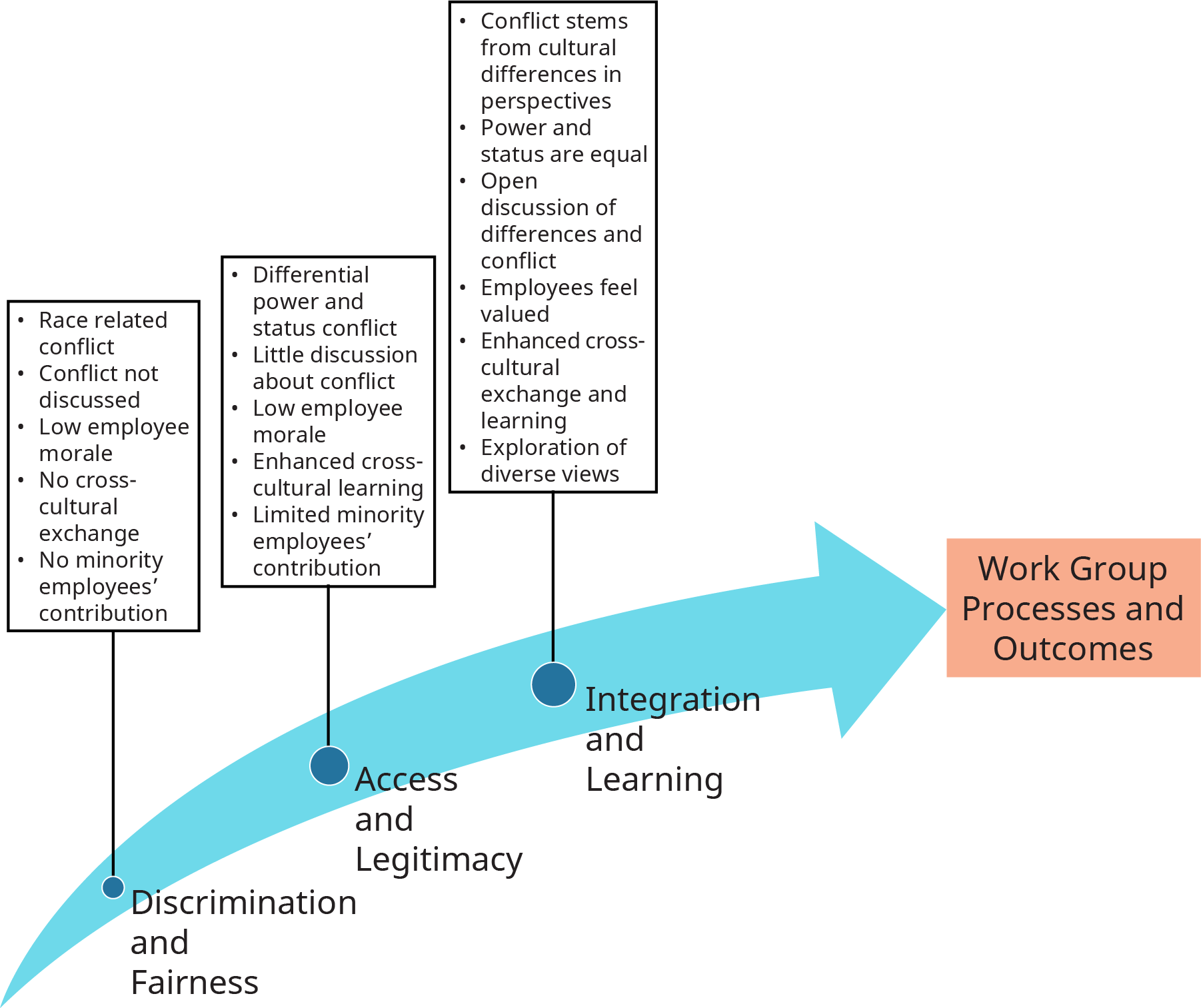
Exhibit 12.8 Cultural Diversity Perspectives at Work
Concept Check
- How can managers reap the benefits of diversity?
- How can managers mitigate the challenges of diversity?
- What is the access-and-legitimacy perspective? Differentiate it from the discrimination-and-fairness perspective.
Recommendations for Managing Diversity
- What can organizations do to ensure applicants, employees, and customers from all backgrounds are valued?
Organizations that are committed to equality and inclusion must take steps to combat the examples of discrimination and harassment that have been covered in this chapter. And they must take steps to make diversity a goal in the pre-employment stages as well as in the post-employment stages. Anyone with managerial or supervisory responsibilities should pay careful attention to hiring and performance-rewarding practices, and make sure to rely on relevant information for making decisions and ignore race-based stereotypes. The following are examples of what leaders and organizations can do make sure employees feel valued.
Interview Selection Process
To ensure fairness for all applicants, organizations should use highly structured interviews during the selection process to avoid bias based on race or gender. Highly structured interviews consists of the following 15 characteristics: "(1) job analysis, (2) same questions, (3) limited prompting, (4) better questions, (5) longer interviews, (6) control of ancillary information, (7) limited questions from candidates, (8) multiple rating scales, (9) anchored rating scales, (10) detailed notes, (11) multiple interviewers, (12) consistent interviewers, (13) no discussion between interviews, (14) training, and (15) statistical prediction". Similarity bias can occur when interviewers prefer interviewees with whom they share similar traits. Organizations can mitigate this challenge if all 15 characteristics of a structured interview are used consistently with each job applicant.
Diversified Mentoring Relationships
Thanks to the rapid growth of international travel and globalization, managers are often called upon to manage a workforce that is increasingly diverse. Research has shown that racially and ethnically diverse firms have better financial performance than more homogeneous firms, because, as mentioned, employees from different backgrounds and with different experiences can give the firm a competitive advantage in various ways. It is necessary, however, that managers and those in positions of power are adequately equipped to manage diverse workforces in ways that are beneficial to all. Diversified mentoring relationships are relationships in which the mentor and the mentee differ in terms of their status within the company and within larger society. The differences could be in terms of race, gender, class, disability, sexual orientation, or other status. Research has found that these types of relationships are mutually beneficial and that the mentor and the mentee both have positive outcomes in terms of knowledge, empathy, and skills related to interactions with people from different power groups.
Managerial Leadership
Diversity Training Programs
As the workforce becomes increasingly more diverse, managers will face a major challenge in understanding how to manage diversity. One of many decisions to be made is whether an organization should offer diversity training and, if so, what topics and issues should be addressed based on the organizational goals.
There has been a debate over the effectiveness of corporate diversity training since the Civil Rights Act of 1964 helped prompt corporate diversity training with the organizational goal of simply being compliant with the law. Prior research shows that it can be effective, ineffective, or even detrimental for employees, but as diversity training has evolved through the years, it has become an important factor in helping employers manage diversity.
In the 1980s through the late 1990s, diversity training evolved from focusing solely on compliance to addressing the needs of women and minorities as they entered the workforce at a faster rate. Unfortunately, this type of training was perceived by White people and men as singling them out as the problem; sometimes such training was even formatted as "confession" sessions for White employees to express their complicity in institutional racism. Not unexpectedly, this type of training would often backfire and would further separate employees from each other, the exact opposite of its intention.
Recently, diversity training has evolved to focus on (1) building cultural competencies regarding fellow employees, (2) valuing differences, and (3) learning how diversity helps make better business decisions. This perspective toward diversity training is more effective than simply focusing on causes of a lack of diversity and the historical roots of discrimination. Understanding how to comply with the law is still important, but training has a greater effect when the other factors are also included.
A recent study investigated various diversity-training methods, including having participants engage in activities on perspective taking and goal setting. For perspective-taking activities, participants were asked to write a few sentences about the challenges they believed minority group members might experience. Goal-setting activities involved writing specific and measurable goals related to workplace diversity such as crafting future policies or engaging in future behaviors. Researchers found that when these activities were used as a diversity-training method, pro-diversity attitudes and behavioral intentions persisted months later.
Issues regarding employee sexual orientation have also been introduced into corporate diversity training in recent years. Because employees' religious beliefs are protected by Title VII of the Civil Rights Act, employers should be sensitive to balancing the rights of lesbian, gay, bisexual, and transgender employees and employees' religious rights. Attempting to protect the rights of one group and not be perceived to disrespect another is a difficult situation for managers. In order to mitigate any backlash from some employees, employers should seek feedback from all groups to learn the best ways to accommodate them, and should assess the organizational climate. Additionally, managers should explain how diversity based on sexual orientation aligns with the company's strategic objectives and explain the company's legal position with supportive reasoning. Lastly, based on their organizational climate and how it reshapes itself over time, some companies may wish to address diversity training on sexual orientation, gender identity, and gender expression in training separate from other diversity issues.
Discussion Questions
- Why do you believe diversity training is resisted by some employees?
- Do you believe there will always be a need for workplace diversity training?
- How would you determine what types of diversity training are needed at your company?
Visible Leadership
Another key to ensure that employees are treated fairly is utilizing appropriate leadership strategies. Leadership must sincerely value variety of opinions, and organizational culture must encourage openness and make workers feel valued. Organizations must also have a well-articulated and widely understood mission and a relatively egalitarian, nonbureaucratic structure. Having such a work environment will ensure that the attitudes and values of employees are aligned with those of the organization. In this way culture serves as a control mechanism for shaping behaviors.
Strategies for Employees
Individuals can increase positive employment outcomes by obtaining high levels of education, because for all groups education is a predictor of employment and increased earnings. Individuals can also seek employment in larger firms, which are more likely to have formal hiring programs and specific diversity provisions in place. Individuals of any race or ethnic background can also take steps to eliminate discrimination by being aware of their own personal stereotypes or biases and taking steps to challenge and address them.
Concept Check
- How can managers ensure fairness in the interviewing and selection process regarding diversity?
- What is the role of leadership regarding diversity?
Key Terms
access discrimination
A catchall term that describes when people are denied employment opportunities because of their identity group or personal characteristics such as gender, race, or age.
access-and-legitimacy perspective
Focuses on the benefits that a diverse workforce can bring to a business that wishes to operate within a diverse set of markets or with culturally diverse clients.
age discrimination
Treating an employee or applicant less favorably due to their age.
Age Discrimination in Employment Act (ADEA)
Forbids discrimination against individuals who are age 40 and above, including offensive or derogatory remarks that create a hostile work environment.
Americans with Disabilities Act (ADA)
Prohibits discrimination in employment, public services, public accommodations, and telecommunications against people with disabilities.
cognitive diversity
Differences between team members regarding characteristics such as expertise, experiences, and perspectives.
cognitive diversity hypothesis
Multiple perspectives stemming from the cultural differences between group or organizational members result in creative problem-solving and innovation.
covert discrimination (interpersonal)
An interpersonal form of discrimination that manifests in ways that are not visible or readily identifiable.
deep-level diversity
Diversity in characteristics that are nonobservable such as attitudes, values, and beliefs, such as religion.
disability discrimination
Occurs when an employee or applicant is treated unfavorably due to their physical or mental disability.
discrimination-and-fairness perspective
A culturally diverse workforce is a moral duty that must be maintained in order to create a just and fair society.
diversified mentoring relationships
Relationships in which the mentor and the mentee differ in terms of their status within the company and within larger society.
diversity
Identity-based differences among and between people that affect their lives as applicants, employees, and customers.
Equal Employment Opportunity Commission
An organization that enforces laws and issues guidelines for employment-related treatment according to Title VII of the Civil Rights Act of 1964.
Equal Pay Act of 1963
An amendment to the Fair Labor Standards Act of 1938.
Family and Medical Leave Act (FMLA)
Provides new parents, including adoptive and foster parents, with 12 weeks of unpaid leave (or paid leave only if earned by the employee) to care for the new child and requires that nursing mothers have the right to express milk on workplace premises.
glass ceiling
An invisible barrier based on the prejudicial beliefs of organizational decision makers that prevents women from moving beyond certain levels within a company.
groupthink
A dysfunction in decision-making that is common in homogeneous groups due to group pressures and group members' desire for conformity and consensus.
harassment
Any unwelcome conduct that is based on characteristics such as age, race, national origin, disability, gender, or pregnancy status.
hidden diversity
Differences in traits that are deep-level and may be concealed or revealed at discretion by individuals who possess them.
highly structured interviews
Interviews that are be structured objectively to remove bias from the selection process.
identity group
A collective of individuals who share the same demographic characteristics such as race, sex, or age.
inclusion
The degree to which employees are accepted and treated fairly by their organization.
integration-and-learning perspective
Posits that the different life experiences, skills, and perspectives that members of diverse cultural identity groups possess can be a valuable resource in the context of work groups.
invisible social identities
Membership in an identity group based on hidden diversity traits such as sexual orientation or a nonobservable disability that may be concealed or revealed.
justification-suppression model
Explains the circumstances in which prejudiced people might act on their prejudices.
justification-suppression model
Explains under what conditions individuals act on their prejudices.
managing diversity
Ways in which organizations seek to ensure that members of diverse groups are valued and treated fairly within organizations.
model minority myth
A stereotype that portrays Asian men and women as obedient and successful and is often used to justify socioeconomic disparities between other racial minority groups.
national origin discrimination
Treating someone unfavorably because of their country of origin, accent, ethnicity, or appearance.
passing
The decision to not disclose one's invisible social identity.
pregnancy discrimination
Treating an employee or applicant unfairly because of pregnancy status, childbirth, or medical conditions related to pregnancy or childbirth.
Pregnancy Discrimination Act (PDA)
Prohibits any discrimination as it relates to pregnancy in hiring, firing, compensation, training, job assignment, insurance, or any other employment conditions.
race/color discrimination
Treating employees or applicants unfairly because of their race or because of physical characteristics typically associated with race such as skin color, hair color, hair texture, or certain facial features.
religious discrimination
When employees or applicants are treated unfairly because of their religious beliefs.
resource-based view
Demonstrates how a diverse workforce can create a sustainable competitive advantage for organizations.
revealing
The decision to disclose one's invisible social identity.
reverse discrimination
Describes a situation in which dominant group members perceive that they are experiencing discrimination based on their race or sex.
schema theory
Explains how individuals encode information about others based on their demographic characteristics.
sex-based discrimination
When employees or applicants are treated unfairly because of their sex, including unfair treatment due to gender, transgender status, or sexual orientation.
sexual harassment
Harassment based on a person's sex; it can (but does not have to) include unwanted sexual advances, requests for sexual favors, or physical and verbal acts of a sexual nature.
similarity-attraction paradigm
Individuals' preferences for interacting with others like themselves can result in diversity having a negative effect on group and organizational outcomes.
social identity theory
Self-concept based on an individual's physical, social, and mental characteristics.
stereotypes
Overgeneralization of characteristics about groups that are the basis for prejudice and discrimination.
strategic human resources management (SHRM)
System of activities arranged to engage employees in a manner that assists the organization in achieving a sustainable competitive advantage.
surface-level diversity
Diversity in the form of characteristics of individuals that are readily visible, including, but not limited to, age, body size, visible disabilities, race, or sex.
treatment discrimination
A situation in which people are employed but are treated differently while employed, mainly by receiving different and unequal job-related opportunities or rewards.
work visa
A temporary documented status that authorizes individuals from other countries to permanently or temporarily live and work in the United States.
workplace discrimination
Unfair treatment in the job hiring process or at work that is based on the identity group, physical or mental condition, or personal characteristic of an applicant or employee.
Summary
An Introduction to Workplace Diversity
- What is diversity?
Diversity refers to identity-based differences among and between people that affect their lives as applicants, employees, and customers. Surface-level diversity represents characteristics of individuals that are readily visible, including, but not limited to, age, body size, visible disabilities, race, or sex. Deep-level diversity includes traits that are nonobservable such as attitudes, values, and beliefs. Finally, hidden diversity includes traits that are deep-level but may be concealed or revealed at the discretion of individuals who possess them.
Diversity and the Workforce
- How diverse is the workforce?
In analyzing the diversity of the workforce, several measures can be used. Demographic measures such as gender and race can be used to measure group sizes. Measures of such things as discrimination toward specific groups can be analyzed to gauge the diversity of the workforce. Other measures of diversity in the workforce can include examination of differences in age and sexual orientation.
Diversity and Its Impact on Companies
- How does diversity impact companies and the workforce?
The demography of the labor force is changing in many ways as it becomes racially diverse and older and includes more women and individuals with disabilities. Diversity affects how organizations understand that employing people who hold multiple perspectives increases the need to mitigate conflict between workers from different identity groups, enhances creativity and problem solving in teams, and serves as a resource to create a competitive advantage for the organization.
Challenges of Diversity
- What is workplace discrimination, and how does it affect different social identity groups?
Workplace discrimination occurs when an employee or an applicant is treated unfairly at work or in the job-hiring process due to an identity group, condition, or personal characteristic such as age, race, national origin, sex, disability, religion, or pregnancy status. The Equal Employment Opportunity Commission enforces laws and legislation related to individuals with those protected statuses.
Harassment is any unwelcome conduct that is based on the protected characteristics listed above. Sexual harassment refers specifically to harassment based on a person's sex, and it can (but does not have to) include unwanted sexual advances, requests for sexual favors, or physical and verbal acts of a sexual nature.
Key Diversity Theories
- What key theories help managers understand the benefits and challenges of managing the diverse workforce?
The cognitive-diversity hypothesis suggests that multiple perspectives stemming from the cultural differences between groups or organizational members result in creative problem solving and innovation. The similarity-attraction paradigm and social identity theory explain how, because individuals prefer to interact with others like themselves, diversity may have a negative effect on group and organizational outcomes. The justification-suppression model explains under what conditions individuals act on their prejudice.
Benefits and Challenges of Workplace Diversity
- How can managers reap benefits from diversity and mitigate its challenges?
By approaching diversity and diversity issues in a thoughtful, purposeful way, managers can mitigate the challenges posed by a diverse workforce and enhance the benefits a diverse workforce can offer.
Managers can work to make sure that the efforts and initiatives they enact to increase diversity in the workplace come from a perspective that ensures and strives for equity and fairness, not simply one that will benefit the company's bottom line.
Using an integration-and-learning perspective strongly links diversity to the work and success of the firm by viewing cultural identity, different life experiences, skills, and perspectives from members of diverse cultural identity groups as a valuable resource.
Recommendations for Managing Diversity
- What can organizations do to ensure applicants, employees, and customers from all backgrounds are valued?
Organizations should use objective and fair recruitment and selection tools and policies.
Leadership should make employees feel valued, be open to varied perspectives, and encourage a culture of open dialogue. Women and racial minorities can increase positive employment outcomes by pursuing higher levels of education and seeking employment in larger organizations. All individuals should be willing to listen, empathize with others, and seek to better understand sensitive issues that affect different identity groups.
Review Questions
- Define the three types of diversity and compare them using examples for each type.
- How are demographics of the workforce changing?
- What are some major challenges that women face in organizations?
- What is the model minority myth? How does it compare to how Black people and Hispanic people are stereotyped?
- What are some benefits of hiring older workers?
- Why would an employee "pass" or "reveal" at work? What are the positive and negative consequences of doing so?
- Explain the six benefits of workplace diversity described by Cox and Blake's business case for diversity.
- Compare how the cognitive diversity hypothesis and the similarity-attraction paradigm relate to diversity outcomes.
- Based on the justification-suppression model, explain why individuals act on their prejudicial beliefs.
- Describe challenges that managers must face when managing diversity.
- How can employees ensure they are compliant with the laws and legislation enforced by the EEOC?
- What are some recommendations for managing diversity?
Critical Thinking Case
Uber Pays the Price
Nine years ago, Uber revolutionized the taxi industry and the way people commute. With the simple mission "to bring transportation - for everyone, everywhere," today Uber has reached a valuation of around $70 billion and claimed a market share high of almost 90% in 2015. However, in June 2017 Uber experienced a series of bad press regarding an alleged culture of sexual harassment, which is what most experts believe caused their market share to fall to 75%.
In February of 2017 a former software engineer, Susan Fowler, wrote a lengthy post on her website regarding her experience of being harassed by a manager who was not disciplined by human resources for his behavior. In her post, Fowler wrote that Uber's HR department and members of upper management told her that because it was the man's first offense, they would only give him a warning. During her meeting with HR about the incident, Fowler was also advised that she should transfer to another department within the organization. According to Fowler, she was ultimately left no choice but to transfer to another department, despite having specific expertise in the department in which she had originally been working.
As her time at the company went on, she began meeting other women who worked for the company who relayed their own stories of harassment. To her surprise, many of the women reported being harassed by the same person who had harassed her. As she noted in her blog, "It became obvious that both HR and management had been lying about this being his 'first offense'". Fowler also reported a number of other instances that she identified as sexist and inappropriate within the organization and claims that she was disciplined severely for continuing to speak out. Fowler eventually left Uber after about two years of working for the company, noting that during her time at Uber the percentage of women working there had dropped to 6% of the workforce, down from 25% when she first started.
Following the fallout from Fowler's lengthy description of the workplace on her website, Uber's chief executive Travis Kalanick publicly condemned the behavior described by Fowler, calling it "abhorrent and against everything Uber stands for and believes in". But later in March, Uber board member Arianna Huffington claimed that she believed "sexual harassment was not a systemic problem at the company". Amid pressure from bad media attention and the company's falling market share, Uber made some changes after an independent investigation resulted in 215 complaints. As a result, 20 employees were fired for reasons ranging from sexual harassment to bullying to retaliation to discrimination, and Kalanick announced that he would hire a chief operating officer to help manage the company. In an effort to provide the leadership team with more diversity, two senior female executives were hired to fill the positions of chief brand officer and senior vice president for leadership and strategy.
Critical Thinking Questions
- Based on Cox's business case for diversity, what are some positive outcomes that may result in changes to Uber's leadership team?
- Under what form of federal legislation was Fowler protected?
- What strategies should have been put in place to help prevent sexual harassment incidents like this from happening in the first place?