Corporate Social Responsibility (CSR)
| Site: | Saylor University |
| Course: | [CB DRAFT] BUS401: Strategic Leadership Management |
| Book: | Corporate Social Responsibility (CSR) |
| Printed by: | Guest user |
| Date: | Tuesday, 27 October 2026, 3:26 PM |
Description
- 5e Apply the role of culture in organizational responsibility and ethics (CLO 5)
Introduction
Today, more than ever, stakeholders are placing a variety of ethical and socially responsible demands on firms across industries. Subsequently, strategic management will be unsuccessful if it is performed in an ethical vacuum. Strategy development and implementation must reflect the firm's mission, vision, and values. Ethical assessments of the external and internal environments must be performed using accurate information and transparent processes even in competitive environments. When firms attempt to gain a competitive advantage, many companies engage in legitimate and accepted competitive tactics, but sometimes firms cross the line and enter unethical, and perhaps illegal, space in their quest. The potential costs of unethical corporate business practice is born by the perpetrator - if they are "caught". However, in many cases, like environmental dumping or exploitative labor practices, society and its members may pay the costs years before the firm does. Minimally, business level, corporate level, and international strategy development should always occur within acceptable practices in the industry and in light of the firm's own code of ethics and compliance. As firms move from "doing right" to "doing good," and endorse corporate social responsibility philosophies and activities, employees, managers, customers, and other stakeholders take pride and satisfaction in the impact their company has on improving the society. Further, as contemporary societal expectations have shifted, firms have witnessed new opportunities to turn corporate values and ethical decision-making into a competitive advantage within their marketplace.
TOMS Shoes: Doing Business with Soul

Figure 11.1: Under the business model used by TOMS Shoes, a pair of their signature alpargata footwear is donated for every pair sold.
In 2002 Blake Mycoskie competed with his sister Paige on The Amazing Race - a reality show where groups of two people with existing relationships engage in a global race to win valuable prizes, with the winner receiving a coveted grand prize. Although Blake's team finished third in the second season of the show, the experience afforded him the opportunity to visit Argentina, where he returned in 2006 and developed the idea to build a company around the alpargata - a popular style of shoe in that region.
The premise of the company Blake started was a unique one. For every shoe sold, a pair will be given to someone in need. This simple business model was the basis for TOMS Shoes, which has now given away more than one million pairs of shoes to those in need in more than 20 countries worldwide. The rise of TOMS Shoes has inspired other companies that have adopted the "buy-one-give-one" philosophy. For example, the Good Little Company donates a meal for every package purchased. This business model has also been successfully applied to selling (and donating) other items such as glasses and books.
The social initiatives that drive TOMS Shoes stand in stark contrast to the criticisms that plagued Nike Corporation, where claims of human rights violations, ranging from the use of sweatshops and child labor to lack of compliance with minimum wage laws, were rampant in the 1990s. While Nike struggled to win back confidence in buyers that were concerned with their business practices, TOMS social initiatives are a source of excellent publicity in pride in those who purchase their products. As further testament to their popularity, TOMS has engaged in partnerships with Nordstrom, Disney, and Element Skateboards.
Although the idea of social entrepreneurship and the birth of firms such as TOMS Shoes are relatively new, a push toward social initiatives has been the source of debate for executives for decades. Issues that have sparked particularly fierce debate include CEO pay and the role of today's modern corporation. More than a quarter of a century ago, famed economist Milton Friedman argued, "The social responsibility of business is to increase its profits". This notion is now being challenged by firms such as TOMS and their entrepreneurial CEO, who argue that serving other stakeholders beyond the owners and shareholders can be a powerful, inspiring, and successful motivation for growing business.
This chapter discusses some of the key issues and decisions relevant to understanding corporate and business ethics. These issues include how to govern large corporations in an effective and ethical manner, what behaviors are considered best practices in regard to corporate social performance, and how different generational perspectives and biases may hold a powerful influence on important decisions. Understanding these issues may provide knowledge that can encourage effective organizational leadership like that of TOMS Shoes and discourage the criticisms of many firms associated with the corporate scandals of the late 1990s and early 2000s.
Source: Reed Kennedy
View original source. This work is licensed under a Creative Commons Attribution-NonCommercial-ShareAlike 4.0 License.
Doing Well by Doing Good
Corporate Scandals and the Sarbanes-Oxley Act
Celebrity scandals often create "buzz" and can actually make celebrities richer. But scandals in the business world frequently lead to the forfeiture of millions of dollars—and to prison sentences. Some notable corporate scandals are illustrated below.
| Scandal | What happened |
|---|---|
| Ponzi schemes | Named after Charles Ponzi, who in the 1920s paid returns to investors using money from new investors rather than firm profits. Inevitably this kind of scheme falls apart, because it becomes impossible to attract enough new investors to pay the existing ones. |
| Enron | Executives used accounting loopholes to create shell companies that hid billions in debt from failed deals and projects. Although these executives thought they were "the smartest guys in the room," the loss of $11 billion in stock value and the prison time served by many of them proved otherwise. |
| Adelphia Communications | Corruption was a family affair at Adelphia, named after the Greek word for "brothers." It was the fifth-largest cable company in the United States until the father-and-son team of John and Timothy Rigas were found guilty of securities violations tied to their theft of $100 million. Another son, Michael Rigas, pled guilty to falsifying financial reports. |
| Boeing | After two crashes that took hundreds of lives, Boeing grounded its 737 Max airliner. Its $20 million fine was small compared to the losses from diminished confidence and future sales, after it was discovered that Boeing had failed in several ways regarding FAA rules, inspections, and pilot training on its software changes. |
| Chiquita Brands | Although Chiquita sells healthy snacks, its corporate actions upset many in 2007 when it was fined $25 million by the U.S. Justice Department for ties to a Colombian paramilitary group on the department's list of foreign terrorist organizations. |
| Bernard Madoff | The Madoff investment scandal that broke in 2008 was a modern twist on the classic Ponzi scheme. NASDAQ chairman Bernard Madoff pled guilty to eleven federal crimes that constituted the largest investor fraud ever committed by an individual. He was sentenced to 150 years in prison. |
In the 1990s and early 2000s, several corporate scandals revealed in the United States exposed a lack of board vigilance. Perhaps the most famous involved Enron, whose executives' antics were documented in the film The Smartest Guys in the Room. Enron used accounting loopholes to hide billions of dollars in failed deals. When the scandal was discovered, top management cashed out millions in stock options while preventing lower-level employees from selling their stock. Enron's collective acts led many employees to lose all of their retirement holdings and their jobs; stockholders lost $74 billion; and many Enron executives were sentenced to prison. The scandal also caused the dissolution of Enron's outside accounting firm, Arthur Andersen, then one of the five largest accounting firms in the world.
Around the same time as Enron, other corporate scandals caused colossal damage. WorldCom, a telecommunications firm, inflated its assets; when this was discovered, shareholders lost $180 billion and 30,000 employees lost their jobs. In another famous case, the CEO and CFO of Tyco stole $150 million and inflated company revenues by $500 million. Before being discovered, the CEO threw a $2 million birthday party for his wife on a Mediterranean island, paid for with company funds. Both the CEO and CFO went to prison.
In response to notable corporate scandals at Enron, WorldCom, Tyco, and other firms, Congress passed sweeping new legislation in hopes of restoring investor confidence while preventing future scandals (Table 11.1). Signed into law by President George W. Bush in 2002, the Sarbanes-Oxley Act contained 11 aspects that represented some of the most far-reaching reforms since the presidency of Franklin Roosevelt. These reforms created improved standards affecting all publicly traded firms in the United States. The key elements of each aspect of the act are summarized below:
- Because accounting firms were implicated in corporate scandals, an oversight board was created to oversee auditing activities.
- Standards now exist to ensure auditors are truly independent and not subject to conflicts of interest regarding the companies they represent.
- Enron executives claimed they had no idea what was going on in their company, but the act requires senior executives to take personal responsibility for the accuracy of financial statements.
- Enhanced reporting is now required to create more transparency about a firm's financial condition.
- Securities analysts must disclose potential conflicts of interest.
- To prevent CEOs from claiming tax fraud is present at their firms, CEOs must personally sign the firm's tax return.
- The Securities and Exchange Commission (SEC) now has expanded authority to censure or bar securities analysts from acting as brokers, advisers, or dealers.
- Reports from the comptroller general are required to monitor any consolidations among public accounting firms, the role of credit agencies in securities market operations, securities violations, and enforcement actions.
- Criminal penalties now exist for altering or destroying financial records.
- Significant criminal penalties now exist for white-collar crimes.
- The SEC can freeze unusually large transactions if fraud is suspected.
The changes that prompted the Sarbanes-Oxley Act were so sweeping that comedian Jon Stewart quipped, "Did Wall Street have any rules before this? Can you just shoot a guy for looking at you wrong?" Despite the act's considerable merits, no legislation can be a cure-all for corporate scandal (Table 11.2). As evidence, the Bernard Madoff scandal that broke in 2008 represented the largest investor fraud ever committed by an individual—but in contrast to some earlier scandals that resulted in relatively minor punishments, Madoff was sentenced to 150 years in prison.
Did the Sarbanes-Oxley Act help reduce corporate scandals? Maybe—but unfortunately they have continued. More notable examples include HealthSouth, Freddie Mac, American International Group (AIG), and Lehman Brothers. Accounting and financial misdeeds are not the only type of corporate scandal that still plagues the corporate environment. More recent scandals have involved Volkswagen (emissions fraud), Uber (sexual harassment), Apple (deliberately slowing devices), Facebook (data harvesting without consent), Boeing (skirting FAA rules), and various pharmaceutical companies that unethically pushed sales of opioid medications, worsening the opioid epidemic. As noted, not all corporate scandals are financial in nature, but they are typically driven by greed and provide a financial benefit for individuals or companies.
In the early 2000s, highly publicized fraud at Enron, WorldCom, Tyco, and other firms revealed significant issues—including conflicts of interest by auditors and securities analysts, boardroom failures, and inadequate funding of the Securities and Exchange Commission. In response, Senator Paul Sarbanes and Representative Michael Oxley sponsored legislation that contained what former President George W. Bush called "the most far-reaching reforms of American business practices since the time of Franklin D. Roosevelt." The 11 key aspects of the law are outlined below.
| # | Key provision |
|---|---|
| 1 | Accounting firms were complicit in some fraudulent events. In response, SOX created a board to oversee auditing activities within these firms. |
| 2 | Concerns about conflicts of interest arising from accounting firms acting as both consultants and auditors for the same firm led SOX to establish standards ensuring that auditors would be truly independent. |
| 3 | Senior executives must take individual responsibility for the accuracy of their firms' financial reports, and they must forfeit the benefits arising from any non-compliance. |
| 4 | To create more transparency, SOX enhances reporting standards for off-balance-sheet transactions and requires timely reporting of material changes in a firm's financial condition. |
| 5 | Securities analysts must disclose any conflicts of interest involving a firm. |
| 6 | The CEO is required to sign the firm's tax return. This may prevent CEOs from claiming they did not know tax fraud was occurring within their firms. |
| 7 | To restore investor confidence in securities analysts, SOX expands the SEC's authority to censure or bar them from acting as a broker, adviser, or dealer. |
| 8 | The comptroller general and the SEC are now required to carefully monitor any consolidation among public accounting firms, the role of credit agencies in securities market operations, securities violations, and enforcement actions. |
| 9 | To preserve potentially incriminating documents, SOX creates criminal penalties for altering or destroying financial records. |
| 10 | In the past, white-collar crimes often received a proverbial slap on the wrist. SOX significantly increased the penalties associated with white-collar crimes and conspiracies. |
| 11 | In response to past fraud and records tampering, the SEC can temporarily freeze transactions deemed unusually large. |
Section Video
The Ethics of Business: Where and Why It Can Go Wrong
This video explains the ethics of business, and where and why it can go wrong.
Ethics and CSR as Corporate Strategy
One positive outcome of the corporate scandals has been an increased focus by firms on corporate ethics. Many companies now have an Ethics and Compliance Officer and a detailed Ethics and Compliance Code. For example, Walmart's Global Ethics and Compliance Program is provided online for the public and runs to numerous pages (Walmart, n.d.). Many firms provide annual training to all employees on their company's ethics and compliance standards.
Below is the table of contents for Facebook's Code of Conduct. Although this is a typical approach to a code of conduct, it does not necessarily mean a company is perceived as ethical—particularly as Facebook has faced pressure to reconcile its commitments to "free speech" with accusations of promoting hate speech.
| # | Section |
|---|---|
| 1 | Introduction |
| 2 | Conflicts of Interest |
| 3 | Harassment |
| 4 | Communications |
| 5 | Public Disclosures |
| 6 | Financial Integrity and Responsibility |
| 7 | Confidential Information |
| 8 | Protection of User Data and Personnel Data |
| 9 | Protection and Use of Facebook Assets |
| 10 | Compliance with Laws |
| 11 | Reporting Violations |
| 12 | Policy Prohibiting Retaliation |
| 13 | Training |
| 14 | Amendment and Waivers |
Another form of regulation designed to prevent corporate misbehavior involves "whistleblower" laws and policies. Many firms intentionally encourage employees to report any suspected misconduct by the firm, its managers, or its employees. A whistleblower hotline is often provided so suspected violations can be reported anonymously, and anti-retaliation policies encourage employees to come forward without fear of retaliation or losing their jobs. Although all these measures are helpful, fraud and misconduct still occur.
In response to persistent rule-breaking by corporate actors, Corporate Social Responsibility (CSR) emerged in the 1970s to assert that a "social contract" exists between business and society. At its base is the assumption that a business thrives when the society it relies on thrives, and that firms therefore have a duty to give back more than profit to their environment. CSR is a business model that attempts to "give back" to the members of the community or society who help the firm succeed by purchasing its products or services. Its goal is to enhance the success of a business by enhancing the society in which the organization operates. CSR can take the form of philanthropy or donating funds to causes important to a firm's stakeholders. Some forms include corporate volunteerism—such as asking employees to help build a Habitat for Humanity house on a Saturday—and improving environmental sustainability, one of the most recognized recent forms of CSR.
Many firms adopt the Triple Bottom Line approach to guide their CSR philosophy. In the triple bottom line, the company focuses on the three P's: profit, planet, and people. CSR is discussed in more detail later in this chapter.
Section Videos
What Is Business Ethics?
The video for this lesson explains personal business ethics.
What Is Ethics? What Is Business Ethics?
This second video for the lesson focuses on business ethics.
Key Takeaway
- Firms can have a positive or negative impact on society. Corporate scandals have caused tremendous losses for shareholders, employees, and other stakeholders. The government has passed various regulations, such as the Sarbanes-Oxley Act, in attempts to thwart unethical and illegal company behavior—yet such behavior continues. A company's board of directors has the ultimate responsibility for ensuring ethical behavior on the part of the organization and its CEO. Senior management may be tempted to act in its own interest instead of the firm's best interests, which is called the agency problem. On the positive side, many firms have adopted the philosophy and activities of corporate social responsibility, or creating shared value. Ethical issues will continue to confront firms and their leadership teams. Adhering to a company's core values and keeping the firm's best interests as the priority will help guide leaders to the best decisions.
Corporate Governance
The Many Roles of Boards of Directors
"You're fired!" is a phrase most closely associated with Donald Trump as he dismissed candidates on his reality show, The Apprentice. But who has the power to utter these words to today's CEOs, whose paychecks rival those of top celebrities and athletes? This honor belongs to the board of directors—a group of individuals that oversees the activities of an organization or corporation.
Potentially firing or hiring a CEO is one of many roles the board of directors plays in its charge to provide effective corporate governance for the firm. An effective board fills many roles—approving financial objectives, advising on strategic issues, making the firm aware of relevant laws, and representing stakeholders who have an interest in the firm's long-term performance (see Table 11.4, "Board Roles"). Effective boards can also bring prestige and important resources to the organization. General Electric's board, for example, has often included the CEOs of other firms as well as former senators and prestigious academics. Blake Mycoskie of TOMS Shoes was touted as an ideal candidate for an "all-star" board of directors because of his ability to fulfill his company's mission "to show how together we can create a better tomorrow by taking compassionate action today."
One of the key stakeholders of a corporation is generally agreed to be the shareholders of the company's stock. Most large, publicly traded firms in the United States have thousands of shareholders. While 5% ownership in many ventures may seem modest, this amount is considerable in publicly traded companies—where such ownership is generally limited to other companies—and could result in representation on the board of directors.
The possibility of conflicts of interest is considerable in public corporations. A conflict of interest exists when a person could receive personal benefit from decisions they make in their official capacity. For example, if a firm's purchasing agent's husband owns an office supply company that could sell products to the firm, the purchasing agent has a conflict of interest. CEOs favor large salaries and job stability, and these desires are often accompanied by a tendency to make decisions that benefit the firm (and their salaries) in the short term, at the expense of decisions viewed over a longer time horizon. Shareholders, in contrast, prefer decisions that grow the value of their stock in the long term. This separation of interests creates an agency problem, in which the interests of the individuals who manage the company (agents such as the CEO) may not align with the interests of the owners (such as stockholders).
The composition of the board is critical, because board dynamics play an important part in resolving the agency problem. However, exactly who should be on the board is an issue subject to fierce debate. CEOs often favor board insiders, who tend to have intimate knowledge of the firm's business affairs. In contrast, many institutional investors—such as mutual funds and pension funds that hold large blocks of stock—prefer significant representation by board outsiders, who can provide a fresh, unbiased perspective on a firm's actions.
One particularly controversial issue regarding board composition is the potential for CEO duality, a situation in which the CEO is also the chairman of the board of directors. This has been known to create a bitter divide within a corporation.
During the 1990s, for example, The Walt Disney Company was often listed in BusinessWeek's rankings as having one of the worst boards of directors. In 2005, Disney's board forced the separation of then-CEO (and board chairman) Michael Eisner's dual roles. Eisner retained the role of CEO but later stepped down from Disney entirely. Disney's story reflects a changing reality: boards now act with considerably more influence than in previous decades, when they were viewed largely as rubber stamps that generally folded to the whims of the CEO.
William Shakespeare once wrote, "All the world's a stage, and the men and women merely players." This analogy applies well to boards of directors. When board members' performance is impressive, the company can put on a dynamic show; but if a board member phones in their role, failure may soon follow. The different roles board members may play are discussed below.
| Role | Responsibility |
|---|---|
| Accountant | Board members may, at times, approve financial objectives. |
| Lawyer | Ensuring the firm complies with applicable laws is a key role. |
| Advisor | Providing advice on strategic issues is a critical role that less effective boards overlook. |
| Activist | Boards must ensure the rights and interests of stakeholders (especially stockholders) are represented. |
| Human Resource Manager | Boards must monitor the CEO and engage in hiring, firing, and the administration of CEO compensation. |
| Agent | Because board members may serve in powerful positions at other companies, a well-networked board member can bring new connections to the firm. |
Managing CEO Compensation
One of the most visible roles of boards of directors is setting CEO pay. The value of the human capital tied to the rare talent some CEOs possess can be illustrated by a story about an encounter one tourist had with the legendary artist Pablo Picasso. As the story goes, Picasso was once spotted sketching by a woman who, overwhelmed with excitement at the serendipitous meeting, offered him fair market value for a quick sketch of her image. After completing the commission, she was shocked when he asked for five thousand francs, responding, "But it only took you a few minutes." Undeterred, Picasso retorted, "No, it took me all my life."

This story illustrates the complexity of managing CEO compensation. On the one hand, large corporations must pay competitive wages for the scarce talent needed to manage billion-dollar enterprises. Like the pay of celebrities and sports stars, CEO pay is much more than a function of a day's work for a day's pay—it is a market-driven function of the competitive wages other corporations would offer for a potential CEO's services.
On the other hand, boards face considerable scrutiny from investors if CEO pay is out of line with industry norms. From 1980 to 2000, the gap between CEO pay and worker pay grew from 42-to-1 to 475-to-1. Although efforts to close this gap have been made, as recently as 2019 reports indicated the ratio remained as high as 278-to-1—much higher than in other countries (Germany's ratio, for example, is half the U.S. figure). Meanwhile, shareholders should be aware that research has found CEO pay to be positively correlated with firm size: the bigger the firm, the higher the CEO's compensation. Consequently, when a CEO tries to grow a company—say, by acquiring a rival—shareholders should question whether such growth is truly in the company's best interest or simply an effort by the CEO to earn a pay raise.
Within American firms, the average CEO is paid over 200 times what the typical worker makes—one of the highest ratios in the world. Many CEOs also receive perks that the average employee could only dream of. Such perks are troubling to the extent that they reflect a board's lack of vigilance in monitoring CEO spending. A few examples are illustrated below.
| Examples of CEO perks |
|---|
| Former Tyco CEO Dennis Kozlowski—now a convicted felon—threw a week-long, $2 million birthday bash for his wife that included an ice sculpture of Michelangelo's David dispensing vodka (top shelf, of course). |
| A small matter compared to the lavish perks of many executives, but a sweet one: former Ben & Jerry's CEO Robert Holland Jr. will receive free ice cream for life. |
| Golden parachutes, in which CEOs receive large cash settlements if fired, are common in publicly traded companies. Less common is the "golden coffin," which provides big settlements if an executive dies in office. Abercrombie & Fitch CEO Michael Jeffries was offered $6 million for his loyalty to the company—dead or alive. |
| Foreclosure! Countrywide Financial, now owned by Bank of America, paid nearly $1 million for its executives' country club memberships between 2003 and 2006. |
| Although Don Tyson of Tyson Foods retired in 2001, Tyson employees mowed his yard and cleaned his house to keep things tidy in retirement. |
In most publicly traded firms, CEO compensation generally includes a guaranteed salary, a cash bonus, and stock options. But perks provide another valuable source of CEO compensation (see Table 11.5, "CEO Perks"). In addition to the controversy over CEO pay, the perks of the position have come under considerable scrutiny. The term "perks," derived from "perquisite," refers to special privileges or rights that come with one's position. CEO perks have ranged from the sweet benefit of ice cream for life given to former Ben & Jerry's CEO Robert Holland to far more extreme benefits that raise investors' eyebrows while outraging employees. One such perk went to John Thain who, as former head of NYSE Euronext, received more than $1 million to renovate his office. While such perks may provide powerful incentives to stay with a company, they can generate considerable negative press and motivate vigilant investors—wary of the value of such spending—to shop elsewhere.
As noted earlier in this chapter, CEOs sometimes get involved in corporate scandals, pursuing their own self-interest instead of the best interests of the company. But this problem can be far more subtle than a scandal, and it is not limited to CEOs. An agency problem exists whenever an "agent" of the company—typically senior management—acts in their own self-interest at the expense of the firm. For example, a CEO may push for the acquisition of another company to enhance their salary and legacy when that acquisition is unwise. They might decide to expand into Spain instead of the United Kingdom because they prefer traveling to sunny Spain with its great food rather than the rainy U.K., even though the U.K. is the better choice. Selfish or self-centered motives can influence decision making in ways that are difficult to detect; at times, the decision maker may feel justified and not even recognize their impure motives. The board of directors—and the decision makers themselves—need to recognize that the agency problem exists and guard against it. The agency problem also exists in politics, where politicians are sometimes accused of making decisions that benefit themselves over their constituents.
The Market for Corporate Governance
The terms associated with mergers, acquisitions, and the actions executives use to block these moves often sound like material from the latest war movie. The important terms are explained below.
| Term | Definition |
|---|---|
| Corporate raider | While a pirate raids a competitor's vessel to loot valuable treasures, a corporate raider invades a firm by purchasing its stock. |
| Hostile takeover | An attempt to purchase a company that is strongly resisted by the target firm's CEO and/or board. |
| Shark repellent | A general name for defenses against takeovers. Several examples are described below. |
| Golden parachute | A financial package (often including stock options and bonuses worth millions of dollars) given to executives likely to lose their jobs after a takeover. These packages make taking over a firm more costly, and thus less attractive. |
| Poison pill | When executives are desperate to avoid a takeover, they may swallow a poison pill—making the firm's stock unattractive to raiders by letting shareholders buy stock at a discount. |
| White knight | A firm that rescues a target by offering a friendly takeover as an alternative to a hostile one. |
| Greenmail | In contrast to blackmail (where information is withheld unless a demand is met), greenmail occurs when an unfriendly firm forces a target company to repurchase a large block of stock at a premium to thwart a takeover attempt. |
An old investment cliché encourages individuals to buy low and sell high. When a publicly traded firm loses value—often due to a lack of vigilance on the part of the CEO and/or board—it may become a takeover target, in which another firm or set of individuals purchases the company. The new top management team is generally charged with revitalizing the firm and maximizing its assets.
In some cases, the takeover takes the form of a leveraged buyout (LBO), in which a publicly traded company is purchased with sizable debt and then taken off the stock market. One of the most famous LBOs was of RJR Nabisco, which inspired the book (and later film) Barbarians at the Gate. LBOs are historically associated with workforce reductions to streamline processes and decrease costs. The managers who instigate buyouts generally bring a more entrepreneurial mindset to the firm, hoping to engineer a turnaround from the same poor performance that made the company an attractive takeover target.
Many takeover attempts increase shareholder value. However, because most takeovers are associated with the dismissal of previous management, the terminology of changing ownership has a decidedly negative slant against the acquiring firm's management team. Individuals or firms hoping to conduct a takeover are often called corporate raiders; an unsolicited takeover attempt is often dubbed a hostile takeover, with shark repellent as one potential defense. Although a targeted firm's poor management is often the reason it becomes a takeover target, when another, friendlier firm enters the picture as an alternative buyer, a white knight is said to have arrived (see Table 11.6, "Takeover Terms").
The negative tone of takeover terminology also extends to the target firm. CEOs and board members are likely to lose their positions after a successful takeover, and boards have used a number of anti-takeover tactics to deter a corporate raid. Many firms pay greenmail, repurchasing large blocks of stock at a premium to avoid a potential takeover. Firms may threaten to take a poison pill, selling additional stock to existing shareholders and increasing the number of shares needed for a viable takeover. And even if a takeover succeeds and the previous CEO is dismissed, a golden parachute that includes a lucrative financial settlement is likely to provide a soft landing for the ousted executive.
Section Video
Role of the Board in Creating an Ethical Corporate Culture [06:48]
This video describes the role of the board in creating an ethical corporate culture.
Key Takeaway
- Firms can benefit from superior corporate governance mechanisms, such as an active board that monitors CEO actions, provides strategic advice, and helps network to other useful resources. When such mechanisms are absent, CEO excess may go unchecked, resulting in negative publicity, poor firm performance, and the potential for a takeover by other firms. An agency problem exists when the CEO acts in their own best interest instead of the best interest of the firm.
Corporate Ethics and Social Responsibility
What Is Corporate Social Responsibility?
As introduced earlier in this chapter, Corporate Social Responsibility (CSR) "is a self-regulating business model that helps a company be socially accountable—to itself, its stakeholders, and the public. By practicing corporate social responsibility, also referred to simply as social responsibility, companies can be conscious of the kind of impact they are having on all aspects of society, including economic, social, and environmental." Philanthropy is the simplest form of CSR, in which a firm donates funds to a nonprofit organization such as the local volunteer rescue squad or the American Cancer Society. However, CSR can take many forms, all with the end result that society benefits in some way. Environmental efforts might include reducing the company's pollution or helping clean up the plastic that washes up on beaches. Supporting local literacy volunteers by encouraging employees to help adults learn to read and write provides a social benefit.
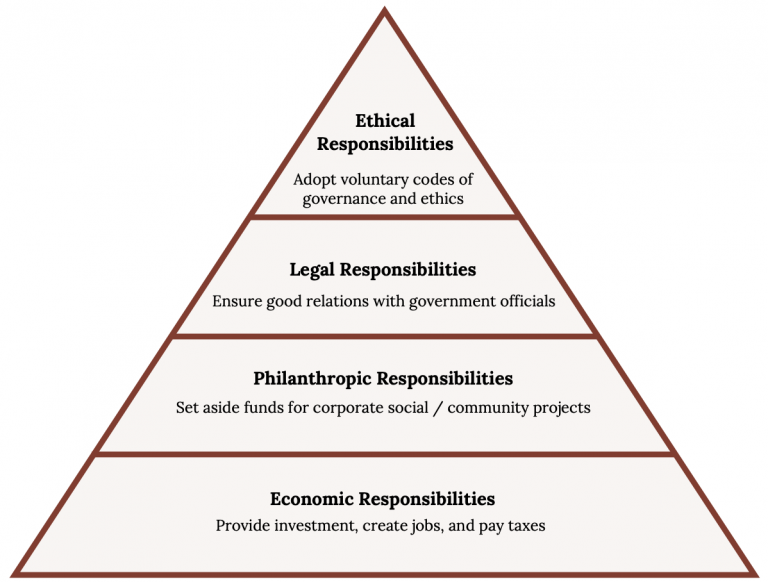
The CSR approach is not without controversy. When CSR was introduced, the famous economist Milton Friedman opposed it on philosophical grounds. He believed, as some others did, that no profits should be diverted to CSR activities: company investors and stockholders took a risk when they invested in the company, so the company's first obligation is to them. Many who practice CSR, on the other hand, believe that CSR activities ultimately do benefit investors and stockholders—a CSR strategy provides good public relations, enhances brand image, and creates loyalty and more sales over the long term. Some consumers, for example, may specifically seek out TOMS shoes because of the firm's "Buy One, Give One" model, feeling that their purchase has a positive social impact.
Some examples of CSR efforts are:
- Reducing its carbon footprint — Coca-Cola
- Ensuring contract manufacturers pay a living wage — Patagonia
- Improving sustainable manufacturing — BMW
- Matching employees' donations to nonprofits — Microsoft and Google
- Reducing carbon emissions — United Airlines
- Promoting literacy among children — Twitter
- Eliminating foam cups — Dunkin'
- Donating employees' hours to children's tutoring — Salesforce
One criticism of CSR is that it is seen as an "add-on" endeavor for firms—often not an ingrained component of a company's philosophy and operations. In response, a relatively new movement emerged to remedy this deficiency. Michael Porter and Mark Kramer suggest that, instead of CSR, wise corporations are shifting to a Creating Shared Value (CSV) model, which argues that firms should address social issues by creating shared value—fundamentally focused on expanding the total pool of social and economic resources. Porter and Kramer re-frame the business proposition by recognizing that "societal needs, not just conventional economic needs, define markets, and social harms can create internal costs for firms."
Creating shared value (CSV) is a business strategy that creates a direct link between the success of the firm and the improvement of society. Generally, CSV can be considered a particular strategic approach within the broader CSR landscape. A key differentiator is CSV's explicit focus on generating positive economic outcomes through its strategic investments: as a company prospers economically, so do those it affects. Both CSV and CSR take a longer-term, rather than short-term, approach to measuring impact. Whole Foods, for example, was one of the most high-profile companies to adopt CSV as a guiding strategy—investing in local schools to ensure a well-prepared workforce and supporting local agricultural communities so it could reliably source produce from local vendors. Whereas one traditional "business as usual" view holds that a company prospers at the expense of the consumer and society, CSV and CSR flip that view.
Section Videos
Business Ethics: Corporate Social Responsibility
This video further explains corporate social responsibility.
Insight: Ideas for Change — Michael Porter — Creating Shared Value
This video focuses on the differences between CSR and CSV.
Measuring Corporate Social Performance
TOMS Shoes' commitment to donating a pair of shoes for every pair sold illustrates the concept of social entrepreneurship, in which a business is created with the goal of improving both business and society. Using a CSR model, firms such as TOMS exemplify a desire to improve corporate social performance (CSP), in which a commitment to individuals, communities, and the natural environment is valued alongside the goal of creating economic value. Although determining the level of a firm's social responsibility is subjective, organizations have addressed this challenge by rating firms on a number of stakeholder-related issues to measure CSP. They conduct ongoing research on the social, governance, and environmental performance of publicly traded firms and report these statistics to institutional investors. The KLD database, for example, provides ratings on numerous "strengths" and "concerns" for each firm along several dimensions of corporate social performance (see Table 11.7, "Measuring Corporate Social Performance"). The results are used to develop the Domini social investments fund, which has performed at levels roughly equivalent to the S&P 500. Some rating firms use an ESG framework—Environmental, Social, and Governance—scoring a company on measures within each of those three dimensions.
Corporate social performance is defined as the degree to which a firm's actions honor ethical values that respect individuals, communities, and the natural environment. Determining whether a firm is socially responsible is somewhat subjective, but one popular approach was developed by KLD Research & Analytics, whose work tracks "strengths" and "concerns" for hundreds of firms over time. KLD's findings are used by investors to screen for socially responsible firms and by scholars interested in explaining corporate social performance. The six key dimensions KLD tracks are illustrated below.
| Dimension | Example strength | Example concern |
|---|---|---|
| Community | Engagement in charitable giving. | Involvement in tax controversies. |
| Product quality / safety | A well-developed quality program. | Receiving fines related to product quality and/or safety. |
| Diversity | Progressive programs for the employment of persons with disabilities. | Fines or civil penalties resulting from an affirmative-action controversy. |
| Employee relations | A no-layoff policy. | Poor union relations. |
| Environmental | Engaging in recycling. | Penalties for air or water violations. |
| Corporate governance | Equitable levels of compensation for top management and board members. | Controversies related to accounting, transparency, or political accountability. |
Assessing the community dimension of CSP involves evaluating community strengths—such as charitable or innovative giving that supports housing, education, or relations with Indigenous peoples, as well as charitable efforts worldwide, including volunteer efforts or in-kind giving. A firm's CSP rating is lowered when it is involved in tax controversies or other negative community actions, such as plant closings that can hurt property values.

CSP diversity strengths are scored positively when a company is known for promoting women and minorities, especially to board membership and the CEO position. Employment of persons with disabilities and the presence of family benefits such as child or elder care also raise the score. Diversity concerns include fines or civil penalties tied to an affirmative-action or other diversity-related controversy, and a lack of women in top management positions—suggesting a glass ceiling—would also negatively affect this dimension.
The employee relations dimension gauges strengths such as notable union relations, profit sharing and employee stock-option plans, favorable retirement benefits, and positive health and safety programs noted by the U.S. Occupational Safety and Health Administration. Concerns include poor union relations and fines for violating health and safety standards. Substantial workforce reductions and concerns about adequate pension funding also count against this dimension.
The environmental dimension records strengths by examining engagement in recycling, pollution prevention, or use of alternative energy; KLD also scores a firm positively if profits derive from environmental products or services. Environmental concerns—such as penalties for hazardous waste or air and water violations, or the production of goods and services that could harm the environment—reduce a firm's CSP score.
Product quality and safety strengths exist when a firm has an established or recognized quality program; concerns are evident when fines related to product quality or safety have been discovered, when a firm has engaged in questionable marketing practices, or when it has paid fines related to antitrust practices or price fixing.
Corporate governance strengths are evident when top management and board compensation are at moderate levels, or when the firm owns a considerable interest in another company rated favorably by KLD; concerns arise when executive compensation is high or when controversies related to accounting, transparency, or political accountability exist.
Key Takeaway
- Many companies have adopted a Corporate Social Responsibility (CSR) philosophy to improve the communities and society in which they operate. CSR is evolving toward a Creating Shared Value (CSV) model that integrates the profit motive with solving social issues. Firms such as KLD provide objective measures of both the positive and negative actions related to corporate social performance.
Contemporary Questions of Corporate Ethics
The subject of corporate ethics is an ever-evolving theme. Sometimes companies and the individuals in those companies cross the line and commit acts that are unethical, immoral, or illegal. Society has attempted to erect barriers to prevent these activities from happening by passing laws and regulations, expecting a strict code of ethics and conduct, and providing measures of a firm's social contribution. Depending on which party is in power in Washington, laws and regulations are relaxed because they are "bad for business," or they are strengthened to "protect the people". Unfortunately, whatever the legal climate, violations of society's standards and expectations continue to occur, and it is critical to recognize that laws represent the minimum ethical standard tolerated by a society.
Firms committed to ethical business practices must start by recognizing that just because an action is legal, it does not mean it is ethical. Strategists understand the importance of this distinction because it will be the organization's stakeholders, and not the legal system, that will decide if the firm is satisfactorily ethical. For example, the 2020 boycott by advertisers of Facebook was a reaction to Facebook's failure to take a more active position on hate speech, but Facebook's decisions did not break any laws.
This leads to questions about contemporary corporate ethics. In a global economy, where US companies are competing against cell phones from South Korean companies and Belgian chocolates, ethical questions arise as to the best path for a company to follow. Will companies stick to their core values statements when ethical decision making gets tough? Some of these questions are explored below.
Stakeholder Considerations
Bottom of the Pyramid Mini Case
In 2017, 8.6% of the world population controlled 86.3% of global wealth. This disparity continues to increase. This left about 3.5 billion people at the "bottom of the pyramid" (BOP) making $10,000 or less annually. This group has largely been ignored by business, assuming they did not have the means to purchase goods other than subsistence items.
Some companies are recognizing that this market of nearly half the world's population may be a viable market and in doing so, provide the world's poor with access to low-cost products that would improve the quality of their daily lives. There are three factors causing the increased interest in this market:
- The rise in income of this group in the last several decades.
- The widespread use of cell phone technology among the world's poor, lowering the cost of communication and learning. Banking is even done by cell phone in some poor countries.
- The rise of corporate social responsibility and creating shared value philosophies among companies in richer nations.
Companies entering this market have used the strategy of "low price, low margins, high volumes" in attempts to gain profitability, but this strategy required appropriately 30% market penetration to be successful. Proctor and Gamble launched its PUR(R) water purification powder on a large scale with this strategy but failed, not achieving sufficient penetration and volumes. Dupont attempted the same strategy selling protein powder packets to fortify foods, but failed for the same reason.
There are criticisms of BOP strategies that extend beyond their failure to achieve market penetration. These BOP critics argue that the targeted marketing of the world's poorest people is exploitative and will systematically keep the poor in poverty by pushing out local suppliers and failing to provide sustainable structures for local employment in their place. Pointedly, they suggest that this approach perpetuates the conditions it is trying to improve.
What can firms like P&G and Dupont do to be successful in the market? How do they need to change their strategy? How can this be a win-win for the company and those at the bottom of the pyramid, or can it? Should firms be engaging in this strategy at all?
Offshoring
As US wages increased, and with improvements in communications and transportation, many US companies offshored their activities. Often, manufacturing operations were closed down in the United States and performed in a country where the labor costs were much cheaper. The result has been the loss of thousands of jobs in the US, with plants closed down and communities left devastated. Another aspect of offshoring has been in the service sector, with US firms setting up their call centers abroad, along with IT services and even accounting services. Importantly, offshoring impacts the working conditions of people around the world, generally in the poorest economies with the least labor protections. Workers in agricultural and garment industries are particularly vulnerable to labor exploitation in the global supply chain, and global concerns about child labor are well documented.
The ethical question is, "Is offshoring ethical?" Justifications can be made on both sides of the issue. US companies compete in a global marketplace, and the dominant argument has been that if they had to pay US wages, they could not compete internationally. Also, in 2019 before the COVID-19 pandemic, the United States had record low unemployment, so the need to return jobs to the United States was questionable. Conversely, the loss of good jobs and the resulting blight of closed facilities in communities across the country are just not worth the advantage of offshoring, in the opinion of some. As of 2018, efforts are being made by the federal government to encourage manufacturers to return to the United States, which include imposing additional tariffs on some goods made abroad. One outcome of the COVID-19 pandemic was the realization that the United States depends on foreign countries for many essential products, such as pharmaceuticals and face masks. This dependency, especially on China, a political adversary, gave more merit to the argument of reducing offshoring.
Of course, other countries besides the United States pursue cheap
labor costs. Sometimes, this can lead to increased labor exploitation
abroad, as foreign manufacturers compete against each other on price.
This can even lead to labor exploitation at home, with the threat of
offshoring to reduce wages and benefits. Conversely, ethical companies
have produced the opposite effect abroad, making their suppliers pay
fair wages if they want their business. Child labor has been reduced in
developing countries because US firms required their suppliers to not
use child labor. In an interesting twist, some industries are turning to
the American South for cheap manufacturing labor.
Offshoring is a complicated strategic question, and without considering the full context of the questions facing the firm within its external environment, a strategist could easily make a short-sighted decision.
Environment/Climate Change/Sustainability
Another debate involving multiple world-wide stakeholders relates to environmental sustainability and global warming. As in offshoring, there are opposing forces that tip the scale one way or the other. On one side is the health of the economy and business environment. The opposing side is the health of the planet and its inhabitants; people, animals, and plant life. As environmental forces gain traction and laws and regulations are implemented by governments, some believe this hurts the economy, businesses, and employment. On the flip side, as regulations are loosened, others believe it contributes to increased pollution, poorer human health, and global warming with all its implications for drought, rising sea levels, and loss of animal and plant species.
These arguments have been going on since the early 1970's with the passage of the Clean Air Act and Clean Water Act by Congress. Some take the position that the dichotomy of opposing forces does not have to exist, that movements toward clean renewable energy sources or reducing pollution are overall good for the business environment, stimulating innovation, efficiency, and job creation. Even though it may cost a manufacturer millions of dollars to retrofit their plant to reduce pollution, these costs can be made up and the overall impact is positive. The pendulum swings back and forth on this issue, often depending on who is in power in Washington. European countries have taken the lead in sustainability, with significant conversion to wind power for electricity generation. Others, including China, India, and emerging economies lag behind.
Global Economic Inequality
In 1990, approximately 36% of the world's population lived in extreme poverty. The World Bank defines extreme poverty as living on less than $1.90 per day. Fortunately, this rate has been consistently declining about one percentage point annually, and in 2015 the percentage of people world wide living in extreme poverty was 10%. Approximately 68 million people are no longer considered in extreme poverty. China is a prime example of poor people moving to cities to take manufacturing jobs, with the result of millions elevating into the middle class.
What created such a drop in those living in extreme poverty? These people have benefited from the increase in global business and foreign direct investment that have impacted developing countries in Asia, Latin America, and Africa. Offshoring to low wage countries, although controversial, has helped millions move from an agrarian lifestyle of poverty to a steady job with steady income. The increase in global trade, particularly in commodities produced by poorer countries, helped in this effort. Likewise, the corporate social responsibility efforts of companies manufacturing in poorer countries insisted on their partners and supply chains to pay a living wage, pay men and women equally, and eliminate child labor, which meant more children received an education.
It is important to understand that even though there has been
significant improvements in the number of people world wide living in
extreme poverty (less than $1.90 per day), nearly half of the world's
population still lives in poverty. Approximately 46% (as of 2015) live
on less than $5.50 per day, and 25% live on less than $3.20 per day.
Progress has been made but there is still a long way to go.
Since 2015, the rate of decrease in extreme poverty has slowed. The world goal of reaching 3% living in extreme poverty by 2030 is doubtful. Several more recent factors slow the decline even more. In 2018–2019 the United States implemented tariffs on many products being imported into the country. This had the effect of slowing international trade, lowering manufacturing volumes abroad, and impacting the job growth seen earlier in poorer countries. The trend of reversing offshoring by US companies, called onshoring, will slow the rate as jobs transition to the United States. Lower commodity prices also influenced the decline. The COVID-19 pandemic had a tremendous negative impact on the world economy with a long term effect of increasing the poverty rate. COVID-19 caused economic activity to decline world wide, and employment in poorer countries dropped off considerably.
COVID-19 Mini Case
The world wide pandemic created by the COVID-19 virus had tremendous impact on businesses domestically and globally. For some, sales increased dramatically, such as in the grocery and medical ventilator industries. For most, however, volumes shrunk as countries mandated stay at home orders and social distancing. Local and national economies across the world were devastated, creating vast numbers of unemployed. Governments were tempted to open the economy back up as soon as possible, and sometimes even when the incidence of infections and hospitalization were still on the rise. This conflicted decision was also deliberated by executives and owners of businesses large and small.
The pandemic created an ethical challenge for both political leaders and citizens: Open up to get the economy going and people back to work and school, but risk raising infection rates, or, continue to lock down to control and diminish the impact of the virus but keep people unemployed, or some balance in between.
(1) Suppose you are the governor of a state. Should lock down continue, at the cost of more unemployment over a longer time frame, or open the economy up at the expense of more coronavirus cases, hospitalizations, and even deaths? What do you do?
(2) Suppose you are the CEO of a 200 person company that makes specialized parts for airplanes. You outsource the manufacturing to another company in Mexico. With the coronavirus outbreak, you initially followed the governor's guidance, closed the office and had people work from home. Productivity is suffering, and you have a lab where 30 people work in two shifts who cannot work from home. You have paid them for the first 4 weeks anyway, but now you are running in the red with sales down. What do you do? Bring everyone back to the office, and risk them getting infected? Bring only the lab staff back, with the same risk? Lay off the lab staff? Furlough everyone to stop the bleeding until this passes? Continue paying everyone and risk bankrupting the company? Some combination of these options? Or is there another option you haven't thought of yet? What's your decision, CEO?
(3) In the midst of this chaos, there are strategic opportunities for those firms positioned to take advantage of the new environment. What might some of those opportunities be?
(4) Suppose you own Sharkey's in Blacksburg. Students are gone and your business has collapsed. Now you're closed per the governor's order, and all staff are furloughed. You tried to stay open for take-out only but it didn't work. The governor has announced that Phase 2 will start next week, and you can open with 25% capacity. It's July, there are a few students around, with many more expected in August. You have enough cash in the bank to stay closed and pay the bills until the semester starts. You'll lose even more money if you open now at 25% capacity and have to pay staff. They need their jobs, however, coming back also increases their risk of infection. What do you do? What's the best decision? You first decide that you hate these ethical dilemmas. Then what?
Section Video
What are the ethical issues facing business today? [02:25]
The video for this lesson explores the ethical issues that businesses face today.
Key Takeaway
- Living in the United States isolates and insulates its citizens from most of the extreme problems of the world; war, dire poverty, starvation, poor housing, lack of water for drinking, bathing, and cleaning, as well as toxic environments. Global business and economic activities over the last few decades have had a positive impact on the conditions of approximately half of the world's population that struggle financially. Foreign direct investment and offshoring by wealthy countries, as well as buying commodities from poorer countries have contributed to the rise in incomes in poorer nations. Ethical questions remain on how business can impact positively not only on the world's poor, but also on citizens at home, and on the health of the planet.
Conclusion
This chapter explains the role of boards of directors in the corporate governance of organizations such as large, publicly traded corporations. Wise boards work to manage the agency problem that creates a conflict of interest between top managers such as the CEO and other groups with a stake in the firm. When boards fail to do their duties, numerous scandals may ensue. Corporate scandals became so widespread that new legislation such as the Sarbanes-Oxley Act of 2002 has been developed with the hope of impeding future actions by executives associated with unethical or illegal behavior. Companies have adopted practices such as ethics and compliance codes and corporate social responsibility activities to improve their accountability to the communities and society they serve. Globally, business activities have lowered poverty rates, but ethical issues remain regarding balancing competing interests on many issues such as offshoring, pollution, sustainability, and economic inequality.