Accrual Accounting
- 4b Describe components of the income statement and balance sheet (CLO 5)
Accrual Accounting
End-of-First-Year Balance Sheet
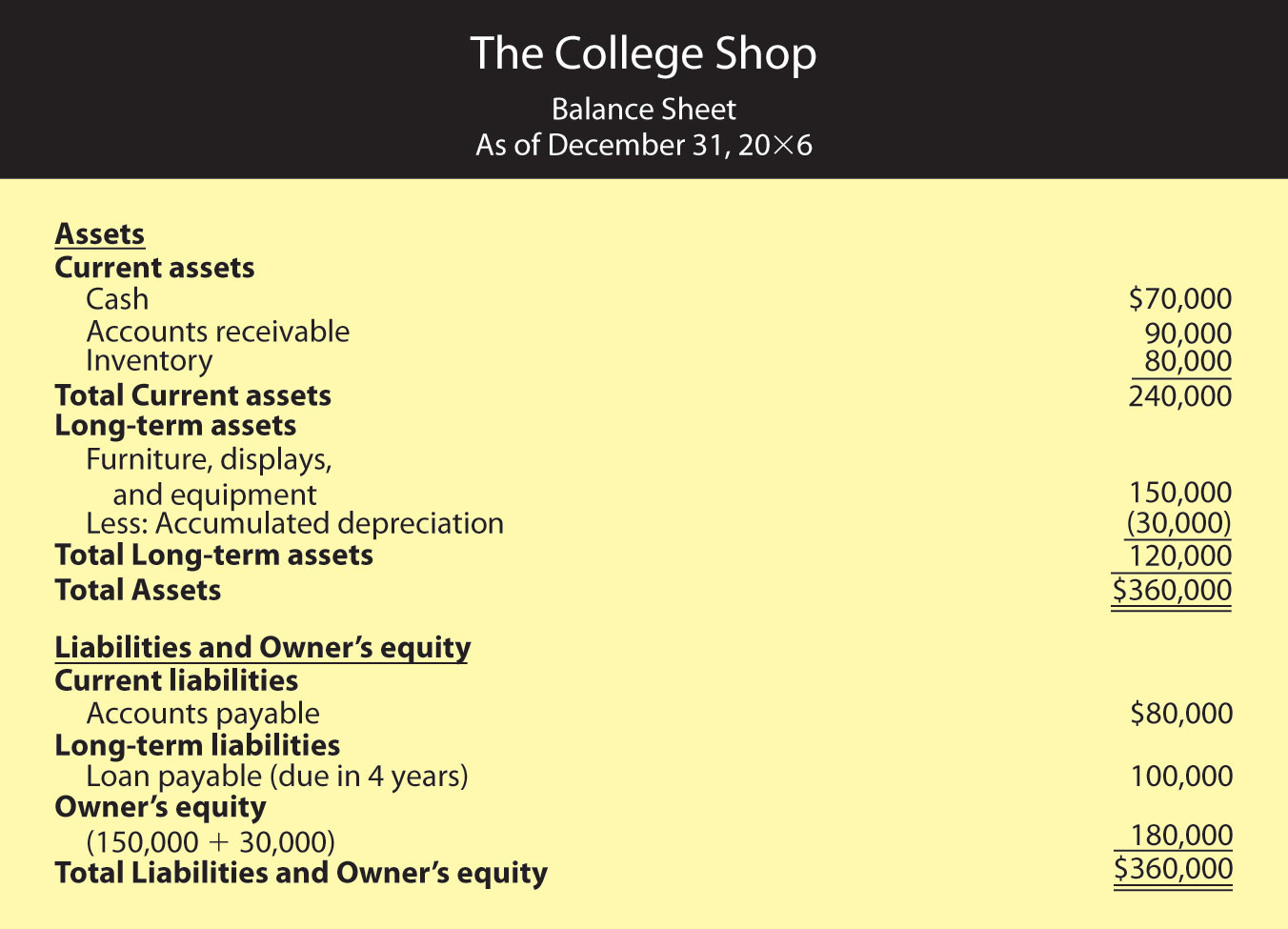
We'll conclude with your balance sheet for the end of your first year of operations, which is shown in Figure 12.17 "End-of-Year Balance Sheet for The College Shop". First, look at your assets. At year's end, you have a cash balance of $70,000 and inventory of $80,000. You also have an accounts receivable of $90,000 because many of your customers have bought goods on credit and will pay later. In addition, the balance sheet now shows two numbers for long-term assets: the original cost of these assets, $150,000, and an accumulated depreciation amount of $30,000, which reflects the amount that you've charged as depreciation expense since the purchase of the assets. The carrying value of these long-term assets is now $120,000 ($150,000 - $30,000), which is the difference between their original cost and the amount that they've been depreciated. Your total assets are thus $360,000.
Figure 12.17 End-of-Year Balance Sheet for The College Shop