Education
- 5a Describe how intercultural communication can affect the success of a business (CLO 1, CLO 3, CLO 4, CLO 5)
Cultural Dimensions and Education
All education systems strive to produce effective citizens that can participate in and contribute to their societies. Because of the nature of cultural values and beliefs, how this is achieved can look very different from culture to culture. Educational philosophies, administration, and practices reflect not only the cultural dimensions, but, religious, political and/or economic stability as well. Even though teachers and students may be oblivious to their origins, Confucian, Judeo-Christian, Islamic, and other religious principles clearly permeate the world view and philosophical systems of cultural values. Countries plagued by chaos within political and economic systems do not usually have enough resources to develop consistent, effective educational systems to serve their citizens.
Individualism and Collectivism
Underlying the many differences between cultures, and the educational systems that have emerged from them, is individualism and collectivism. Collectivism is marked by structured relationships where individual needs are subservient to the group. Solidarity, harmony, and equal distribution of rewards among students is expected. Modesty is valued, norms are set by the average student, and failure is seen as unfortunate but not dire. Success is seen as something linked to family, classmates, and society as a whole.
Conversely, individualism is marked by loose relationships and ties that are forged according to self-interest. Status and grades are based on individual success. Competition is encouraged, norms are set by the best students, and failure is perceived as fairly significant.
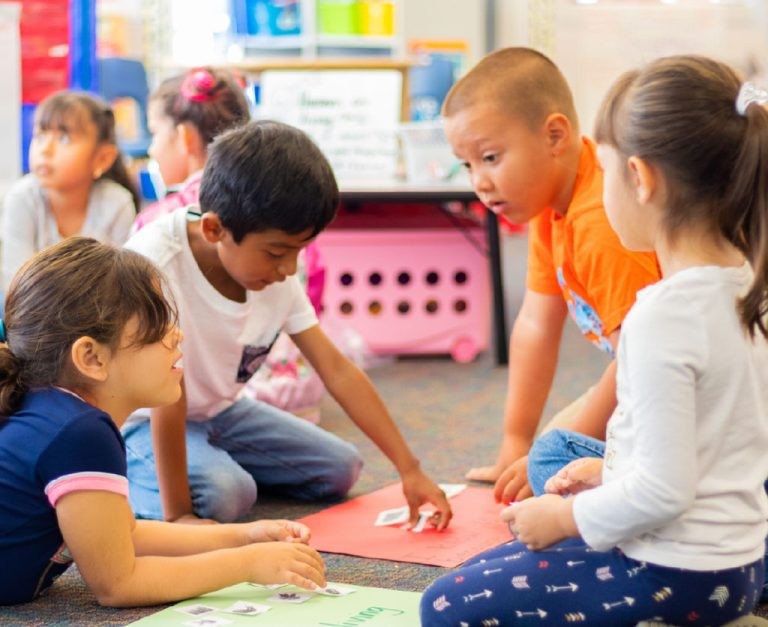
These basic values impact everything from the atmosphere in the classroom, teaching styles, and attitudes about dishonesty and plagiarism. In collectivistic classrooms, for instance, education is seen as a tool for strengthening the country rather than for the betterment of an individual. This fundamental premise has implications for the teacher-student relationship in that working together is not cheating, but rather a happy by-product of good relations. The collectivistic mentality may also account for the absence of sorting students by ability, and the lack of teasing of less gifted students. Fast learners are expected to help slow learners.
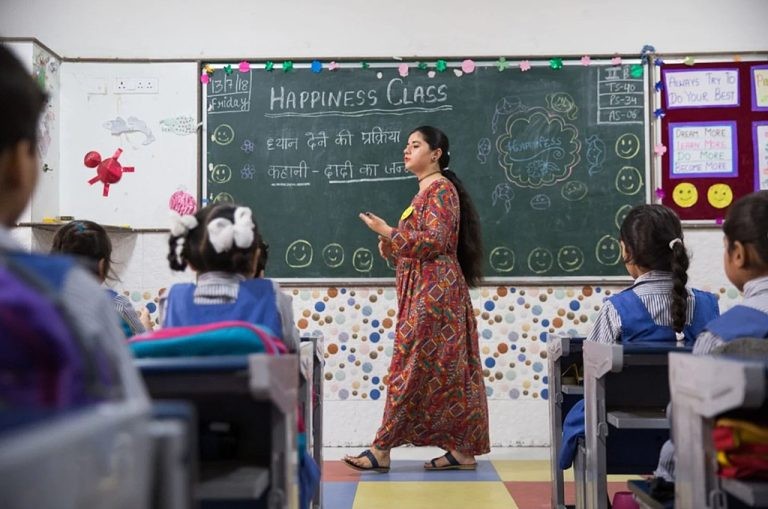
In individualistic classrooms, education is seen as a tool for getting ahead. Students are responsible for their own learning. Academic progress is measured through individual assessment and reported as individual grades. The learning relationship is primarily between the teacher and the student, not the classmate group. If a student needs help, they ask the teacher questions. Students are taught to be more engaged in discussions and arguments. Schools encourage students to become independent thinkers. An academic task has value in and of itself so getting one's work done is important. Relationships with other students is secondary. In certain situations, helping others could be cheating.
Even concepts of intelligence are culture-based. Individualistic cultures tend to think of intelligence as a "gift" and relatively fixed, although somewhat impacted by environmental influences. Collectivistic cultures view intelligence as something that can be improved by hard work rather than a lack of ability.
Power Distance
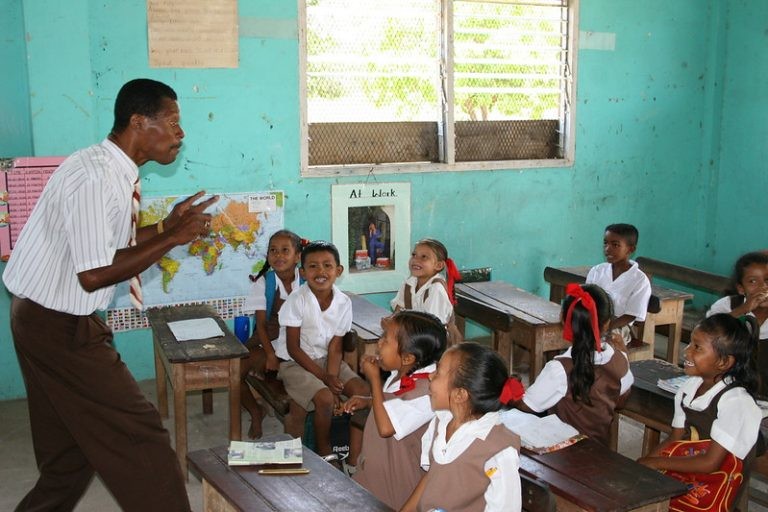
Reflections of power distance can show up in education systems as well. High power distance classrooms focus on expertise, authority along with the importance of social and moral order. Leaders have stronger social prominence, and there are explicit, enforced barriers to information. Examples of this can be libraries and information structures only available to certain majors or even specific faculty. Degrees with official stamps and logos might only be issued to select graduates and not others.
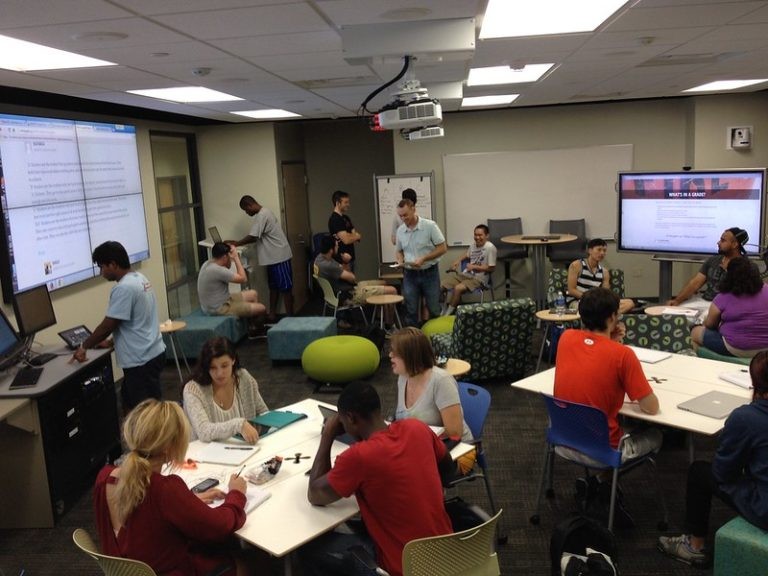
In lower power distance classrooms, students are required to take much more responsibility for their own actions and learning. The institution respects the independence of the students and student driven initiatives. Students are expected to find their own way. Restrictions to learning are discouraged, and that sometimes includes letting students know that they do not have the skills to succeed in their desired careers path. Instructors are treated as equals to be engaged and even challenged.
Time
As previously discussed, cultures can view time in a variety of ways. The classroom will also reflect the cultural preference for time.
Polychronic and Monochronic
Monochronic classrooms view time as something to be managed so learning proceeds along a linear path with clear prerequisites and milestones. Goal setting is important, so time and opportunities are not to be wasted. Repetition might be seen as a lack of progress. The past might be seen as less significant than the future. Students expect to see immediate relevance to a subject area.

The polychronic classroom adapts to time. Learning is seen as the practice needed to reach perfection, so goals are secondary as one adapts to the situation. Time exists for observation and opportunities can reoccur which makes the past important because cycles repeat themselves. Repetition is valuable for learning therefore students may have to be more patient to discover the relevance of the lesson.
Long-term and Short-term
When instructional activities start and stop promptly according to "clock time," it is considered a short- term classroom. Meetings outside of class time are limited to schedules and there are procedures to follow when working on assignments. There are consequences for missing deadlines.
Instructional activities that are allowed to continue if they are useful is a trait of a long-term classroom. If there is improvement, there is less adherence to deadlines and procedures can have flexibility. The boundaries between class time and outside of class time is loose.
Uncertainty Avoidance
Uncertainty avoidance can have a major impact on the classroom. High uncertainty avoidance classrooms tend to focus on error prevention so smaller amounts of information is given with choices being limited. Simplicity is used to reduce the ambiguity and students are given the exact assessment rubrics for grading.
The low uncertainty avoidance classroom shows up in the complexity of the assignments. Instructors avoid over protection and maximize rather than minimize choices. There is often an abundance of additional recommended reading, and assignments are designed to produce meaningful learning for students.
Masculine and Feminine
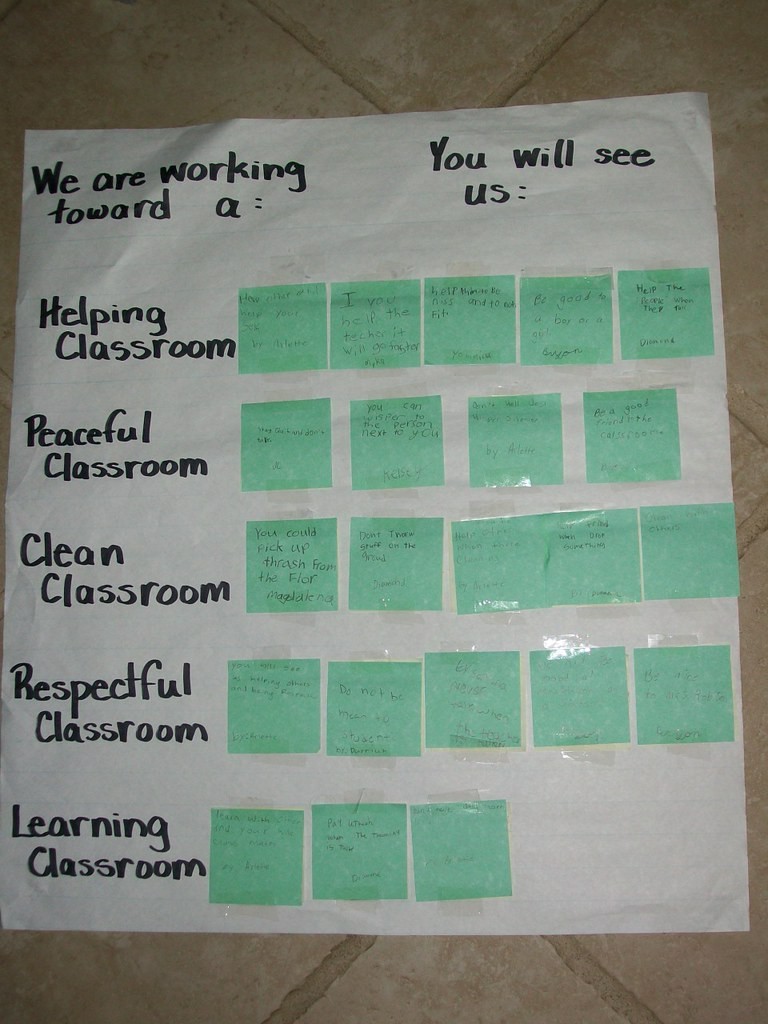
In more feminine classrooms, the average student is used as the norm and teachers often avoid praising students. Rewards are given more for social skills than intelligence and failure is not a life-altering event. Students choose subjects of interest for majors.
In more masculine classrooms, teachers use the best students as the norm by often praising and rewarding them. Failure can be life-altering, and students compete for top positions in a class. Students will choose majors based on their career opportunities.
Different Approaches to Knowing
How do we "know" what we claim to know? Although this is not something that Hofstede has explored as a cultural dimension, the idea of extended epistemology or other ways of developing knowledge has been gaining traction in educational scholarship in recent years. Scholars generally categorize the different ways of knowing as empiricism, rationalism, authority, and revelation.
Generally speaking, European cultures tend to consider information acquired to cognitive processes such as counting, measuring, and the "scientific process" as more valid than other ways of knowing things. Other cultures might prefer symbolic imagery, rhythm or transcendence. The different approaches to knowing could affect the ways that information and problem-solving is taught and accepted within an educational setting.