
Education
- 5a Describe how intercultural communication can affect the success of a business (CLO 1, CLO 3, CLO 4, CLO 5)
The Impact of Culture on Education
All educational systems strive to produce effective citizens capable of participating in, and contributing to, their societies. Education is not simply driven by the simple desire to teach and learn. Education is enculturation. Enculturation is the process by which people acquire the values, norms, and worldviews of their cultural group. An example of enculturation could be watching family members go grocery shopping. You learn which stores you typically go to, which foods you usually eat, how to pick good products, and what foods are used to make your favorite dishes.
Acculturation is the process where people from one culture adopt the process of another culture which is not their own. Acculturation begins when two cultures meet. Acculturation is not necessary for survival but is basically adopted because the dominant culture has influence over the other. Acculturation is often seen in those far from their home cultures such as refugees and migrants but can also apply to co-cultural and microcultural groups within a dominant culture as well.

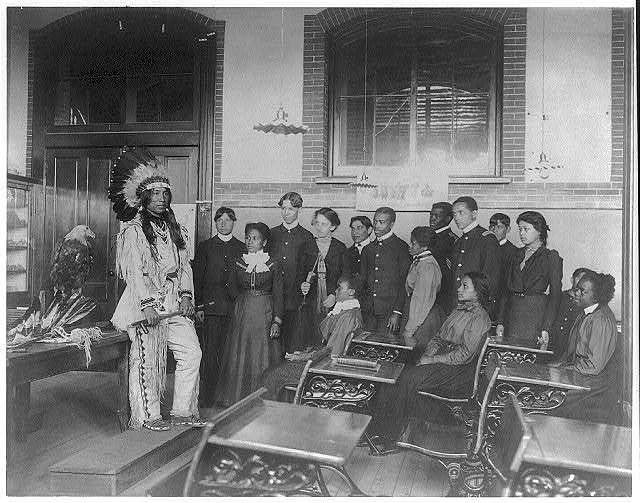
There is no universal curriculum that all students in all cultures follow. History plays an important role in student experiences of education as well as the educational systems created within a culture. During the era of great national expansion known as the colonial period, the colonizers educational systems were imported into the conquered or assimilated nations. Western-style education systems, originally under the auspices of the colonial education system, can be controversial even today. Colonial education systems - rightly or wrongly – have been accused of being tools by capitalists to exploit the underdeveloped world to keep people in subjection.
Whether a culture has a colonial educational history or not, currently education is widely perceived to be an important avenue for advancement within a society. In an era when it is estimated that a weeks' worth of the New York Times contains more information than a person was likely to come across in a lifetime in the 18th century, most cultures place high value on their education systems.