Problem-Solving and Leadership Styles
Leadership, Diversity and Culture
Leadership Styles
Given the large amount of research done on leadership, it is not surprising that there are several ways to define or categorize leadership styles. In general, effective leaders do not fit solely into one style in any of the following classifications. Instead, they are able to adapt their leadership style to fit the relational and situational context. One common way to study leadership style is to make a distinction among autocratic, democratic, and laissez-faire leaders.
These leadership styles can be described as follows:
- Autocratic leaders set policies and make decisions primarily on their own, taking advantage of the power present in their title or status to set the agenda for the group.
- Democratic leaders facilitate group discussion and like to take input from all members before making a decision.
- Laissez-faire leaders take a "hands-off" approach, preferring to give group members freedom to reach and implement their own decisions.
While this is a frequently cited model of leadership styles, we will focus in more detail on a model that was developed a few years after this one. I choose to focus on this later model because it offers some more specifics in terms of the communicative elements of each leadership style. The four leadership styles used in this model are directive, participative, supportive, and achievement oriented.
Directive Leaders
Directive leaders help provide psychological structure for their group members by clearly communicating expectations, keeping a schedule and agenda, providing specific guidance as group members work toward the completion of their task, and taking the lead on setting and communicating group rules and procedures. Although this is most similar to the autocratic leadership style mentioned before, it is more nuanced and flexible. The originators of this model note that a leader can be directive without being seen as authoritarian. To do this, directive leaders must be good motivators who encourage productivity through positive reinforcement or reward rather than through the threat of punishment.
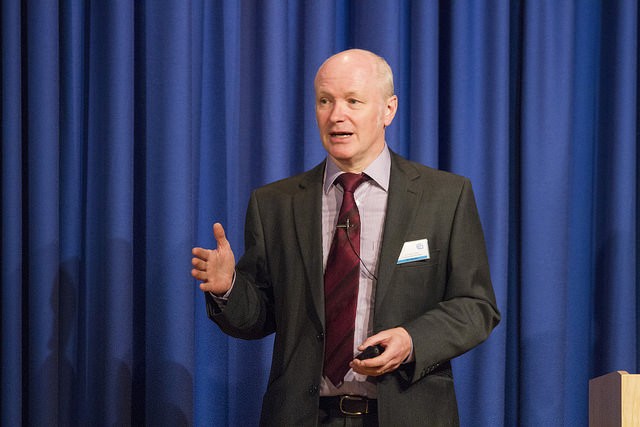
A directive leadership style is effective in groups that do not have a history and may require direction to get started on their task. It can also be the most appropriate method during crisis situations in which decisions must be made under time constraints or other extraordinary pressures. When groups have an established history and are composed of people with unique skills and expertise, a directive approach may be seen as "micromanaging". In these groups, a more participative style may be the best option.
This leadership style is often valued in high power distance cultures such as China, Nigeria, or the United Arab Emirates, where deference to authority is common and leaders are expected to provide clear direction and structure. In these contexts, a hands-off or overly collaborative approach might be viewed as weak or indecisive. However, in low power distance cultures like Sweden or the Netherlands, directive leadership may be interpreted as controlling or autocratic unless carefully balanced with respect and transparency.
Participative Leaders
Participative leaders work to include group members in the decision-making process by soliciting and considering their opinions and suggestions. When group members feel included, their personal goals are more likely to align with the group and organization's goals, which can help productivity. This style of leadership can also aid in group member socialization, as the members feel like they get to help establish group norms and rules, which affects cohesion and climate. When group members participate more, they buy into the group's norms and goals more, which can increase conformity pressures for incoming group members. As we learned earlier, this is good to a point, but it can become negative when the pressures lead to unethical group member behavior. In addition to consulting group members for help with decision making, participative leaders also grant group members more freedom to work independently. This can lead group members to feel trusted and respected for their skills, which can increase their effort and output.
The participative method of leadership is similar to the democratic style discussed earlier, and it is a style of leadership practiced in many organizations that have established work groups that meet consistently over long periods of time. US companies began to adopt a more participative and less directive style of management in the 1980s after organizational scholars researched teamwork and efficiency in Japanese corporations. Japanese managers included employees in decision making, which blurred the line between the leader and other group members and enhanced productivity. These small groups were called quality circles, because they focused on group interaction intended to improve quality and productivity.
Participative leadership aligns well with low power distance and individualistic cultures such as those in Germany, the United States, or Denmark, where team members expect to be consulted and have input in decisions. In collectivist cultures like Japan or South Korea, participation may also be valued - but typically within a harmony-based consensus model rather than open debate. In high power distance settings, this style may clash with expectations that decisions come from the top, requiring leaders to intentionally build trust and explain the rationale for collaboration.
Supportive Leaders
Supportive leaders show concern for their followers' needs and emotions. They want to support group members' welfare through a positive and friendly group climate. These leaders are good at reducing the stress and frustration of the group, which helps create a positive climate and can help increase group members' positive feelings about the task and other group members. As we will learn later, some group roles function to maintain the relational climate of the group, and several group members often perform these role behaviors. With a supportive leader as a model, such behaviors would likely be performed as part of established group norms, which can do much to enhance social cohesion. Supportive leaders do not provide unconditionally positive praise. They also competently provide constructive criticism in order to challenge and enhance group members' contributions.
A supportive leadership style is more likely in groups that are primarily relational rather than task focused. For example, support groups and therapy groups benefit from a supportive leader. While maintaining positive relationships is an important part of any group's functioning, most task-oriented groups need to spend more time on task than social functions in order to efficiently work toward the completion of their task. Skilled directive or participative leaders of task-oriented groups would be wise to employ supportive leadership behaviors when group members experience emotional stress to prevent relational stress from negatively impacting the group's climate and cohesion.
Supportive leadership may be especially effective in feminine cultures (as described by Hofstede) like Norway or Costa Rica, where nurturing relationships, work-life balance, and emotional well-being are emphasized. In collectivist cultures, such as Thailand or Colombia, supportive behaviors that build harmony and relational trust are also highly valued. However, in masculine or task-focused cultures (like Japan or the U.S.), this style may need to be paired with clear performance expectations to be seen as competent leadership.
Achievement-Oriented Leaders
Achievement-oriented leaders strive for excellence and set challenging goals, constantly seeking improvement and exhibiting confidence that group members can meet their high expectations. These leaders often engage in systematic social comparison, keeping tabs on other similar high-performing groups to assess their expectations and the group's progress. This type of leadership is similar to what other scholars call transformational or visionary leadership and is often associated with leaders like former Apple CEO Steve Jobs, talk show host and television network CEO Oprah Winfrey, former president Bill Clinton, and business magnate turned philanthropist Warren Buffett. Achievement-oriented leaders are likely less common than the other styles, as this style requires a high level of skill and commitment on the part of the leader and the group. Although rare, these leaders can be found at all levels of groups ranging from local school boards to Fortune 500 companies. Certain group dynamics must be in place in order to accommodate this leadership style. Groups for which an achievement-oriented leadership style would be effective are typically intentionally created and are made up of members who are skilled and competent in regards to the group's task. In many cases, the leader is specifically chosen because of his or her reputation and expertise, and even though the group members may not have a history of working with the leader, the members and leader must have a high degree of mutual respect.
Achievement-oriented leadership tends to resonate in masculine and individualistic cultures like the United States, Australia, or Japan, where success is measured through ambition, performance, and innovation. It may also be well received in high uncertainty avoidance cultures like Germany, where setting high standards provides needed structure. However, in collectivist or egalitarian cultures, leaders who focus too heavily on competition or individual distinction may risk alienating team members unless those goals are framed in terms of collective benefit.
Adapting Leadership for International and Multicultural Teams
While leadership styles can be categorized into directive, participative, supportive, and achievement-oriented, how those styles are received - and which ones are most effective - may vary dramatically across cultures. Leading across borders and identity lines requires more than style; it requires cultural intelligence, flexibility, and respect for difference. Leaders in international and multicultural environments must consider differences in hierarchy, communication style, decision-making preferences, and views on time and structure.
Consider a multinational product team made up of members from Denmark, Japan, and Nigeria. The Danish team members, used to flat hierarchies, expect everyone to speak up and question leadership decisions. The Japanese members wait for consensus to emerge through group harmony. The Nigerian members look to the team leader to provide direction and avoid ambiguity. Without cultural awareness, misunderstandings can arise - one team member might be seen as passive, another as disrespectful. But with intentional leadership, these diverse perspectives can lead to better outcomes and richer collaboration.
One useful tool is the concept of "cultural bridging" - a practice in which leaders acknowledge the default patterns of their own culture and consciously shift their behaviors to align with the expectations of others. This requires not only knowledge, but curiosity, humility, and emotional intelligence. Multicultural teams benefit most when leaders foster trust, clarify expectations, and make space for multiple voices.
The Role of Cultural Values in Leadership
In multicultural teams, assumptions about what roles people should play - and how those roles should be carried out - can differ significantly. Cultural values such as power distance, uncertainty avoidance, and collectivism influence how people perceive leadership and responsibility.
In some cultures, roles and responsibilities are clearly defined and tied to seniority, expertise, or job title. In others, they are more flexible, evolving through collaboration and consensus. These expectations are often shaped by dimensions like individualism-collectivism and uncertainty avoidance.
For instance, in Japan, the concept of "ringi" reflects a collective decision-making process where input is gathered from all levels before reaching consensus. In the U.S., a project manager might be expected to make decisions quickly and independently.
Leaders must also be aware of implicit cultural roles. For example, some cultures expect the oldest person to take the lead, while others look to the person with the most technical skill or the one who builds the strongest interpersonal connections.
Being aware of these differences helps leaders assign responsibilities in a way that is respectful, clear, and empowering - especially when navigating hybrid or multicultural teams.
Leadership Principles for Managing Individual Differences
In addition to cultural backgrounds, team members bring a wide range of individual traits - such as introversion vs. extroversion, learning preferences, and problem-solving styles. Leaders must be mindful of personality diversity and neurodivergence, recognizing that not all great ideas come from the most vocal contributors.
Leaders can foster inclusion by creating space for reflection as well as discussion, offering multiple modes of contribution (spoken, written, visual), and valuing both "big picture" thinkers and detail-oriented implementers. Understanding personality frameworks like the Big Five traits or cognitive diversity frameworks can help leaders build balanced teams and prevent groupthink.
Effective leadership isn't about finding people who think like you - it's about drawing on differences to strengthen the team's perspective and output. Inclusive leadership acknowledges individual needs while focusing on shared goals.
Leadership Across Cultures: Key Strategies
- Observe before you act: Take time to learn how leadership is expressed and expected within the team or culture.
- Clarify roles early: Don't assume everyone shares the same understanding of who's in charge or who makes decisions.
- Use inclusive decision-making: Adapt your communication so that everyone - regardless of culture, language, or personality - has a way to contribute.
- Flex your style: Be prepared to shift between directive and participative approaches depending on the context and team.