Problem-Solving and Leadership Styles
| Site: | Saylor University |
| Course: | [CB DRAFT] COMM311: Intercultural Communication |
| Book: | Problem-Solving and Leadership Styles |
| Printed by: | Guest user |
| Date: | Tuesday, 27 October 2026, 2:34 PM |
Description
- 5a Describe how intercultural communication can affect the success of a business (CLO 1, CLO 3, CLO 4, CLO 5)
- 5c Apply competent relationship practices in common work settings (CLO 5, CLO 6)
Making Decisions When People Think - and Lead - Differently
Think back to a time you were in a group that had to make a decision. Did someone step up immediately and take charge? Did the group brainstorm until they reached consensus? Or did everyone wait, unsure who had the authority - or the responsibility - to move things forward?
Problem-solving and leadership might seem like straightforward business functions - but they're anything but universal. What "good leadership" looks like, how teams are expected to solve problems, and even who gets included in decision-making can vary significantly depending on cultural values, individual backgrounds, and team dynamics.
In some workplace cultures, leaders are expected to be decisive, assertive, and directive. In others, they're seen as facilitators who build group consensus and avoid taking center stage. Likewise, group members may expect clearly defined roles - or prefer flexibility and shared ownership. These differences can be shaped by factors such as power distance, individualism vs. collectivism, work-life balance expectations, and access to past leadership opportunities.
In this chapter, you'll explore how cultural and identity-based factors influence leadership expectations, group roles, and problem-solving strategies. You'll learn how your own preferences and assumptions about leadership may differ from others' - and how to adapt in ways that support equity and collaboration.
Being culture smart doesn't mean always leading or following the same way - it means learning how to guide, contribute, and support progress in ways that work across diverse teams and perspectives.
Source: Carolyn Hurley
View original source.
 This work is licensed under a Creative Commons Attribution-NonCommercial-ShareAlike 4.0 License.
Problem-Solving Styles Across Cultures
Problem? No problem!
In any workplace - whether a start-up in Berlin, a family business in Mexico City, or a multinational team meeting virtually across continents - problem-solving requires more than identifying an issue and generating a solution. It also involves navigating differences in how people define problems, share ideas, assign responsibility, and make decisions. By understanding these dynamics, groups can improve their ability to navigate challenges, resolve conflicts, and achieve their goals efficiently.
Problem Solving Styles
In small group contexts, problem solving involves identifying issues and finding solutions to them, while decision making focuses on choosing a course of action from available options. Though related, they aren't the same: problem solving often precedes decision making. This next section will discuss these communication practices in small groups. You'll notice that common themes of open communication, collaboration, and active listening are present in both types of small group situations.
Defining Problem Solving
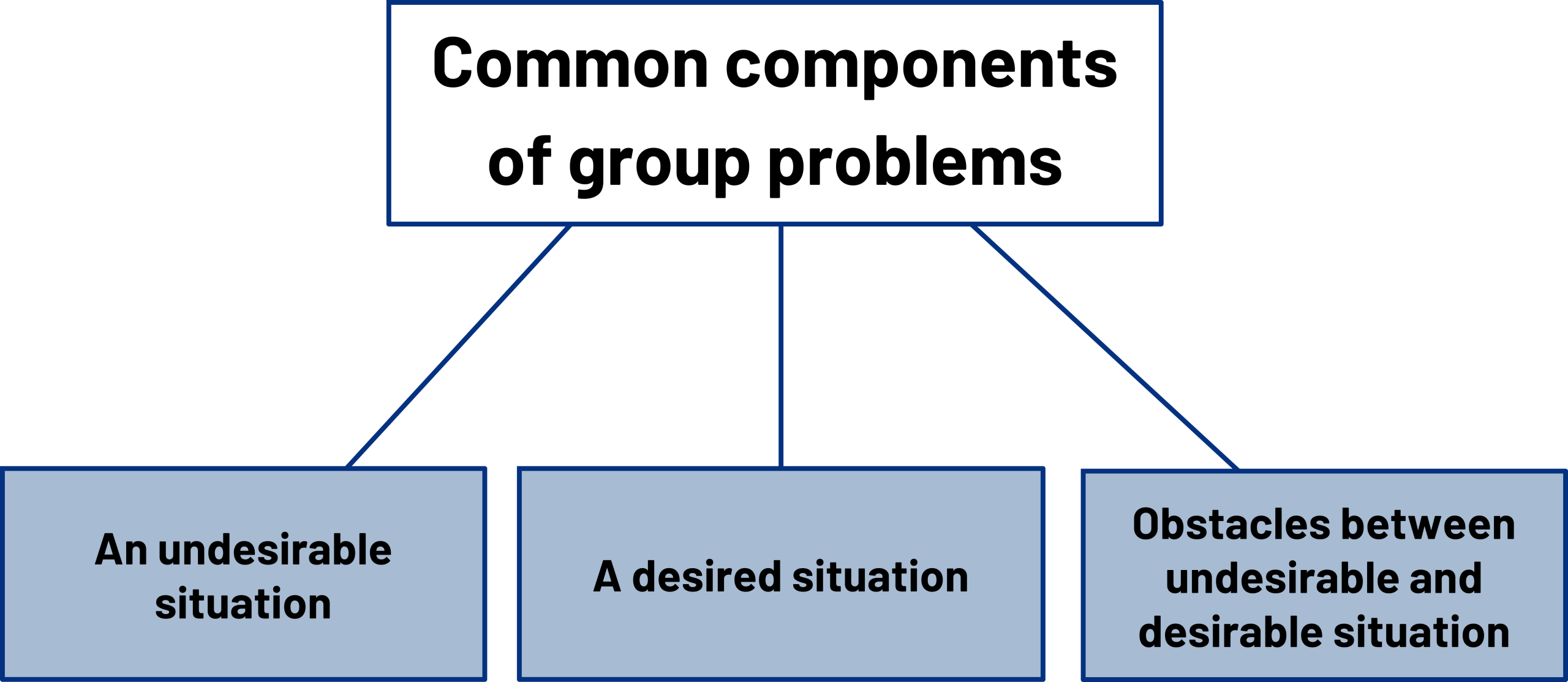
Figure 1: Common components of group problems.
No matter the cultural context, problem-solving involves moving from an undesirable situation to a desired one, navigating obstacles along the way. Most group challenges - whether budgeting, customer service, or innovation - contain three shared elements:
- An undesirable situation: A conflict, challenge, or missed opportunity
- A desired outcome: A goal, improvement, or resolution the team wants to reach
- Obstacles: Resources, knowledge, personalities, or policies that stand in the way
How teams approach those obstacles varies. Some prioritize logical frameworks; others rely on intuition or past relationships. The following five factors - adapted from group communication research and applied to intercultural business contexts - offer a practical framework for understanding group problem-solving styles globally:
-
Task Complexity: Cultures with low uncertainty avoidance (e.g., Sweden, Singapore) may tolerate ambiguity and adjust on the fly. Others (e.g., Japan, France) prefer clear structure, research, and time to plan before acting.
-
Number of Possible Solutions: Some teams prefer to generate many ideas before narrowing down options. Others prefer a few well-vetted options, particularly where hierarchy or face-saving matters.
-
Interest and Engagement: When employees are invested - especially in participative cultures - they may want more freedom to co-create solutions. In high-power-distance cultures, however, solutions may be expected to come from leadership.
-
Familiarity with the Problem: In global teams, members bring different expertise. A problem that's common in one region might be new elsewhere. Effective teams make space to share knowledge without assuming a shared starting point.
-
Need for Stakeholder Buy-In: In collectivist and consensus-driven cultures, decisions often require more consultation. Even the "best" solution will fail if it lacks support from the right people - especially in hierarchical or face-sensitive contexts.
Influences on Problem-Solving
Some cultures value quick, decisive action led by an appointed leader. Others emphasize group harmony and consensus, even if that means more time is needed to reach agreement. Still others focus on pragmatic trial-and-error approaches rather than linear analysis. Understanding these cultural styles can help prevent frustration, reduce miscommunication, and improve collaboration.
Individualistic vs. Collaborative Approaches
One of the most widely studied differences in global problem-solving is the role of individualism and collectivism. In individualistic cultures - such as the United States, Australia, and many parts of Western Europe - problem-solving often emphasizes personal accountability, autonomy, and direct communication. People may speak up quickly, propose solutions independently, and expect recognition for their contributions.
In contrast, collectivist cultures - common in East Asia, Latin America, and many African contexts - may favor a group-oriented approach. Solutions are discussed in group settings, and decisions are expected to reflect shared interests and preserve harmony. Group members might wait for senior input, speak less assertively, or avoid direct disagreement. In such environments, the process can seem slow to outsiders - but it often builds trust and long-term buy-in.
These preferences aren't rigid rules, of course. Professionals in all cultures can flex their styles depending on context. However, being aware of these tendencies - and how they show up in problem-solving - can reduce misunderstandings and help global teams collaborate more effectively.
Workplace Example: Missed Client Deadline
Scenario:
A
project team at an international marketing firm is responsible for
delivering a campaign proposal to a major client by Friday. On Wednesday
morning, it becomes clear that the team is behind schedule - critical
data from the analytics team has not yet arrived, and the visuals are
incomplete. The client has not been updated, and tensions begin to rise
in the team's shared workspace.
The team includes employees from both individualistic and collectivist cultural backgrounds. They agree a solution is needed quickly - but their preferred approaches differ.
Solution 1: Individualistic Approach
An employee from a culture that values individual responsibility and initiative (e.g., United States, Germany) suggests:
"I'll call the client myself and explain the situation. Then I'll stay late tonight to finish the visuals. If we each take a piece and move quickly, we can still deliver on time. We don't need to over-discuss - we just need to act".
In this approach, the emphasis is on personal accountability, assertiveness, and taking decisive action. The employee believes taking ownership and moving fast - even without full consensus - is the best way forward. There's less concern about hierarchy or group harmony, and more focus on outcomes and individual contribution.
Solution 2: Collectivist Approach
An employee from a culture that prioritizes group harmony and consensus (e.g., Japan, Colombia) suggests:
"Let's take a few minutes to talk together about what went wrong and how we can avoid blame. We should speak to our manager as a group and agree on a joint message before contacting the client. It's important that we're aligned before we move forward".
This approach reflects a preference for shared responsibility and team cohesion. The employee emphasizes collective problem-solving, respect for leadership hierarchy, and maintaining group unity - especially when representing the team externally. While it may take longer, this method prioritizes relational trust and long-term collaboration.
Key Takeaway:
Neither approach is inherently better - each reflects a culturally informed way of solving problems. Individualistic strategies may work well in fast-paced, competitive environments where initiative is valued. Collectivist approaches can be more effective in settings where relationship-building, group ownership, and long-term reputation matter most. Intercultural teams benefit when they recognize these differences and find ways to balance clarity with collaboration.
Problem-Solving Process
Many models of problem-solving - such as Dewey's reflective thinking process - are useful starting points but may need to be adapted for global teams. The five stages below can be applied with cultural awareness to support inclusive and effective collaboration.
Step 1: Define the Problem
Define the problem by considering the three elements shared by every problem: the current undesirable situation, the goal or more desirable situation, and obstacles in the way. At this stage, group members share what they know about the current situation, without proposing solutions or evaluating the information. Here are some questions to ask during this stage: What is the current difficulty? How did we come to know that the difficulty exists? Who or what is involved? Why is it meaningful/urgent/important? What have the effects been so far? What, if any, elements of the difficulty require clarification?
At the end of this stage, the group should be able to compose a single sentence that summarizes the problem called a problem statement. Avoid wording in the problem statement or question that hints at potential solutions. A small group formed to investigate ethical violations of city officials could use the following problem statement: "Our state does not currently have a mechanism for citizens to report suspected ethical violations by city officials".
Step 2: Analyze the Problem
During this step, a group should analyze the problem and the group's relationship to the problem. Whereas the first step involved exploring the "what" related to the problem, this step focuses on the "why". At this stage, group members can discuss the potential causes of the difficulty. Group members may also want to begin setting out an agenda or timeline for the group's problem-solving process, looking forward to the other steps. To analyze the problem, the group can discuss the five common problem variables discussed before. Here are two examples of questions that the group formed to address ethics violations might ask: Why doesn't our city have an ethics reporting mechanism? Do cities of similar size have such a mechanism? Once the problem has been analyzed, the group can pose a problem questionthat will guide the group as it generates possible solutions. "How can citizens report suspected ethical violations of city officials and how will such reports be processed and addressed?" As you can see, the problem question is more complex than the problem statement, since the group has moved on to more in-depth discussion of the problem during step 2.
Step 3: Generate Possible Solutions
Helpful tip! it is really important to be open-minded in step 3, to allow all group members to contribute their ideas. Allow group members to propose unlikely or even unfeasible solutions. Through an iterative and creative brainstorming process, a group can often uncover novel solutions that were not apparent at the onset of the discussion.
During this step, group members generate possible solutions to the problem. Again, group members should not evaluate solutions at this point, only propose and clarify. The question should be what could we do to address this problem, not what should we do to address it? It is perfectly OK for a group member to seek more information at this point by asking something like "What do you mean?" or "Could you explain your reasoning more?" Discussions at this stage may reveal a need to return to previous steps to better define or more fully analyze a problem. Since many problems are multifaceted, it is necessary for group members to generate solutions for each part of the problem separately, making sure to have multiple solutions for each part. Stopping the solution-generating process prematurely can lead to groupthink.
Step 4: Evaluate Solutions
During this step, solutions can be critically evaluated based on their credibility, completeness, and worth. Once the potential solutions have been narrowed based on differences in relevance and/or merit, the group should analyze each solution based on its potential effects - especially negative effects. Groups that are required to report the rationale for their decision or whose decisions may be subject to public scrutiny would be wise to make a set list of criteria for evaluating each solution. To avoid groupthink, it is important to evaluate all potential solutions, even if they seem like a "win" on the surface. Take the time to think about the pros and cons of each potential solution and address multiple perspectives.
Additionally, solutions can be evaluated based on how well they fit with the group's charge and the abilities of the group. To do this, group members may ask, "Does this solution live up to the original purpose or mission of the group?" "Can the solution actually be implemented with our current resources and connections?" "How will this solution be supported, funded, enforced, and assessed?" Secondary tensions and substantive conflict, two concepts discussed earlier, emerge during this step of problem solving, and group members will need to employ effective critical thinking and listening skills.
Decision-making is part of the larger process of problem solving and it plays a prominent role in this step. While there are several similar models for problem solving, groups can use many varied decision-making techniques. For example, to narrow the list of proposed solutions, group members may decide by majority vote, by weighing the pros and cons, or by discussing them until they reach a consensus. There are also more complex decision-making models like the "six hats method," (de Bono, 1985). Once the group reaches a final decision, the group leader or facilitator should confirm that the group agrees. It may be beneficial to let the group break for a while or even to delay the final decision until a later meeting to allow people time to evaluate it outside of the group context.
Step 5: Implement and Assess the Solution
Implementing the solution requires some advanced planning, and it should not be rushed unless the group is operating under strict time restraints or a delay may lead to some kind of harm. Although some solutions can be implemented immediately, others may take days, months, or years. As was noted earlier, it may be beneficial for groups to poll those who will be affected by the solution as to their opinion of it or even to do a pilot test to observe the effectiveness of the solution and how people react to it. Before implementation, groups should also determine how and when they would assess the effectiveness of the solution by asking, "How will we know if the solution is working or not?" Since solution assessment will vary based on whether or not the group is disbanded, groups should also consider the following questions: If the group disbands after implementation, who will be responsible for assessing the solution? If the solution fails, will the same group reconvene? Will a new group be formed?
Certain elements of the solution may need to be delegated to various people inside and outside the group. Group members may also be assigned to implement a particular part of the solution based on their role or because it connects to their area of expertise. Likewise, group members may be tasked with publicizing the solution or "selling" it to a particular group of stakeholders. Last, the group should consider its future. In some cases, the group will get to decide if it will stay together and continue working on other tasks or if it will disband. In other cases, outside forces determine the group's fate.
Cultural Adaptability and Team Success
Effective global teams recognize that problem-solving is not just a technical skill - it's a cultural performance. Adapting your expectations, listening to others' approaches, and co-creating processes that work for everyone are essential steps in building intercultural competence.
As you continue reading, we'll explore how leadership expectations - like who gets to decide, who speaks first, and who's held accountable - also vary across cultures and identities.
Wrap Up
Small groups are a vital part of our personal, academic, and professional lives. Whether we're solving a community problem, collaborating on a class project, or working with colleagues on a team, effective group communication plays a critical role in determining outcomes. As you continue to work in small groups, consider not only what your group is doing, but how it is communicating - because that process will often determine your success.
Leadership, Diversity and Culture
How can I lead a multicultural team?
Leadership is often seen as a formal role - but in reality, leadership is a dynamic process shaped by communication, culture, and context. Whether you're working in a start-up in Denmark, a family business in Brazil, or a multinational corporation in Singapore, expectations about leadership are often shaped by deeply held cultural values - like how authority is expressed, how much participation is expected, and who gets a seat at the table. Scholars in communication, business, psychology, and other fields have explored what makes someone an effective leader, but there's no single formula. While some people hold formal leadership positions, others lead through influence, collaboration, or example - often without a title at all. It's important to distinguish between a leader (a person recognized in a formal or informal leadership role) and leadership (the communication behaviors and relational dynamics that guide and move a group forward). In this section, we'll explore how leadership functions within teams, how different leadership styles emerge, and how leaders can adapt their approach to support diverse groups and global collaboration.
Why and How People Become Leaders
Throughout human history, some people have grown into, taken, or been given positions as leaders. Many early leaders were believed to be divine in some way. In some indigenous cultures, shamans are considered leaders because they are believed to be bridges that can connect the spiritual and physical realms. Many early kings, queens, and military leaders were said to be approved by a god to lead the people. Today, many leaders are elected or appointed to positions of power, but most of them have already accumulated much experience in leadership roles. Some leaders are well respected, some are feared, some are hated, and many elicit some combination of these reactions. This brief overview illustrates the centrality of leadership throughout human history, but it wasn't until the last hundred years that leadership became an object of systematic study.

Before we move onto specific approaches to studying leadership, let's distinguish between designated and emergent leaders. In general, some people gravitate more toward leadership roles than others, and some leaders are designated while other are emergent. Designated leaders are officially recognized in their leadership role and may be appointed or elected by people inside or outside the group. Designated leaders can be especially successful when they are sought out by others to fulfill and are then accepted in leadership roles. On the other hand, some people seek out leadership positions not because they possess leadership skills and have been successful leaders in the past but because they have a drive to hold and wield power. Many groups are initially leaderless and must either designate a leader or wait for one to emerge organically. Emergent leaders gain status and respect through engagement with the group and its task and are seen by others as a resource when leadership is needed. Emergent leaders may play an important role when a designated leader unexpectedly leaves. We will now turn our attention to three common perspectives on why some people are more likely to be designated leaders than others and how leaders emerge in the absence of or in addition to a designated leader.
Leaders Emerge Because of Their Traits
The trait approach to studying leadership distinguishes leaders from followers based on traits, or personal characteristics. Some traits that leaders, in general, share are related to physical appearance, communication ability, intelligence, and personality. In terms of physical appearance, designated leaders tend to be taller and more attractive than other group members. This could be because we consciously and/or subconsciously associate a larger size (in terms of height and build, but not body fat) with strength and strength with good leadership. As far as communication abilities, leaders speak more fluently, have a more confident tone, and communicate more often than other group members. Leaders are also moderately more intelligent than other group members, which is attractive because leaders need good problem-solving skills. Interestingly, group members are not as likely to designate or recognize an emergent leader that they perceive to be exceedingly more intelligent than them. Last, leaders are usually more extroverted, assertive, and persistent than other group members. These personality traits help get these group members noticed by others, and expressivity is often seen as attractive and as a sign of communication competence.
The trait approach to studying leaders has provided some useful information regarding how people view ideal leaders, but it has not provided much insight into why some people become and are more successful leaders than others. The list of ideal traits is not final, because excellent leaders can have few, if any, of these traits and poor leaders can possess many. Additionally, these traits are difficult to change or control without much time and effort. Because these traits are enduring, there isn't much room for people to learn and develop leadership skills, which makes this approach less desirable for communication scholars, who view leadership as a communication competence. Rather than viewing these traits as a guide for what to look for when choosing your next leader, view them as traits that are made meaningful through context and communication behaviors.
Leaders Emerge in Specific Situations
The emergent approach to studying leadership considers how leaders emerge in groups that are initially leaderless and how situational contexts affect this process. The situational context that surrounds a group influences what type of leader is best. Situations may be highly structured, highly unstructured, or anywhere in between. Research has found that leaders with a high task orientation are likely to emerge in both highly structured contexts like a group that works to maintain a completely automated factory unit and highly unstructured contexts like a group that is responding to a crisis. Relational-oriented leaders are more likely to emerge in semistructured contexts that are less formal and in groups composed of people who have specific knowledge and are therefore trusted to do much of their work independently. For example, a group of local business owners who form a group for professional networking would likely prefer a leader with a relational-oriented style, since these group members are likely already leaders in their own right and therefore might resent a person who takes a rigid task-oriented style over a more collegial style.
Leaders emerge differently in different groups, but there are two stages common to each scenario. The first stage only covers a brief period, perhaps no longer than a portion of one meeting. During this first stage, about half of the group's members are eliminated from the possibility of being the group's leader. Remember that this is an informal and implicit process - not like people being picked for a kickball team or intentionally vetted. But there are some communicative behaviors that influence who makes the cut to the next stage of informal leader consideration. People will likely be eliminated as leader candidates if they do not actively contribute to initial group interactions, if they contribute but communicate poorly, if they contribute but appear too rigid or inflexible in their beliefs, or if they seem uninformed about the task of the group.
The second stage of leader emergence is where a more or less pronounced struggle for leadership begins. In one scenario, a leader candidate picks up an ally in the group who acts as a supporter or lieutenant, reinforcing the ideas and contributions of the candidate. If there are no other leader candidates or the others fail to pick up a supporter, the candidate with the supporter will likely become the leader. In a second scenario, there are two leader candidates who both pick up supporters and who are both qualified leaders. This leads to a more intense and potentially prolonged struggle that can actually be uncomfortable for other group members. Although the two leader candidates don't overtly fight with each other or say, "I should be leader, not you!" they both take strong stances in regards to the group's purpose and try to influence the structure, procedures, and trajectory for the group. Group members not involved in this struggle may not know who to listen to, which can lead to low task and social cohesion and may cause a group to fail. In some cases, one candidate-supporter team will retreat, leaving a clear leader to step up. But the candidate who retreated will still enjoy a relatively high status in the group and be respected for vying for leadership. The second-place candidate may become a nuisance for the new emergent leader, questioning his/her decisions. Rather than excluding or punishing the second-place candidate, the new leader should give that person responsibilities within the group to make use of his/her respected status.
Leaders Emerge Based on Communication Skill and Competence
This final approach to the study of leadership is considered a functional approach, because it focuses on how particular communication behaviors function to create the conditions of leadership. This last approach is the most useful for communication scholars and for people who want to improve their leadership skills, because leadership behaviors (which are learnable and adaptable) rather than traits or situations (which are often beyond our control) are the primary focus of study. As we've already learned, any group member can exhibit leadership behaviors, not just a designated or emergent leader. Therefore leadership behaviors are important for all of us to understand even if we don't anticipate serving in leadership positions.

The communication behaviors that facilitate effective leadership encompass three main areas of group communication including task, procedural, and relational functions. Although any group member can perform leadership behaviors, groups usually have patterns of and expectations for behaviors once they get to the norming and performing stages of group development. Many groups meet only one or two times, and in these cases it is likely that a designated leader will perform many of the functions to get the group started and then step in to facilitate as needed.
Leadership behaviors that contribute to a group's task-related functions include providing, seeking, and evaluating information. Leaders may want to be cautious about contributing ideas before soliciting ideas from group members, since the leader's contribution may sway or influence others in the group, therefore discouraging others from expressing varying perspectives. Likewise, a leader may want to solicit evaluation of ideas from members before providing his/her own judgment. In group situations where creativity is needed to generate ideas or solutions to a problem, the task leader may be wise to facilitate brainstorming and discussion.
This can allow the leader to keep an eye on the "big picture" and challenge group members to make their ideas more concrete or discuss their implications beyond the group without adding his/her own opinion. To review, some of the key leadership behaviors that contribute to the task-related functions of a group include the following:
- Contributing ideas
- Seeking ideas
- Evaluating ideas
- Seeking idea evaluation
- Visualizing abstract ideas
- Generalizing from specific ideas
Leadership behaviors that contribute to a group's procedural-related functions help guide the group as it proceeds from idea generation to implementation. Some leaders are better at facilitating and managing ideas than they are at managing the administrative functions of a group. So, while a group leader may help establish the goals of the group and set the agenda, another group member with more experience in group operations may step in to periodically revisit and assess progress toward completion of goals and compare the group's performance against its agenda. It's also important to check in between idea-generating sessions to clarify, summarize, and gauge the agreement level of group members. A skilled and experienced leader may take primary responsibility for all these behaviors, but it's often beneficial to share them with group members to avoid becoming overburdened. To review, some of the key leadership behaviors that contribute to the procedural functions of a group include the following:
- Goal setting
- Agenda making
- Clarifying
- Summarizing
- Verbalizing consensus
- Generalizing from specific ideas
Leadership behaviors that contribute to a group's relational functions include creating a participative and inclusive climate, establishing norms of reflection and self-analysis, and managing conflict. By encouraging participation among group members, a leader can help quell people who try to monopolize discussion and create an overall climate of openness and equality. Leaders want to make sure that people don't feel personally judged for their ideas and that criticism remains idea centered, not person centered. A safe and positive climate typically leads to higher-quality idea generation and decision making. Leaders also encourage group members to metacommunicate, or talk about the group's communication. This can help the group identify and begin to address any interpersonal or communication issues before they escalate and divert the group away from accomplishing its goal. A group with a well-established participative and inclusive climate will be better prepared to handle conflict when it emerges. Remember that conflict when handled competently can enhance group performance. Leaders may even instigate productive conflict by playing devil's advocate or facilitating civil debate of ideas. To review, some of the key leadership behaviors that contribute to the relational functions of a group include the following:
- Regulating participation
- Climate making
- Instigating group self-analysis
- Resolving conflict
- Instigating productive conflict
While individual traits and group dynamics influence how leaders emerge, cultural values strongly shape what those traits and behaviors mean. A leader seen as confident and effective in one culture may be seen as arrogant or disengaged in another. To lead effectively across borders, it's essential to understand how culture shapes the expectations and acceptance of different leadership styles.
Power Distance and Leadership Expectations
One of the most influential frameworks for understanding cultural expectations around leadership is Geert Hofstede's concept of Power Distance - the degree to which people in a culture accept unequal distribution of power. In high power distance cultures like the Philippines or Saudi Arabia, people tend to defer to authority, and leaders are expected to make decisions without much input. In low power distance cultures like Sweden or the Netherlands, leadership is flatter, and collaboration and consensus are the norm. When leading global teams, recognizing these expectations can prevent missteps like assuming participation is always welcomed - or that top-down leadership is always accepted.
Leadership Styles
Given the large amount of research done on leadership, it is not surprising that there are several ways to define or categorize leadership styles. In general, effective leaders do not fit solely into one style in any of the following classifications. Instead, they are able to adapt their leadership style to fit the relational and situational context. One common way to study leadership style is to make a distinction among autocratic, democratic, and laissez-faire leaders.
These leadership styles can be described as follows:
- Autocratic leaders set policies and make decisions primarily on their own, taking advantage of the power present in their title or status to set the agenda for the group.
- Democratic leaders facilitate group discussion and like to take input from all members before making a decision.
- Laissez-faire leaders take a "hands-off" approach, preferring to give group members freedom to reach and implement their own decisions.
While this is a frequently cited model of leadership styles, we will focus in more detail on a model that was developed a few years after this one. I choose to focus on this later model because it offers some more specifics in terms of the communicative elements of each leadership style. The four leadership styles used in this model are directive, participative, supportive, and achievement oriented.
Directive Leaders
Directive leaders help provide psychological structure for their group members by clearly communicating expectations, keeping a schedule and agenda, providing specific guidance as group members work toward the completion of their task, and taking the lead on setting and communicating group rules and procedures. Although this is most similar to the autocratic leadership style mentioned before, it is more nuanced and flexible. The originators of this model note that a leader can be directive without being seen as authoritarian. To do this, directive leaders must be good motivators who encourage productivity through positive reinforcement or reward rather than through the threat of punishment.

A directive leadership style is effective in groups that do not have a history and may require direction to get started on their task. It can also be the most appropriate method during crisis situations in which decisions must be made under time constraints or other extraordinary pressures. When groups have an established history and are composed of people with unique skills and expertise, a directive approach may be seen as "micromanaging". In these groups, a more participative style may be the best option.
This leadership style is often valued in high power distance cultures such as China, Nigeria, or the United Arab Emirates, where deference to authority is common and leaders are expected to provide clear direction and structure. In these contexts, a hands-off or overly collaborative approach might be viewed as weak or indecisive. However, in low power distance cultures like Sweden or the Netherlands, directive leadership may be interpreted as controlling or autocratic unless carefully balanced with respect and transparency.
Participative Leaders
Participative leaders work to include group members in the decision-making process by soliciting and considering their opinions and suggestions. When group members feel included, their personal goals are more likely to align with the group and organization's goals, which can help productivity. This style of leadership can also aid in group member socialization, as the members feel like they get to help establish group norms and rules, which affects cohesion and climate. When group members participate more, they buy into the group's norms and goals more, which can increase conformity pressures for incoming group members. As we learned earlier, this is good to a point, but it can become negative when the pressures lead to unethical group member behavior. In addition to consulting group members for help with decision making, participative leaders also grant group members more freedom to work independently. This can lead group members to feel trusted and respected for their skills, which can increase their effort and output.
The participative method of leadership is similar to the democratic style discussed earlier, and it is a style of leadership practiced in many organizations that have established work groups that meet consistently over long periods of time. US companies began to adopt a more participative and less directive style of management in the 1980s after organizational scholars researched teamwork and efficiency in Japanese corporations. Japanese managers included employees in decision making, which blurred the line between the leader and other group members and enhanced productivity. These small groups were called quality circles, because they focused on group interaction intended to improve quality and productivity.
Participative leadership aligns well with low power distance and individualistic cultures such as those in Germany, the United States, or Denmark, where team members expect to be consulted and have input in decisions. In collectivist cultures like Japan or South Korea, participation may also be valued - but typically within a harmony-based consensus model rather than open debate. In high power distance settings, this style may clash with expectations that decisions come from the top, requiring leaders to intentionally build trust and explain the rationale for collaboration.
Supportive Leaders
Supportive leaders show concern for their followers' needs and emotions. They want to support group members' welfare through a positive and friendly group climate. These leaders are good at reducing the stress and frustration of the group, which helps create a positive climate and can help increase group members' positive feelings about the task and other group members. As we will learn later, some group roles function to maintain the relational climate of the group, and several group members often perform these role behaviors. With a supportive leader as a model, such behaviors would likely be performed as part of established group norms, which can do much to enhance social cohesion. Supportive leaders do not provide unconditionally positive praise. They also competently provide constructive criticism in order to challenge and enhance group members' contributions.
A supportive leadership style is more likely in groups that are primarily relational rather than task focused. For example, support groups and therapy groups benefit from a supportive leader. While maintaining positive relationships is an important part of any group's functioning, most task-oriented groups need to spend more time on task than social functions in order to efficiently work toward the completion of their task. Skilled directive or participative leaders of task-oriented groups would be wise to employ supportive leadership behaviors when group members experience emotional stress to prevent relational stress from negatively impacting the group's climate and cohesion.
Supportive leadership may be especially effective in feminine cultures (as described by Hofstede) like Norway or Costa Rica, where nurturing relationships, work-life balance, and emotional well-being are emphasized. In collectivist cultures, such as Thailand or Colombia, supportive behaviors that build harmony and relational trust are also highly valued. However, in masculine or task-focused cultures (like Japan or the U.S.), this style may need to be paired with clear performance expectations to be seen as competent leadership.
Achievement-Oriented Leaders
Achievement-oriented leaders strive for excellence and set challenging goals, constantly seeking improvement and exhibiting confidence that group members can meet their high expectations. These leaders often engage in systematic social comparison, keeping tabs on other similar high-performing groups to assess their expectations and the group's progress. This type of leadership is similar to what other scholars call transformational or visionary leadership and is often associated with leaders like former Apple CEO Steve Jobs, talk show host and television network CEO Oprah Winfrey, former president Bill Clinton, and business magnate turned philanthropist Warren Buffett. Achievement-oriented leaders are likely less common than the other styles, as this style requires a high level of skill and commitment on the part of the leader and the group. Although rare, these leaders can be found at all levels of groups ranging from local school boards to Fortune 500 companies. Certain group dynamics must be in place in order to accommodate this leadership style. Groups for which an achievement-oriented leadership style would be effective are typically intentionally created and are made up of members who are skilled and competent in regards to the group's task. In many cases, the leader is specifically chosen because of his or her reputation and expertise, and even though the group members may not have a history of working with the leader, the members and leader must have a high degree of mutual respect.
Achievement-oriented leadership tends to resonate in masculine and individualistic cultures like the United States, Australia, or Japan, where success is measured through ambition, performance, and innovation. It may also be well received in high uncertainty avoidance cultures like Germany, where setting high standards provides needed structure. However, in collectivist or egalitarian cultures, leaders who focus too heavily on competition or individual distinction may risk alienating team members unless those goals are framed in terms of collective benefit.
Adapting Leadership for International and Multicultural Teams
While leadership styles can be categorized into directive, participative, supportive, and achievement-oriented, how those styles are received - and which ones are most effective - may vary dramatically across cultures. Leading across borders and identity lines requires more than style; it requires cultural intelligence, flexibility, and respect for difference. Leaders in international and multicultural environments must consider differences in hierarchy, communication style, decision-making preferences, and views on time and structure.
Consider a multinational product team made up of members from Denmark, Japan, and Nigeria. The Danish team members, used to flat hierarchies, expect everyone to speak up and question leadership decisions. The Japanese members wait for consensus to emerge through group harmony. The Nigerian members look to the team leader to provide direction and avoid ambiguity. Without cultural awareness, misunderstandings can arise - one team member might be seen as passive, another as disrespectful. But with intentional leadership, these diverse perspectives can lead to better outcomes and richer collaboration.
One useful tool is the concept of "cultural bridging" - a practice in which leaders acknowledge the default patterns of their own culture and consciously shift their behaviors to align with the expectations of others. This requires not only knowledge, but curiosity, humility, and emotional intelligence. Multicultural teams benefit most when leaders foster trust, clarify expectations, and make space for multiple voices.
The Role of Cultural Values in Leadership
In multicultural teams, assumptions about what roles people should play - and how those roles should be carried out - can differ significantly. Cultural values such as power distance, uncertainty avoidance, and collectivism influence how people perceive leadership and responsibility.
In some cultures, roles and responsibilities are clearly defined and tied to seniority, expertise, or job title. In others, they are more flexible, evolving through collaboration and consensus. These expectations are often shaped by dimensions like individualism-collectivism and uncertainty avoidance.
For instance, in Japan, the concept of "ringi" reflects a collective decision-making process where input is gathered from all levels before reaching consensus. In the U.S., a project manager might be expected to make decisions quickly and independently.
Leaders must also be aware of implicit cultural roles. For example, some cultures expect the oldest person to take the lead, while others look to the person with the most technical skill or the one who builds the strongest interpersonal connections.
Being aware of these differences helps leaders assign responsibilities in a way that is respectful, clear, and empowering - especially when navigating hybrid or multicultural teams.
Leadership Principles for Managing Individual Differences
In addition to cultural backgrounds, team members bring a wide range of individual traits - such as introversion vs. extroversion, learning preferences, and problem-solving styles. Leaders must be mindful of personality diversity and neurodivergence, recognizing that not all great ideas come from the most vocal contributors.
Leaders can foster inclusion by creating space for reflection as well as discussion, offering multiple modes of contribution (spoken, written, visual), and valuing both "big picture" thinkers and detail-oriented implementers. Understanding personality frameworks like the Big Five traits or cognitive diversity frameworks can help leaders build balanced teams and prevent groupthink.
Effective leadership isn't about finding people who think like you - it's about drawing on differences to strengthen the team's perspective and output. Inclusive leadership acknowledges individual needs while focusing on shared goals.
Leadership Across Cultures: Key Strategies
- Observe before you act: Take time to learn how leadership is expressed and expected within the team or culture.
- Clarify roles early: Don't assume everyone shares the same understanding of who's in charge or who makes decisions.
- Use inclusive decision-making: Adapt your communication so that everyone - regardless of culture, language, or personality - has a way to contribute.
- Flex your style: Be prepared to shift between directive and participative approaches depending on the context and team.
Delegation, Decision-Making, and Adaptability
Who Decides - and How?
Decision-making may sound like a simple task - evaluate the options and choose the best one. But in multicultural teams, the process of how decisions are made can be just as important as the decision itself.
In some cultures, decision-making is expected to be fast and top-down. Leaders are trusted to act with authority, and team members are expected to implement the decision without extensive discussion.
In other settings, particularly in cultures that value consensus and group harmony, decision-making can be a slower, more collaborative process. Input is gathered from across the team - sometimes across levels of seniority - and leadership is expected to listen, build agreement, and present a unified direction.
This can cause some challenges in a multi-cultural workplace. This chapter provides a background on decision making preferences and models to aid your understanding.
Decision Making in Groups
We all engage in personal decision making daily, and we all know that some decisions are more difficult than others are. When we make decisions in groups, we face some challenges that we do not face in our personal decision-making, but we also stand to benefit from some advantages of group decision-making. Group decision making can appear fair and democratic but really only be a gesture that covers up the fact that certain group members or the group leader have already decided. Group decision making also takes more time than individual decisions and can be burdensome if some group members do not do their assigned work, divert the group with self-centered or unproductive role behaviors, or miss meetings.
Conversely, though, group decisions are often more informed, since all group members develop a shared understanding of a problem through discussion and debate. The shared understanding may also be more complex and deep than what an individual would develop, because group members expose themselves to a variety of viewpoints that can broaden their own perspectives. Group decisions also benefit from synergy, one of the key advantages of group communication that we discussed earlier. Most groups do not use a specific method of decision-making, perhaps thinking that they will work things out as they go. This can lead to unequal participation, social loafing, premature decisions, prolonged discussion, and a host of other negative consequences. Therefore, in this section we will learn some practices that will prepare us for good decision-making and some specific techniques we can use to help us reach a final decision.
Influences on Decision Making
Many factors influence the decision-making process. For example, how might a group's independence or access to resources affect the decisions they make? What potential advantages and disadvantages come with decisions made by groups that are more or less similar in terms of personality and cultural identities? In this section, we will explore how situational, personality, and cultural influences affect decision making in groups.
Situational Influences on Decision-Making
A group's situational context affects decision-making. One key situational element is the degree of freedom that the group has to make its own decisions, secure its own resources, and initiate its own actions. Some groups have to go through multiple approval processes before they can do anything, while others are self-directed, self-governing, and self-sustaining. Another situational influence is uncertainty. In general, groups deal with more uncertainty in decision-making than do individuals because of the increased number of variables that comes with adding more people to a situation. Individual group members cannot know what other group members are thinking, whether they are doing their work, and how committed they are to the group. Therefore, the size of a group is a powerful situational influence, as it adds to uncertainty and complicates communication.
Access to information also influences a group. First, the nature of the group's task or problem affects its ability to get information. Group members can more easily make decisions about a problem when other groups have similarly experienced it. Even if the problem is complex and serious, the group can learn from other situations and apply what it learns. Second, the group must have access to flows of information. Access to archives, electronic databases, and individuals with relevant experience is necessary to obtain any relevant information about similar problems or to do research on a new or unique problem. In this regard, group members' formal and information network connections also become important situational influences.
The origin and urgency of a problem are also situational factors that influence decision-making. In terms of origin, problems usually occur in one of four ways:
- Something goes wrong. Group members must decide how to fix or stop something. Example - a firehouse crew finds out that half of the building is contaminated with mold and must be closed down.
- Expectations change or increase. Group members must innovate more efficient or effective ways of doing something. Example - a firehouse crew finds out that the district they are responsible for is being expanded.
- Something goes wrong and expectations change or increase. Group members must fix/stop and become more efficient/effective. Example - the firehouse crew has to close half the building and must start responding to more calls due to the expanding district.
- The problem existed from the beginning. Group members must go back to the origins of the situation, walk through and analyze the steps again to decide what can be done differently. Example - a firehouse crew has consistently had to work with minimal resources in terms of building space and firefighting tools.
In each of the cases, the need for a decision may be more or less urgent depending on how badly something is going wrong, how high the expectations have been raised, or the degree to which people are fed up with a broken system. Decisions must be made in situations ranging from crisis level to mundane.
Cultural Context and Decision-Making

Just like neighborhoods, schools, and countries, small groups vary in terms of their degree of similarity and difference. Demographic changes in the United States and increases in technology that can bring different people together make it more likely that we will be interacting in more and more heterogeneous groups. Some small groups are more homogenous, meaning the members are more similar, and some are more heterogeneous, meaning the members are more different. Diversity and difference within groups has advantages and disadvantages. In terms of advantages, research finds that, in general, culturally heterogeneous groups perform better than more homogenous groups.
Additionally, when group members have time to get to know each other and competently communicate across their differences, the advantages of diversity include better decision making due to different perspectives. Unfortunately, groups often operate under time constraints and other pressures that make the possibility for intercultural dialogue and understanding difficult. The main disadvantage of heterogeneous groups is the possibility for conflict, but since all groups experience conflict, this is not solely due to the presence of diversity. We will now look more specifically at how some of the cultural value orientations we have learned about already in this text can play out in groups with international diversity and how domestic diversity in terms of demographics can influence group decision making.
Cultural Values and Decision Making
Cultural value orientations such as individualism/collectivism, power distance, and high-/low-context communication styles all manifest on a continuum of communication behaviors and can influence group decision making. Group members from individualistic cultures are more likely to value task-oriented, efficient, and direct communication. This could manifest in behaviors such as dividing tasks into individual projects before collaboration begins and then openly debating ideas during discussion and decision-making. Additionally, people from cultures that value individualism are more likely to express dissent from a decision, essentially expressing their disagreement with the group. Group members from collectivistic cultures are more likely to value relationships over the task. Because of this, they also tend to value conformity and face-saving (i.e., indirect) communication. This could manifest in behaviors such as establishing norms that include periods of socializing to build relationships before task-oriented communication (like negotiations) begins or norms that limit public disagreement in favor of more indirect communication that doesn't challenge the face of other group members or the group's leader. In a group composed of people from a collectivistic culture, each member would likely play harmonizing roles, looking for signs of conflict and resolving them before they become public.
Power distance can also affect group interactions. Some cultures rank higher on power-distance scales, meaning they value hierarchy, make decisions based on status, and believe that people have a set place in society that is unchangeable. Group members from high-power-distance cultures would likely appreciate a strong designated leader who exhibits a more directive leadership style and prefer groups in which members have clear and assigned roles. In a group that is homogenous in terms of having a high-power-distance orientation, members with higher status would be able to openly provide information, and those with lower status may not provide information unless a higher status member explicitly seeks it from them. Low-power-distance cultures do not place as much value and meaning on status and believe that all group members can participate in decision-making. Group members from low-power-distance cultures would likely freely speak their mind during a group meeting and prefer a participative leadership style.
How much meaning is conveyed through the context surrounding verbal communication can also affect group communication. Some cultures have a high-context communication style in which much of the meaning in an interaction is conveyed through context such as nonverbal cues and silence. Group members from high-context cultures may avoid saying something directly, assuming that other group members will understand the intended meaning even if the message is indirect. Therefore, if someone disagrees with a proposed course of action, he or she may say, "Let's discuss this tomorrow," and mean, "I don't think we should do this". Such indirect communication is also a face-saving strategy that is common in collectivistic cultures. Other cultures have a low-context communication style that places more importance on the meaning conveyed through words than through context or nonverbal cues. Group members from low-context cultures often say what they mean and mean what they say. For example, if someone does not like an idea, they might say, "I think we should consider more options. This one doesn't seem like the best we can do".
In any of these cases, an individual from one culture operating in a group with people of a different cultural orientation could adapt to the expectations of the host culture, especially if that person possesses a high degree of intercultural communication competence (ICC). Additionally, people with high ICC can also adapt to a group member with a different cultural orientation than the host culture. Even though these cultural orientations connect to values that affect our communication in consistent ways, individuals may exhibit different communication behaviors depending on their own individual communication style and the situation.
Cultural Intelligence Tip:
If your team includes multiple cultural backgrounds, discuss and agree
on how decisions will be made before you're under pressure. Clarify who
has authority, how input will be gathered, and when consensus is
required.
Identity, Stereotypes, and Group Communication
While it is becoming more likely that we will interact in small groups with international diversity, we are guaranteed to interact in groups that are diverse in terms of the cultural identities found within a single country or the subcultures found within a larger cultural group.
Gender stereotypes sometimes influence the roles that people play within a group. For example, the stereotype that women are more nurturing than men may lead group members (both male and female) to expect that women will play the role of supporters or harmonizers within the group. Since women have primarily performed secretarial work since the 1900s, it may also be expected that women will play the role of recorder. In both of these cases, stereotypical notions of gender place women in roles that are typically not as valued in group communication. The opposite is true for men. In terms of leadership, despite notable exceptions, research shows that men fill an overwhelmingly disproportionate amount of leadership positions. We are socialized to see certain behaviors by men as indicative of leadership abilities, even though they may not be. For example, men are often perceived to contribute more to a group because they tend to speak first when asked a question or to fill a silence and are perceived to talk more about task-related matters than relationally oriented matters.
Both of these tendencies create a perception that men are more engaged with the task. Men are also socialized to be more competitive and self-congratulatory, meaning that their communication may be seen as dedicated and their behaviors seen as powerful, and that when their work isn't noticed they will be more likely to make it known to the group rather than take silent credit. Even though we know that the relational elements of a group are crucial for success, even in high-performance teams, that work is not as valued in our society as the task-related work.
Despite the fact that some communication patterns and behaviors related to our typical (and stereotypical) gender socialization affect how we interact in and form perceptions of others in groups, the differences in group communication that used to be attributed to gender in early group communication research seem to be diminishing. This is likely due to the changing organizational cultures from which much group work emerges, which have now had more than sixty years to adjust to women in the workplace. It is also due to a more nuanced understanding of gender-based research, which does not take a stereotypical view from the beginning as many of the early male researchers did.
Now, instead of assuming biological sex is a factor that creates inherent communication differences, group communication scholars see that men and women both exhibit a range of behaviors that are more or less feminine or masculine. It is these gendered behaviors, and not a person's gender, that seem to have more of an influence on perceptions of group communication. Interestingly, group interactions are still masculinist in that male and female group members prefer a more masculine communication style for task leaders and that both males and females in this role are more likely to adapt to a more masculine communication style. Conversely, men who take on social-emotional leadership behaviors adopt a more feminine communication style. In short, it seems that although masculine communication traits are more often associated with high status positions in groups, both men and women adapt to this expectation and are evaluated similarly.

In terms of age, for the first time since industrialization began, it is common to have three generations of people (and sometimes four) working side by side in an organizational setting. Today, generations interact regularly, and it is common for an older person to have a leader or supervisor who is younger than them. While a single person cannot be fully defined by their generational group membership, it is still helpful to consider how age affects communication. Different generations were influenced by historical, economic and cultural events, that affect their expectations and worldview. Different generations may have also established different norms for communicating.
The benefits and challenges that come with diversity of group members are important to consider. Since we will all work in diverse groups, we should be prepared to address potential challenges in order to reap the benefits. Diverse groups may be wise to coordinate social interactions outside of group time in order to find common ground that can help facilitate interaction and increase group cohesion. We should be sensitive but not let sensitivity create fear of "doing something wrong" that then prevents us from having meaningful interactions.
Personality Influences on Decision Making
A long-studied typology of value orientations that affect decision making consists of the following types of decision maker: the economic, the aesthetic, the theoretical, the social, the political, and the religious.
- The economic decision maker makes decisions based on what is practical and useful.
- The aesthetic decision maker makes decisions based on form and harmony, desiring a solution that is elegant and in sync with the surroundings.
- The theoretical decision maker wants to discover the truth through rationality.
- The social decision maker emphasizes the personal impact of a decision and sympathizes with those who may be affected by it.
- The political decision maker is interested in power and influence and views people and/or property as divided into groups that have different value.
- The religious decision maker seeks to identify with a larger purpose, works to unify others under that goal, and commits to a viewpoint, often denying one side and being dedicated to the other.
In North America, economic, political, and theoretical decision making tend to be more prevalent decision-making orientations, which likely corresponds to the individualistic cultural orientation with its emphasis on competition and efficiency. But situational context, as we discussed before, can also influence our decision making.
The personalities of group members, especially leaders and other active members, affect the climate of the group. Group member personalities can be categorized based on where they fall on a continuum anchored by the following descriptors: dominant/submissive, friendly/unfriendly, and instrumental/emotional. The more group members there are in any extreme of these categories, the more likely that the group climate will also shift to resemble those characteristics.
- Dominant versus submissive. Group members that are more dominant act more independently and directly, initiate conversations, take up more space, make more direct eye contact, seek leadership positions, and take control over decision-making processes. More submissive members are reserved, contribute to the group only when asked to, avoid eye contact, and leave their personal needs and thoughts unvoiced or give into the suggestions of others.
- Friendly versus unfriendly. Group members on the friendly side of the continuum find a balance between talking and listening, don't try to win at the expense of other group members, are flexible but not weak, and value democratic decision making. Unfriendly group members are disagreeable, indifferent, withdrawn, and selfish, which leads them to either not invest in decision making or direct it in their own interest rather than in the interest of the group.
- Instrumental versus emotional. Instrumental group members are emotionally neutral, objective, analytical, task-oriented, and committed followers, which leads them to work hard and contribute to the group's decision making as long as it is orderly and follows agreed-on rules. Emotional group members are creative, playful, independent, unpredictable, and expressive, which leads them to make rash decisions, resist group norms or decision-making structures, and switch often from relational to task focus.
The benefits and challenges that come with diversity of group members are important to consider. Since we will all work in diverse groups, we should be prepared to address potential challenges in order to reap the benefits. Diverse groups may be wise to coordinate social interactions outside of group time in order to find common ground that can help facilitate interaction and increase group cohesion. We should be sensitive but not let sensitivity create fear of "doing something wrong" that then prevents us from having meaningful interactions.
Decision-Making Techniques
Group Methods for Decision Making
In this section. Before a group can decide, it needs good options and a fair way to weigh them. This reading walks through methods for doing both — structured brainstorming, the Six Thinking Hats, the nominal group technique, and four ways groups settle on a final choice (majority, minority/expert, authority, and consensus) — with notes on collaborating across cultures.
Brainstorming Before Decision Making

Before groups can make a decision, they need to generate possible solutions to their problem. The most commonly used method is brainstorming, although most people do not follow the recommended steps of brainstorming. As you will recall, brainstorming refers to the quick generation of ideas free of evaluation. The originator of the term brainstorming said the following four rules must be followed for the technique to be effective:
- Evaluation of ideas is forbidden.
- Wild and crazy ideas are encouraged.
- Quantity of ideas, not quality, is the goal.
- New combinations of ideas presented are encouraged.
To make brainstorming more of a decision-making method rather than an idea-generating method, group communication scholars have suggested additional steps that precede and follow brainstorming.
- Do a warm-up brainstorming session. Some people are more apprehensive about publicly communicating their ideas than others are, and a warm-up session can help ease apprehension and prime group members for task-related idea generation. Anyone in the group can initiate the short warm-up. To get things started, a person could ask, "If our group formed a band, what would we be called?" or "What other purposes could a mailbox serve?" In the previous examples, the first warm up gets the group's creative juices flowing, while the second focuses more on practical and concrete ideas.
- Do the actual brainstorming session. This session should not last more than thirty minutes and should follow the four rules of brainstorming mentioned previously. In order to realize the fourth rule, the facilitator could encourage people to piggyback off each other's ideas.
- Eliminate duplicate ideas. After the brainstorming session is over, group members can eliminate (without evaluating) ideas that are the same or very similar.
- Clarify, organize, and evaluate ideas. Before evaluation, see if any ideas need clarification. Then try to theme or group ideas together in some orderly fashion. Since "wild and crazy" ideas are encouraged, some suggestions may need clarification. If it becomes clear that there is not really a foundation to an idea and that it is too vague or abstract, it may be eliminated. As a caution, though, it may be wise not to throw out off-the-wall ideas that are hard to categorize and instead put them in a miscellaneous or "wild and crazy" category.
Six Thinking Hats Technique
The Six Thinking Hats technique, created by Edward de Bono , is a method for exploring different perspectives in decision-making and problem-solving by "wearing" various metaphorical hats. Each hat represents a specific type of thinking, encouraging team members to consider an issue from multiple angles. Basically, as the group engages in discussion they metaphorically "put on" each of the following six hats, and ensure that they discuss each of those perspectives. This practice allows the group to engage in a thorough evaluation, considering the data, opinions, feelings, creative solutions, logistics, and challenges of potential solutions.
The six metaphorical "thinking hats" a group can adopt in turn, each with its purpose and the key questions it prompts, so every angle of a decision is examined.
| Color Hat | Purpose | Key Questions |
|---|---|---|
| Blue (Process) | It is important to begin any discussion with a plan for the discussion. The blue hat manages the thinking process, guiding the flow and ensuring each hat's perspective is addressed. It is also used to summarize findings and next steps. | "What is our objective?" "What hat should we wear next?" "What actions or decisions have we identified?" |
| White (Facts & Information) | This hat focuses on objective data, details, and information known or needed. It encourages a factual analysis of the issue. The information seekers and givers will play a key role here. | "What data do we have, and what's missing?" "Are there trends or patterns?" "What evidence supports this?" |
| Red (Emotions & Intuition) | The red hat allows participants to share their feelings, instincts, and emotional reactions to the problem without needing justification. The opinion givers and seekers will play a key role here. It is also important to encourage all group members to explore how this decision affects them or their group. | "What is my gut reaction?" "How do I feel about this solution?" "What worries me or excites me?" |
| Yellow (Pros) | The yellow hat seeks positive aspects, focusing on potential benefits, opportunities, and value. It encourages constructive thinking and exploring positives. | "What are the benefits?" "How could this work well?" "What value could this bring to our team or organization?" |
| Black (Cons) | This hat is used for identifying potential challenges, risks, and downsides. It's a space for constructive criticism. | "What could go wrong?" "What are the limitations?" "What are the worst-case scenarios?" |
| Green (Creativity) | This hat focuses on brainstorming, innovation, and exploring alternative solutions or ideas. It's where creativity is encouraged without judgment. | "What new ideas can we explore?" "How else could we solve this?" "What is an unconventional solution?" |
By adopting each of these perspectives, the team can consider all facets of an issue, allowing for a balanced and well-informed decision-making process. This approach reduces biases and ensures that all voices, ideas, and risks are considered.
Discussion Before Decision Making
The nominal group technique guides decision making through a four-step process that includes idea generation and evaluation and seeks to elicit equal contributions from all group members. This method is useful because the procedure involves all group members systematically, which fixes the problem of uneven participation during discussions. Since everyone contributes to the discussion, this method can also help reduce instances of social loafing. To use the nominal group technique, do the following:
- Silently and individually, list ideas.
- Create a master list of ideas.
- Clarify ideas as needed.
- Take a secret vote to rank group members' acceptance of ideas.
Why "Just Make a Decision!" May Backfire
When team members from high-consensus cultures delay decisions to gather more input, colleagues from fast-paced cultures may grow impatient. But pushing for a quick decision can damage trust and derail collaboration. What looks like "indecision" may actually be a sign of respect, due diligence, or strategic alignment. Slow down, listen, and revisit the process - not just the outcome.
During the first step, have group members work quietly, in the same space, to write down every idea they have to address the task or problem they face. This should not take more than twenty minutes. Whoever is facilitating the discussion should remind group members to use brainstorming techniques, which means they should not evaluate ideas as they are generated. Ask group members to remain silent once they have finished their list so they do not distract others.
During the second step, the facilitator goes around the group in a consistent order asking each person to share one idea at a time. As the idea is shared, the facilitator records it on a master list that everyone can see. Keep track of how many times each idea comes up, as that could be an idea that warrants more discussion. Continue this process until all the ideas have been shared. As a note to facilitators, some group members may begin to edit their list or self-censor when asked to provide one of their ideas. To limit a person's apprehension with sharing his or her ideas and to ensure that each idea is shared, I have asked group members to exchange lists with someone else so they can share ideas from the list they receive without fear of being judged.
During step three, the facilitator should note that group members could now ask for clarification on ideas on the master list. Do not let this discussion stray into evaluation of ideas. To help avoid an unnecessarily long discussion, it may be useful to go from one person to the next to ask which ideas need clarifying and then go to the originator(s) of the idea in question for clarification.
During the fourth step, members use a voting ballot to rank the acceptability of the ideas on the master list. If the list is long, you may ask group members to rank only their top five or so choices. The facilitator then takes up the secret ballots and reviews them in a random order, noting the rankings of each idea. Ideally, the highest ranked idea can then be discussed and decided on. The nominal group technique does not carry a group all the way through to the point of decision; rather, it sets the group up for a roundtable discussion or use of some other method to evaluate the merits of the top ideas.
Specific Decision-Making Techniques
Some decision-making techniques involve determining a course of action based on the level of agreement among the group members. These methods include majority, expert, authority, and consensus rule.
- Majority rule is a commonly used decision-making technique in which a majority (one-half plus one) must agree before making a decision. A show-of-hands vote, a paper ballot, or an electronic voting system can determine the majority choice. Many decision-making bodies, including the US House of Representatives, Senate, and Supreme Court, use majority rule to make decisions, which shows that it is often associated with democratic decision making, since each person gets one vote and each vote counts equally. Of course, other individuals and mediated messages can influence a person's vote, but since the voting power is spread among all group members, it is not easy for one person or party to take control of the decision-making process. In some cases - for example, to override a presidential veto or to amend the constitution - a super majority of two-thirds may be required to make a decision. However, if your group has inequities, note that majority rule may be ignoring the voice of the minority or other marginalized members (for example, if a board of a health care company is made up of 8 men and 2 women, a majority vote may mute the needs of women who are in the voting minority).
- Minority rule is a decision-making technique in which a designated authority or expert has final say over a decision and may or may not consider the input of other group members. When a designated expert makes a decision by minority rule, there may be buy-in from others in the group, especially if the members of the group did not have relevant knowledge or expertise. When a designated authority makes decisions, buy-in will vary based on group members' level of respect for the authority. For example, decisions made by an elected authority may be more accepted by those who elected him or her than by those who did not. As with majority rule, this technique can be time saving. Unlike majority rule, one person or party can have control over the decision-making process. This style of decision making may not make sense on a team or class group where the group members are expected to have equity.
This type of decision-making is more similar to that used by monarchs and dictators. An obvious negative consequence of this method is that the needs or wants of one person can override the needs and wants of the majority. A minority deciding for the majority has led to negative consequences throughout history. The white Afrikaner minority that ruled South Africa for decades instituted apartheid, which was a system of racial segregation that disenfranchised and oppressed the majority population. The quality of the decision and its fairness really depends on the designated expert or authority.
- Consensus rule is a decision-making technique in which all members of the group must agree on the same decision. On rare occasions, a decision may be ideal for all group members, which can lead to unanimous agreement without further debate and discussion. Although this can be positive, be cautious that this is not a sign of groupthink. More typically, groups reach consensus only after lengthy discussion. On the plus side, consensus often leads to high-quality decisions due to the time and effort it takes to get everyone in agreement. Group members are also more likely to be committed to the decision because of their investment in reaching it. On the negative side, the ultimate decision is often one that all group members can live with but not one that is ideal for all members. Additionally, the process of arriving at consensus also includes conflict, as people debate ideas and negotiate the interpersonal tensions that may result.
Tips for Cross-Cultural Collaboration in Decision-Making:
- Clarify roles early. Who has decision-making authority? Who needs to be consulted?
- Build in time for reflection. Give team members space to process and provide input, especially in writing.
- Confirm in writing. Follow up verbally agreed-upon decisions with a summary email or document.
- Respect different paces. Fast doesn't always mean better. Balance urgency with inclusion.
Summary
Leadership Is Learned - and Shared
Leadership isn't a fixed trait or a one-size-fits-all role. In global and multicultural environments, leadership must be flexible, responsive, and inclusive.
Across this chapter, you've seen that expectations for leadership and decision-making are deeply shaped by cultural norms, power structures, identity, and even past experiences. What's considered a strong leader in one context - bold, directive, fast - may be seen as overbearing or disrespectful in another. Conversely, a leader who prioritizes consensus and humility may be perceived as indecisive or weak in a more hierarchical or individualistic setting.
The solution isn't to abandon your leadership instincts - it's to expand them. Leaders who thrive in diverse settings practice cultural intelligence (CQ) - the ability to recognize, understand, and adapt to cultural differences in real time. They combine self-awareness with curiosity, humility, and emotional intelligence. They ask thoughtful questions, invite input, adapt their style, and communicate clearly across diverse expectations.
Whether you're leading a formal team or contributing to a collaborative project, remember:
- Good leadership is relational. It's not just about tasks - it's about how people feel heard, respected, and valued.
- Leadership is shared. Different people lead in different ways, depending on the context and the group's needs.
- Cultural intelligence is a lifelong skill. The more you learn, the better equipped you'll be to lead with empathy, adaptability, and impact.
Reflection Questions
- What challenges might arise when team members from individualistic and collectivist cultures work together to solve a problem?
- What strategies can help bridge differences in problem-solving styles to reach more effective and inclusive solutions?
- Reflect on a leader you've worked with or observed. Which leadership style did they use (directive, participative, supportive, or achievement-oriented)? Was it effective in that setting?
- Consider Hofstede's Power Distance dimension. How might expectations for authority and deference play out differently in a low power distance vs. high power distance business setting?
- Have you ever been frustrated by a team's decision-making pace or style? Looking back, could cultural expectations have played a role?
- What leadership habits do you want to strengthen as you prepare for global teamwork or future management roles?