
Nonverbal Communication
- 1d Compare and contrast verbal and nonverbal communication behaviors in intercultural contexts (CLO 1)
Principles of Nonverbal Communication
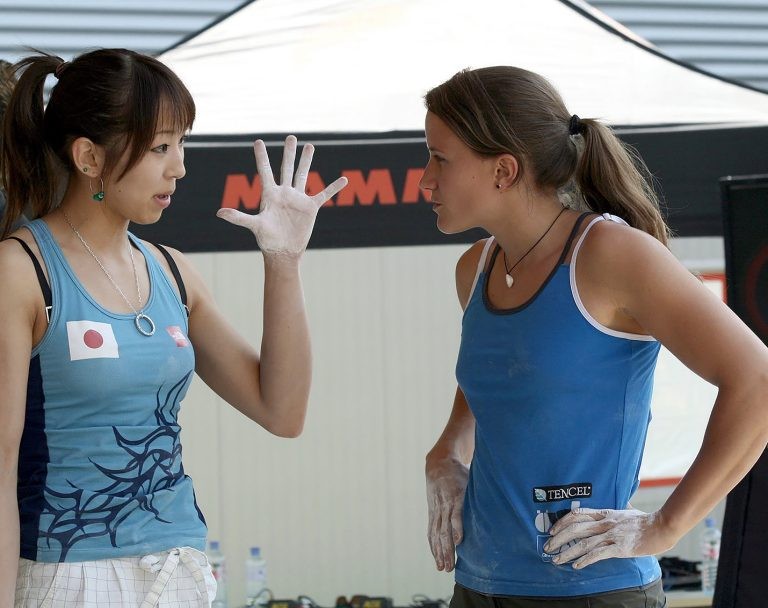
Nonverbal Communication Uses Multiple Channels
When we use verbal communication, we use words, and we transmit through one channel at a time. We can speak words, read words, type words, or listen to words, but the verbal channel is determined by words.
Nonverbally, when I talk to a friend, I listen to my friend's tone of voice, I watch my friend's facial expressions, use of eye contact, and gestures, and possibly touch them (multiple channels) all while trying to make sense of the words (one channel). Or to impress a possible romantic partner, I might dress up in my most flattering clothes, put on cologne or perfume, fix my hair, and laugh at their jokes (multiple channels) to indicate my interest in them.
Nonverbal Communication is More Ambiguous
Unlike most verbal communication, nonverbal communication and its meanings are primarily learned unconsciously. A smile can express friendliness, comfort, nervousness, and sarcasm. Just as catching someone's eye can convey intimacy, humor, or a challenge, depending on the situation. This ambiguity can pose difficulties for the interpretation of messages - especially across cultural boundaries. Chances are you have had many experiences where words were misunderstood, or where the meaning of words was unclear. When it comes to nonverbal communication, meaning is even harder to discern. We can sometimes tell what people are communicating through their nonverbal communication, but there is no foolproof "dictionary" of how to interpret nonverbal messages.
Some nonverbal behaviors are learned as part of being socialized into a culture. In the United States, we often shake hands when meeting someone new in a formal situation. Words such as "hi, I'm Karen" along with a firm handshake are general expectations in business settings. As is saying, "it was so nice to meet you" and another firm handshake at parting.
Nonverbal Communication Has Fewer Rules
One reason that nonverbal communication is more ambiguous than verbal communication is because it is governed by fewer rules. Verbal communication has literally thousands of rules governing grammar, spelling, pronunciation, usage, meaning, and more. Nonverbal communication does not. Yes, your parents might tell you "it's not polite to stare at people," but most of these declarations are considered models of good behavior and not something that dictates the meaning of a communication act.
Nonverbal Communication is Continuous
Nonverbal communication is ongoing. When interacting face-to-face, you begin nonverbally before you start talking and you continue communicating after you stop talking. If nothing else, you will always be communicating nonverbally through your physical appearance. When interacting through a medium such as email or Instagram, you communicate through usernames, avatars, pictures, word choice, and more. You can stop communicating verbally, but you never stop communicating nonverbally.

Nonverbal Messages Communicate Emotions, Meaning, and Relationships
When we interact with others, we monitor many channels besides their words to determine meaning. Where does a wink start and a nod end? Nonverbal communication involves the entire body, the space it occupies and dominates, the time it interacts, and not only what is not said, but how it is not said. Nonverbal action flows almost seamlessly from one thought to the next, creating an intention of meaning in the mind of the receiver.
Nonverbal communication can give our thoughts and feelings away before we are even aware of what we are thinking or how we feel. People may see and hear more than you ever intended. Your nonverbal communication includes both intentional and unintentional messages, but since it all happens so fast, the unintentional ones can contradict what you know you are supposed to say or how you are supposed to react.
Our reliance on nonverbal communication becomes even more intense when people display mixed messages or verbal and nonverbal behaviors that convey contradictory meanings. In such cases, we almost always trust the nonverbal message over the verbal one as nonverbal behavior is believed to operate at a unconscious or semi-conscious level. Still, we often assign intentional motives to nonverbal communication when in fact the meaning is unintentional, and hard to interpret.
Nonverbal behavior also communicates status and power. Touch, posture, gestures, use of space and territory, are good indicators of how power is distributed in a relationship, and the perks that status brings.
Nonverbal and Verbal Communication Work Together to Create Communication
Verbal and nonverbal forms of communication work together to create meaning. As communicators, we do not experience or express them separately, but rather jointly to create meaning. Your interpretation of verbal meaning is often framed by accompanying nonverbal elements such as tone of voice, facial expressions, and gestures. Nonverbal communication can reinforce, substitute for, and contradict verbal communication, but it can never be the words - we need the words to have a focus for the meaning and feelings that are being displayed.

Nonverbal Communication is Influenced by Culture
The close bond between culture and nonverbal communication makes true intercultural communication difficult to master. Yes, some cues can be learned, but because nonverbal is ambiguous and has fewer rules, it takes most people many years of immersion within a culture before they can fully understand the subtle meanings encompassed within that culture's nonverbal communication.
In a 2009 meeting with the emperor of Japan, then President Barak Obama, bowed rather deeply in greeting. US conservative commentators called the bow ‘treasonous' while former vice-president, Dick Cheney, believed that "there was no reason for an American president to bow to anyone" (Slate, retrieved 3/8/19). The Japanese press, on the other hand, acknowledged the bow as a sign of respect, but believed the 45 degree bend or ‘seikeirei' bow to be much more exaggerated than it needed to be.