The Role of the Federal Reserve
- 4e Describe the roles of the Federal Reserve, banks, interest rates, and credit analysis with respect to decisions on financial lending (CLO 5)
How does the Federal Reserve manage the money supply?
 buttons.
Before the twentieth century, there was very little government regulation of the U.S. financial or monetary systems. In 1907, however, several large banks failed, creating a public panic that led worried depositors to withdraw their money from other banks. Soon many other banks had failed, and the U.S. banking system was near collapse. The panic of 1907 was so severe that Congress created the Federal Reserve System in 1913 to provide the nation with a more stable monetary and banking system.
The Federal Reserve System (commonly called the Fed) is the central bank of the United States. The Fed's primary mission is to oversee the nation's monetary and credit system and to support the ongoing operation of America's private-banking system. The Fed's actions affect the interest rates banks charge businesses and consumers, help keep inflation under control, and ultimately stabilize the U.S. financial system. The Fed operates as an independent government entity. It derives its authority from Congress but its decisions do not have to be approved by the president, Congress, or any other government branch. However, Congress does periodically review the Fed's activities, and the Fed must work within the economic framework established by the government.
The Fed consists of 12 district banks, each covering a specific geographic area. Exhibit 15.3 shows the 12 districts of the Federal Reserve. Each district has its own bank president who oversees operations within that district.
Originally, the Federal Reserve System was created to control the money supply, act as a borrowing source for banks, hold the deposits of member banks, and supervise banking practices. Its activities have since broadened, making it the most powerful financial institution in the United States. Today, four of the Federal Reserve System's most important responsibilities are carrying out monetary policy, setting rules on credit, distributing currency, and making check clearing easier.
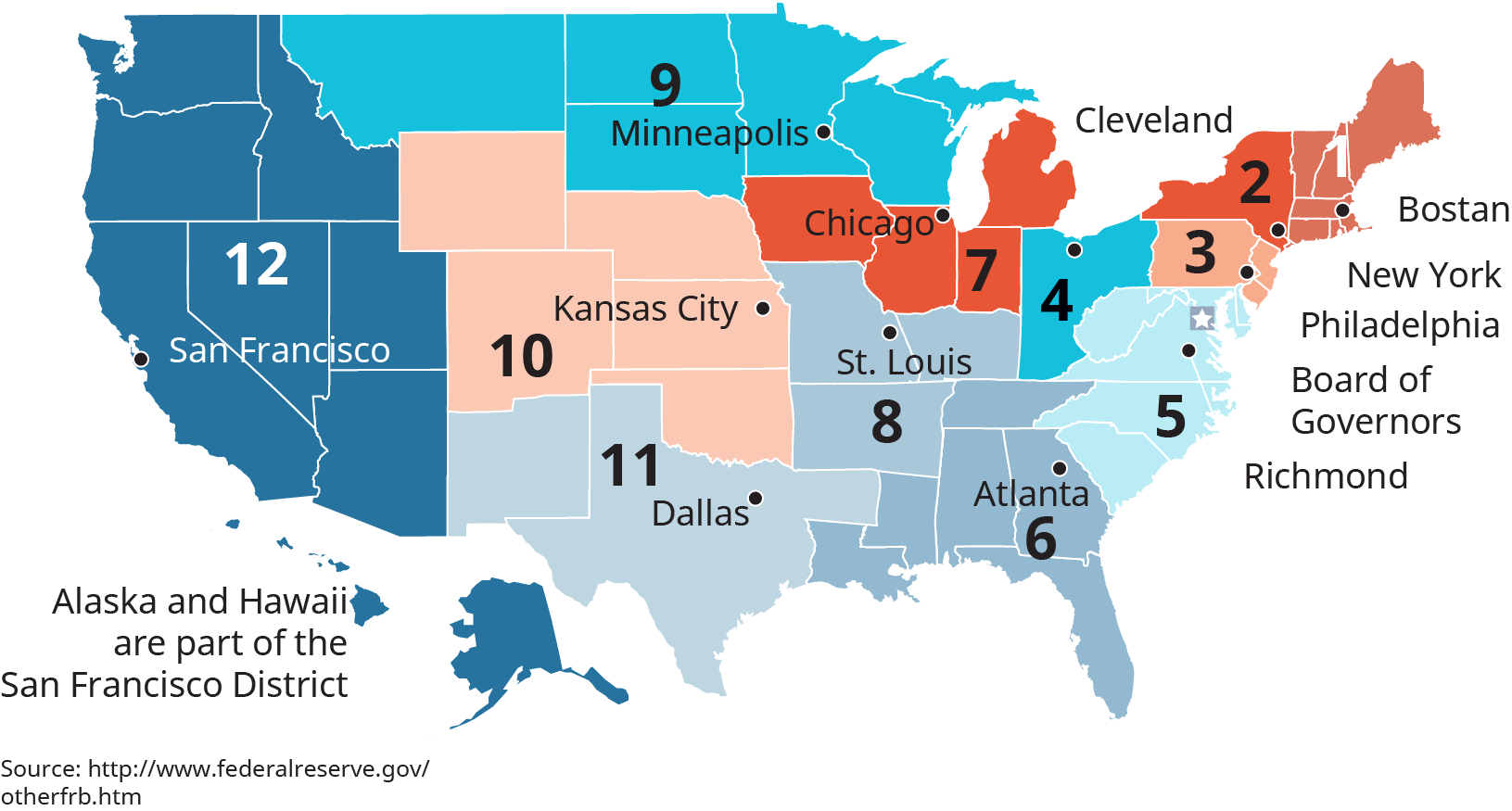
Exhibit 15.3 Federal Reserve Districts and Banks
Source: Rice University, https://openstax.org/books/introduction-business/pages/15-2-the-federal-reserve-system This work is licensed under a Creative Commons Attribution 4.0 License.